
Table of Contents
Introduction
Every family should keep essential medicines at home to safely and effectively handle everyday health problems. A well-stocked medicine kit can be invaluable during sudden illnesses or minor injuries. Whether reducing a fever in the middle of the night, easing a painful headache, or treating a small cut, having the right medicines available enables quick action and helps prevent unnecessary panic. Medicines are classified into two main categories worldwide: over-the-counter (OTC) medicines and Prescription medicines. With numerous options, it can be challenging to determine which medicines are truly essential and how to store them effectively.
This guide will assist you in choosing the right OTC and prescription medicines, knowing when to use them, and recognizing when it’s necessary to consult a doctor.
What are the OTC Medicines?
- OTC medicines are those that we can buy without a doctor’s prescription, like for fever, pain, cold, allergy, etc.
- Regulatory authorities, such as the CDSCO in India or the FDA in the United States, determine whether a medicine can be sold over the counter based on its safety and effectiveness.
- Common OTC medicines treat everyday health issues like pain, fever, allergies, and stomach upset.
What are prescription Medicines ?
- They are generally prescribed by a doctor or other authorized healthcare professional.
- They are used to treat specific medical conditions that may require professional evaluation.
- The medicine, strength, dose, frequency, and duration are selected based on the patient’s condition and other factors.
- Some can cause side effects, drug interactions, or complications if used incorrectly.
- Examples: Antibiotics, medicines for diabetes and blood pressure.
What are the Common Medicines to be kept at home?
⚠️ Important: The medicines needed at home may vary depending on age, existing health conditions, allergies, pregnancy, and other individual factors. Always use medicines according to the label or as advised by a healthcare professional. Avoid using someone else’s prescription medicine or leftover antibiotics.
Here is a list of a few common medicines you may consider keeping at home.
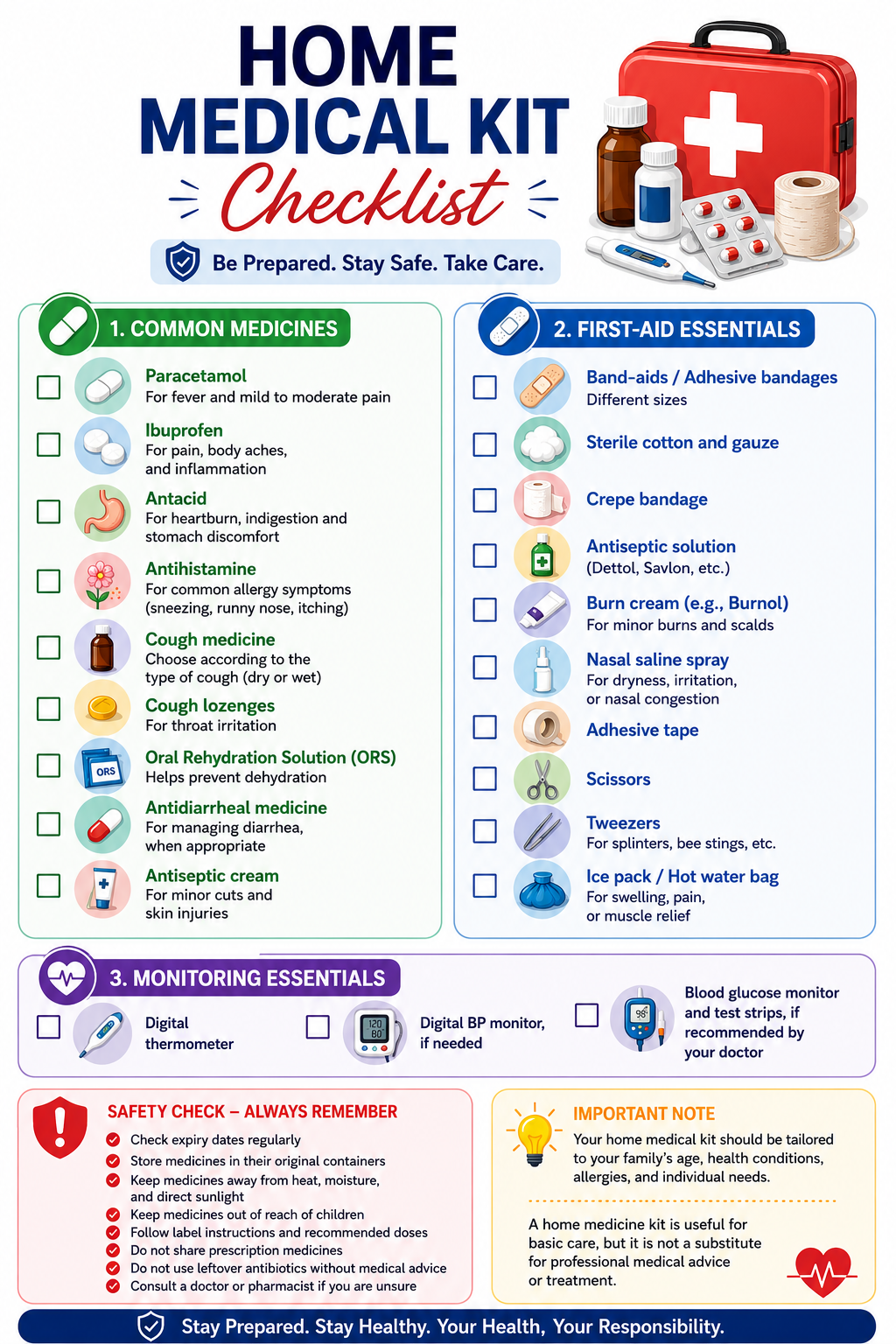
Paracetamol
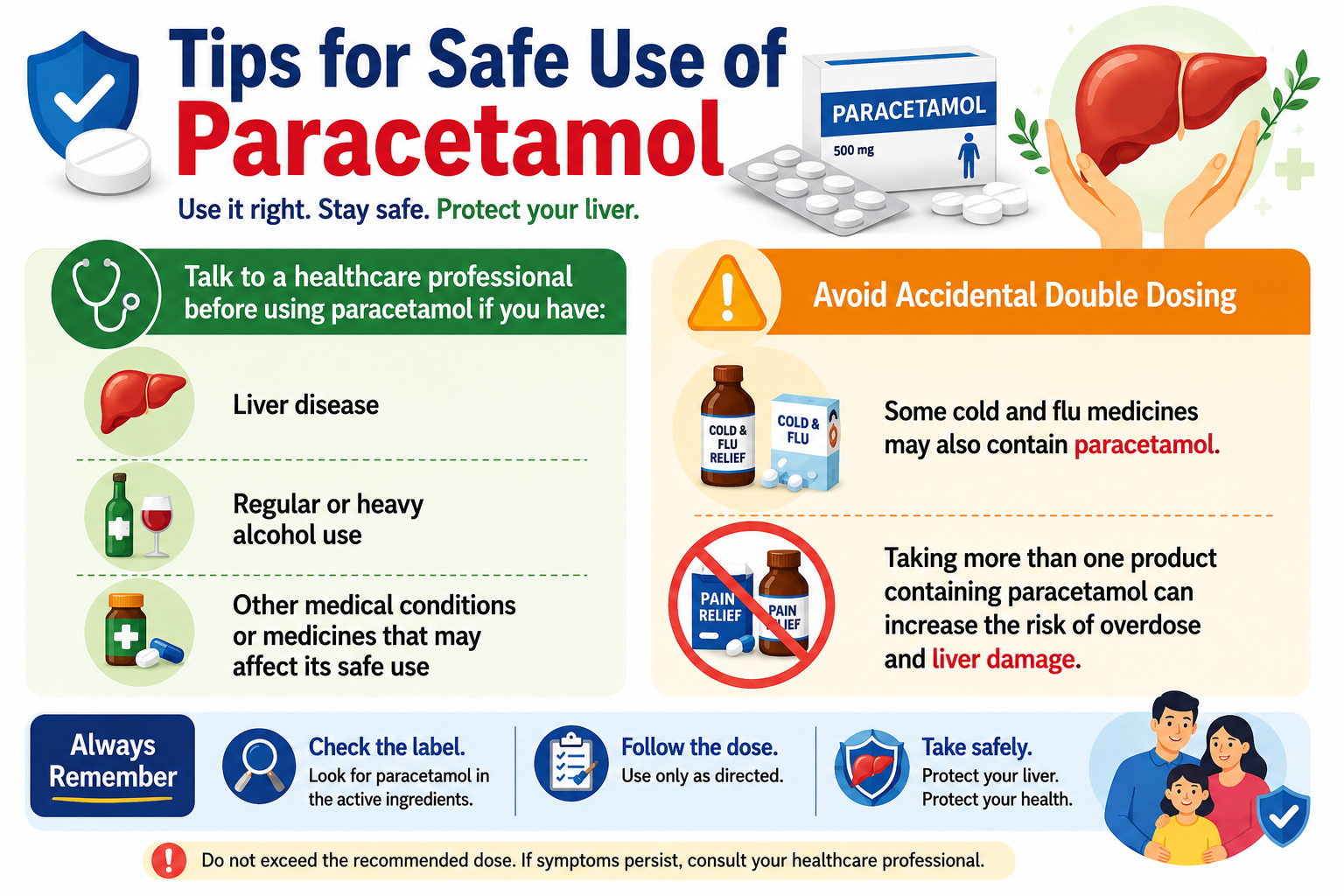
- Paracetamol is very commonly used to treat fever and mild to moderate pain.
- Take as directed on the label or by your healthcare professional.
Ibuprofen
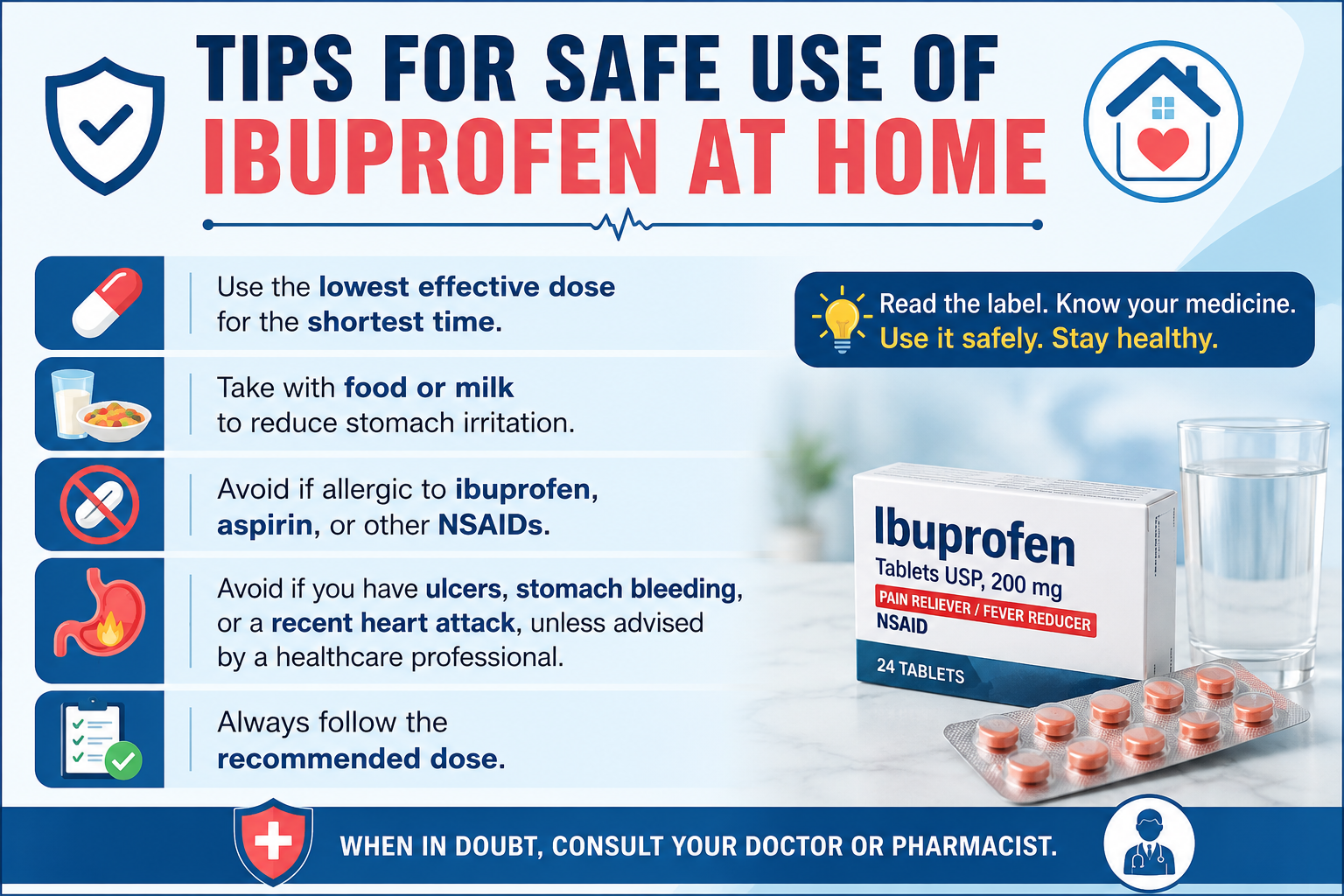
- Ibuprofen is a nonsteroidal anti-inflammatory drug (NSAID).
- It is commonly used for pain relief, body aches, and fever.
Antacids
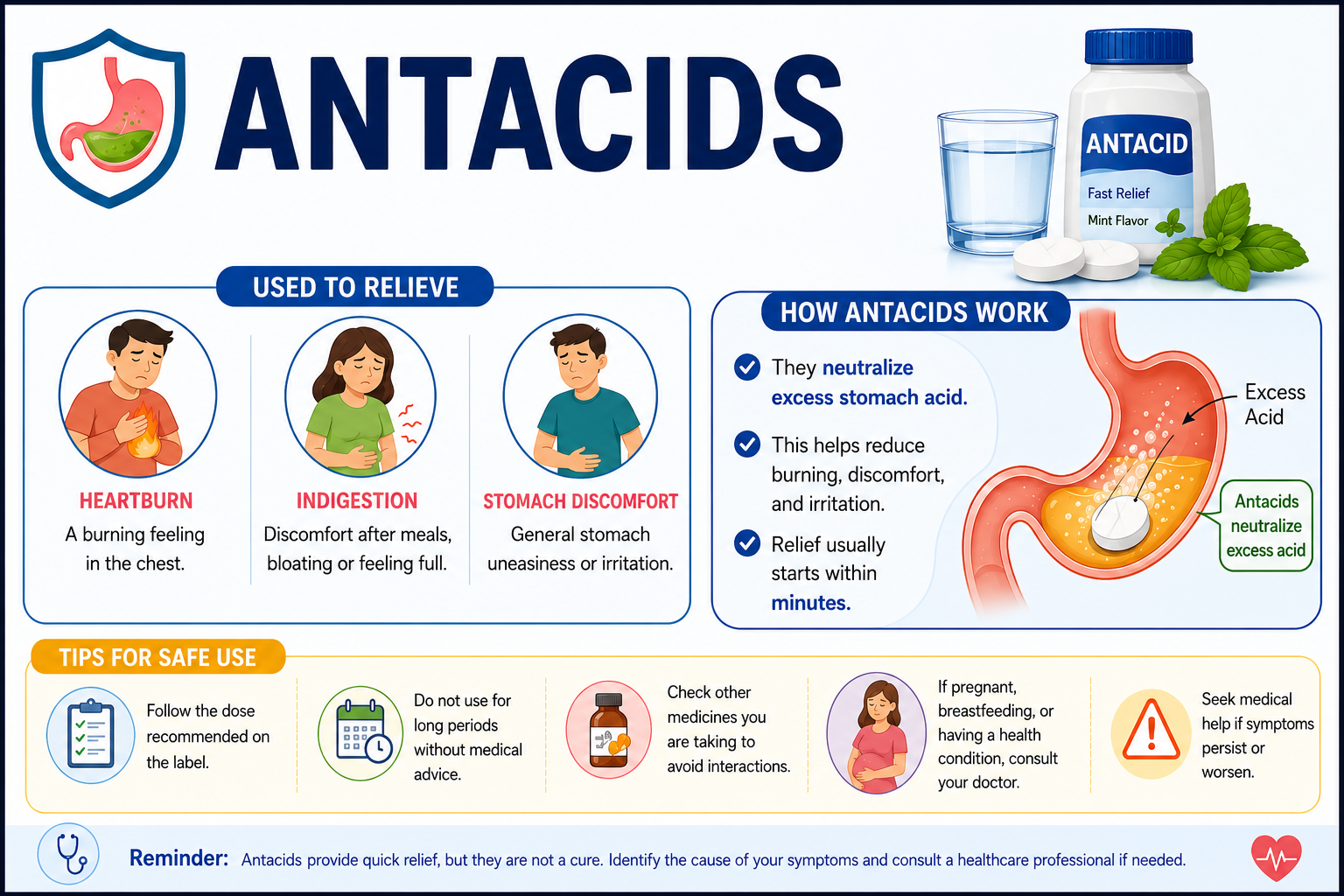
- Antacids are drugs that help to balance stomach acid levels.
- People commonly use them to relieve heartburn, Indigestion, and stomach discomfort.
- Examples: Products that contain calcium carbonate, magnesium hydroxide, aluminum hydroxide, and sodium bicarbonate.
Antihistamines
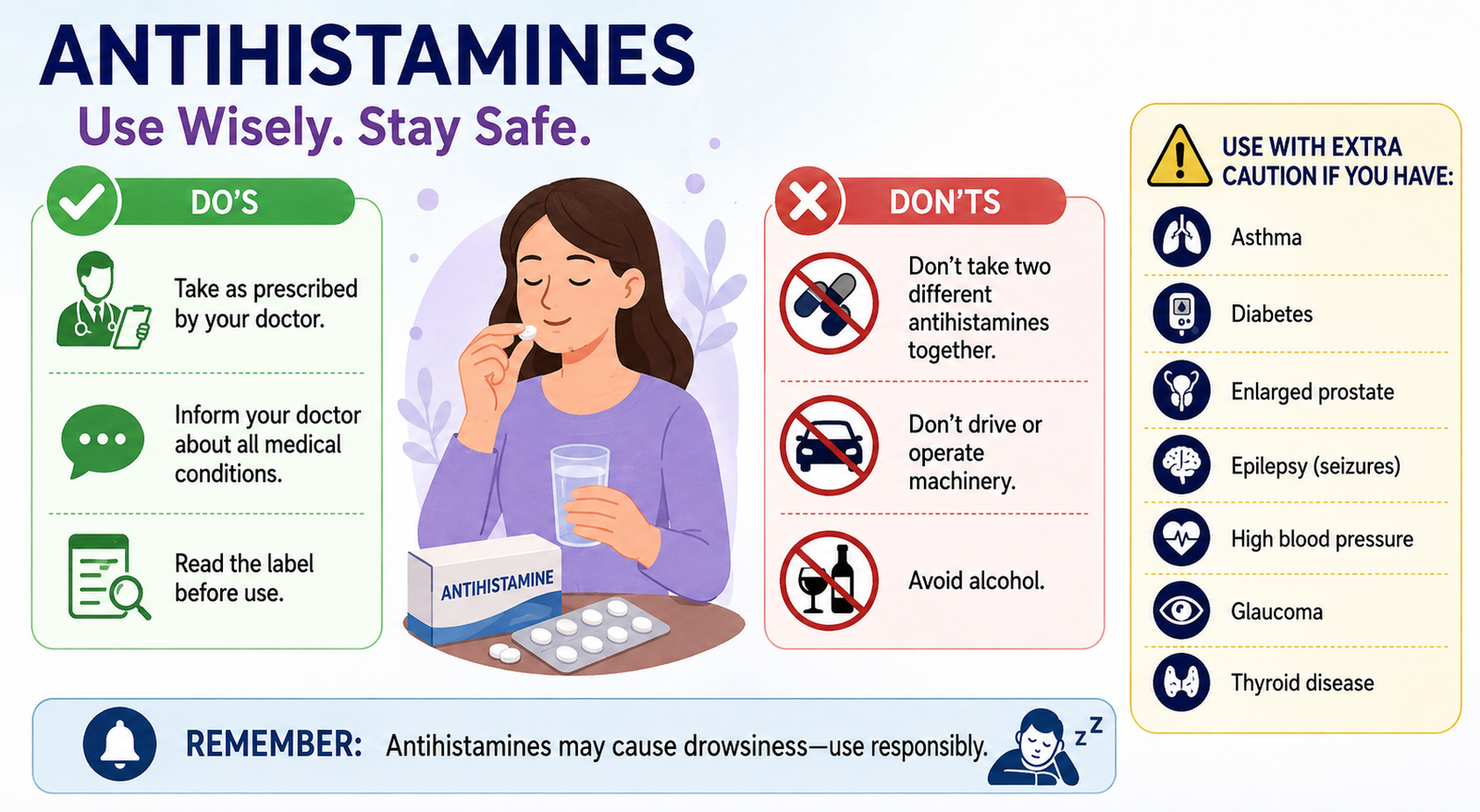
- Antihistamines are a group of medicines used to treat allergic symptoms, also known as antiallergic drugs.
- They are commonly used for a runny nose, sneezing, sore throat, skin rash, and itchy, watery eyes.
- Examples: Cetirizine, Fexofenadine, Levocetirizine.
Cough Medicines
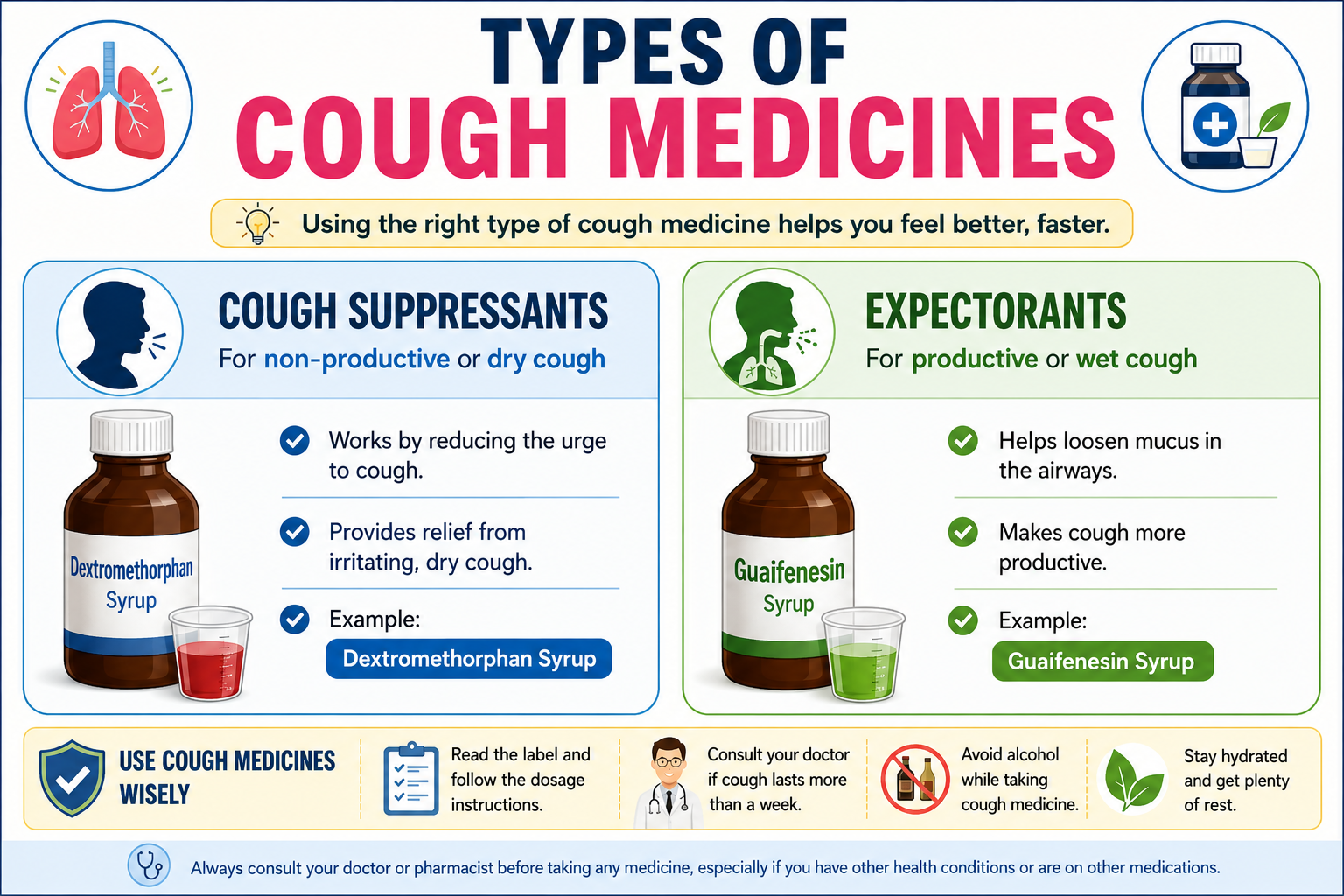
- Cough medication helps reduce cough symptoms caused by various factors, including colds, allergies, or respiratory infections.
- There are different types of cough medicines:
- Cough suppressants – for non-productive or dry cough, like Dextromethorphan syrup.
- Expectorants – for Productive or wet cough, like Guaifenesin syrup.
- Some cough medicines also combine ingredients to target multiple symptoms, like congestion or a sore throat.
- Soothing lozenges are also available to reduce throat irritation.
Oral Rehydration Solution (ORS)
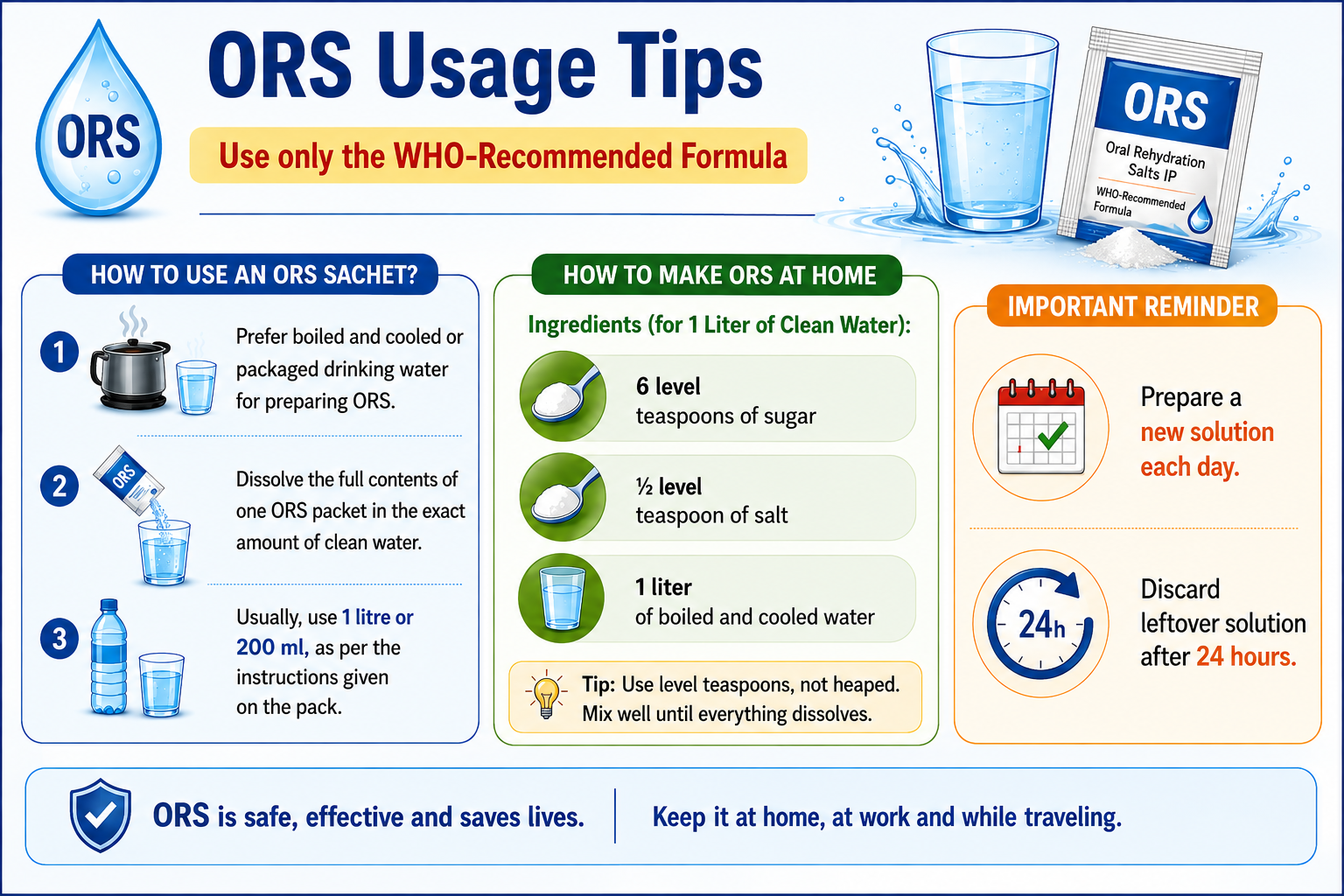
- ORS is a mixture of water, sugar, and electrolytes (sodium and potassium).
- It helps prevent dehydration and assists the body in regaining lost fluids and minerals.
- People can use ORS during:
- diarrhea (loose motion)
- vomiting
- fever
- heat-related illnesses
Antidiarrheal
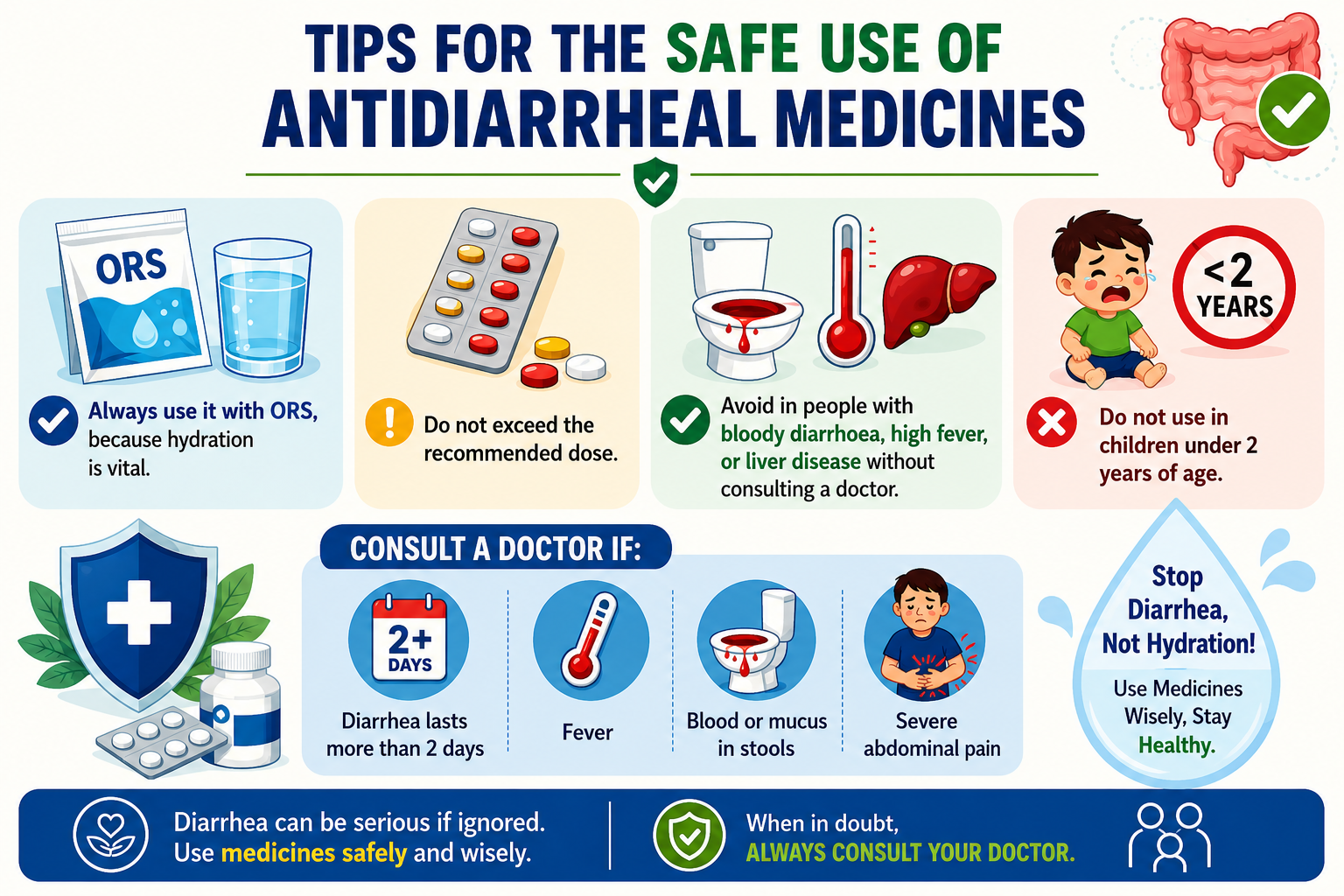
- Antidiarrheal drugs are used to manage loose stools or diarrhea.
- They help reduce instestine movements and fluid loss, making stools more formed.
- Example: Loperamide, Bismuth subsalicylate.
Antiseptic Cream
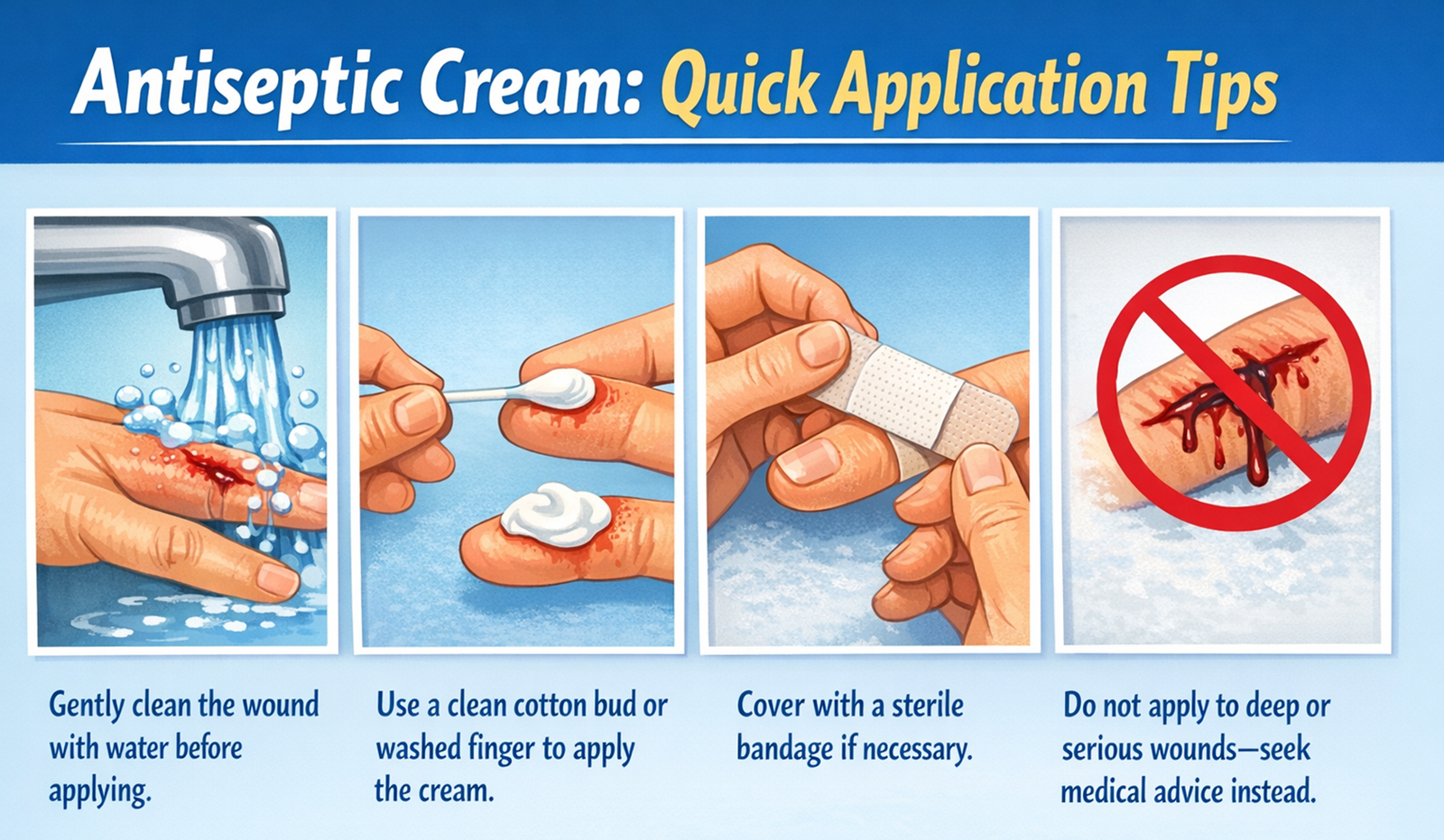
- An antiseptic cream is an essential part of every home first-aid kit.
- It helps prevent infections and speeds up healing.
- Situations where it proves useful:
- Minor cuts and scratches – keep germs out of the wound.
- Burns and scalds – soothe the skin and reduce the risk of infection.
- Insect bites and stings – relieve itching and safeguard against infection.
- Skin irritations – soothe redness or minor rashes.
- Example: Betadine, Soframycin.
How to store medicine safely at home?
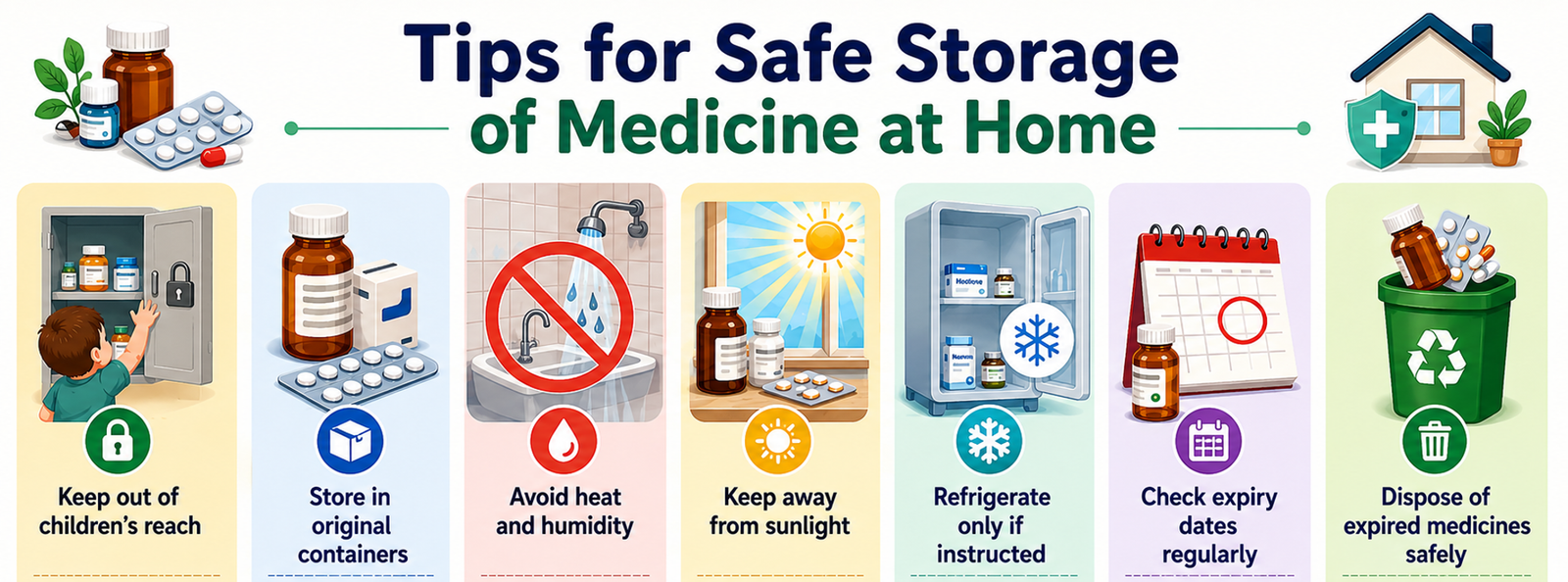
- Keep out of reach of children – Store in a secured cabinet or on high shelves.
- Store in original containers – Labels provide vital information and expiry dates.
- Avoid bathroom and kitchen storage – Heat and humidity can damage medicines.
- Use airtight storage if needed – Especially for moisture-sensitive tablets or capsules.
- Keep away from sunlight and heat – Some medicines lose their effect when exposed.
- Refrigerate only if instructed – Not all medicines should go in the fridge.
- Check expiry dates regularly – Safely discard expired or unused medicines.
- Dispose properly – Never throw into open rubbish; follow local disposal guidelines.
What other essentials should be kept in the medical kit?
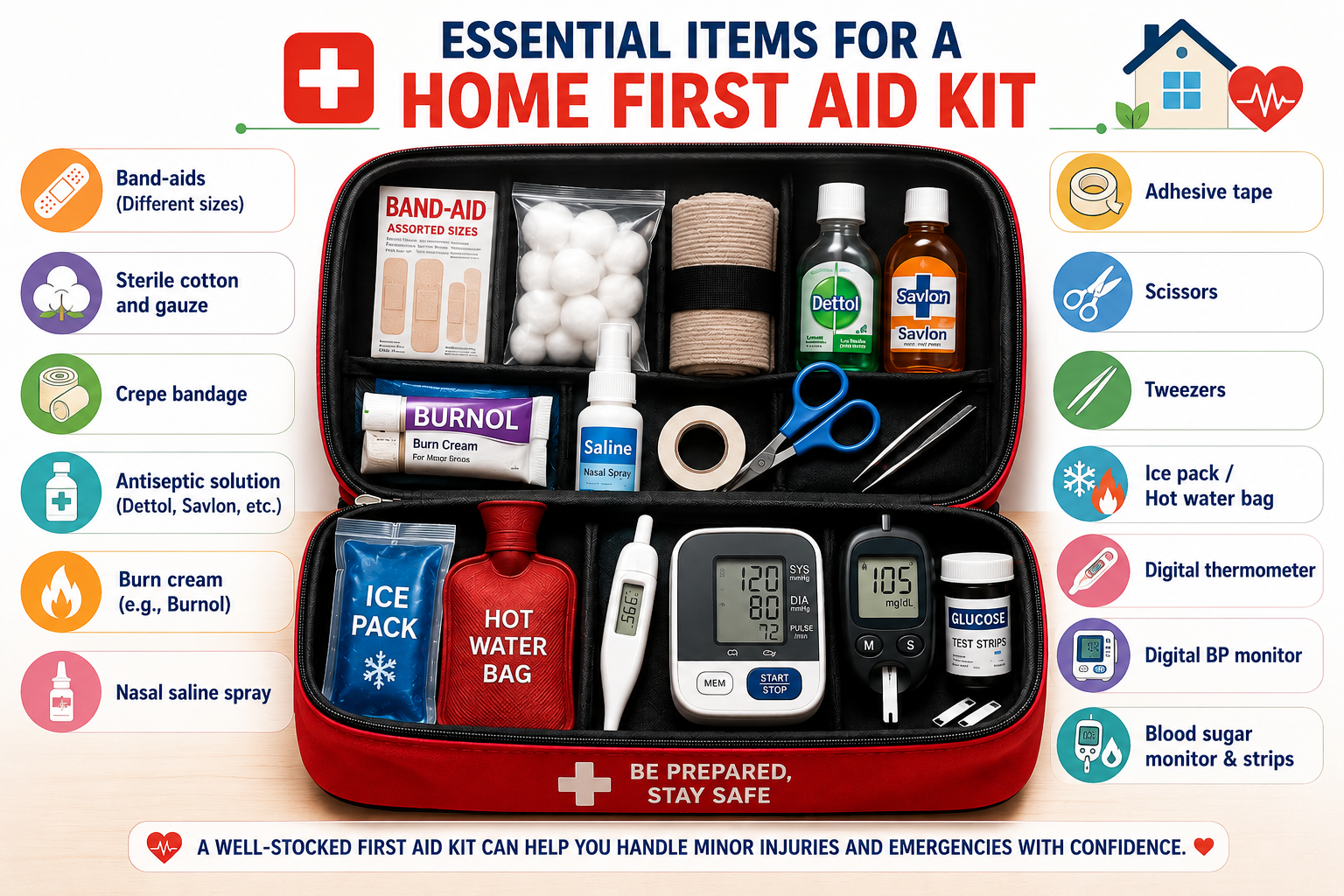
- Band-aids (Different sizes) – For minor cuts and scrapes.
- Sterile cotton and gauze – For cleaning and dressing wounds.
- Crepe bandage – For sprains and support.
- Antiseptic solution (Dettol, Savlon, etc.) – To clean or disinfect wounds or injuries.
- Burn cream (e.g., Burnol) – For minor burns and scalds.
- Nasal saline spray – For dryness, irritation, or nasal congestion.
- Adhesive tape – To secure dressings or bandages.
- Scissors – For cutting tape, gauze, etc.
- Tweezers – For removing splinters, bee stings, etc.
- Ice pack / Hot water bag – For swelling, pain, or muscle relief.
- Digital thermometer – To measure fever.
- Digital BP monitor – To measure blood pressure.
- Blood sugar monitor & strips – If recommended by a doctor.
Questions to Ask Your Doctor
- Before beginning a new medication, your doctor can provide you with important information and address any questions you may have. Here are some helpful questions to consider about your medication:
- ✅What’s the name of the medication?
- ✅ What’s it for?
- ✅ Is there a more affordable option?
- ✅ What condition does it treat?
- ✅ How long before it starts working?
- ✅ How will I know if it’s working?
- ✅ Are there any potential side effects to be aware of?
- ✅ What should I do if I experience severe side effects?
- ✅Will it interact with other medicines, supplements, or over-the-counter drugs?
- ✅What if I want to stop taking it?
- ✅ Is it okay to stop suddenly?
Final Takeaway
Keeping a well-stocked home medicine kit can help you manage minor health concerns and common symptoms, but medicines should always be used responsibly.
✔️ Read the medicine label carefully.
✔️ Follow the recommended dose and instructions.
✔️ Avoid self-medication and sharing prescription medicines.
✔️ Check expiry dates and store medicines properly.
✔️ Consult your doctor or pharmacist if you are unsure.
⚠️Remember, a home medicine kit is useful for basic care, but it is not a substitute for professional medical advice or treatment.
Further Reading
- National Health Service. (2022, October 20). How and when to take paracetamol for adults. NHS. https://www.nhs.uk/medicines/paracetamol-for-adults/how-and-when-to-take-paracetamol-for-adults
- MedlinePlus. (n.d.). Ibuprofen — Drug information. U.S. National Library of Medicine. https://medlineplus.gov/druginfo/meds/a682159.html
- National Health Service. (2023). Antacids. NHS. https://www.nhs.uk/medicines/antacids
- Times of India. (2025, March 4). Monitor NDMA levels in antacid Ranitidine; Drugs body CDSCO. Times of India. https://timesofindia.indiatimes.com/india/monitor-ndma-levels-in-antacid-ranitidine-drugs-body-cdsco/articleshow/122961902.cms
- Centers for Disease Control and Prevention. (2023). About medication safety. U.S. Department of Health & Human Services. https://www.cdc.gov/medication-safety/about/index.html
- National Institute on Aging. (2022). Taking medicines safely as you age. U.S. Department of Health & Human Services. https://www.nia.nih.gov/health/medicines-and-medication-management/taking-medicines-safely-you-age
Disclaimer: The information provided on Medical Pharma Lifestyle Pulse is for educational and informational purposes only and is not intended as medical advice, diagnosis, or treatment. Always consult a qualified healthcare professional before making any decisions about your health, medications, or treatment. Never ignore or delay seeking professional medical advice based on information you have read on this website. While we strive to provide accurate and up-to-date information, we do not guarantee the completeness or accuracy of the content. For more information, please read our full Medical Disclaimer.



Pingback: How to Read a Medicine Strip: Tips for Safe Medication Use -