
Table of Contents
Introduction
Paracetamol, also known as Acetaminophen, is a widely used medicine found in most homes. As an over-the-counter (OTC) medication, it is the standard and first-line treatment for fever and acute pain. Its availability and safety reputation make it a trusted remedy for all ages. While paracetamol is usually safe when used properly, many remain unaware of the risks and complications. Knowing the correct dose, who should be cautious, and the early signs of side effects is essential to keep this standard medicine effective and safe.
Our blog will walk you through the essential facts about paracetamol, including its uses, safe dosages, risks, and precautions, so you can make informed choices the next time you need it.
What are the Common Uses of Paracetamol?
- Fever reduction – For adults and children.
- Headache relief – including tension headaches and migraines.
- Toothache – Mild to moderate dental pain.
- Muscle aches and body pain – Such as after exercise or viral illness.
- Joint pain – For mild to moderate pain.
- Back pain – Commonly used for temporary relief.
- Post-vaccination fever and pain – Especially in children.
- Cold and flu symptoms – Often combined with other medicines.
- Post-surgical pain or injury-related pain – Sometimes given in hospitals (oral or intravenous).
What are the different dosage forms available?
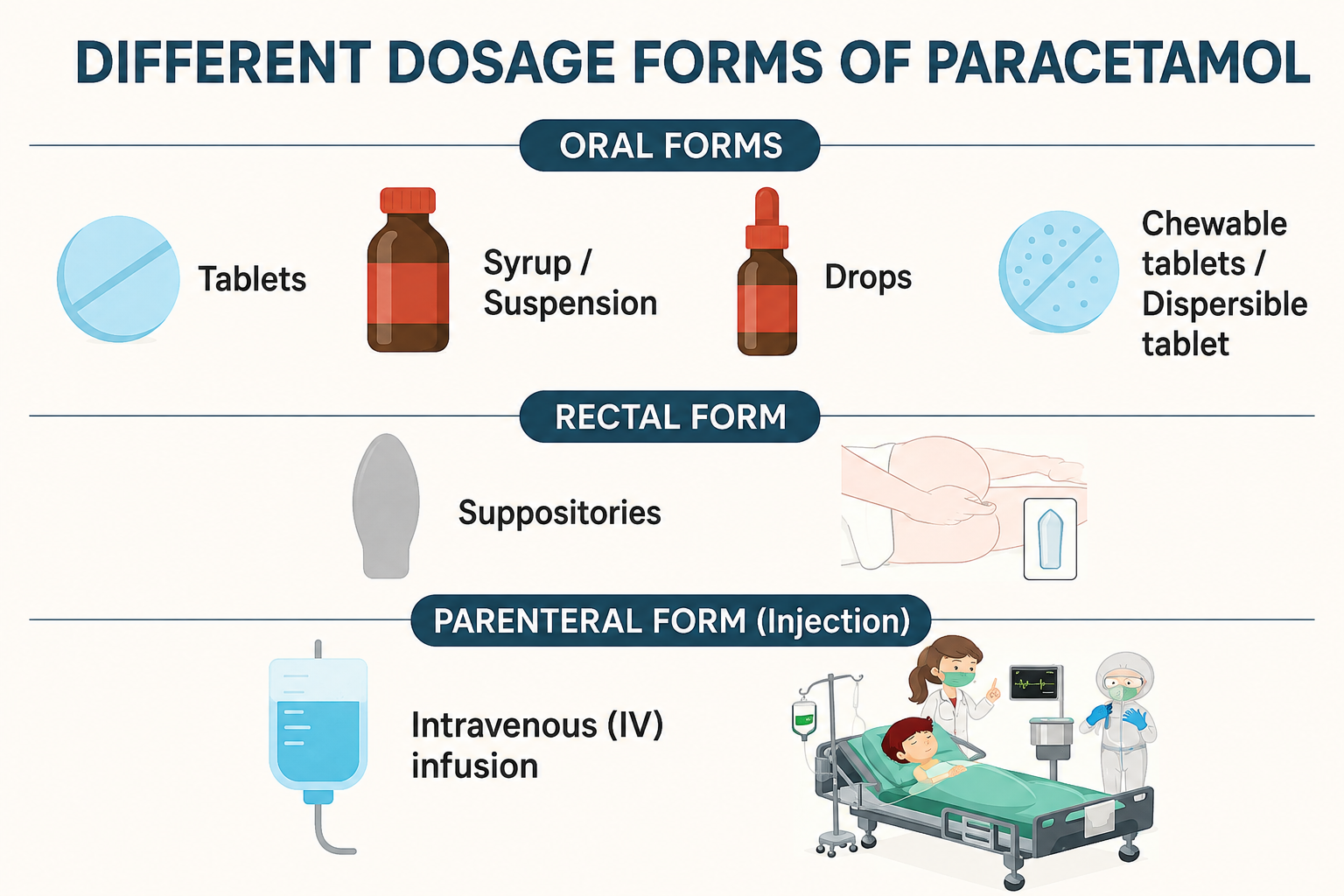
- Oral Forms (Taken by Mouth)
- Tablets – Most common.
- Capsules – Not very commonly available.
- Syrup/Suspension – For children (flavored, easy to swallow).
- Drops – Concentrated form for Infants.
- Chewable tablets / Dispersible tablets – For children or those with swallowing difficulty.
- Modified-release tablets – For longer action (prescription only)
- Rectal Form (Inserted into Rectum)
- Suppositories – Used when oral intake is not possible (Vomiting, unconscious patients, infants).
- Injectable Forms
- Intravenous (IV) injection/infusion – used in hospitals for severe pain/fever, post-surgery, or when the oral route is not possible.
Which are the Popular brands available in India?
- Some of the popular brands in India are:
- Dolo 650 (by Micro Labs Pvt Ltd)
- Calpol (by GlaxoSmithKline Pharmaceuticals Ltd.)
- Crocin (by GlaxoSmithKline Pharmaceuticals Ltd.)
- Pacimol (by Ipca Laboratories)
- Paracip (by Cipla)
- Sumo L 650 (by Alkem Laboratories Ltd.)
- Metacin (by GlaxoSmithKline)
- P 650 (by Apex Laboratories)
- T-98 (by Blue Cross Laboratories)
- Febrex (by Indoco Remedies)
Which forms of Paracetamol need a prescription?
- Plain paracetamol tablets, syrup, and suspension are widely available OTC in India.
- However, some combinations, modified-release products, and injectable forms require a prescription or medical supervision, such as:
- Paracetamol + Codeine: Paracod, Nepar Forte
- Paracetamol + Tramadol: Ultracet, Doltram Plus
- Paracetamol + NSAIDs: Aceclofenac, ibuprofen, or diclofenac combinations
- Paracetamol + Cold Medicines: Some combination products contain antihistamines/decongestants
- Modified-Release Paracetamol: Higher-strength formulations such as Para 1000-SR
- IV Paracetamol: Used mainly in hospitals under medical supervision
Always check the label to avoid accidentally taking paracetamol from multiple products.
What is the dose for Adults and Adolescents?
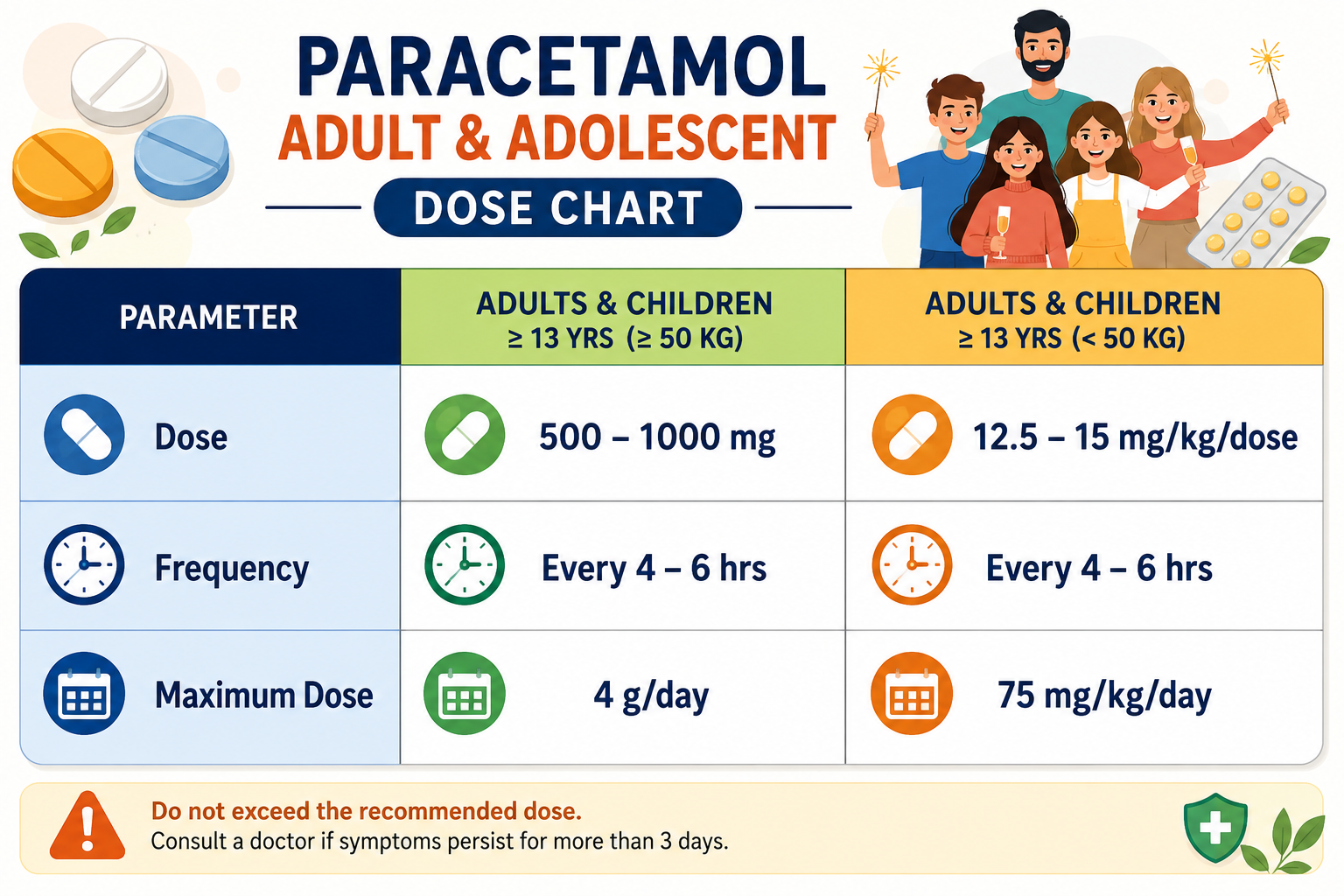
- Adults and adolescents (≥13 years ) weighing ≥50 kg
- The recommended dose is 500 – 1000 mg every 4 -6 hours.
- The maximum single dose should not exceed 1000 mg, and the minimum dosing interval is 4 hours.
- Notably, the maximum daily dosage should not exceed 4000 mg (4g).
- Adults and adolescents (≥13 years ) weighing < 50 kg
- The recommended dosage is 12.5 mg/kg every 4 hours or 15 mg/kg every 6 hours.
- The maximum single dose should not exceed 15 mg/kg, and the minimum dosing interval is 4 hours.
- Additionally, it is essential to adhere to a maximum daily dosage of not >75 mg/kg, up to a maximum of 3750 mg.
What is the dose for children?
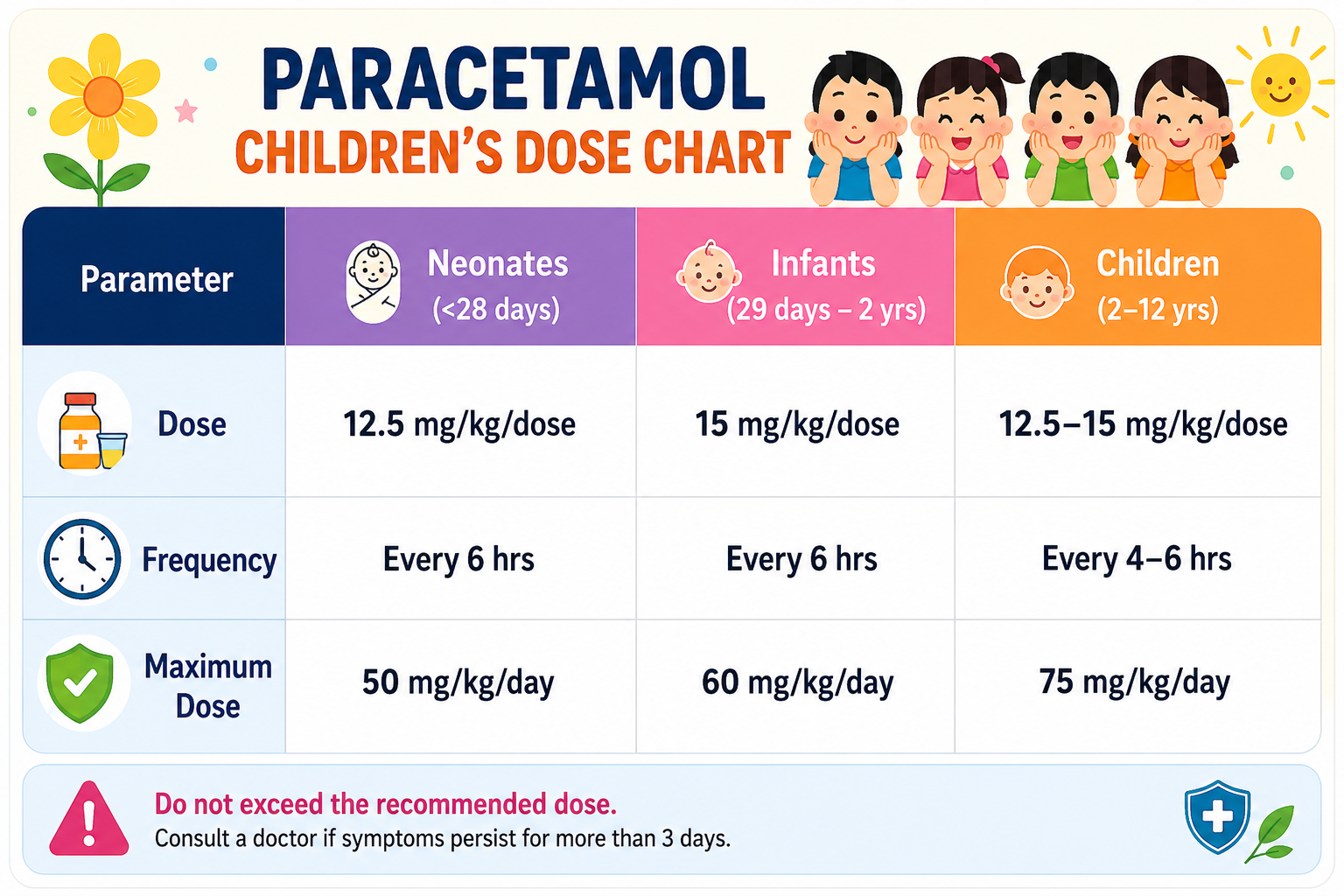
- Neonate (Premature Baby born at ≥32 weeks or < 28 days old)
- The recommended dosage is 12.5 mg/kg every 6 hours.
- The maximum recommended daily dosage is 50 mg/kg.
- Infants (Children aged 29 days to 2 years)
- Generally, infants are given a dose of 15 mg/kg every 6 hours.
- The maximum daily dosage should not exceed 60 mg/kg.
- Children (2-12 years)
- 12.5–15 mg/kg per dose every 4–6 hours as needed.
- The maximum single dose should not exceed 15 mg/kg.
- The maximum daily dosage is 75 mg/kg.
What are the Important precautions to be taken?
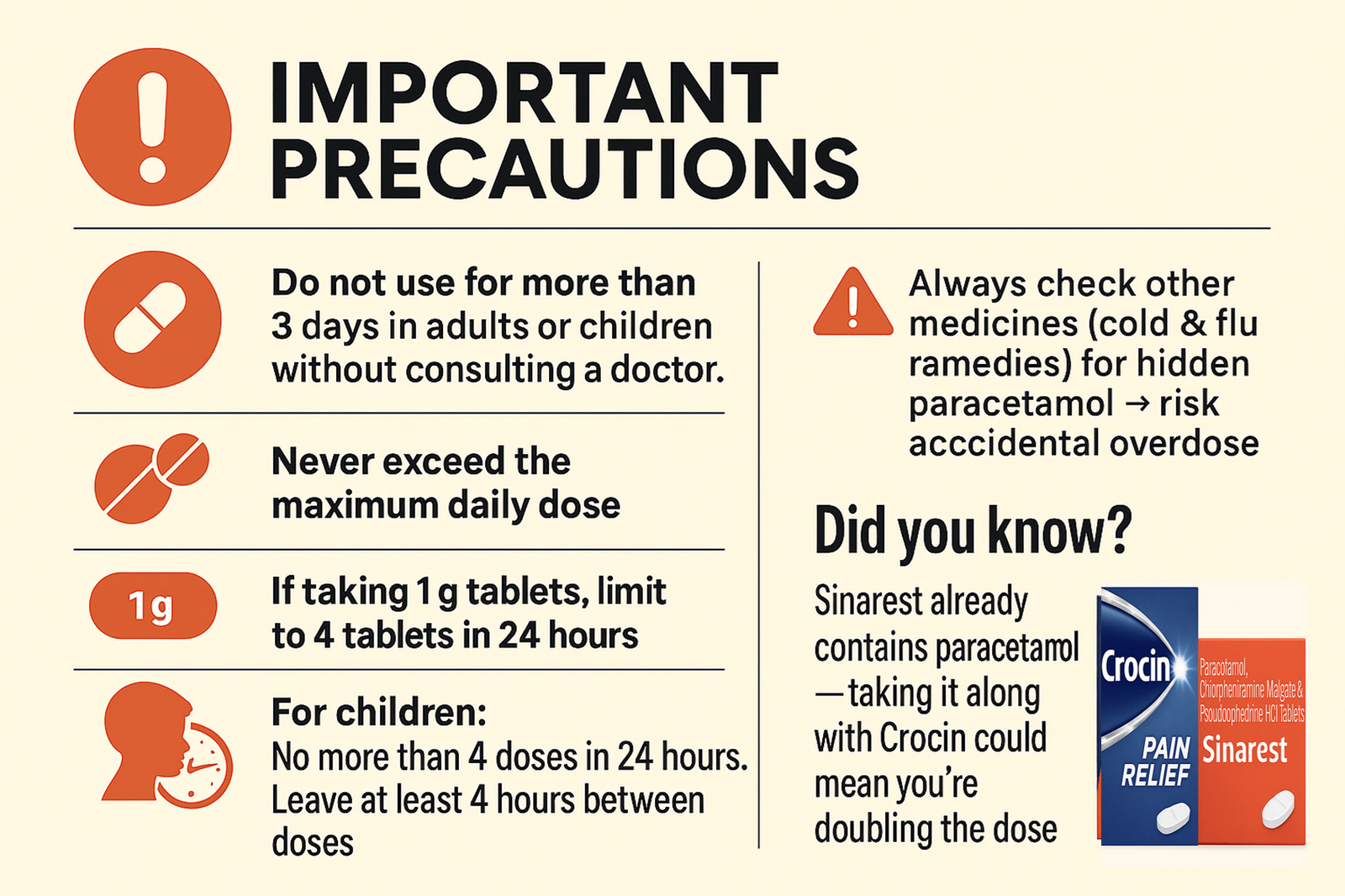
- Never give to adults or children for longer than three days without consulting a doctor.
- Do not exceed the recommended dose (Adults: max 4 g/day; Children: max 60 mg/kg/day).
- Avoid exceeding the maximum doses.
- If you’re using 1g tablets, remember not to take more than four in a 24-hour period.
- Do not give your child more than four doses within 24 hours. Allow at least four hours between doses.
- Many cold and flu medicines already contain paracetamol; taking plain paracetamol together can unknowingly cause an overdose.
- Take only as directed or as indicated on the package.
- Avoid doubling doses if you miss one.
What should I do if I miss a dose?
- If you happen to miss a dose, take the next dose when it’s needed, as long as it’s been more than 4 hours since your last one.
- Remember, don’t take a double dose or go over the maximum daily amount.
What are the common side effects?
- It is generally safe when taken at the correct dose, and side effects are uncommon.
- However, on a rare occasion, some people might experience a serious allergic reaction called anaphylaxis.
- It’s always good to be mindful and consult your healthcare provider if you have any concerns.
Can Paracetamol cause Liver damage?
- When used as recommended, it is usually safe and gentle on the liver.
- However, taking too much, using it for a long time at high doses, or mixing it with alcohol can strain the liver’s ability to handle the medicine. This can lead to a buildup of a harmful substance, which may cause liver damage.
How much Dose can be Toxic?
- Adults
- >12 grams over 24 hours
- Single dose >7.5–10 grams (15–20 tablets of 500 mg)
- Children
- Single dose of 150 mg/kg or 200 mg/kg in otherwise healthy children aged 1 to 6 years.
When can paracetamol be harmful at the usual dose?
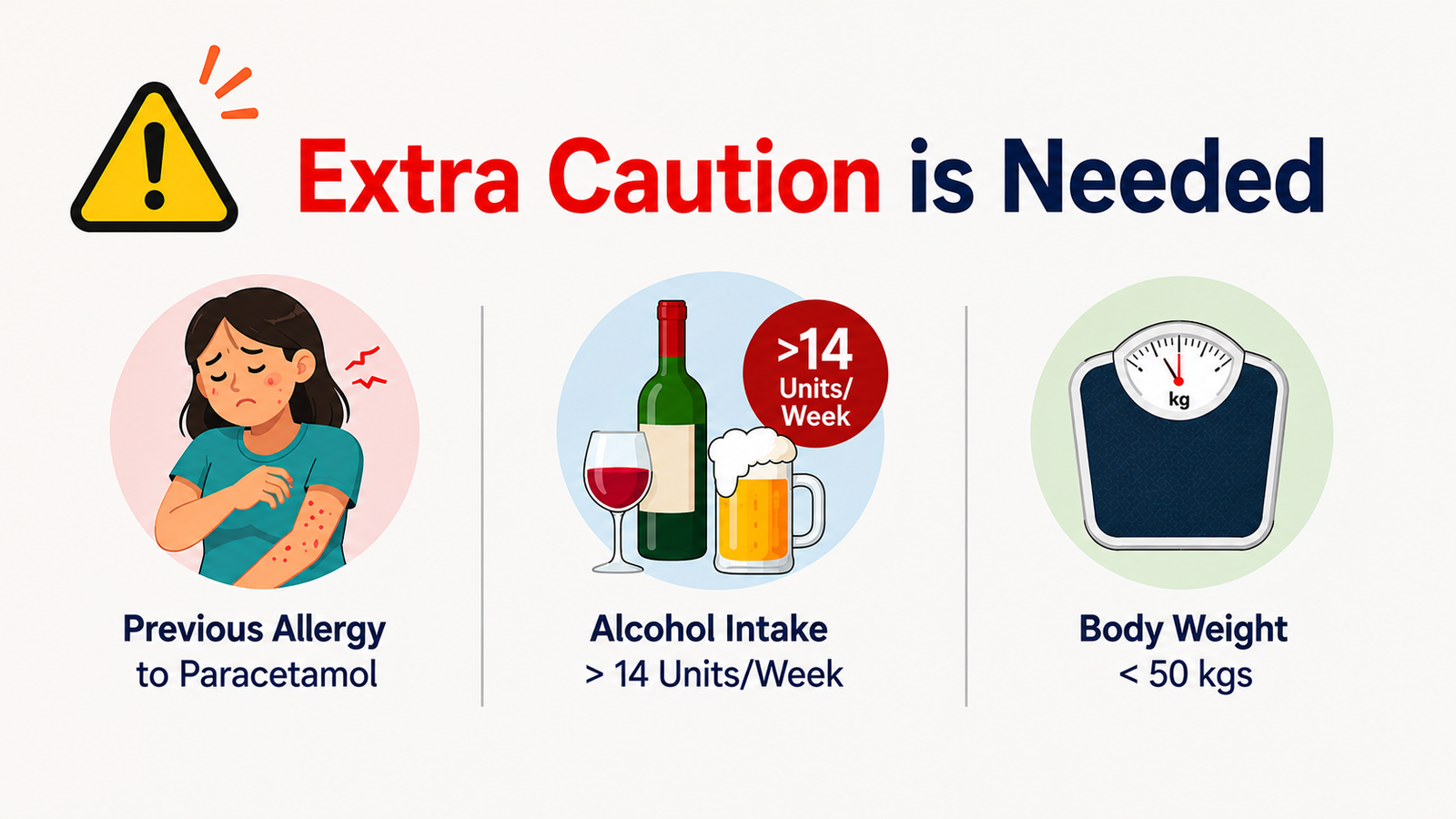
- Paracetamol is generally safe when taken as directed, but the risk of liver damage can increase with:
- Heavy alcohol use — especially with higher doses.
- Fasting or malnutrition may increase liver toxicity risk.
- Liver disease — the liver may process paracetamol less effectively.
- Certain medicines — e.g., carbamazepine (used for Seizures or fits).
- Some herbal supplements — e.g., St. John’s Wort (Used to relieve Anxiety and stress).
- Multiple paracetamol-containing products can lead to accidental overdose.
What precautions should be taken for older people?
- Being older doesn’t automatically mean you need less medication—healthy seniors over 50kg usually don’t require a dose change.
- However, it’s good to keep in mind that some older adults might be weak or have lower body weight, or kidney and liver issues.
- For those at higher risk, starting with a lower dose or taking medicine less frequently might be a wise choice.
The American Geriatric Society suggests that for older adults with liver problems or a history of alcohol misuse, it’s a good idea to cut the maximum dose by 50-75%. This simple adjustment can help ensure their safety and well-being.
Is Paracetamol suitable during pregnancy and breastfeeding?
- Yes — paracetamol is generally regarded as safe during pregnancy and breastfeeding when used at the recommended doses.
- It is a preferred option for pain relief and lowering fever during pregnancy.
- Research shows that taking it in standard doses does not increase the risk of birth defects.
- Furthermore, paracetamol passes into breast milk in small, safe amounts for the baby.
Conclusion
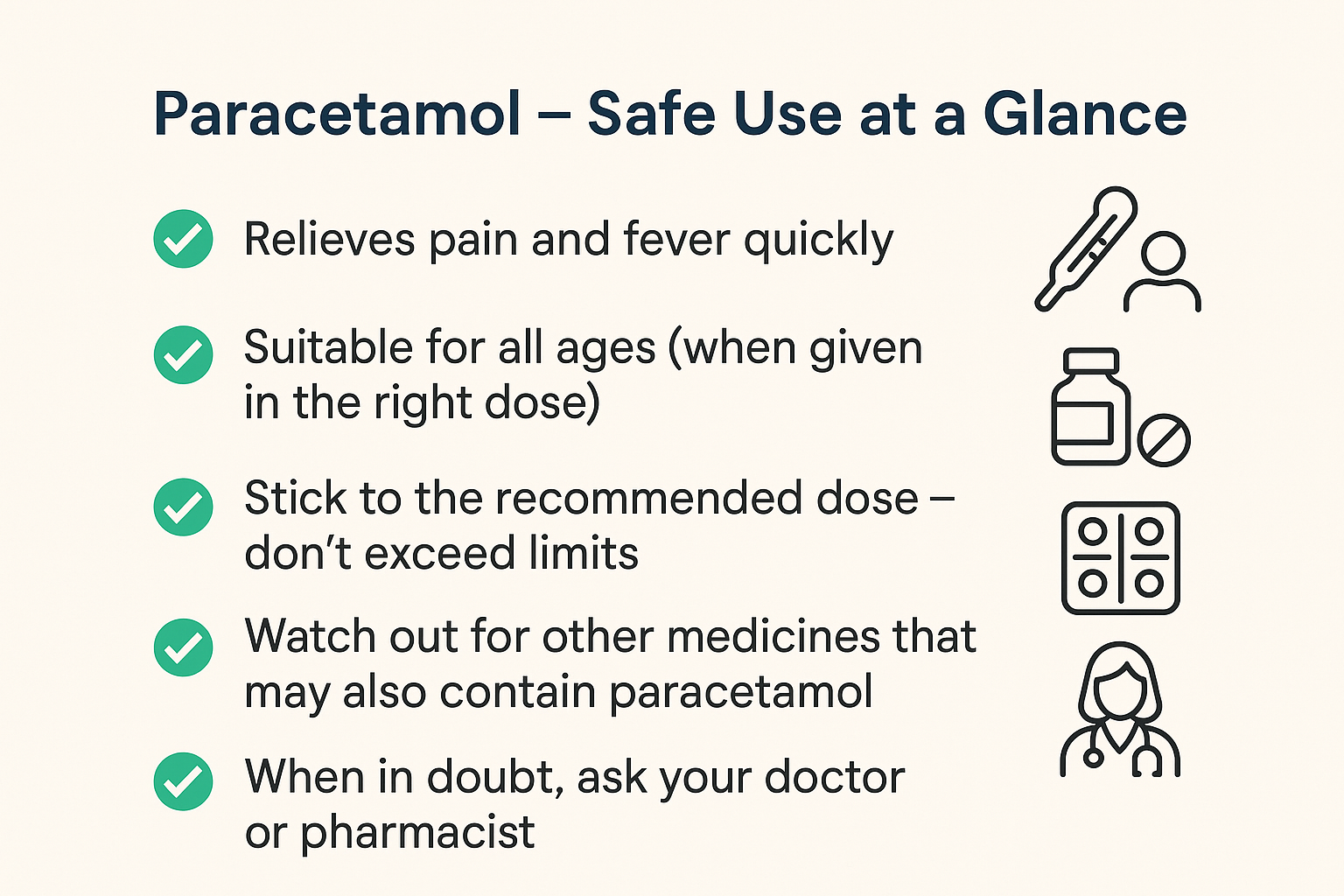
Paracetamol has become a dependable option for easing pain and reducing fever because it is safe for people of all ages when used as directed. Whether you’re dealing with a headache, toothache, cold, or post-vaccination fever, it’s often the first choice for quick relief. Just remember—using it safely is important. Always follow the recommended dose, avoid taking other medicines that also have paracetamol at the same time, and don’t hesitate to ask your doctor or pharmacist if you’re unsure. When appropriately used, paracetamol can be a trustworthy part of your family’s healthcare routine.
Further Reading
- Therapeutic Goods Administration. (2019, August 15). Recommended paracetamol doses. Australian Government Department of Health. https://www.tga.gov.au/news/news/recommended-paracetamol-doses
- National Health Service. (2023). How and when to take paracetamol for adults. https://www.nhs.uk/medicines/paracetamol-for-adults/how-and-when-to-take-paracetamol-for-adults
- National Center for Biotechnology Information. (2018). Paracetamol (acetaminophen). In StatPearls. StatPearls Publishing. https://www.ncbi.nlm.nih.gov/books/NBK482369/
- Drug and Therapeutics Bulletin. (2018). What dose of paracetamol for older people? DTB, 56(6), 69–72. https://dtb.bmj.com/content/56/6/69
- Electronic Medicines Compendium. (2023). Paracetamol 500 mg tablets – Summary of Product Characteristics (SPC). Medicines.org.uk. https://www.medicines.org.uk/emc/product/8080/smpc
- Electronic Medicines Compendium. (2023). Paracetamol 120 mg/5 ml oral suspension – Summary of Product Characteristics (SPC). Medicines.org.uk. https://www.medicines.org.uk/emc/product/5164/smpc
- NHS Inform. (2023). Paracetamol. NHS Scotland. https://www.nhsinform.scot/tests-and-treatments/medicines-and-medical-aids/types-of-medicine/paracetamol/
Disclaimer: The information provided on Medical Pharma Lifestyle Pulse is for educational and informational purposes only and is not intended as medical advice, diagnosis, or treatment. Always consult a qualified healthcare professional before making any decisions about your health, medications, or treatment. Never ignore or delay seeking professional medical advice based on information you have read on this website. While we strive to provide accurate and up-to-date information, we do not guarantee the completeness or accuracy of the content. For more information, please read our full Medical Disclaimer.