
Table of Contents
Introduction
Have you ever found yourself staring at the medicine strips, trying to make sense of the jumble of letters and numbers? You’re not alone! Life can get busy, and sometimes we pop a pill without fully understanding what we’re taking. But reading a strip the right way is so much more than just spotting the drug—it’s a vital part of keeping yourself safe and making sure your treatment works well.
From checking the expiry date to understanding how much to take and what side effects might occur, every detail on that small foil pack really counts. In this post, we’ll share everything you need to know to read your medicine strips with confidence and take charge of your health!
Key Information to Check
1. Brand name
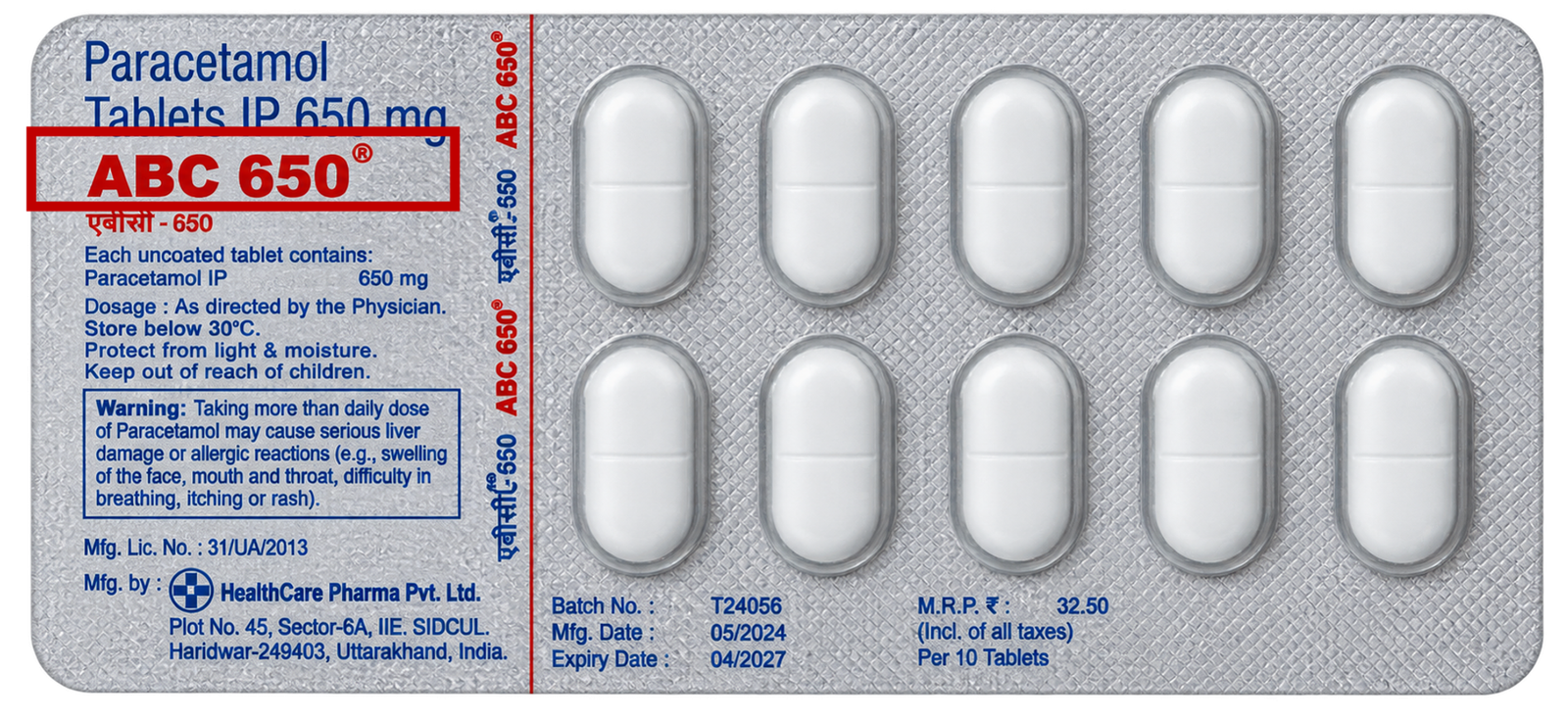
- The most noticeable name on the strip, often in a bigger font size.
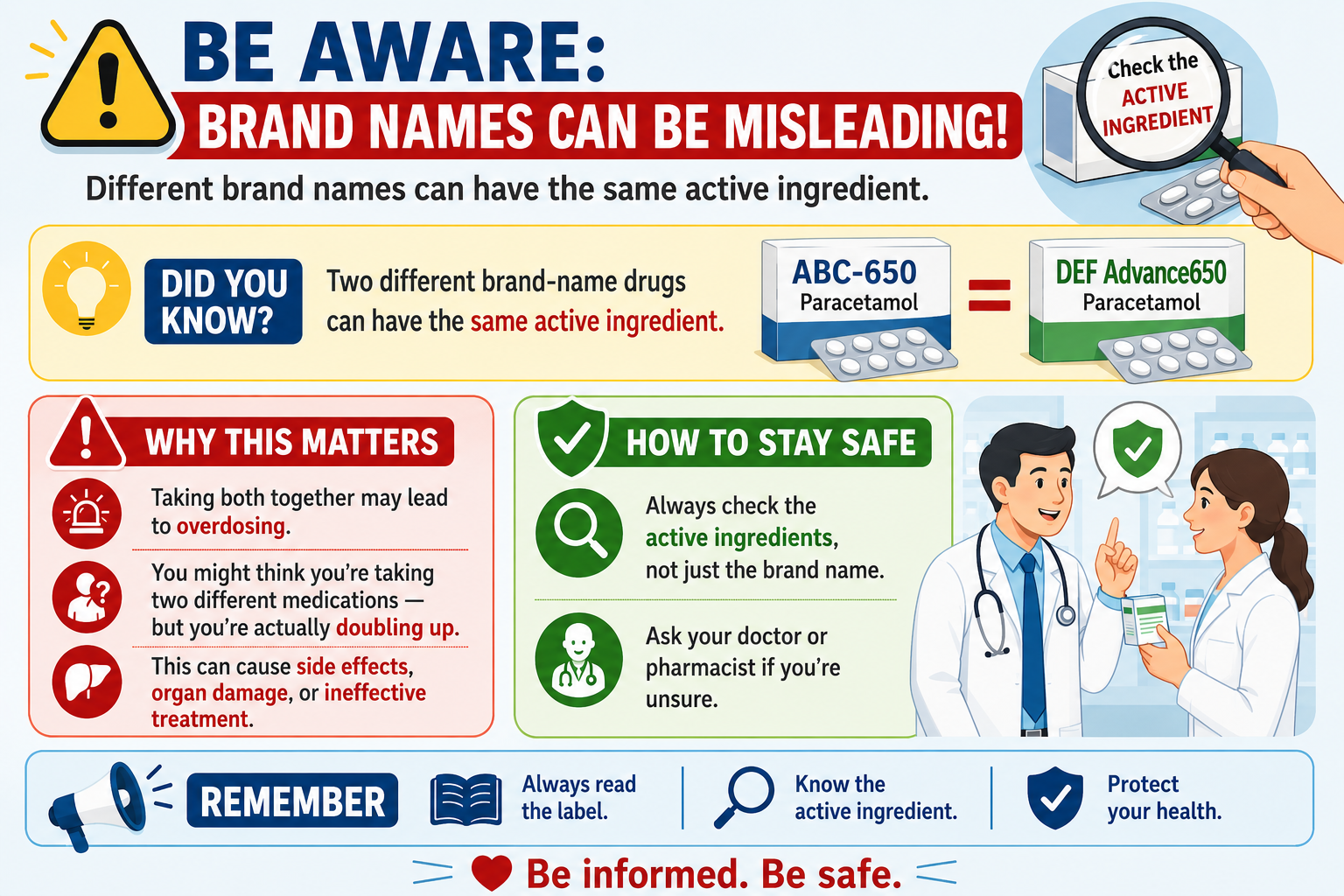
2. Active ingredients
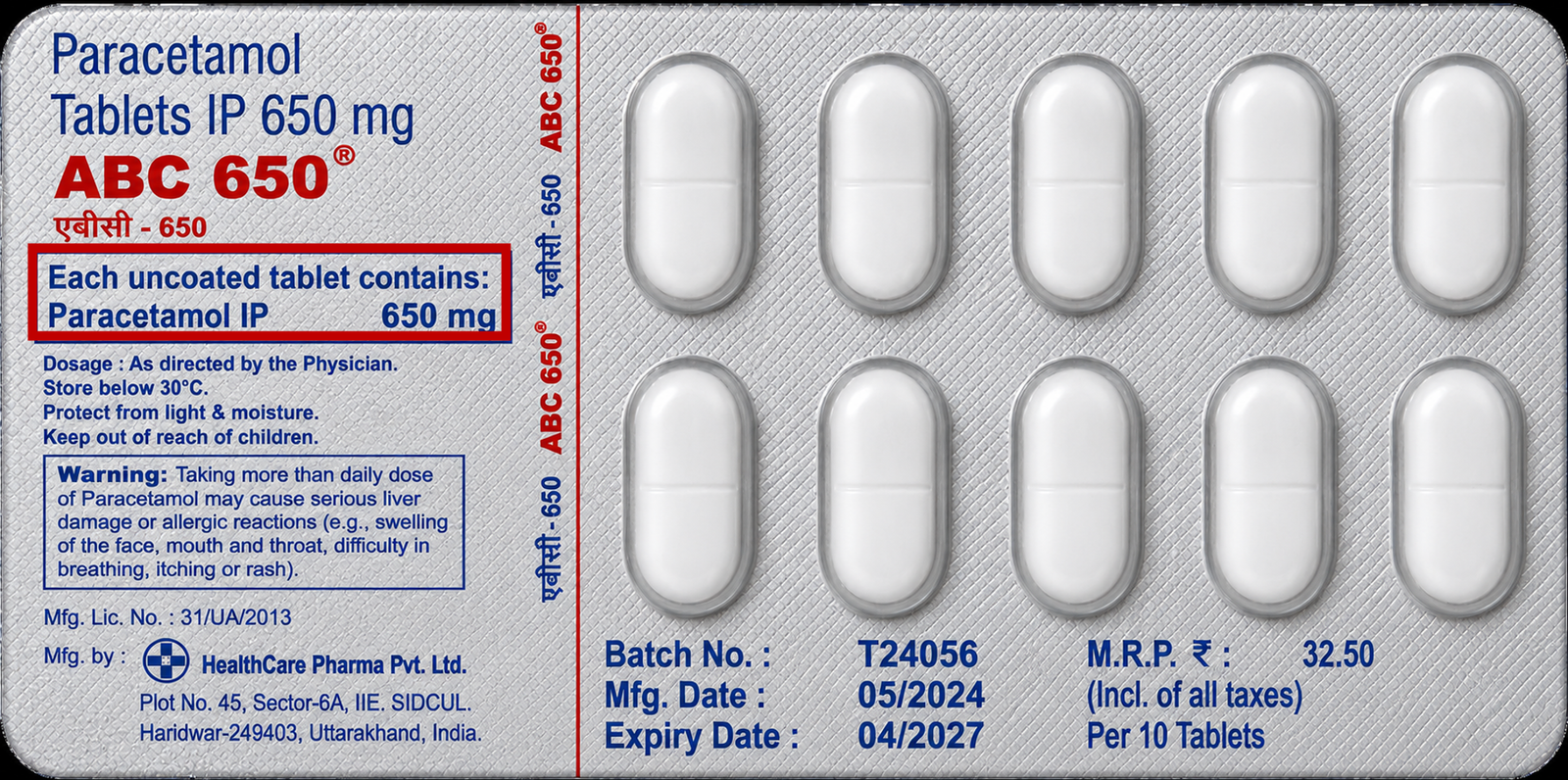
- Identify a smaller font, often positioned right above or near the brand name.
- It indicates the scientific or chemical name of the active ingredient.
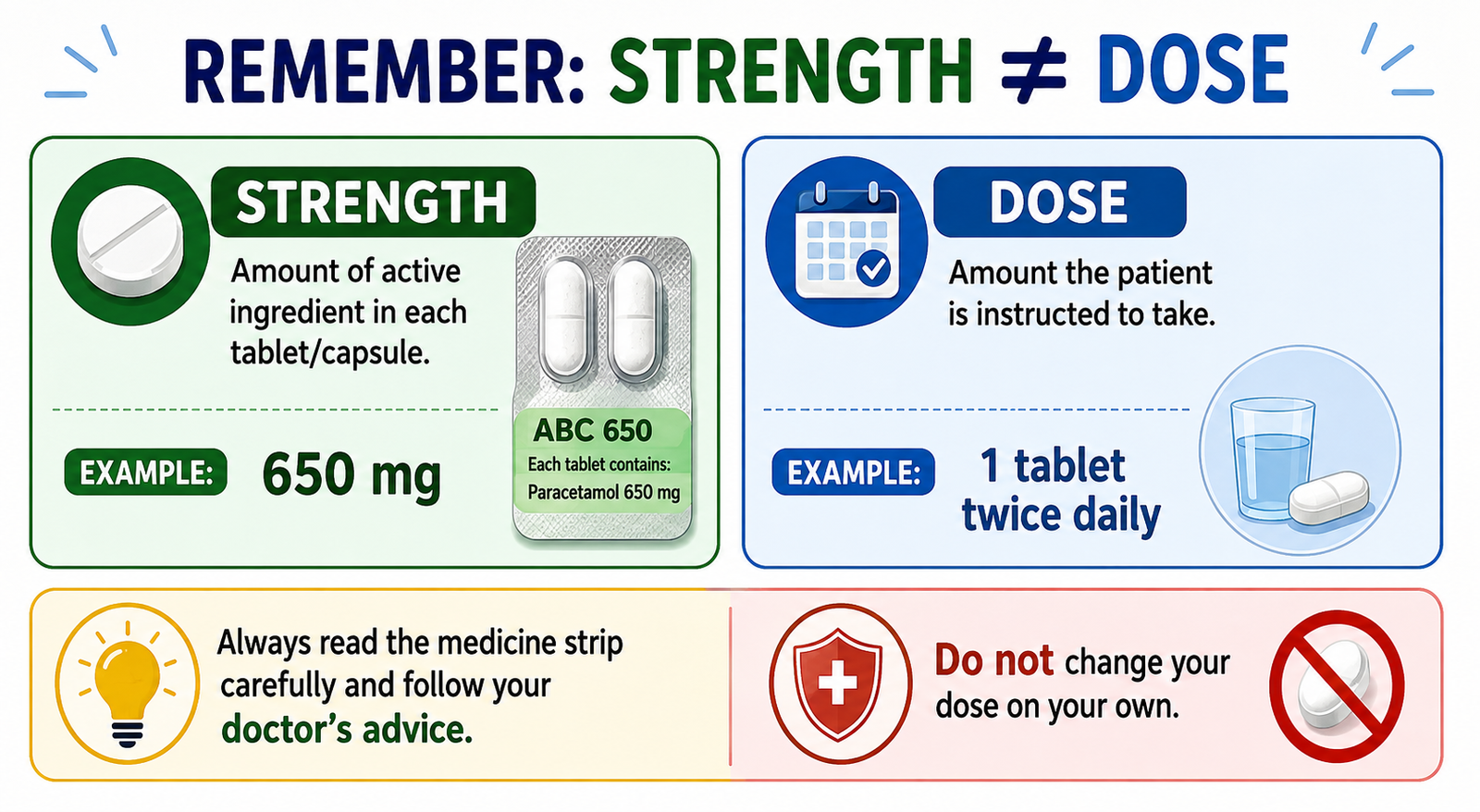
3. Strength
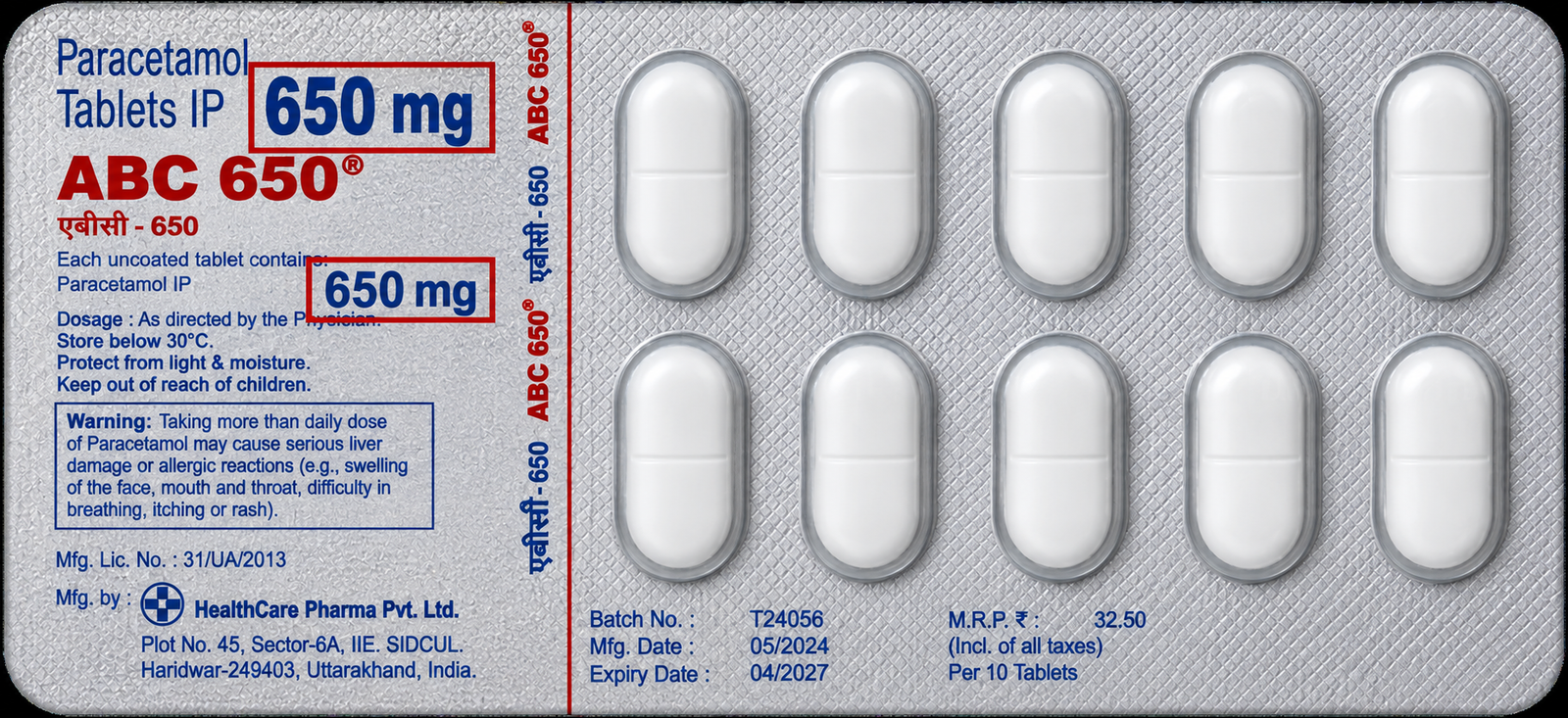
- It indicates the amount of the active ingredient in each tablet or capsule.
- Expressed in milligrams (mg), grams (g), or international units (IU).
- It will often be next to the generic name or brand name.
4. Formulation
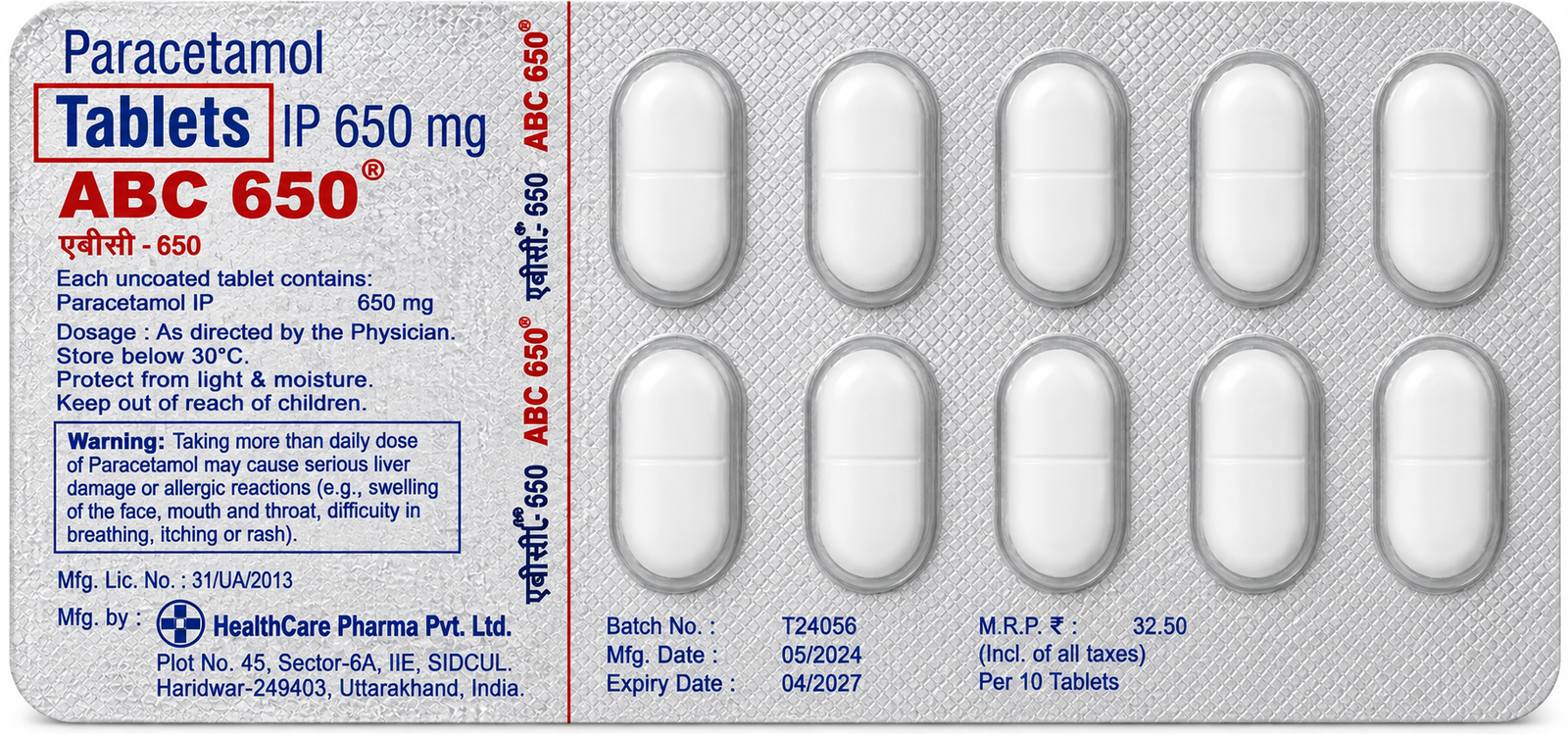
- The strip will indicate the form of the medicine, such as tablets, capsules, or soft gel capsules.
5. Check for Special Formulations
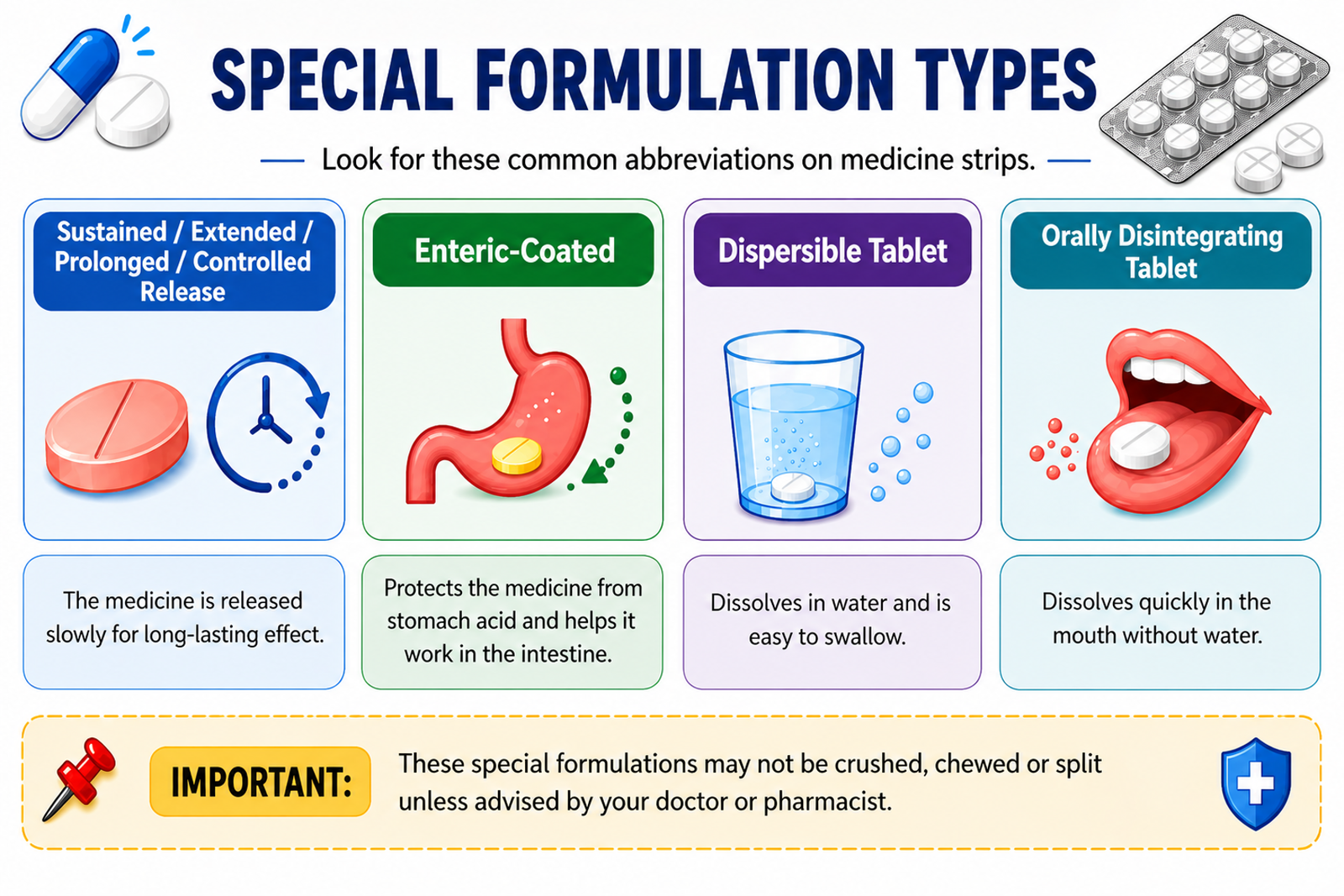
Some medicines have special formulations designed to release the active ingredient differently or make them easier to take. Look for abbreviations such as:
- SR / ER / XR / CR – These indicate sustained-, extended-, prolonged-, or controlled-release formulations that release the medicine gradually over time.
- EC – Enteric-coated tablets have a special coating that helps the tablet pass through the stomach before dissolving.
- DT – A dispersible tablet is designed to be dispersed in water before taking, according to the instructions provided.
- ODT – An orally disintegrating tablet is designed to dissolve or disintegrate in the mouth.
6. Special Warnings
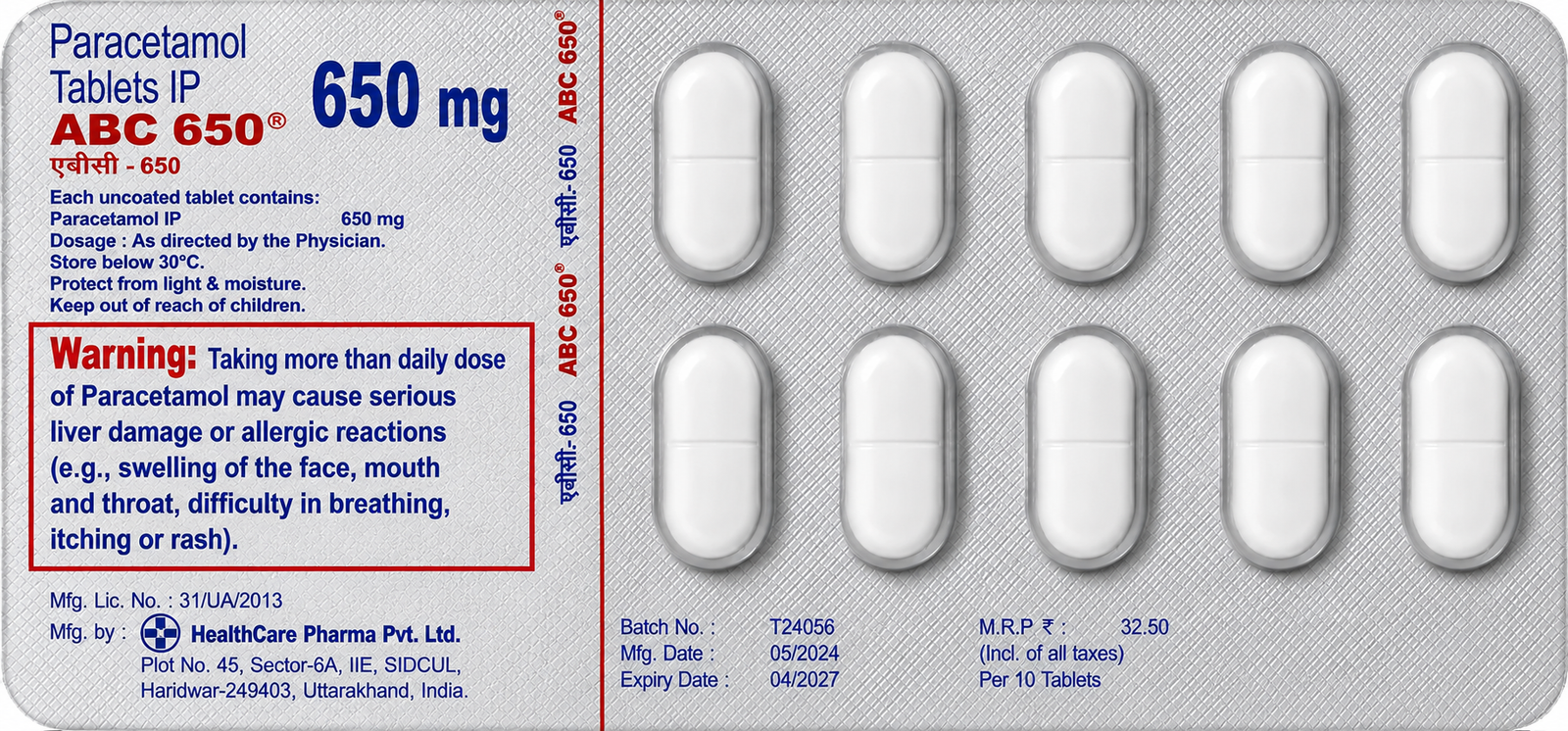
- Some medicines carry a specific prescription warning on the label.
- These can feature warnings about potential side effects, drug interactions with other medications, scenarios where the drug should be avoided, or special groups (e.g., pregnant women and children).
- These medicines should be used only as directed by a qualified healthcare professional.
7. Storage instructions
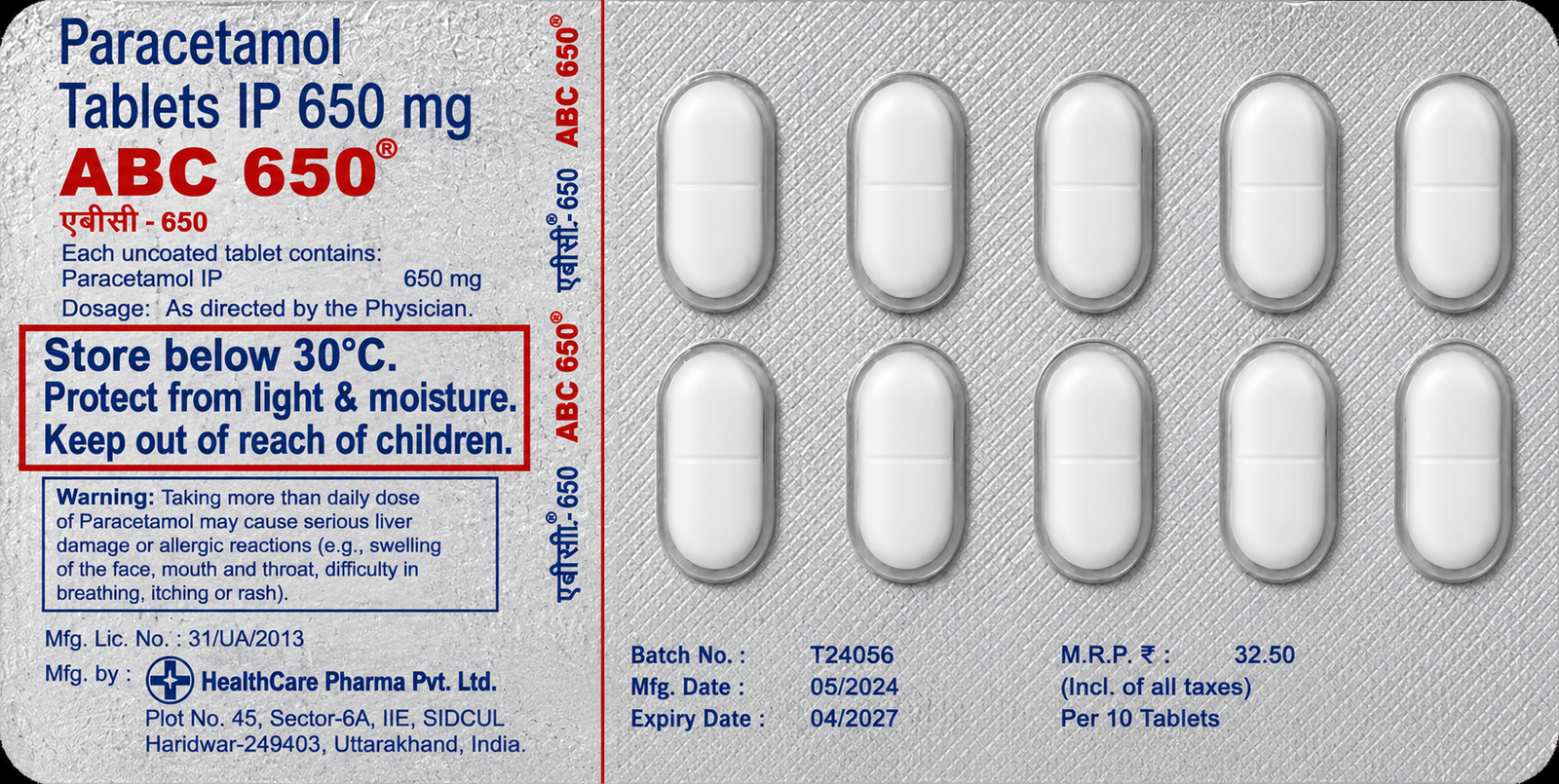
- The correct storage of medications is essential.
- Improper storage can affect a medicine’s quality, stability, and effectiveness. Always follow the storage instructions provided on the pack.
- Always check the storage instructions on the back.
- Look for phrases like “Store in a cool, dry place,” “Protect from light,” “Do not refrigerate,” or specific temperature ranges.
8. Decode the Colored Lines
🔴 Red Line = Schedule H or Schedule H1
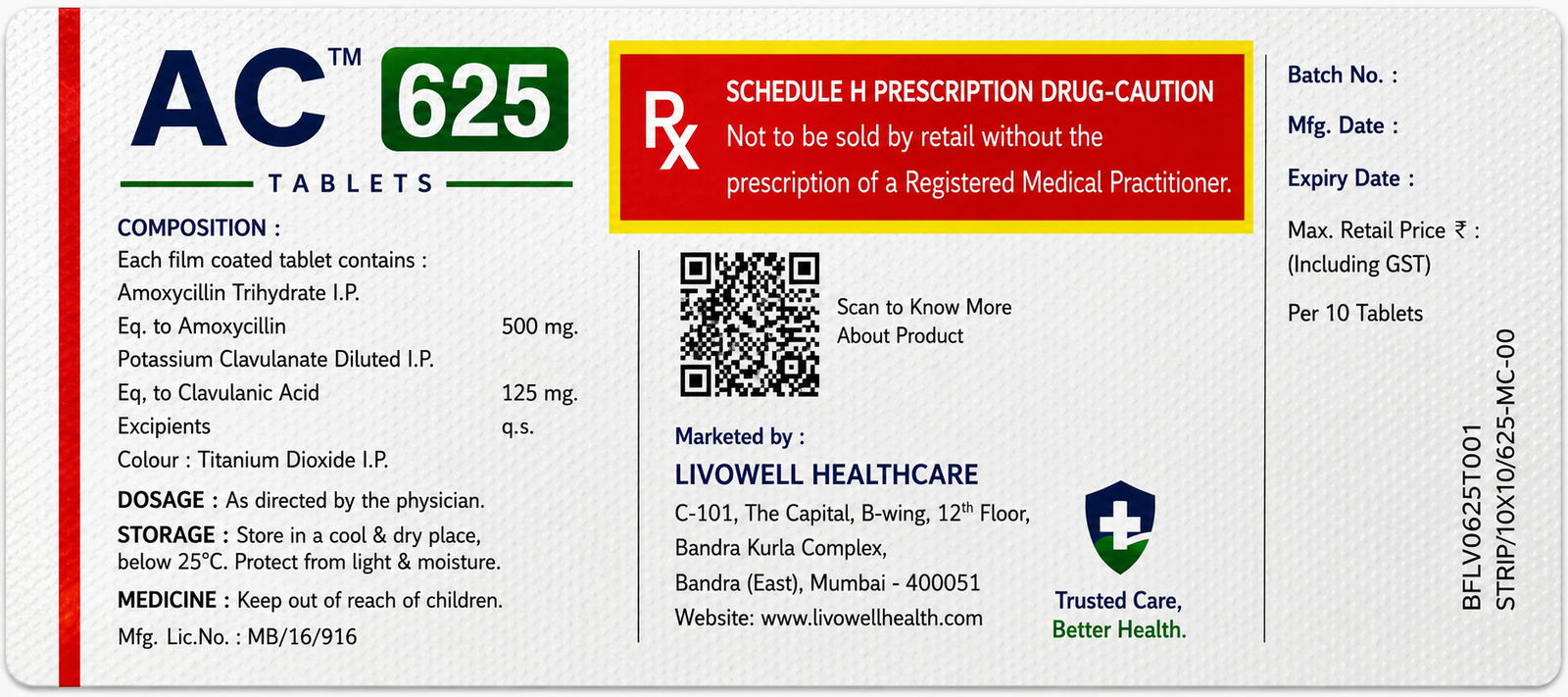
- A red vertical line or stripe on a medicine strip is a visual warning associated with prescription medicines, particularly those covered under Schedule H or Schedule H1 in India.
- It indicates that the drug should be sold and used only with a valid doctor’s prescription.
- The red line is also widely associated with the Ministry of Health’s Red Line Campaign, which promotes responsible use of prescription medicines like antibiotics.
- Example: Antibiotics like amoxicillin-clavulanic acid, NSAIDs (Painkillers) like Ibuprofen.
🔵 Blue Line = Schedule G Medicine
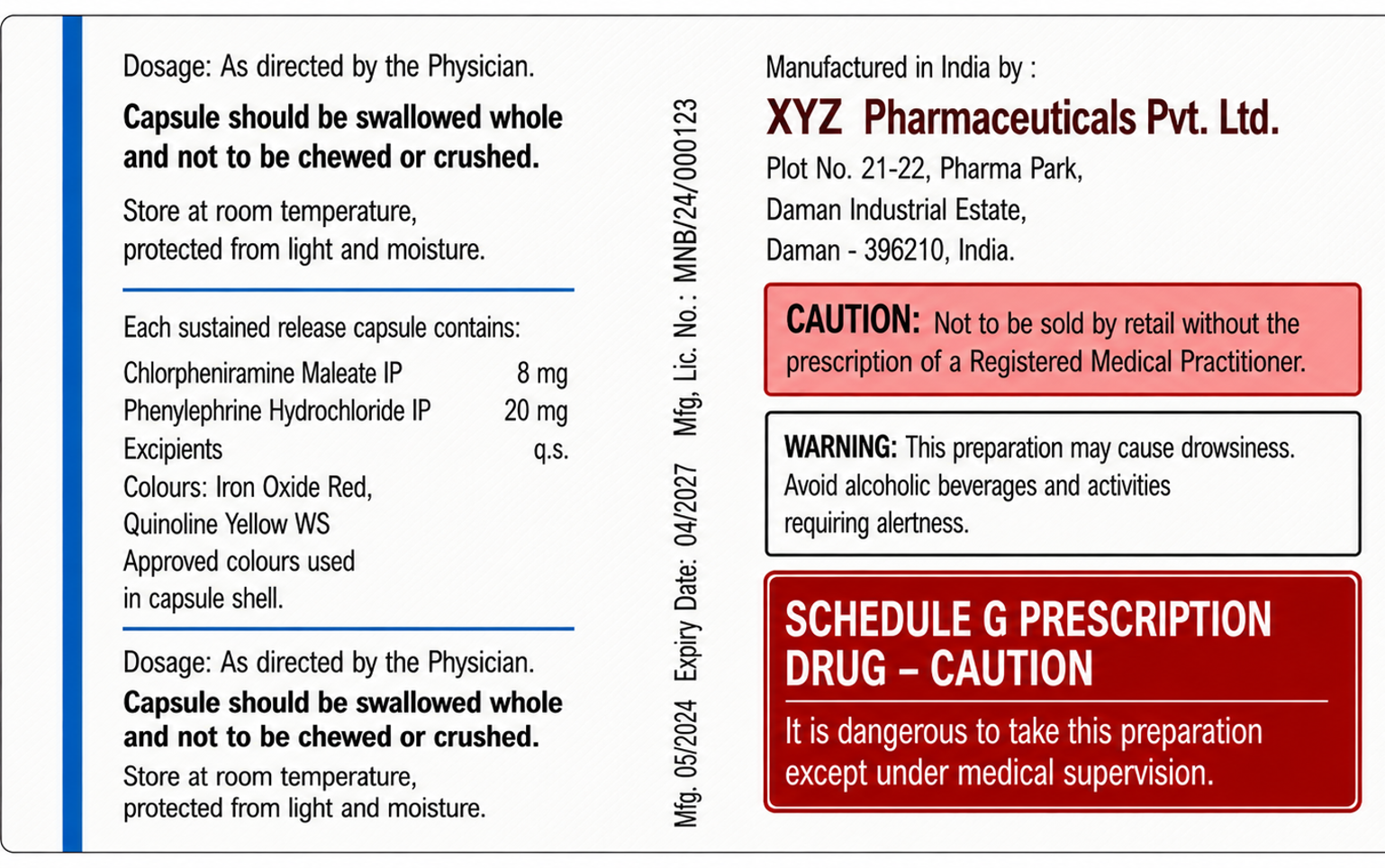
- These medications must be used strictly under medical supervision and are frequently prescribed for long-term treatments
- Typically, it carries the label warning: “Caution: It is dangerous to take this preparation except under medical supervision.”
- Example: Antihistamine like Chlorpheniramine, Antidiabetic medicines like Metformin.
9. Expiry Date
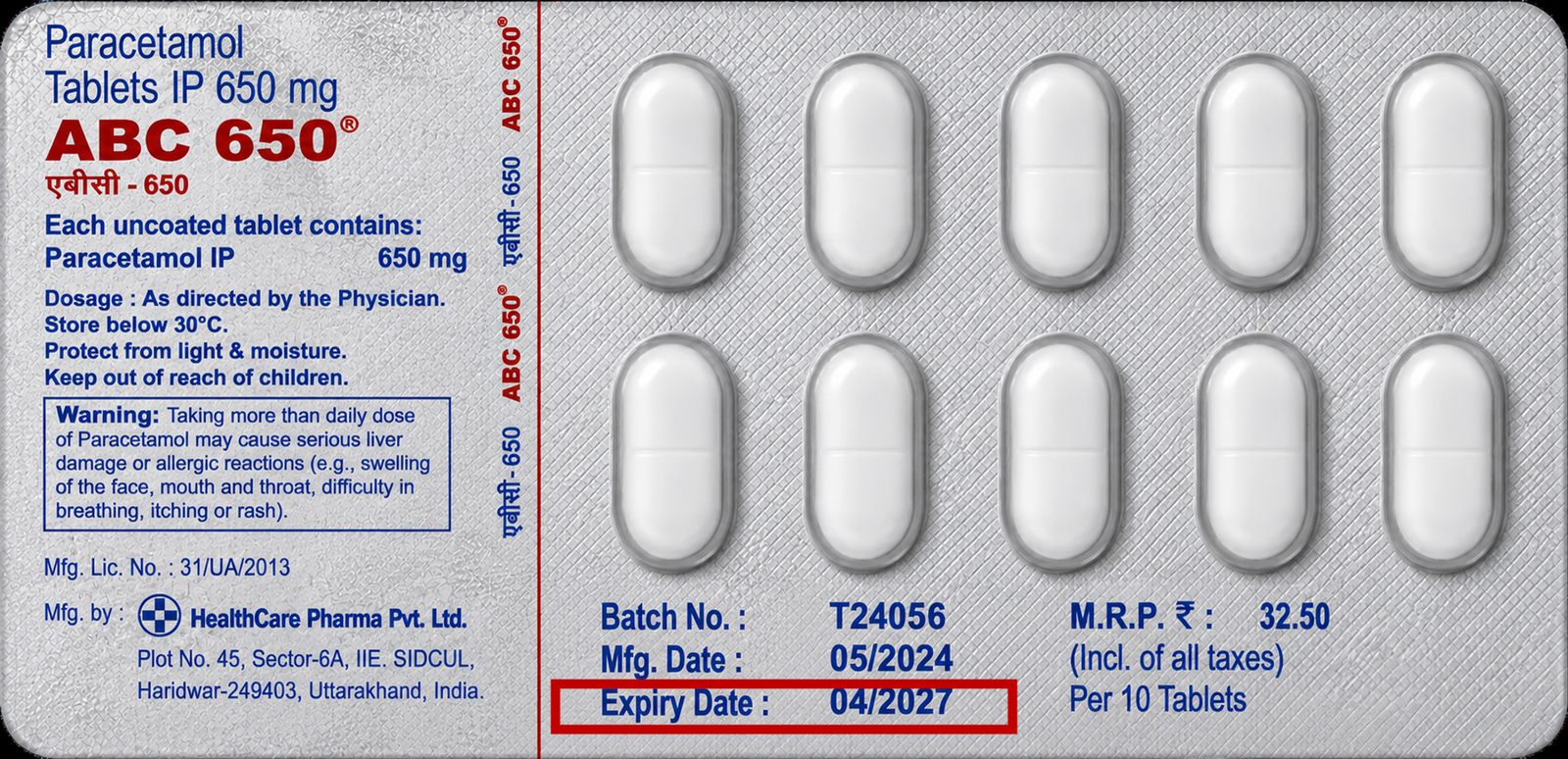
- Look for “EXP,” “Expiry Date,” “Expires On,” or a similar abbreviation, often followed by a month and year. It’s crucial never to consume expired medication.
10. Additional Information to Check
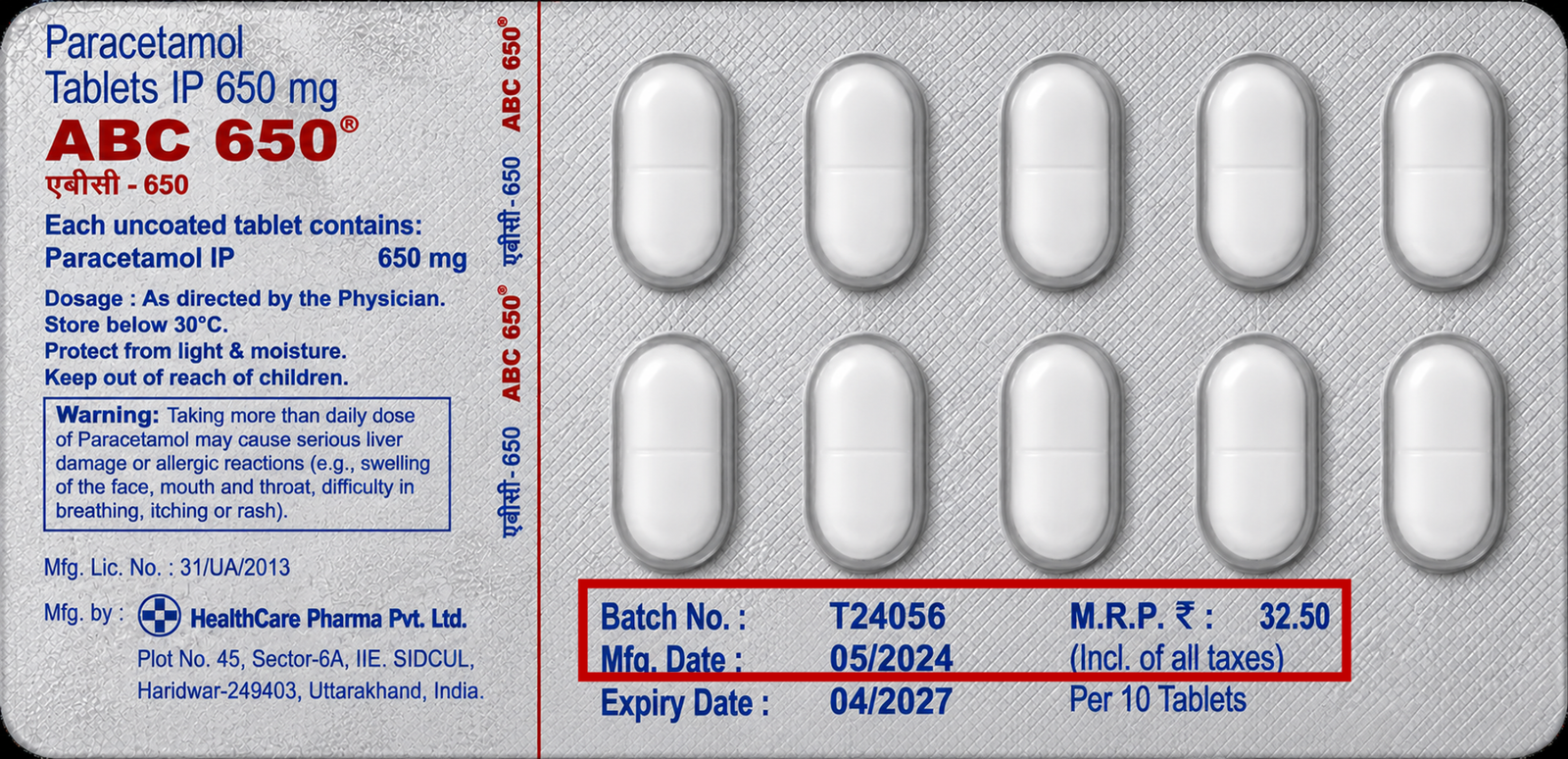
- Batch number: A unique code is assigned to a specific quantity of drug produced together in a single manufacturing run under uniform conditions. Search for abbreviations like “Batch No.,” “B. No.,” “Lot No.,” or simply “Batch.”
- Manufacturing date—it’s usually printed alongside the expiry date and the batch number. Search for abbreviations like “Mfg. Date,” “Mfd. Date,” “Date of Mfg.,” or “Manufacturing Date.”
- Maximum retail price (MRP)-The highest price at which the drugs can be sold to the consumer. It is usually printed on the strip, sometimes near the expiry date or batch number.
Key Tips for Taking Medicines Safely
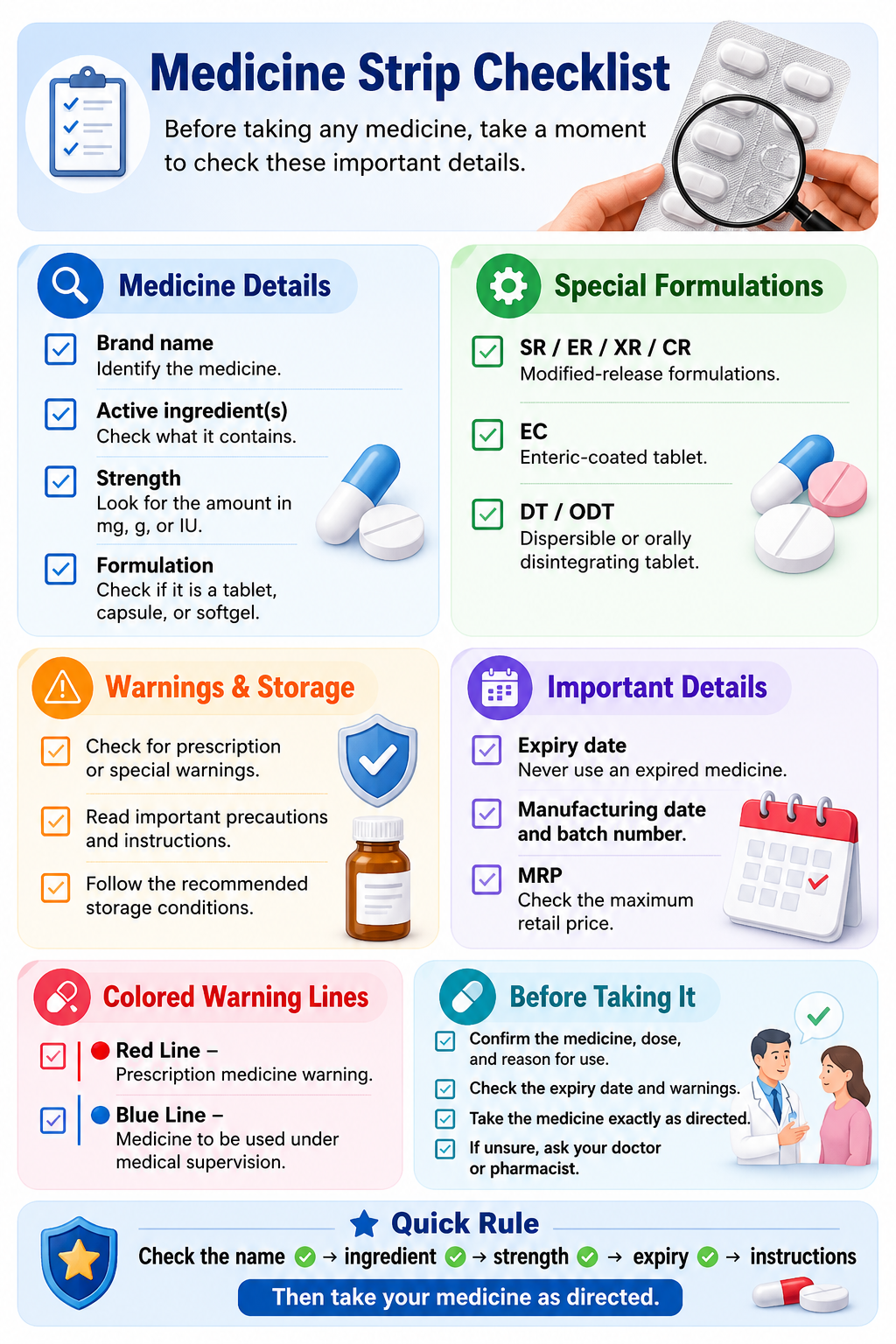
☑️ Always confirm with your doctor or pharmacist the name of the medicine, active ingredient, indication, expiry date, and side effects or warnings.
☑️Ask your doctor for the recommended dose, amount to take, and frequency of administration.
☑️Take prescription medicines as directed. If you miss a dose or want to stop a medicine, ask your doctor what to do.
☑️ Consult your healthcare provider before discontinuing your medication.
☑️ Don’t use medicine in the dark where you can’t see what you are taking.
☑️Ask your doctor or pharmacist about the proper disposal of unused medications.
Further Reading
- Food and Drug Administration. (2024, October 25). Over-the-counter drug facts label. U.S. Department of Health and Human Services. https://www.fda.gov/drugs/understanding-over-counter-medicines/over-counter-drug-facts-label
- Cleveland Clinic. (2020, December 22). Prescription medication labels: How to read. ClevelandClinic.org. https://my.clevelandclinic.org/health/drugs/15212-prescription-medication-labels-how-to-read
- WebMD. (2025, June 26). How to read drug labels. WebMD. https://www.webmd.com/a-to-z-guides/ss/slideshow-how-to-read-drug-labels
Disclaimer: The information provided on Medical Pharma Lifestyle Pulse is for educational and informational purposes only and is not intended as medical advice, diagnosis, or treatment. Always consult a qualified healthcare professional before making any decisions about your health, medications, or treatment. Never ignore or delay seeking professional medical advice based on information you have read on this website. While we strive to provide accurate and up-to-date information, we do not guarantee the completeness or accuracy of the content. For more information, please read our full Medical Disclaimer.



Pingback: Easy Guide to Stocking Essential Medicines at Home!! -