
Table of Contents
Introduction
Drug-induced liver injury (DILI) has become an important concern as the use of prescription medicines, over-the-counter drugs, and herbal products continues to increase. While most medicines are safe when used correctly, some can potentially harm the liver. In rare cases, drug-related liver damage can become severe, leading to Acute liver failure, the need for a liver transplant, or even life-threatening complications.
One important contributor to preventable medicine-related harm is self-medication, which is widely practiced, particularly in developing countries such as India. Although self-medication may be useful for certain minor conditions or first-aid situations, inappropriate or prolonged use can cause serious health problems and may even mask the symptoms of an underlying disease. Therefore, using medicines responsibly, following recommended doses, and seeking medical advice when needed are essential.
What Are the Different Types of Drug-Induced Liver Injury?
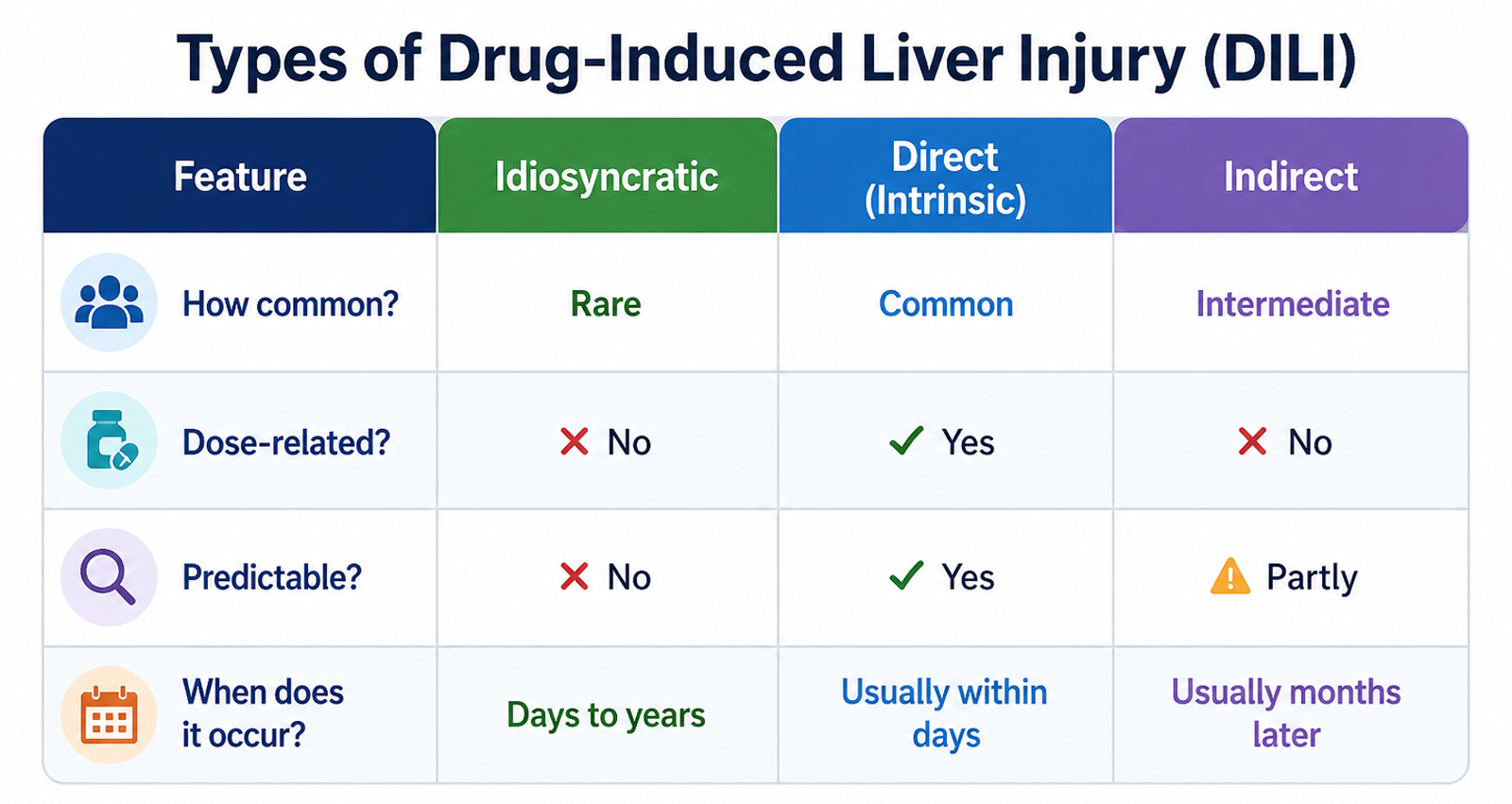
Idiosyncratic
- Occurs in very few people: about 1 in 1,000 to 1 in 1 million exposed individuals.
- Usually unpredictable and not clearly dose-dependent.
- Symptoms may develop weeks to months later, depending on the drug and mechanism.
Direct (Intrinsic)
- Predictable and dose-dependent.
- Can affect many exposed individuals when a threshold dose or duration of exposure is exceeded.
- Symptoms usually appear within hours to days.
- Severity generally depends on the dose taken.
Indirect
- A medicine may not damage the liver directly but can cause liver injury indirectly.
- For example, by changing the immune response or reactivating a hidden infection such as hepatitis B.
- Generally not dose-dependent, similar to idiosyncratic.
- Usually develops after a week to a month.
Who Is at Higher Risk of Drug-Induced Liver Injury?
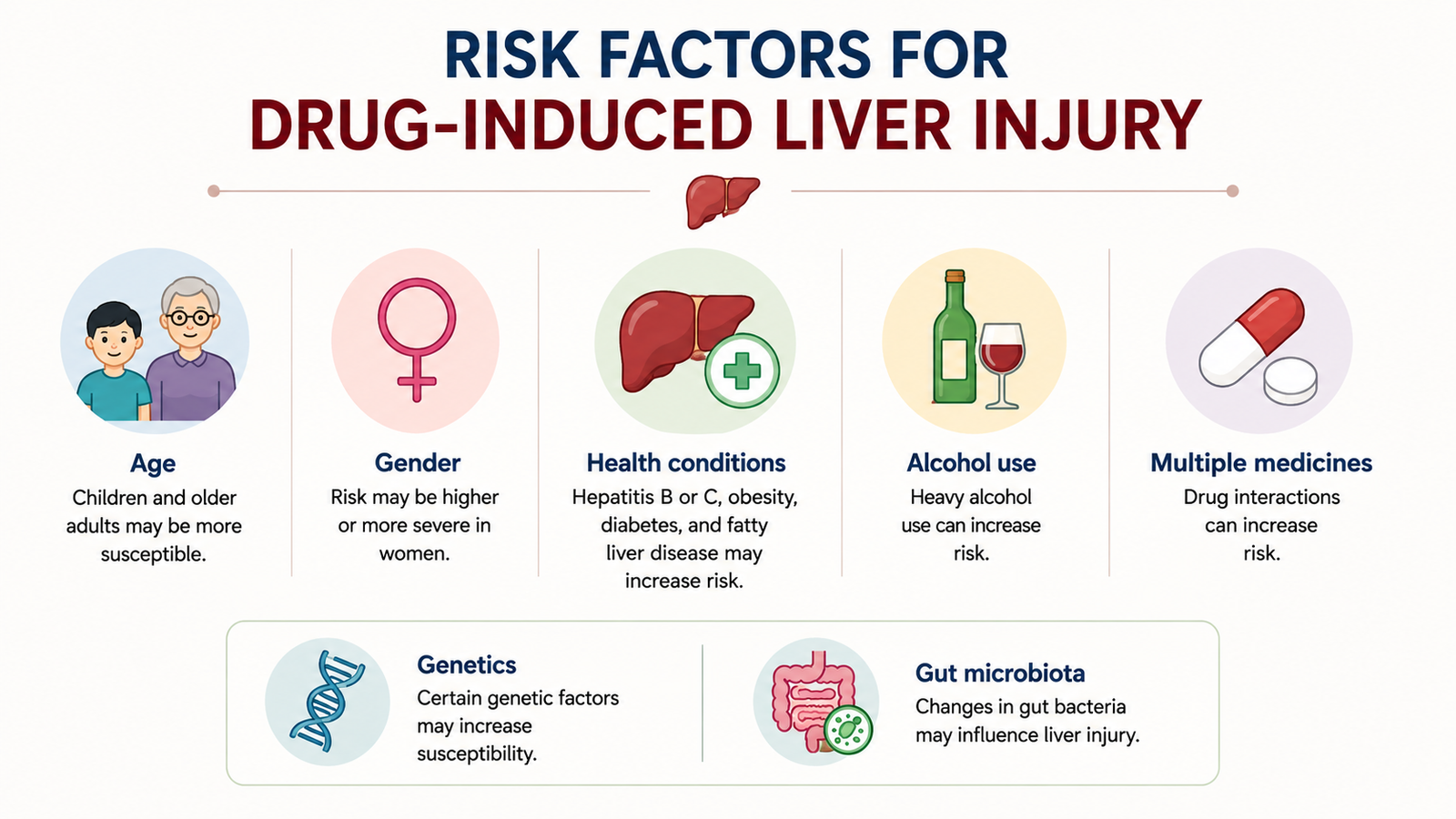
- Certain patient, lifestyle, and drug-related factors may increase the risk:
- Age: Children and older adults may be more susceptible.
- Gender: Some forms may occur more frequently or be more severe in women.
- Health conditions: Hepatitis B or C, obesity, diabetes, and fatty liver disease may increase risk.
- Alcohol: Heavy alcohol use can increase the risk of liver damage.
- Nutrition: Malnutrition or overnutrition may contribute.
- Multiple medicines: Drug interactions can increase risk.
- Genetics: Certain genetic factors may increase susceptibility.
- Gut microbiota: Changes in gut bacteria may also influence liver damage.
Which medicine is a classic example of direct liver injury?
- Paracetamol (acetaminophen) is a common medicine used for pain and fever.
- It is a classic example of a medicine that can cause liver damage when taken in excessive doses.
- Paracetamol overdose may be accidental or intentional.
- Severe overdose can lead to acute liver failure and, in some cases, the need for a liver transplant.
- Many combination medicines also contain paracetamol, increasing the risk of accidental overdose.
- Always check medicine labels before taking more than one product containing paracetamol.
What Are the Causes of Drug-Induced Liver Injury Globally?
- Worldwide, amoxicillin-clavulanate is a common cause of idiosyncratic drug-induced liver injury.
- Paracetamol overdose is a leading cause of acute liver failure in adults in the United States.
What are the Causes of Drug-Induced Liver Injury in India?
The idiosyncratic form constitutes ~99% of all liver damage cases in India. The common causes, as per the Indian Network of Drug‐Induced Liver Injury, are listed below.
Anti-Tuberculosis (TB) Drugs
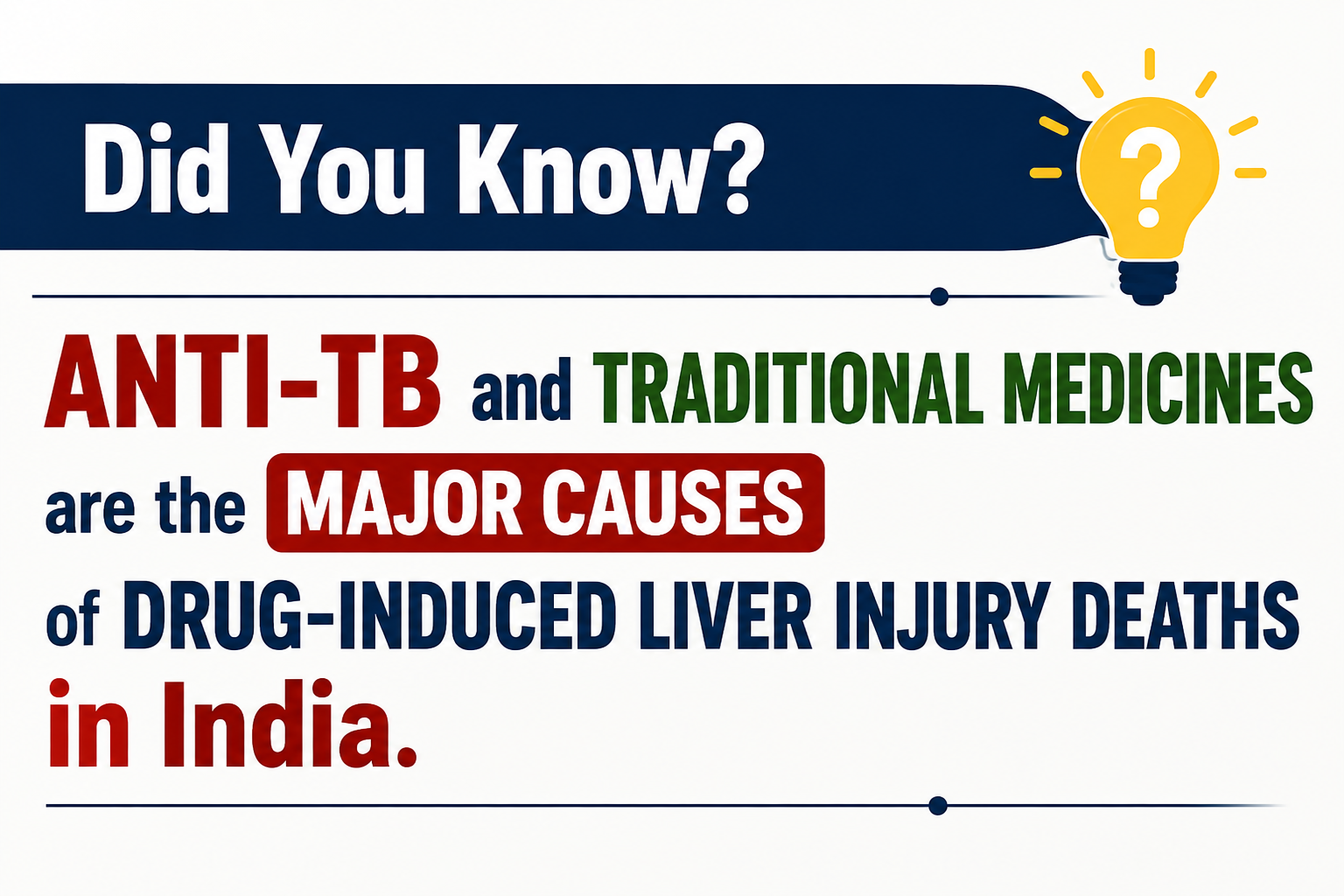
- Anti-TB Drugs are the Leading cause of drug-induced liver damage and acute liver failure in India.
- Usually occurs within the first 2 months of treatment.
- The widespread use of combination anti-TB therapy, particularly isoniazid, rifampicin, and pyrazinamide, increases the risk of liver toxicity
- Drug interactions, high doses, malnutrition, and Genetic factors may contribute.
Traditional and Complementary Medicines
- Ayurveda, Unani, Siddha, and Homeopathy are widely used in India—and sometimes taken alongside modern medicines.
- But “natural” or traditional does not always mean risk-free. Some preparations may contain undisclosed ingredients, contaminants, or heavy metals that can potentially harm the liver.
- Several commonly used herbs and herbal extracts—including Ashwagandha, Aloe vera, Guggul, Puncture vine, Turmeric, Gotu-kola, Bakuchi, Senna, Noni, Malabar tamarind, and Gurmar—have been associated with various forms of liver injury.
- Taking multiple herbal products or combining them with prescription medicines may further increase the risk.
Antiepileptic Drugs
- Older antiepileptics such as phenytoin, carbamazepine, and phenobarbitone can cause liver damage.
- However, with the greater use of newer drugs with a better liver safety profile, the incidence of liver damage is decreasing.
Non-TB Antimicrobials
- Non-TB antimicrobials constitute the fourth-largest cause of liver damage.
- The top three drugs in this group are:
Which Medicines Can Cause Indirect Liver Injury?
- Indirect liver injury can occur with some cancer medicines, including immunotherapies, monoclonal antibodies, and targeted therapies.
- Examples
- Cancer immunotherapy: ipilimumab, nivolumab, pembrolizumab
- Monoclonal antibody Therapy: rituximab
- Targeted cancer medicines: imatinib, lapatinib, regorafenib
What Are the Warning Signs of Drug-Induced Liver Injury?
- Liver damage due to drugs often causes no symptoms. If symptoms occur, they can vary from person to person and may include:
- In severe cases, it can lead to liver failure.
How Is Drug-Induced Liver Injury Diagnosed?
- There is no single test. Doctors usually diagnose it by:
- Reviewing medicines: Checking which medicines or supplements the person is taking.
- Blood tests: Liver enzymes, bilirubin, international normalized ratio, and complete blood count may be checked.
- Ruling out other causes: Tests may be done for viral hepatitis and autoimmune liver disease.
- Imaging: Ultrasound or MRI may be used to check for other problems.
- Liver biopsy: Usually not needed, but may help when the diagnosis is unclear.
How Can Drug-Induced Liver Injury Be Prevented?
- Prevention is key: Treatment options for liver damage caused by medicines are limited, so preventing liver injury is important.
- Screen medicines carefully: Potentially harmful drugs are tested for liver safety before clinical trials.
- Assess patient risk: Consider individual risk factors before starting medicines that may harm the liver.
- Monitor high-risk patients: Regular liver function tests can help detect liver injury early.
- Use safer alternatives: Avoid or replace known liver-harmful medicines when appropriate, especially in people with chronic liver disease.
- Limit unsafe use: Restricting access to or pack sizes of certain medicines can reduce overdose-related liver injury.
- Educate patients: Encourage patients to report symptoms and follow monitoring advice.
- Report cases: Reporting helps identify patterns and improve prevention and patient safety.
How Is Drug-Induced Liver Injury Managed?
- Do not restart the suspected medicine unless advised by your doctor.
- Maintain adequate fluids, nutrition, and electrolyte balance.
- Repeat tests as advised by your doctor to track recovery.
- Avoid alcohol.
- Eat a balanced diet.
- Get adequate rest.
- Avoid self-medication and medicines or supplements that may further harm the liver.
Key Takeaways
- Drug-induced liver injury can be caused by prescription medicines, over-the-counter drugs, herbal products, and dietary supplements.
- Anti-TB drugs are a leading cause of drug-induced liver injury in India.
- Natural or traditional products are not always liver-safe.
- Paracetamol overdose is a classic example of predictable, dose-related liver injury.
- Drug-induced liver injury often causes no symptoms.
- Severe cases can lead to acute liver failure, although this is uncommon.
- Early recognition and appropriate medical management are important.
- Do not self-medicate or restart a suspected medicine without medical advice.
- The best way to manage is to prevent it, detect it early, and act quickly.
Further Reading
- Rashid, M., Chhabra, M., Kashyap, A., Undela, K., & Gudi, S. K. (2020). Prevalence and predictors of self-medication practices in India: A systematic literature review and meta-analysis. Current Clinical Pharmacology, 15(2), 90–101. https://doi.org/10.2174/1574884714666191122103953
- Chaudhary, V., Kumari, S., Sharma, B., Ahuja, C., Kishore, H., & Pal, B. (2025). Prevalence and patterns of self-medication practices in India: A systematic review and meta-analysis. Medical Journal Armed Forces India, 81(4), 377–385. https://doi.org/10.1016/j.mjafi.2024.11.008
- Hosack, T., Damry, D., & Biswas, S. (2023). Drug-induced liver injury: A comprehensive review. Therapeutic Advances in Gastroenterology, 16, 17562848231163410. https://doi.org/10.1177/17562848231163410
- Wang, Y., & Xie, W. (2023). Drug-induced liver injury: An overview and update. Gastroenterology & Endoscopy, 1(2), 102–109. https://doi.org/10.1016/j.gande.2022.11.005
- Kozielewicz, D. M., Stalke, P., & Skrzypek, J. (2025). Drug-induced liver injury. Part I: Classification, diagnosis and treatment. Clinical and Experimental Hepatology, 11(1), 25–33. https://doi.org/10.5114/ceh.2025.148329
- Devarbhavi, H., Joseph, T., Sunil Kumar, N., Rathi, C., Thomas, V., Prasad Singh, S., Sawant, P., Goel, A., Eapen, C. E., Rai, P., Arora, A., Leelakrishnan, V., Gopalakrishnan, G., Vardhan Reddy, V., Singh, R., Goswami, B., Venkataraman, J., Balaraju, G., Patil, M., … Shalimar. (2021). The Indian Network of Drug-Induced Liver Injury: Etiology, clinical features, outcome and prognostic markers in 1288 patients. Journal of Clinical and Experimental Hepatology, 11(3), 288–298. https://doi.org/10.1016/j.jceh.2020.11.002
- Devarbhavi, H. (2021). Drug-induced liver injury unique to India. Clinical Liver Disease, 18(3), 108–110. https://doi.org/10.1002/cld.1120
- Tiwari, V., Shandily, S., Albert, J., Mishra, V., Dikkatwar, M., Singh, R., Sah, S. K., & Chand, S. (2025). Insights into medication-induced liver injury: Understanding and management strategies. Toxicology Reports, 14, 101976. https://doi.org/10.1016/j.toxrep.2025.101976
- Philips, C. A., Ahamed, R., Rajesh, S., George, T., Mohanan, M., & Augustine, P. (2020). Comprehensive review of hepatotoxicity associated with traditional Indian Ayurvedic herbs. World Journal of Hepatology, 12(9), 574–595. https://doi.org/10.4254/wjh.v12.i9.574
- Francis, P., & Navarro, V. J. (2024). Drug-induced hepatotoxicity. In StatPearls. StatPearls Publishing. NCBI Bookshelf
- Ozturk, N. B., Uskudar, E., Toruner, M. D., Simsek, C., & Gurakar, A. (2025). Drug-induced liver injury: Diagnosis, management and the role of liver transplantation. Hepatology Forum, 6(2), 72–76. https://doi.org/10.14744/hf.2024.2024.0003
- Rotundo, L., & Pyrsopoulos, N. (2020). Liver injury induced by paracetamol and challenges associated with intentional and unintentional use. World Journal of Hepatology, 12(4), 125–136. https://doi.org/10.4254/wjh.v12.i4.125
Disclaimer: The information provided on Medical Pharma Lifestyle Pulse is for educational and informational purposes only and is not intended as medical advice, diagnosis, or treatment. Always consult a qualified healthcare professional before making any decisions about your health, medications, or treatment. Never ignore or delay seeking professional medical advice based on information you have read on this website. While we strive to provide accurate and up-to-date information, we do not guarantee the completeness or accuracy of the content. For more information, please read our full Medical Disclaimer.