
Table of Contents
Introduction
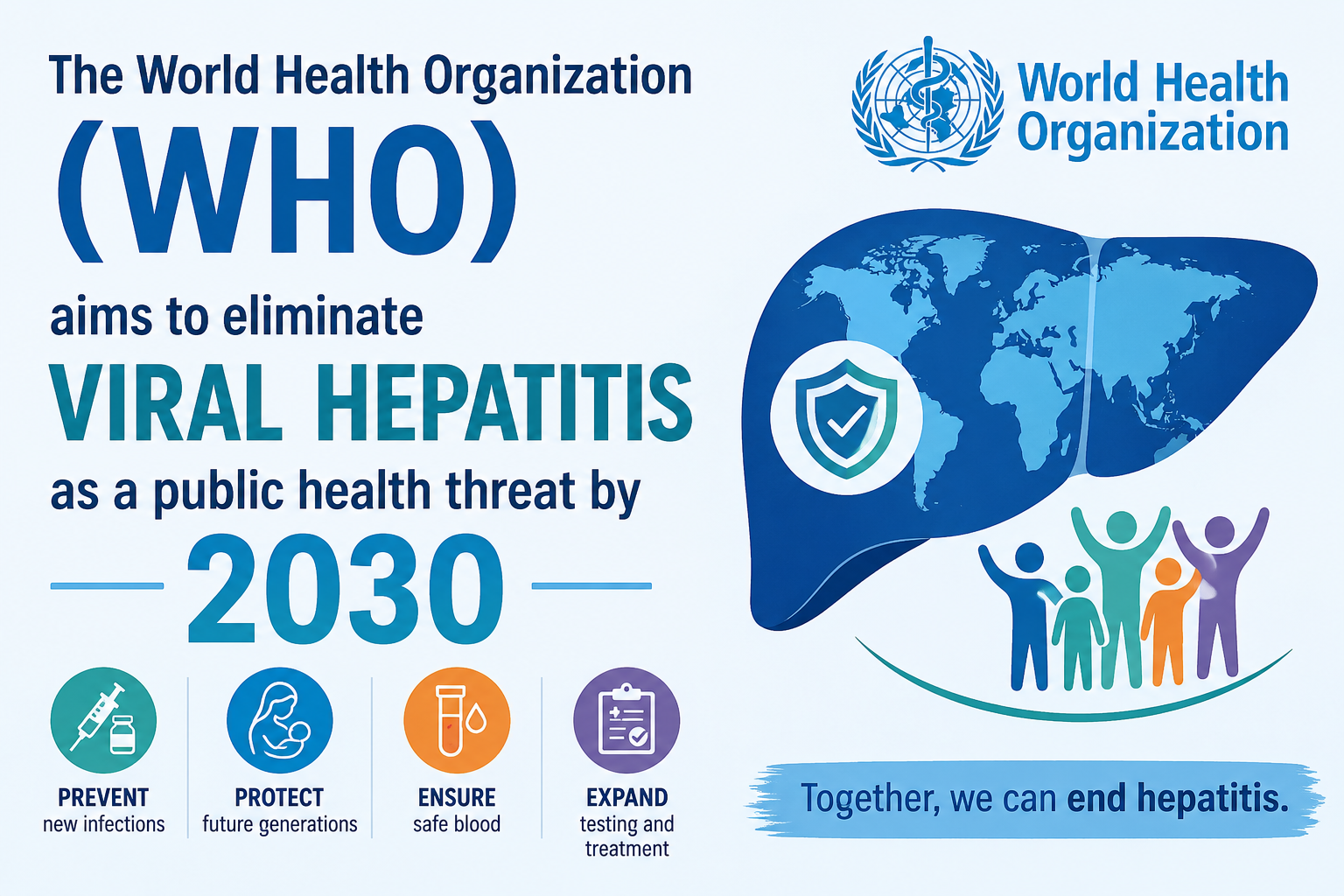
Hepatitis is a condition in which the liver becomes inflamed (swollen). It can be caused by heavy alcohol use, certain medicines, toxins, Autoimmune diseases, or infections. However, the most common cause is a viral infection, known as viral hepatitis. It is a major public health problem worldwide because some types can lead to serious liver damage. Learning about these different types can help you recognize the risks, take preventive measures, and protect your liver health.
Viral Hepatitis
What is Viral Hepatitis?
Viral hepatitis is an infection of the liver caused by specific viruses that lead to Inflammation (swelling) and damage to liver cells. It is one of the most common causes of hepatitis worldwide and affects millions of people each year.
What are the main types of viral Hepatitis?
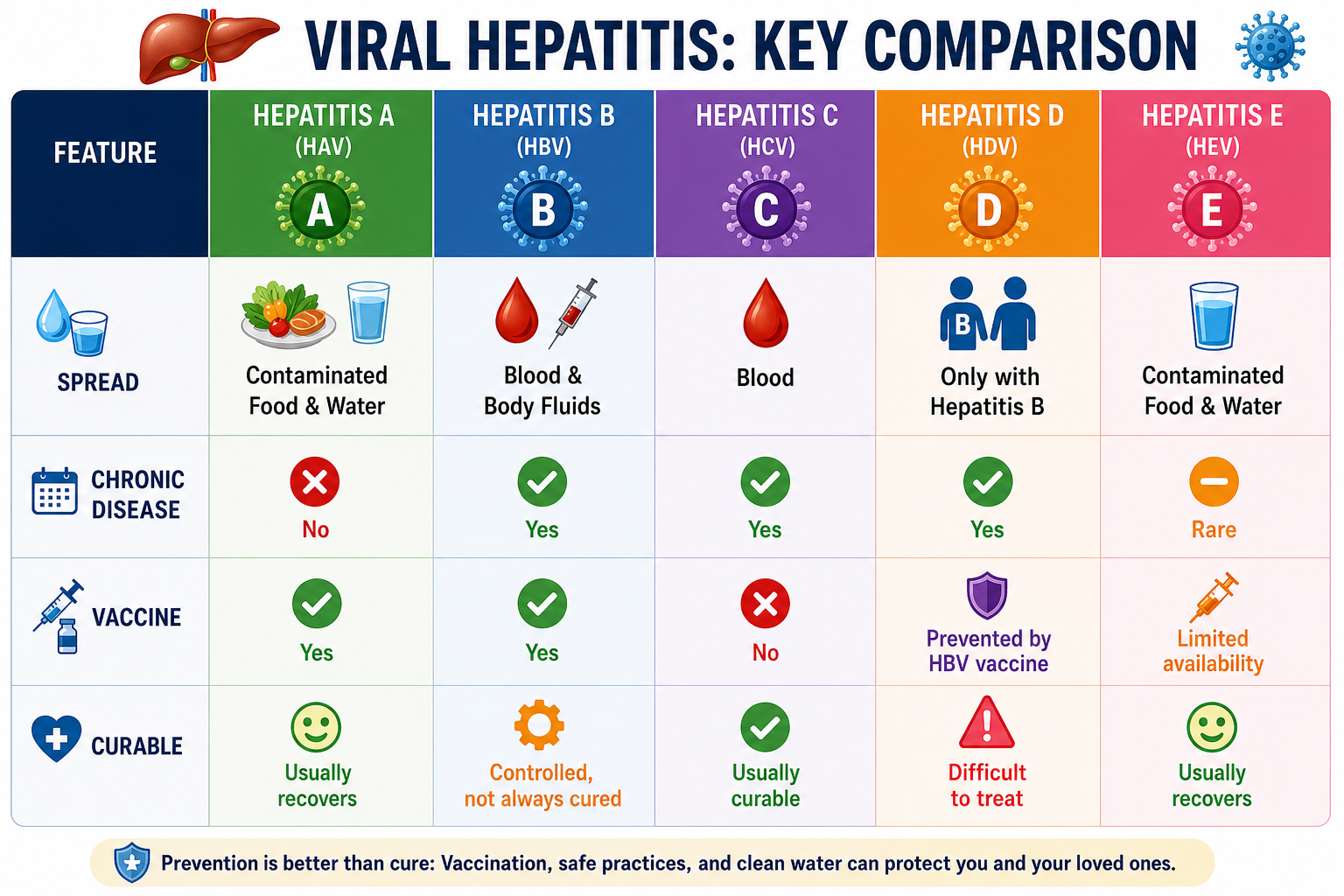
- There are five main types of viruses that cause viral hepatitis:
- Hepatitis A (HAV)
- Hepatitis B (HBV)
- Hepatitis C (HCV)
- Hepatitis D (HDV)
- Hepatitis E (HEV)
Although all five viruses infect the liver and cause inflammation, they differ in how they spread, the severity of the illness, whether the infection is acute or chronic, where they are most common, and how they can be prevented. Understanding these differences is important for reducing your risk of infection and seeking the right treatment when needed.
What are the Common symptoms of viral hepatitis?
- Viral hepatitis may not cause symptoms in its early stages. When symptoms do occur, they are often similar across the different types of viral hepatitis, as listed below:
💡 Did You Know? Many people with chronic hepatitis B or hepatitis C have no symptoms for years—or even decades. During this time, the virus can silently damage the liver, making early testing essential.
Can Viral Hepatitis Be Prevented?
- Yes. Most types of viral hepatitis can be prevented
- Get vaccinated against Hepatitis A and B.
- Ensure safe blood transfusions and sterile medical equipment.
- Never share needles or syringes.
- Screen pregnant women and prevent mother-to-child transmission of hepatitis B.
- Practice safe sex.
- Wash hands regularly and maintain good hygiene and sanitation.
- Drink safe water and eat well-cooked food.
📢 Remember: Vaccination, early diagnosis, safe healthcare practices, and timely treatment are the most effective ways to reduce the burden of viral hepatitis and protect liver health.
Hepatitis A (HAV)
What is Hepatitis A?
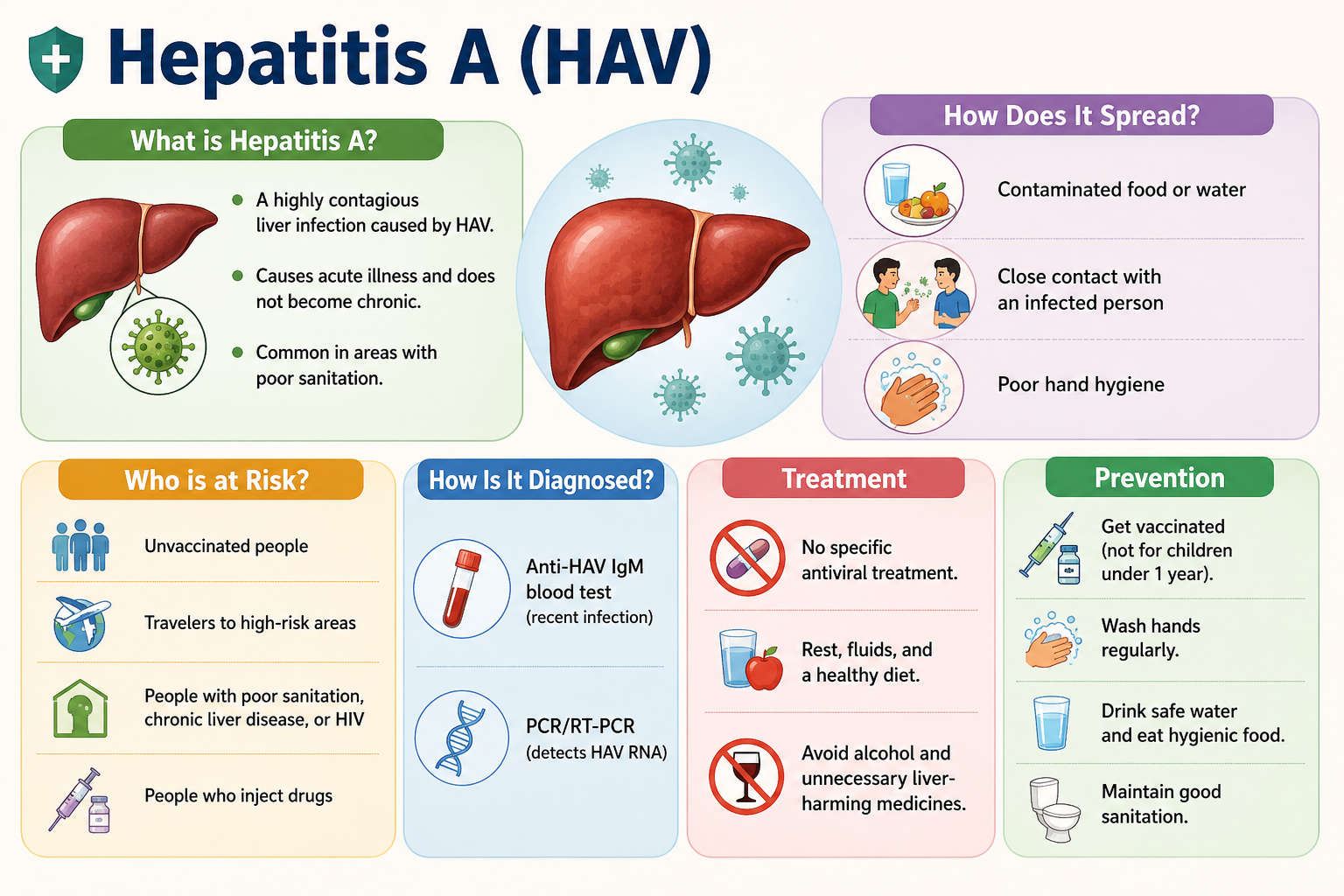
- Hepatitis A is a highly contagious viral infection of the liver caused by the Hepatitis A virus (HAV).
- It usually causes acute illness and does not lead to chronic liver disease.
- More common in low- and middle-income countries with poor sanitation and hygiene.
- Most children (about 90%) in these areas are infected before the age of 10 years.
- Many children have no symptoms or only mild illness.
How Does It Spread?
- Hepatitis A spreads mainly through the fecal–oral route, usually by:
- Eating or drinking contaminated food or water
- Close physical contact with an infected person
- Poor hand hygiene after using the toilet or changing diapers
- Consuming raw or undercooked shellfish from contaminated water
Who is at risk?
- Anyone who is not vaccinated or has never had hepatitis A can get infected. The risk is higher for people who:
- Live in areas with poor sanitation or unsafe drinking water
- Travel to countries where hepatitis A is common without vaccination
- Use recreational or injectable drugs
- Are men who have sex with men
- Work in laboratories handling the hepatitis A virus
- Have chronic liver disease, HIV, or are experiencing homelessness, as they may develop more severe illness.
How Is Hepatitis A Diagnosed?
- Blood tests are the main way to diagnose hepatitis A.
- Doctors check for Immunoglobulin M (IgM) against HAV, which indicates a recent infection.
- Polymerase Chain Reaction (PCR) or Reverse Transcription Polymerase Chain Reaction (RT-PCR)
What are the Treatment options?
- No specific antiviral treatment is available.
- Treatment focuses on supportive care.
- Stay well hydrated.
- Eat a balanced, nutritious diet.
- Avoid unnecessary liver-harming medicines (e.g., paracetamol/acetaminophen) unless advised by a doctor.
- Hospitalization is usually not needed, except in severe cases or acute liver failure.
- Recovery may take weeks to months.
How to Prevent Hepatitis A?
- Get vaccinated against hepatitis A.
- Hepatitis A vaccine is not approved for children under 1 year of age.
- Wash hands regularly with soap and water.
- Drink safe, clean water.
- Follow good food hygiene and food safety practices.
- Ensure proper sanitation and sewage disposal.
- Practice safer sex (including condoms and good hygiene).
Hepatitis B (HBV)
What is Hepatitis B?
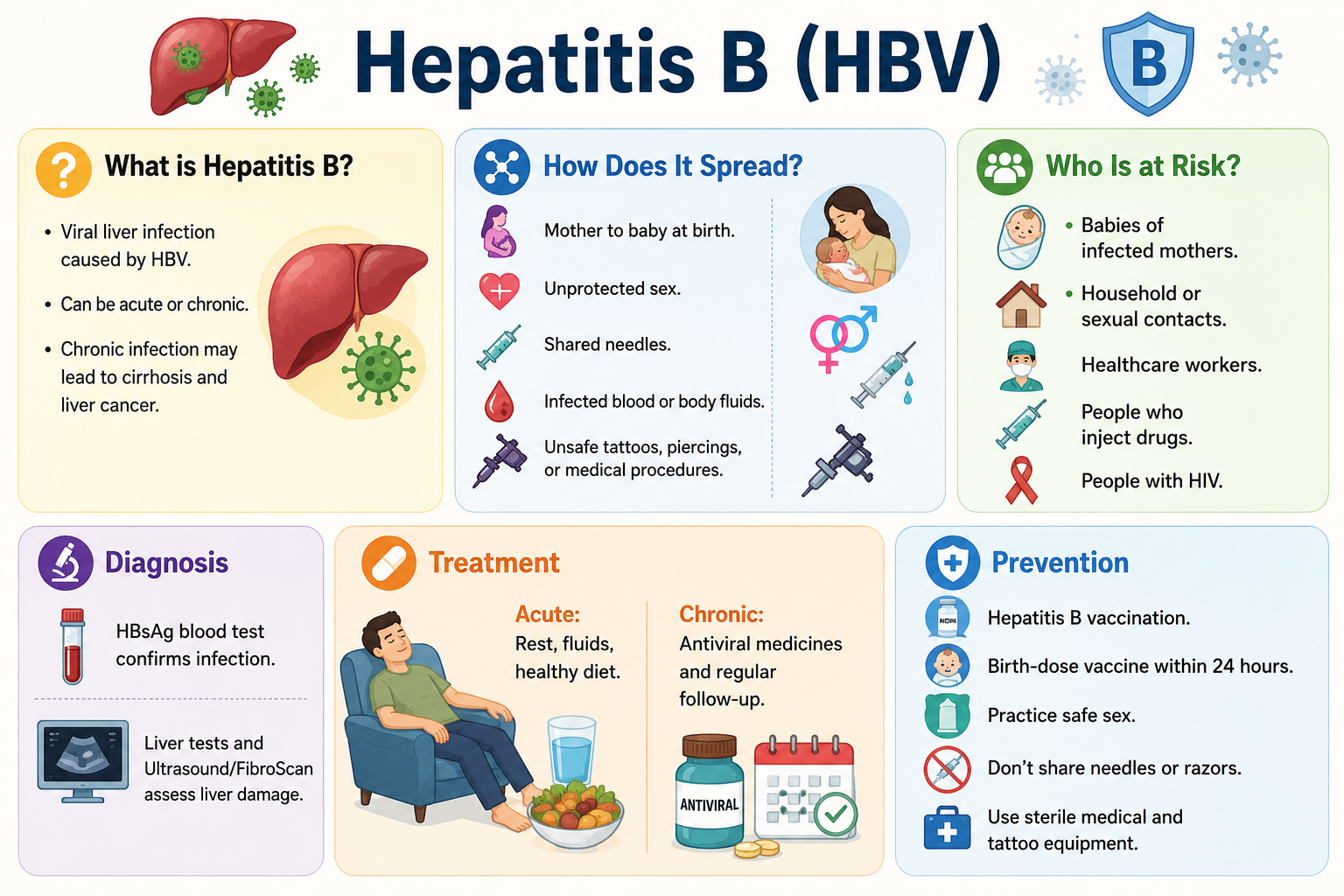
- Hepatitis B is a viral infection caused by the hepatitis B virus (HBV).
- The infection may be acute or Chronic .
- Chronic infection puts people at high risk of death from cirrhosis and liver cancer.
💡Did You Know? In India, hepatitis B virus (HBV) is the third most common cause of liver cirrhosis, after alcohol-related liver disease and metabolic dysfunction-associated Fatty liver disease.
How Does It Spread?
- From an infected mother to her baby during childbirth.
- Through unprotected sexual contact with an infected person.
- By sharing contaminated needles or syringes.
- Through unsafe tattooing, piercing, or sharp instruments.
- By contact with infected blood or body fluids through open cuts or sores.
- Rarely through unsafe blood transfusions where blood is not properly screened.
Who is at risk?
- Babies born to mothers with hepatitis B. People living with an infected family member or sexual partner. Healthcare workers exposed to blood or body fluids.
- People who inject drugs and share needles.
- People with multiple sexual partners or who have unprotected sex.
- People receiving unsafe medical procedures, tattoos, or piercings.
- People living with HIV. Travelers to regions where hepatitis B is common.
How Is Hepatitis B Diagnosed?
- Blood tests are the main way to diagnose hepatitis B.
- The Hepatitis B surface antigen (HBsAg) test confirms whether a person has a hepatitis B infection.
- Additional blood tests help determine whether the infection is acute or Chronic and assess liver function and damage.
- Ultrasound and FibroScan may be used to check for liver fibrosis (scarring).
What are the Treatment options?
- Acute hepatitis B is usually managed with supportive care, including rest, adequate fluids, and a healthy diet.
- Avoid alcohol and medicines that may harm the liver unless advised by a doctor.
- Chronic hepatitis B may be treated with antiviral medicines to slow liver damage.
- Regular follow-up and monitoring are important for people with chronic infections.
- Some people may require long-term treatment.
How to Prevent Hepatitis B?
- Get vaccinated against hepatitis B.
- Ensure newborn babies receive the birth dose within 24 hours of birth.
- Practice safe sex by using condoms. Never share needles, syringes, razors, or toothbrushes.
- Use only sterile equipment for tattoos, piercings, and medical procedures.
- Healthcare workers should follow standard infection-control precautions and be vaccinated.
- Pregnant women should receive appropriate medical care.
- Wash hands thoroughly after contact with blood or body fluids.
Hepatitis C (HCV)
What is Hepatitis C?
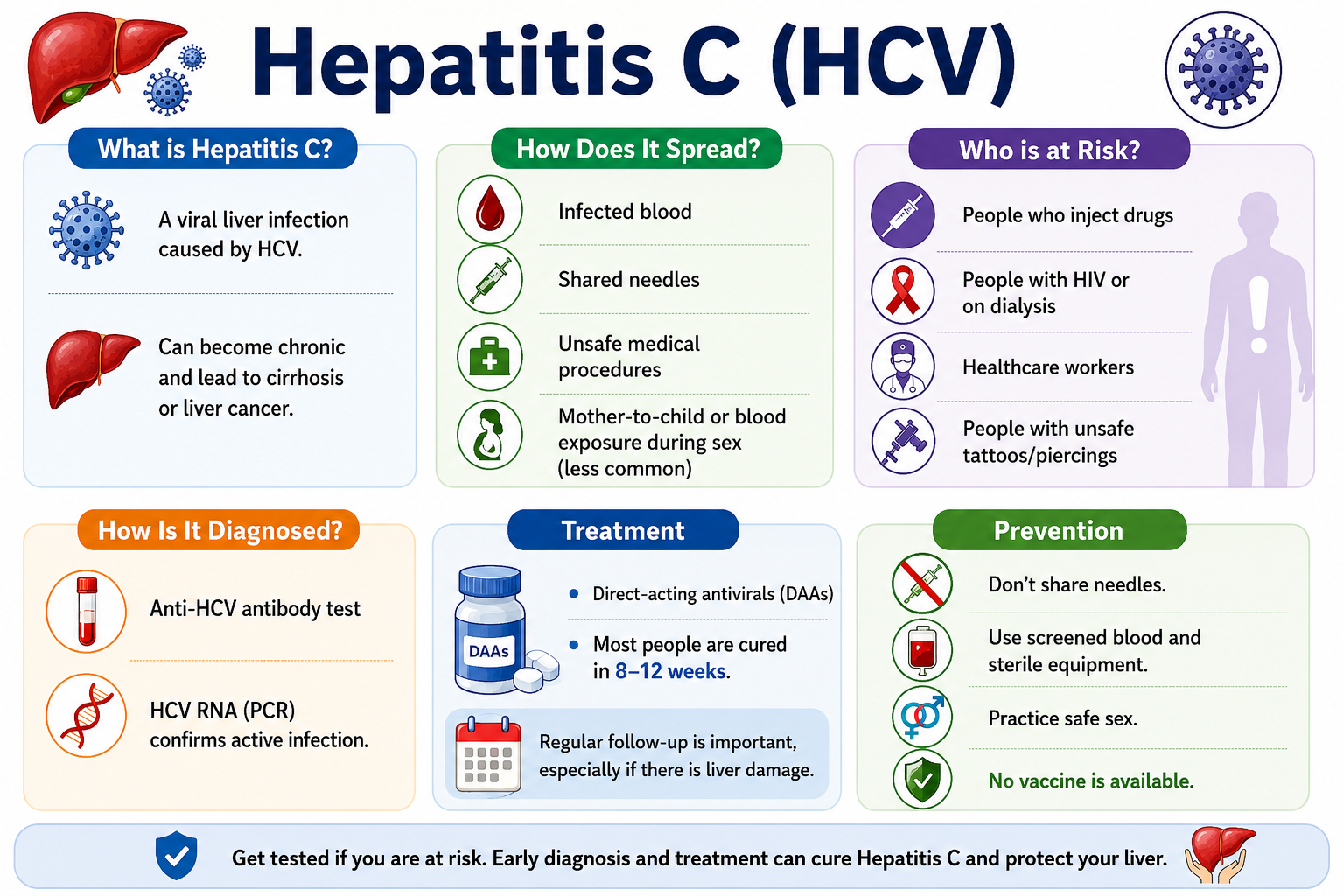
- Hepatitis C is a viral infection caused by the hepatitis C virus (HCV).
- It affects the liver and can cause acute or Chronic infection.
- Chronic hepatitis C can lead to cirrhosis, liver failure, and liver cancer if left untreated.
How Does It Spread?
- Through contact with infected blood.
- By sharing contaminated needles or syringes.
- Through unsafe injections or medical procedures.
- From unscreened blood transfusions (rare, where blood is properly screened).
- From an infected mother to her baby during childbirth (less common).
- Through sexual contact that involves exposure to blood (less common).
Who is at risk?
- People who inject drugs and share needles.
- People who received unscreened blood transfusions or organ transplants.
- Healthcare workers exposed to infected blood. People living with HIV.
- People on long-term dialysis.
- People who have unsafe tattoos or piercings.
- People with multiple sexual partners or high-risk sexual practices.
- Babies born to mothers with hepatitis C.
How Is Hepatitis C Diagnosed?
- Blood tests are the main way to diagnose hepatitis C.
- An anti-HCV antibody test shows whether a person has been infected with the hepatitis C virus.
- If the antibody test is positive, an HCV RNA (PCR) test is done to confirm an active infection.
- Some people clear the virus naturally, so a positive antibody test does not always mean there is an ongoing infection.
- If chronic hepatitis C is confirmed, doctors assess liver damage (fibrosis or Cirrhosis) using blood tests, FibroScan, or sometimes a liver biopsy.
What are the Treatment options?
- Hepatitis C is treated with direct-acting antiviral medicines.
- Most people can be cured within 8–12 weeks.
- Treatment is usually oral, safe, and well tolerated.
- Regular follow-up is important, especially if there is liver damage.
- Avoid alcohol and maintain a healthy lifestyle to protect the liver.
How to prevent Hepatitis C?
- Never share needles or syringes.
- Ensure blood transfusions are properly screened.
- Use sterile equipment for tattoos, piercings, and medical procedures.
- Practice safe sex, especially if there is a risk of blood exposure.
- Healthcare workers should follow standard infection-control precautions.
- Dispose of needles safely.
- Get tested if you are at increased risk.
⚠️ No Vaccine Yet! Unlike hepatitis A and B, hepatitis C has no vaccine. Prevention through safe practices and early testing remains the best protection.
Hepatitis D (HDV)
What is Hepatitis D?
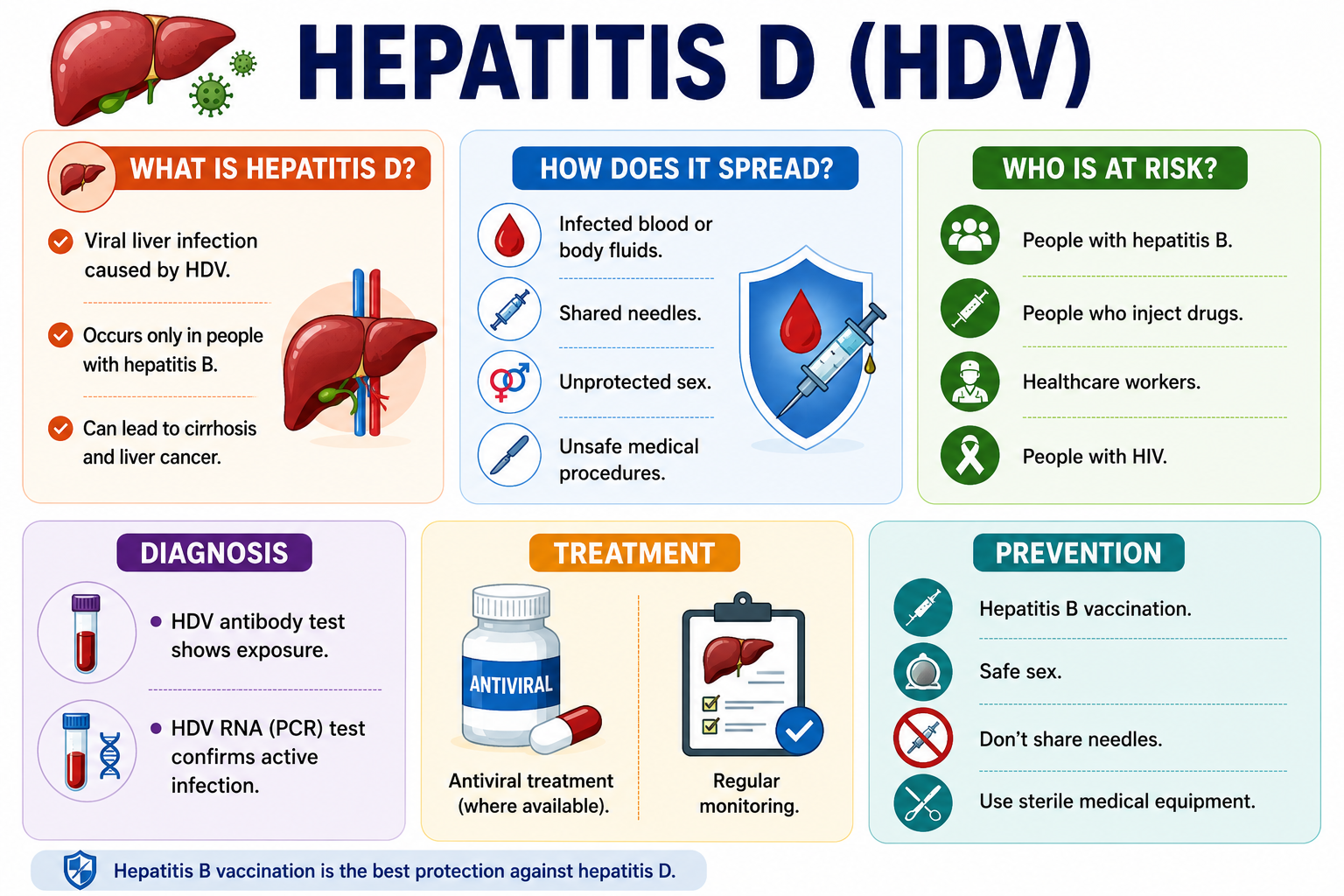
- Hepatitis D is a viral infection caused by the hepatitis D virus (HDV).
- It only occurs in people who have hepatitis B (HBV).
- It can cause acute or chronic liver infection.
- Chronic HDV is the most severe form of hepatitis, with a higher risk of cirrhosis and liver cancer.
How Does It Spread?
- Through contact with infected blood or body fluids.
- By sharing contaminated needles or syringes.
- Through unprotected sexual contact. From an infected mother to her baby (rare).
- Through unsafe medical procedures or unscreened blood transfusions.
Who is at risk?
- People with chronic hepatitis B.
- People who inject drugs.
- Healthcare workers exposed to blood.
- People living with HIV or hepatitis C.
- People on long-term dialysis.
- People with multiple sexual partners.
- Men who have sex with men.
- People receiving unsafe tattoos, piercings, or medical procedures.
How Is Hepatitis D Diagnosed?
- HDV testing is not widely available, especially in many low- and middle-income countries.
- Blood tests are used to diagnose hepatitis D.
- An HDV antibody test shows whether a person has been exposed to the hepatitis D virus.
- An HDV RNA (Polymerase Chain Reaction) test confirms an active hepatitis D infection.
- HDV RNA testing is also used to monitor how well treatment is working.
What are the Treatment options?
- Treatment depends on the stage of liver disease.
- Bulevirtide is approved in some countries for chronic hepatitis D.
- Some patients may receive pegylated interferon.
- Regular monitoring and treatment of hepatitis B are important.
- Advanced liver disease may require liver transplantation.
How to prevent Hepatitis D?
- Get vaccinated against hepatitis B (prevents hepatitis D).
- Never share needles or syringes. Practice safe sex.
- Use sterile equipment for tattoos, piercings, and medical procedures.
- Ensure donated blood is properly screened.
- Follow standard infection-control precautions.
- People already infected with hepatitis B should have regular medical follow-up.
Hepatitis E (HEV)
What is Hepatitis E?
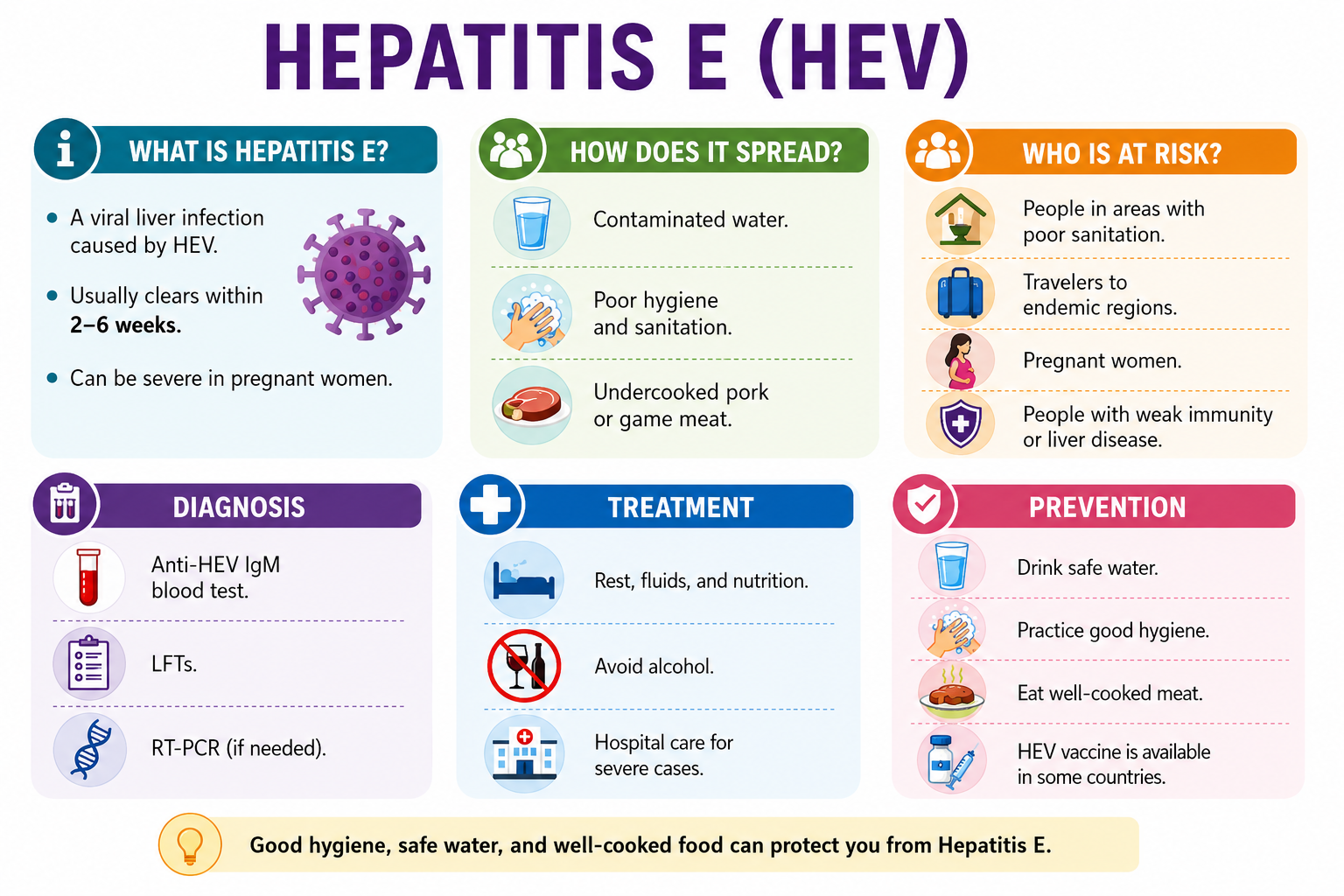
- Hepatitis E is a viral infection caused by the hepatitis E virus (HEV).
- It mainly affects the liver and is usually an acute illness that resolves within 2–6 weeks.
- In rare cases, it can lead to acute liver failure, especially in pregnant women.
How Does It Spread?
- Drinking contaminated water.
- Eating undercooked pork, wild boar, or deer meat (in some countries).
- Poor sanitation and hygiene.
- During outbreaks caused by contaminated water supplies.
Who is at risk?
- People living in areas with poor sanitation.
- Travelers to regions where hepatitis E is common.
- Pregnant women (especially in the second and third trimesters).
- People with weakened immune systems.
- People with chronic liver disease.
- People consuming undercooked pork or game meat.
How Is Hepatitis E Diagnosed?
- Blood tests are the main way to diagnose hepatitis E.
- An anti-HEV Immunoglobulin M (IgM) antibody test confirms a recent hepatitis E infection.
- Liver function tests (LFTs) may show increased bilirubin, ALT, and AST levels, indicating liver inflammation.
- Reverse Transcription Polymerase Chain Reaction (RT-PCR can detect the virus in blood or stool, especially in early infection or chronic cases.
What are the Treatment options?
- There is no specific antiviral treatment for most people.
- Most patients recover with rest, fluids, and good nutrition.
- Avoid alcohol and medicines that may harm the liver unless advised by a doctor.
- Severe cases or pregnant women may require hospitalization.
- Chronic infection in immunocompromised people may need specialist treatment.
How to prevent Hepatitis E?
- Drink safe, clean, or boiled water. Wash hands regularly with soap.
- Maintain good sanitation and hygiene.
- Eat well-cooked meat, especially pork and game meat.
- Avoid raw or undercooked shellfish in high-risk areas. Ensure proper disposal of human waste.
- The hepatitis E vaccine helps protect people from infection and prevent disease outbreaks.
Frequently Asked Questions
1. Is hepatitis caused only by alcohol?
- No. Viral hepatitis is caused by viruses. Although alcohol can damage the liver, it does not cause viral hepatitis.
2. Are all types of hepatitis the same?
- No. Hepatitis A, B, C, D, and E are caused by different viruses and differ in how they spread, are treated, and affect the liver.
3. Does everyone with hepatitis have symptoms?
- No. Many people, especially those with hepatitis B or C, may have no symptoms until significant liver damage has occurred.
4. Can I get hepatitis from hugging, kissing, or sharing meals?
Usually, no. Hepatitis A, B, C, D, and E do not spread through casual kissing. However, hepatitis B may rarely spread through deep kissing if both people have open sores or bleeding gums. Casual contact, hugging, or sharing food does not spread hepatitis B, C, or D.
5. Can children get viral hepatitis?
- Yes. Children can get hepatitis A through contaminated food or water and hepatitis B from an infected mother during birth or through contact with infected blood or body fluids. Routine childhood vaccination helps protect against hepatitis A and B.
6. Can I have hepatitis without any symptoms?
- Yes. Many people with hepatitis B or hepatitis C have no symptoms for years while the virus silently damages the liver. Early testing is the best way to detect infection before complications develop.
7. Is hepatitis incurable?
- No. The outcome depends on the type of hepatitis. Hepatitis A and E usually resolve on their own; hepatitis B can often be effectively managed with treatment, and most cases of hepatitis C can now be cured with modern antiviral medicines. Early diagnosis and timely treatment are key to preventing liver damage.
8. Can viral hepatitis come back after recovery?
- It depends on the type. People who recover from hepatitis A or E usually develop lifelong immunity. Hepatitis C can be cured, but it is still possible to become infected again if exposed to the virus. Chronic hepatitis B may remain in the body for life and requires regular medical follow-up.
9. Is viral hepatitis always life-threatening?
- No. Many people recover completely, and early diagnosis and treatment can prevent serious complications.
10. Who should get tested for viral hepatitis?
- Testing is recommended for people at higher risk, including those with a history of blood transfusions before routine screening, people who inject drugs, healthcare workers, people living with HIV, pregnant women (for hepatitis B), and anyone with abnormal liver function tests or risk factors for infection.
11. Are vaccines available for all types of hepatitis?
- No. Vaccines are available for hepatitis A and B. There are no widely available vaccines for hepatitis C or D. A hepatitis E vaccine is licensed only in some countries.
Key Takeaways
✅ Viral hepatitis is the most common type of hepatitis.
✅ Viral hepatitis is caused by five different viruses: hepatitis A, B, C, D, and E.
✅ Hepatitis A and E usually spread through contaminated food or water.
✅ Hepatitis B, C, and D mainly spread through blood and body fluids.
✅ Vaccines are available for hepatitis A and B.
✅ Most hepatitis C infections can now be cured.
✅ Early testing helps prevent liver damage.
Further Reading
- Swaroop, S., Shalimar, & Acharya, S. K. (2025). Hepatitis B virus prevalence in India: A wake-up call for action. Indian Journal of Gastroenterology, 44(5), 585–587. https://doi.org/10.1007/s12664-025-01804-5
- Grant, L. M., & Purres, M. (2024). Viral hepatitis. In StatPearls. StatPearls Publishing. https://www.ncbi.nlm.nih.gov/books/NBK554549/
- World Health Organization. (n.d.). Hepatitis. https://www.who.int/health-topics/hepatitis
- Centers for Disease Control and Prevention. (2025, April 10). Viral hepatitis. https://www.cdc.gov/hepatitis/index.html
Disclaimer: The information provided on Medical Pharma Lifestyle Pulse is for educational and informational purposes only and is not intended as medical advice, diagnosis, or treatment. Always consult a qualified healthcare professional before making any decisions about your health, medications, or treatment. Never ignore or delay seeking professional medical advice based on information you have read on this website. While we strive to provide accurate and up-to-date information, we do not guarantee the completeness or accuracy of the content. For more information, please read our full Medical Disclaimer.