
Table of Contents
Introduction
In countries like India, lifestyle diseases such as obesity, hypertension, Diabetes, and heart disease are rapidly increasing, mainly due to changing diets, urban lifestyles, and the growing consumption of packaged foods. While food packaging often highlights attractive claims like “low-fat,” “sugar-free,” or “high-fiber,” the absolute truth lies in the Food labels on the back.
Next time you’re reaching for a packet of chips, juice, or biscuits, take a moment to look beyond. The real story is tucked away on the food labels at the back; those small lines and numbers reveal precisely what you’re consuming. Learning how to read food labels is a simple and effective way to eat more wisely, steer clear of hidden sugars and fats, and support your health in the long run. Let’s explore how food labels function and why they are crucial for maintaining your daily health.
Why Food Labels Matter?
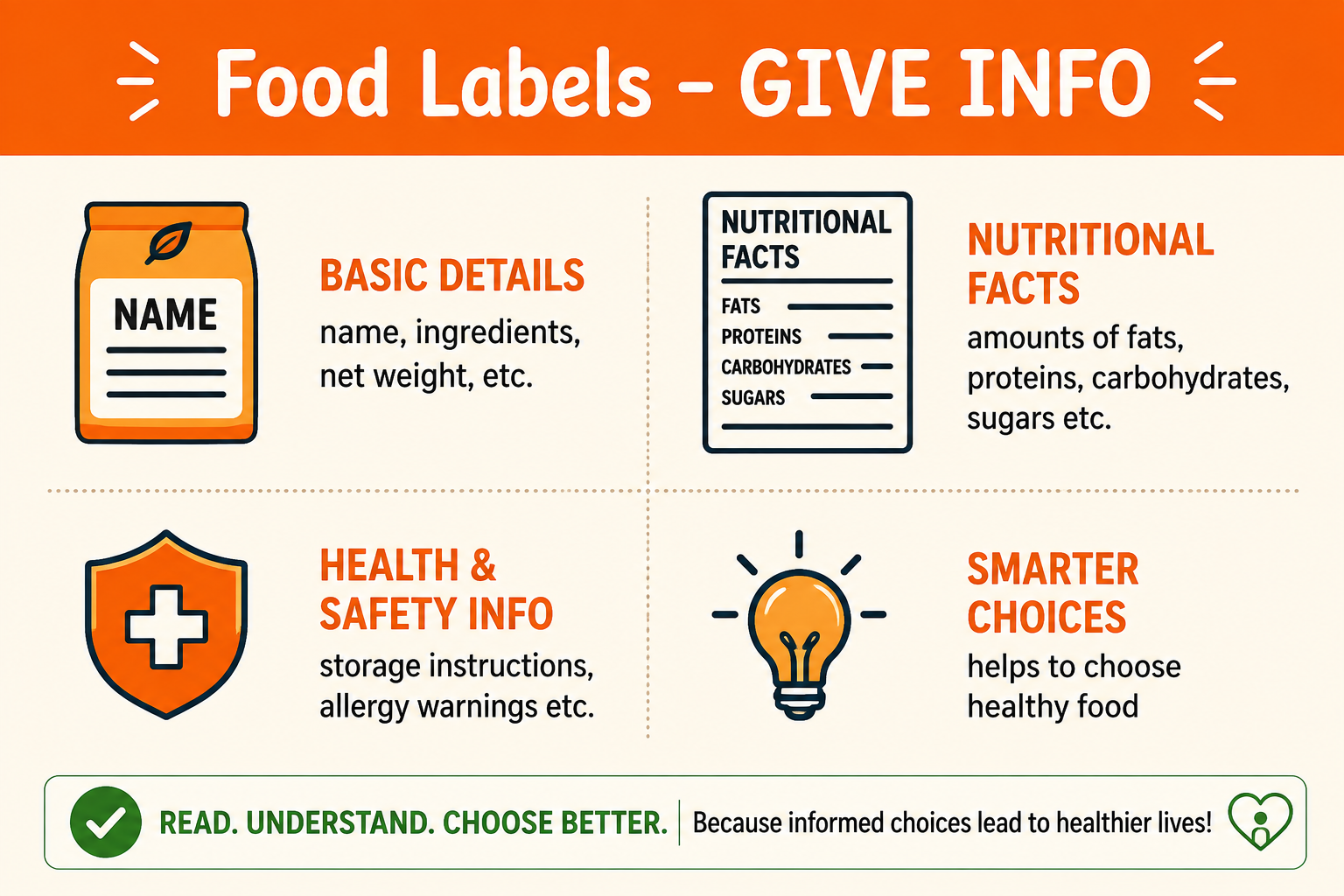
Food labels are more than just small print on the back of a packet. They provide essential information to help you make informed, safe, and healthy choices.
- Basic details → Every food label displays the product name, ingredients, net weight, shelf life, grade, vegetarian/non-vegetarian logo, country of origin, manufacturer details, and food safety authority approval.
- Nutritional facts → Labels display the amounts of fats, proteins, carbohydrates, sugars, vitamins, and minerals in the food, allowing you to see if it suits your diet.
- Health & safety info → Storage instructions (such as keep refrigerated), handling guidelines, and allergy warnings (such as contains nuts, gluten, or Soy) protect consumers from risks.
- Smarter choices → Reading labels allows you to compare products, avoid misleading claims, and select options that align with your health goals.
How to Read a Food Label?
Start with the Basics
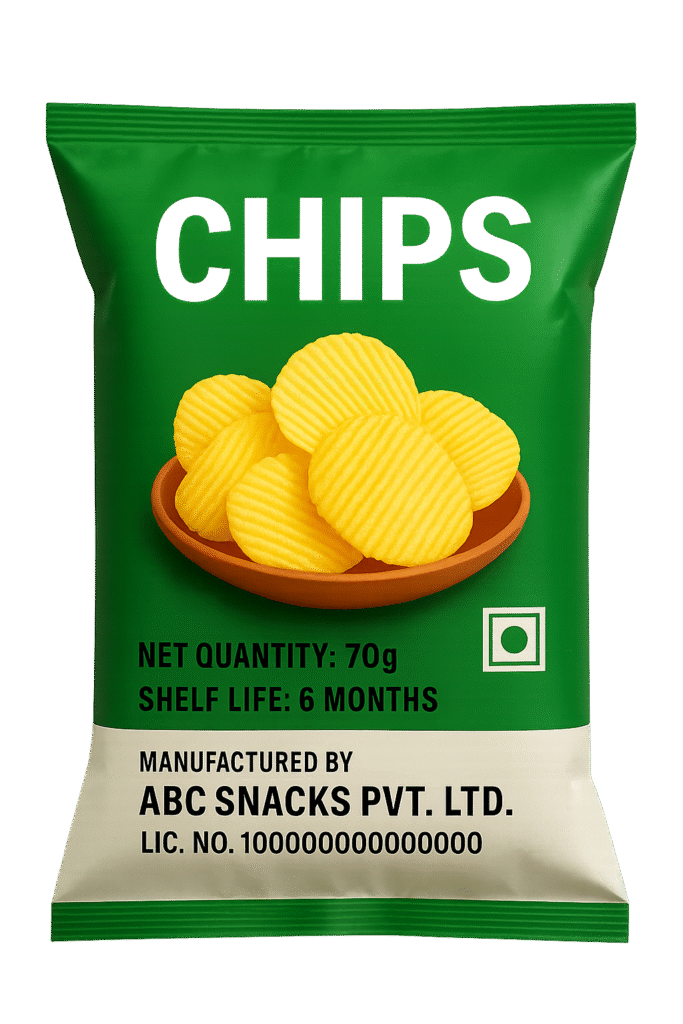
- Product Name and Brand – Know what you’re buying.
- Net Quantity – Weight/volume of the food inside.
- Shelf Life / Expiry Date – Always check before purchasing.
- Veg/Non-Veg Logo – Green (veg) or Red (non-veg).
- Manufacturer and FSSAI License — Ensures authenticity in India.
Ingredients List
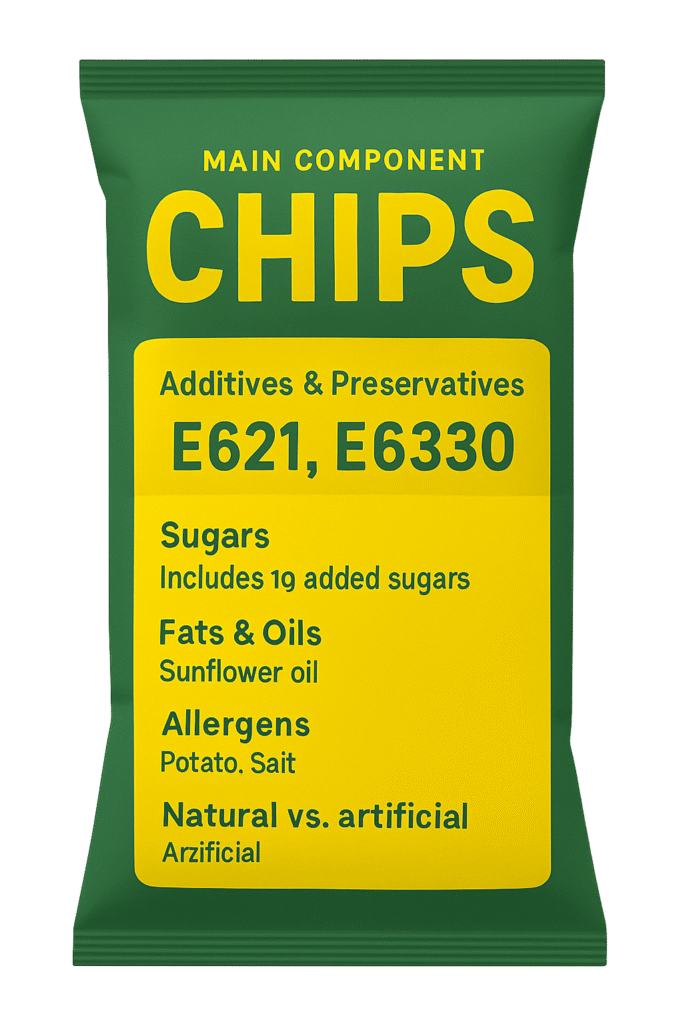
- Main Ingredient – When sugar, refined flour, or oil appears at the top of the list, it means that ingredient is the main component of the product.
- Additives – Check for E-numbers, artificial colors, or chemical names.
- Hidden Sugars – Be aware of hidden sugars, such as glucose syrup, maltose, fructose, and corn syrup, which can be sneaky ingredients in many products.
- Fats and oils – Check if they list “hydrogenated/partially hydrogenated” (trans fats) or if they contain healthier oil options.
- Allergens – Such as milk, nuts, gluten, soy, and others (often highlighted in bold) — are essential to be aware of.
Understand the Serving Size
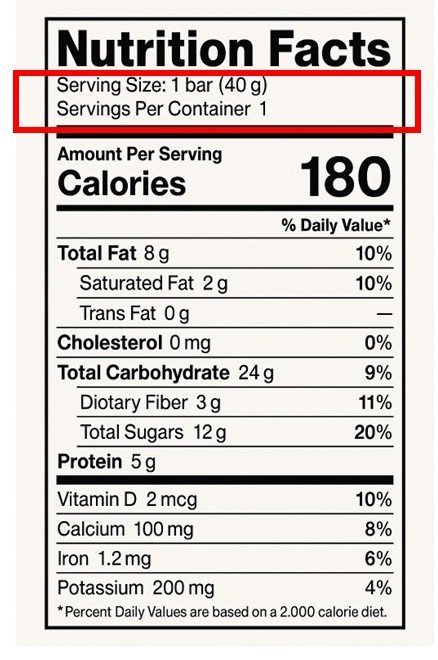
- Definition – It’s the standard measurement used to describe nutritional values on the food labels, such as 1 cup, 100g, or two pieces.
- Importance: The calories, fats, sugars, proteins, and other nutrients listed are all based on that specific serving size, not the entire package. This way, you can better understand what you’re consuming with each portion.
- Common mistake: people think the numbers apply to the entire pack. If the pack has three servings, remember to multiply all the numbers—calories, fat, sugar, and so on—by three if you plan to eat the entire pack.
- Portion Size Vs Serving Size: The serving size is what’s listed on the label, while the portion size is how much you actually put on your plate. Sometimes, your portion may be larger than the serving size, so it’s good to keep that in mind.
Look for Calories
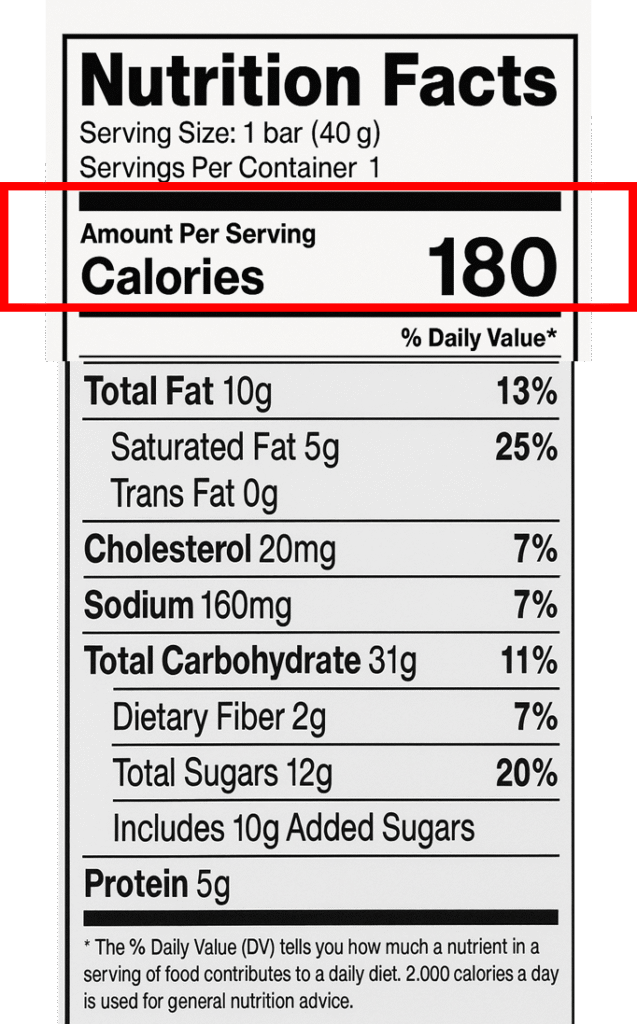
- Calories show you how much energy is in a serving of food.
- “Low Calorie” Definition in India – Under the FSSAI Advertising and Claims Regulations, a product can be labeled as “Low” in energy/calories if it contains:
- Solids (per 100 g): Not more than 40 kcal
- Liquids (per 100 ml): Not more than 20 kcal
- FDA General Guidance for Calorie Levels – While the FSSAI doesn’t define “Moderate” or “High” calorie categories, the FDA uses these approximate benchmarks, which consumers often use for reference:
- Moderate-calorie foods: About 100 kcal per serving
- High-calorie foods: More than 400 kcal per serving
- These aren’t legal definitions but serve as helpful guidance for understanding energy intake.
Check % Daily Value (%DV)
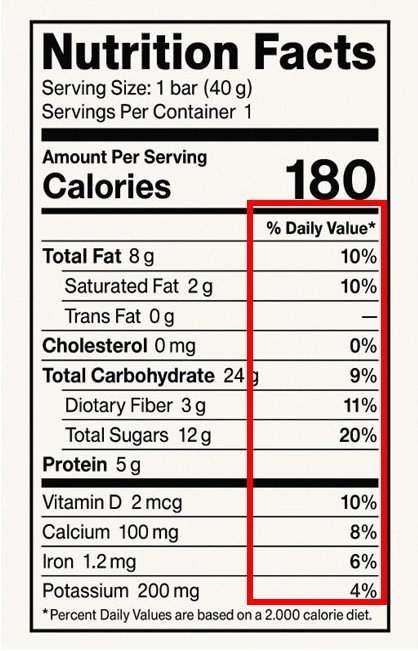
- The percentage daily value on the food labels indicates the amount of a nutrient you obtain from one serving and how it contributes to your daily intake.
- It’s designed based on a typical 2,000-calorie daily intake, which many adults use as a handy reference.
- General classification :
- ≤ 5% DV → Low in that Nutrient
- 10–19% DV → Moderate amount
- ≥ 20% DV → High in that nutrient
Total Sugar Vs Added Sugar
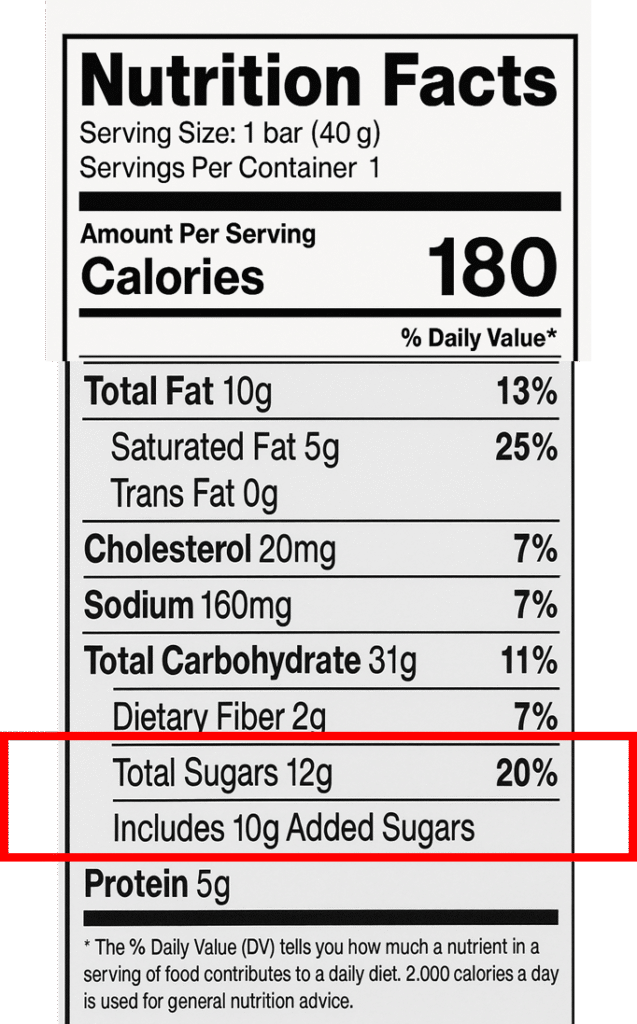
- Total Sugars (Natural Sugar + Added Sugar) – Food labels include both the naturally occurring sugars found in healthy foods and beverages, such as milk and fruit, as well as any added sugars that may be present in the product.
- Added Sugar (Extra Sugar) – Food labels also include sugars added during food processing, such as sucrose or dextrose, as well as sugars from packaged sweeteners, including table sugar. It also covers sugars from syrups, honey, and concentrated fruit or vegetable juices.
- Guideline (WHO & FSSAI):
- Limit added sugars to < 10% of daily calories (ideally 5%).
- For a 2000-calorie diet → 25–50g added sugar/day max.
Understand the 5/20 Rule
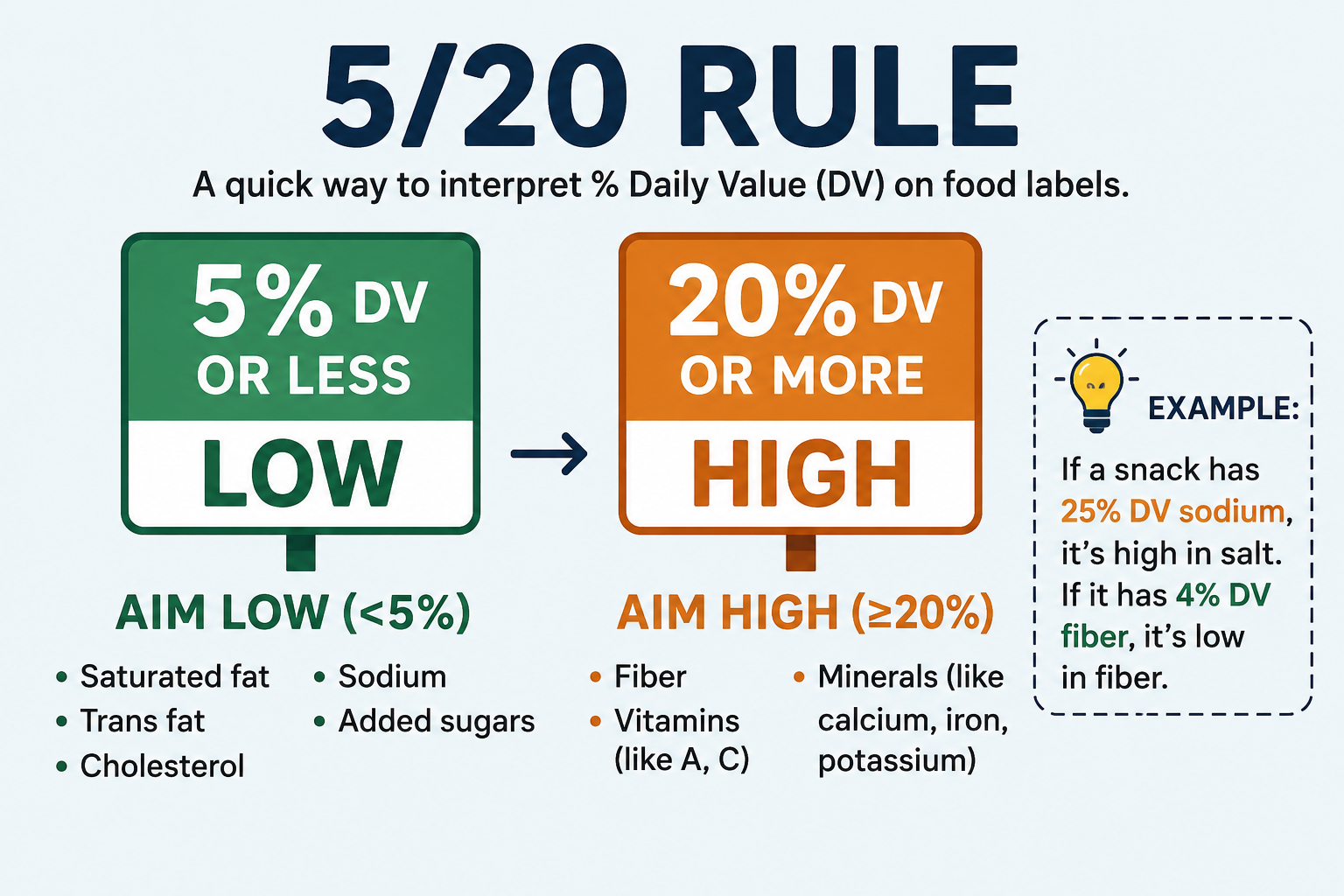
- The 5/20 Rule is a simple tool to help you read the % DV on food labels.
- If a nutrient shows 5% DV or less, it’s considered low—best for things like added sugar, sodium, or saturated fat.
- If it shows 20% DV or more, it’s high—a good sign for fiber, vitamins, and minerals.
- This quick check helps you determine whether a food product aligns with your health goals.
Common Misleading Claims
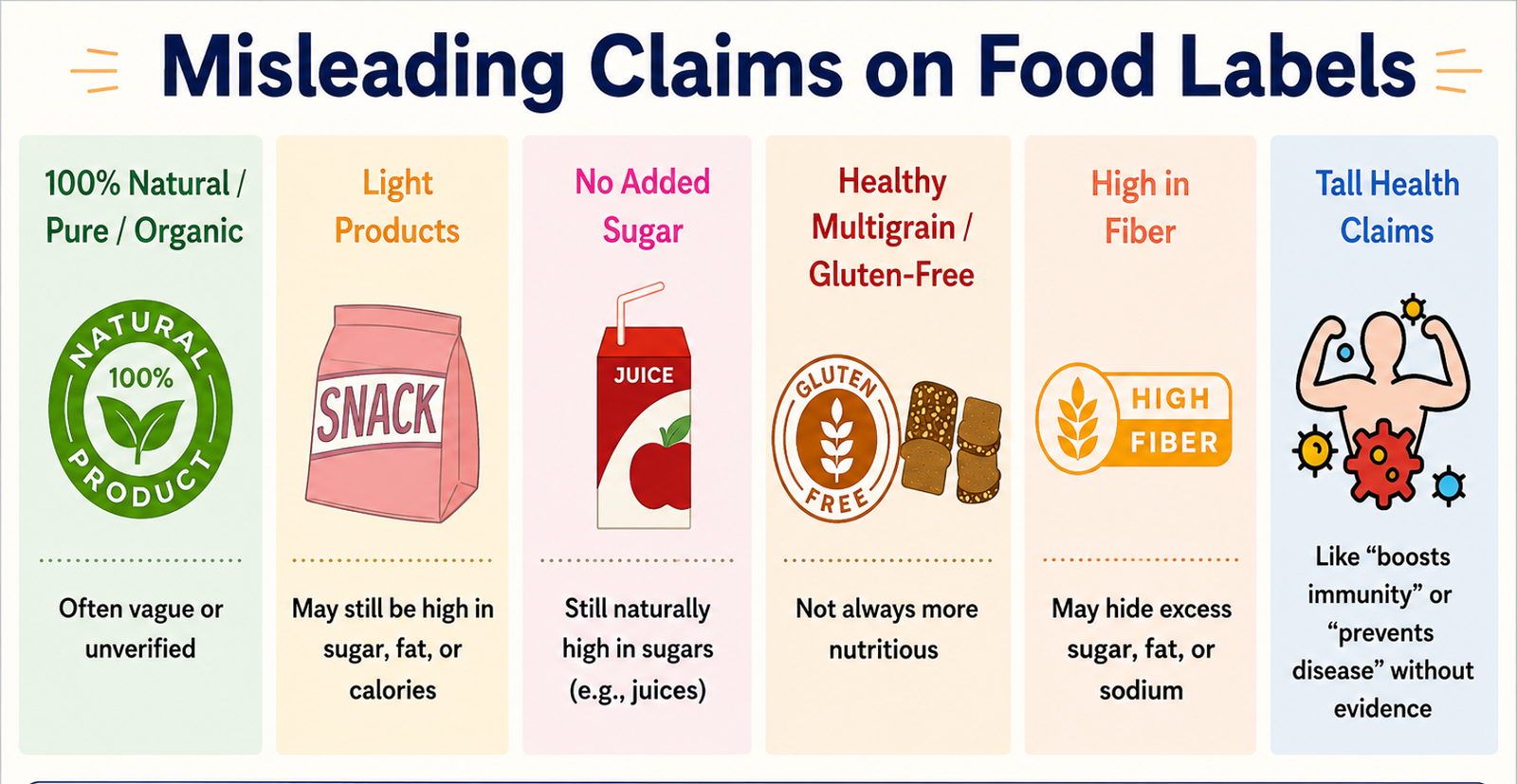
- 100% Natural/Pure/Organic → Sounds healthy, but doesn’t mean nutritious. Organic sugar is still sugar.
- Light → May mean lower fat or calories, but check for added sugar or other ingredients.
- Multigrain→ Contains multiple grains, but they may be refined. Look for whole grain.
- No Added Sugar→ Doesn’t mean sugar-free. Natural sugars may still be high, especially in fruit juice.
- Selective Highlighting → High in fiber” may distract from high sugar, fat, or sodium.
- Gluten-Free→ Doesn’t mean low-calorie, low-carb, or healthier. Some gluten-free foods are highly processed.
- Health Benefit Claims → Claims like “boosts immunity” or “prevents disease” may lack solid scientific evidence.
- Ingredient Misrepresentation → Attractive images of fruits or nuts don’t guarantee they’re actually present in meaningful amounts. Check the ingredient list.
List of Additives to Avoid
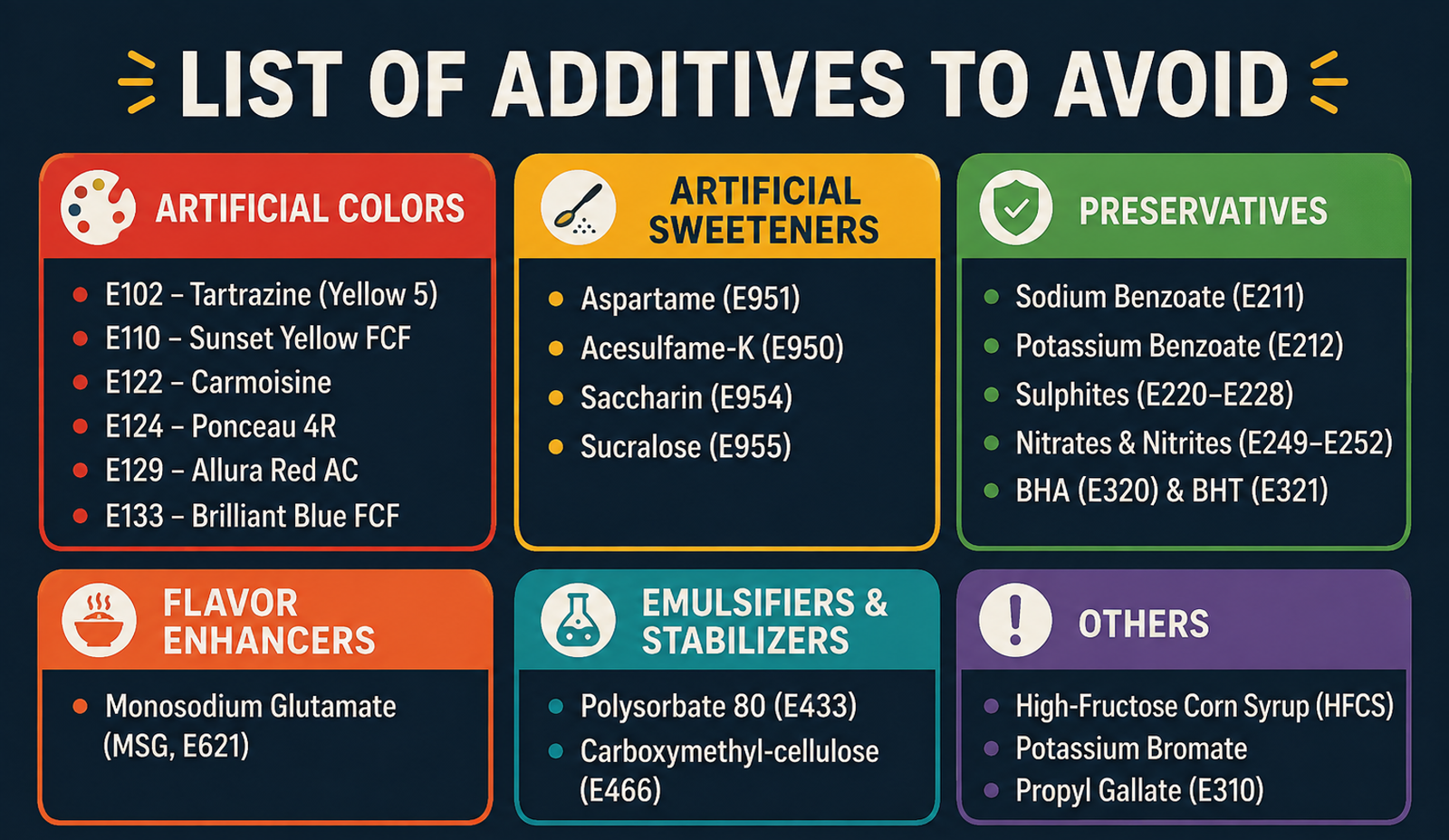
Food additives are substances often added to processed or other large-scale foods for practical reasons. These reasons include making the food safer, keeping it fresh longer, or changing its flavor and appearance to make it more appealing. Here’s a list of key additives that may be harmful and are best to avoid.
- Artificial Colors [E102, E110, E129, E124, E133] – Linked to hyperactivity, allergies, and possible carcinogenic risks.
- Artificial Sweeteners [Aspartame, Acesulfame-K, Saccharin, Sucralose] – Controversial due to possible links with metabolic issues and gut imbalance.
- Preservatives [ Benzoate, Potassium Benzoate, Sulfites] – Some are linked with asthma, allergies, or long-term risks.
- Flavor Enhancers [Monosodium Glutamate] – May cause Chinese Restaurant Syndrome in sensitive individuals (headaches, flushing, sweating).
- Emulsifiers and Stabilizers [Polysorbate 80, Carboxymethylcellulose] – Some are linked to gut microbiome disruption and inflammation.
- Others
- High-Fructose Corn Syrup – Linked to obesity, fatty liver, and insulin resistance.
- Potassium Bromate – Banned in many countries, a possible carcinogen.
- Propyl Gallate – Antioxidant additive, potential endocrine disruptor.
📌 Tip for Consumers: If you see too many E-numbers, artificial colors, or chemical names on the food labels, the product is heavily processed—opt for fresh or minimally processed alternatives.
Key Takeaways
✅ Read the ingredients, not just the front label.
✅ Check serving size before judging calories or nutrients.
✅ Limit sugar, salt, and saturated fat.
✅ Don’t trust “natural” or “healthy” claims blindly.
✅ Compare labels before choosing a product.
✅ Choose minimally processed foods more often.
Understanding food labels is now more important than ever for your health. As more people face lifestyle diseases, learning to recognize hidden sugars, artificial additives, and clever marketing tactics can empower you to make better, healthier choices.
Further Reading
- U.S. Food and Drug Administration. (2020). How to understand and use the Nutrition Facts label. U.S. Department of Health & Human Services. https://www.fda.gov/food/nutrition-facts-label/how-understand-and-use-nutrition-facts-label
- Fortune Journals. (2020). Food label and its influence among Indian consumers: A review. Fortune Journals. https://cdn.fortunejournals.com/articles/food-label-and-its-influence-among-indian-consumers–a-review.pdf
- National Institute of Diabetes and Digestive and Kidney Diseases. (2021). Just enough for you: About food portions. National Institutes of Health. https://www.niddk.nih.gov/health-information/weight-management/just-enough-food-portions
- Food Safety and Standards Authority of India. (2022). Compendium of advertising and claims regulations. https://www.fssai.gov.in/upload/uploadfiles/files/Compendium_Advertising_Claims_Regulations_14_12_2022
- Los Angeles Pierce College. (2017). Nutrition facts label—Food facts. https://www.lapc.edu/sites/lapc.edu/files/2022%2008/2017_01_10_nfl_food_facts_final_english.pdf
- Blaszczak-Boxe, A. (2015, July 29). Nutrition label 5-20 rule: What is it and how to use it. Healthline. https://www.healthline.com/health-news/nutrition-label-5-20-rule#What-is-the-5-20-rule
- National Health Service (NHS). (2022). How to read food labels. NHS UK. https://www.nhs.uk/live-well/eat-well/food-guidelines-and-food-labels/how-to-read-food-labels/#:~:text=Nutrition%20labels
- Gunnars, K. (2016, June 7). How to read food labels without being tricked. Healthline. https://www.healthline.com/nutrition/how-to-read-food-labels#top-misleading-claims
- Food Safety and Standards Authority of India. (2020). Guidance note on gluten-free foods (Revised 2020). https://www.fssai.gov.in/upload/uploadfiles/files/Guidance_Note_Ver2_Gluten_Free_31_10_2019_Revised_10_02_2020.pdf
- World Health Organization. (2022). Food additives. WHO. https://www.who.int/news-room/fact-sheets/detail/food-additives
- Food Standards Agency. (2023). Food additives. Government of the United Kingdom. https://www.food.gov.uk/safety-hygiene/food-additives#:~:text=Food%20colours%20and%20hyperactivity
- Cleveland Clinic. (2023, March 2). Are artificial sweeteners safe for people with diabetes? Cleveland Clinic. https://health.clevelandclinic.org/are-artificial-sweeteners-safe-for-people-with-diabetes
Disclaimer: The information provided on Medical Pharma Lifestyle Pulse is for educational and informational purposes only and is not intended as medical advice, diagnosis, or treatment. Always consult a qualified healthcare professional before making any decisions about your health, medications, or treatment. Never ignore or delay seeking professional medical advice based on information you have read on this website. While we strive to provide accurate and up-to-date information, we do not guarantee the completeness or accuracy of the content. For more information, please read our full Medical Disclaimer.



Nice Read!