
Table of Contents
Introduction
Sugar-free products are everywhere—but are they truly healthier, or simply a smart marketing shift? With obesity and diabetes rates rising globally, reducing excess sugar has become an important health priority.
As a result, many people are turning to artificial and natural sweeteners to reduce sugar and calories. While these alternatives can have benefits, questions remain about their long-term effects on metabolism, gut health, and overall well-being.
This blog takes a balanced look at sweeteners—their types, benefits, potential risks, and practical use—to help you make informed choices.
sweeteners – Definition
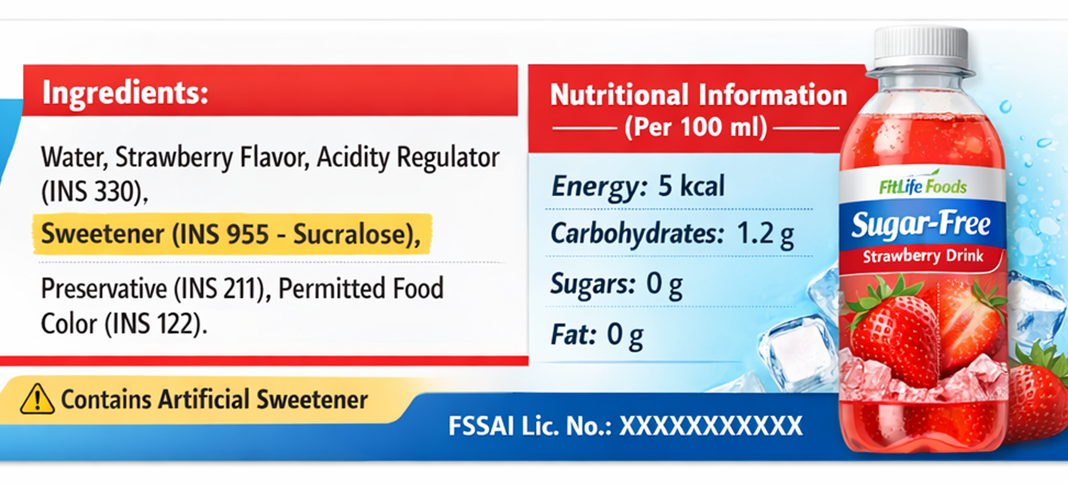
- Sweeteners are substances added to foods and beverages to provide sweetness, often as a substitute for sugar. They are widely used in the food industry because they offer sweetness while offering advantages such as lower calorie content, greater stability, and cost-effectiveness.
types of sweeteners
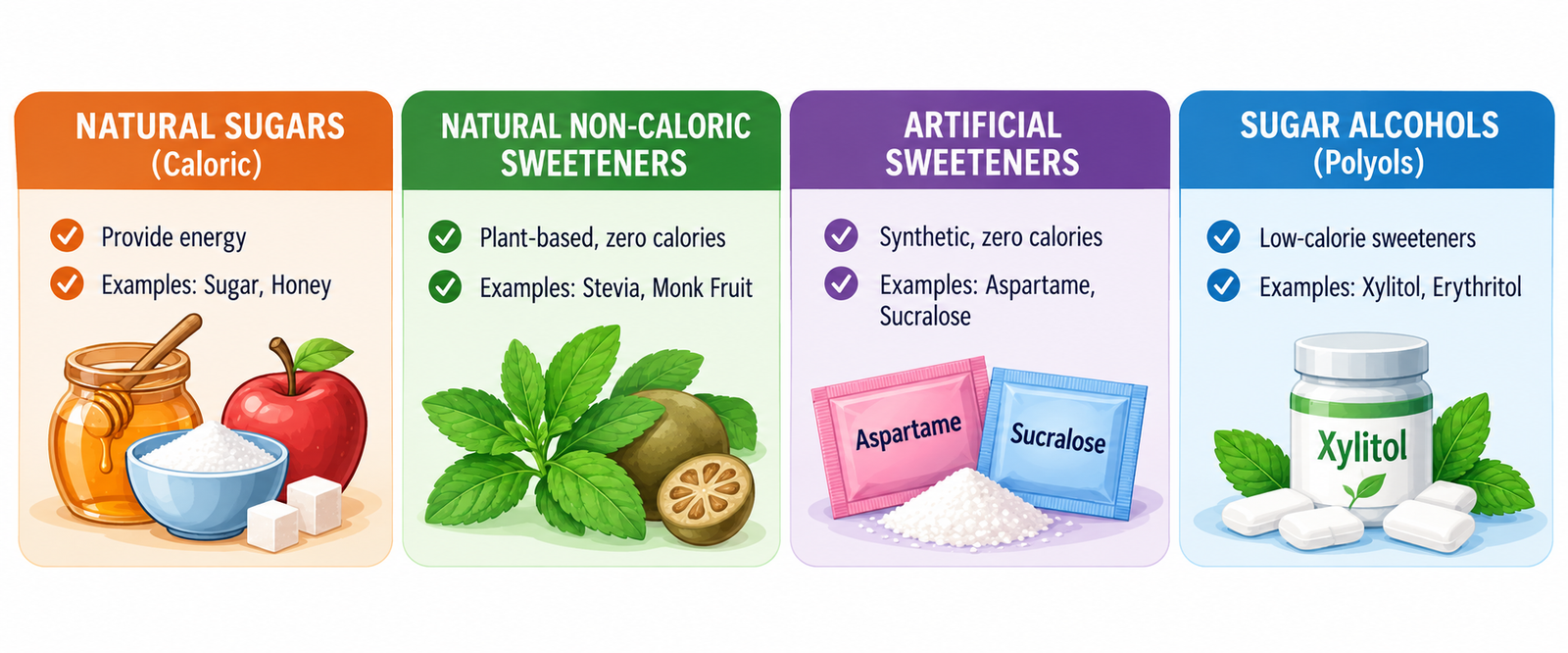
Natural Sweeteners (Caloric or Nutritive)
- They are derived from natural sources like plants, fruits, and tree saps.
- Causes a quick spike in blood glucose.
- Excess intake can be harmful.
- Examples: sugar, honey, jaggery (gur), maple syrup.
Natural Non-Caloric Sweeteners
- Plant-derived with little to no calories.
- No significant effect on blood glucose levels.
- Very sweet, thus used in tiny amounts.
- Examples: Stevia (steviol glycosides), monk fruit (Luo Han Guo)
Artificial Sweeteners
- Synthetic sugar substitutes.
- Very low or zero calories.
- Highly sweet.
- Used in sugar-free/diet products
- Examples: Aspartame, sucralose, saccharin, acesulfame potassium (Ace-K), neotame, advantame.
Sugar Alcohols (Polyols)
- Processed from natural sources.
- Lower calories than sugar.
- Slower blood glucose rise.
- Examples: Xylitol, erythritol, sorbitol, maltitol, mannitol, isomalt
Uses of Non-Sugar Sweeteners
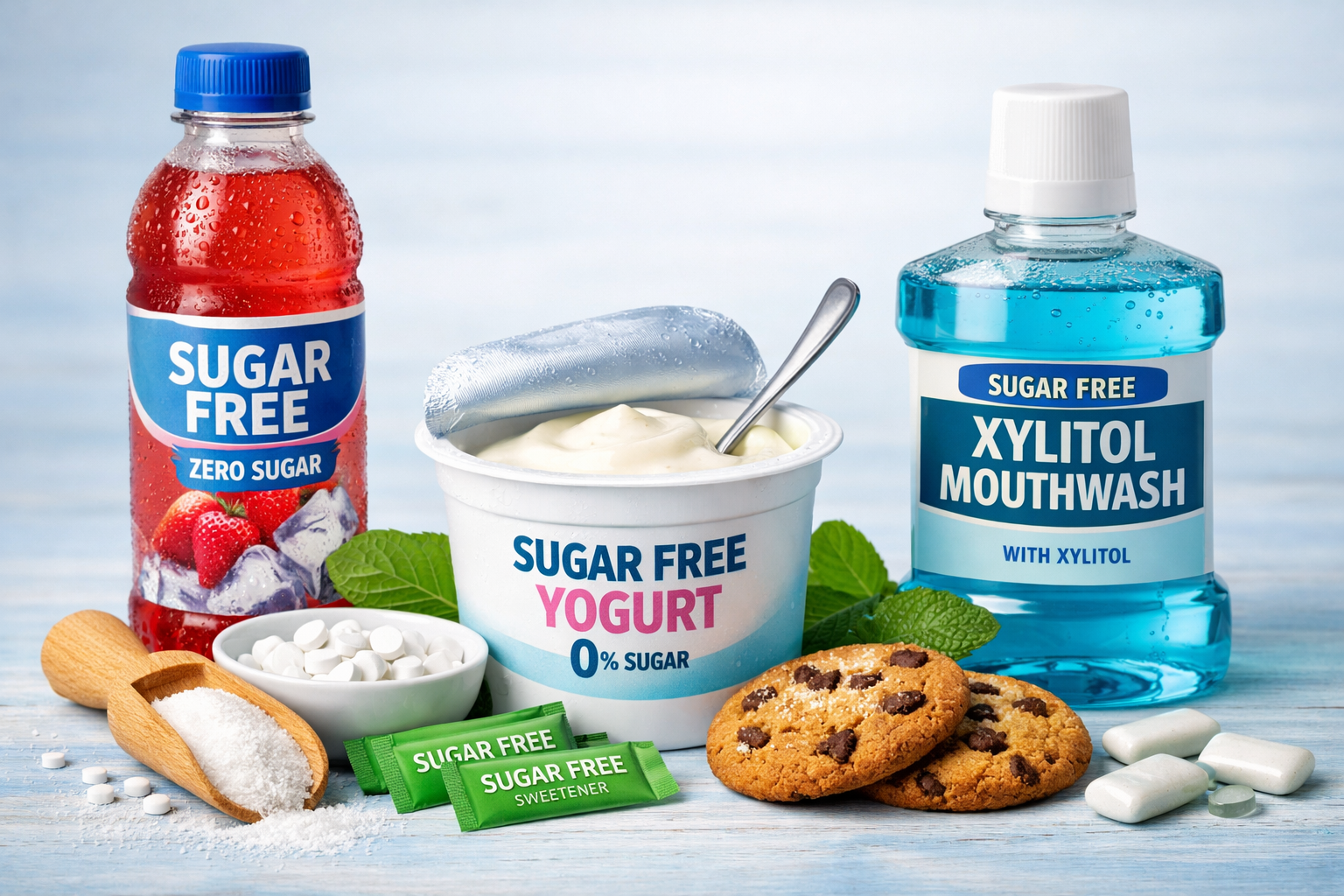
- Sugar-free beverages
- rely on high-intensity sweeteners that provide sweetness with little or no calories. These are much sweeter than sugar, so only a tiny amount is needed.
- Food products
- Sweeteners are widely added to packaged foods to provide sweetness with or without calories. You’ll find them in biscuits, yogurts, desserts, protein bars, jams, and “sugar-free” products.
- Special Uses
- Xylitol is widely used not only in foods but also in oral care products such as toothpaste and mouthwash.
Controversies of Artificial Sweeteners
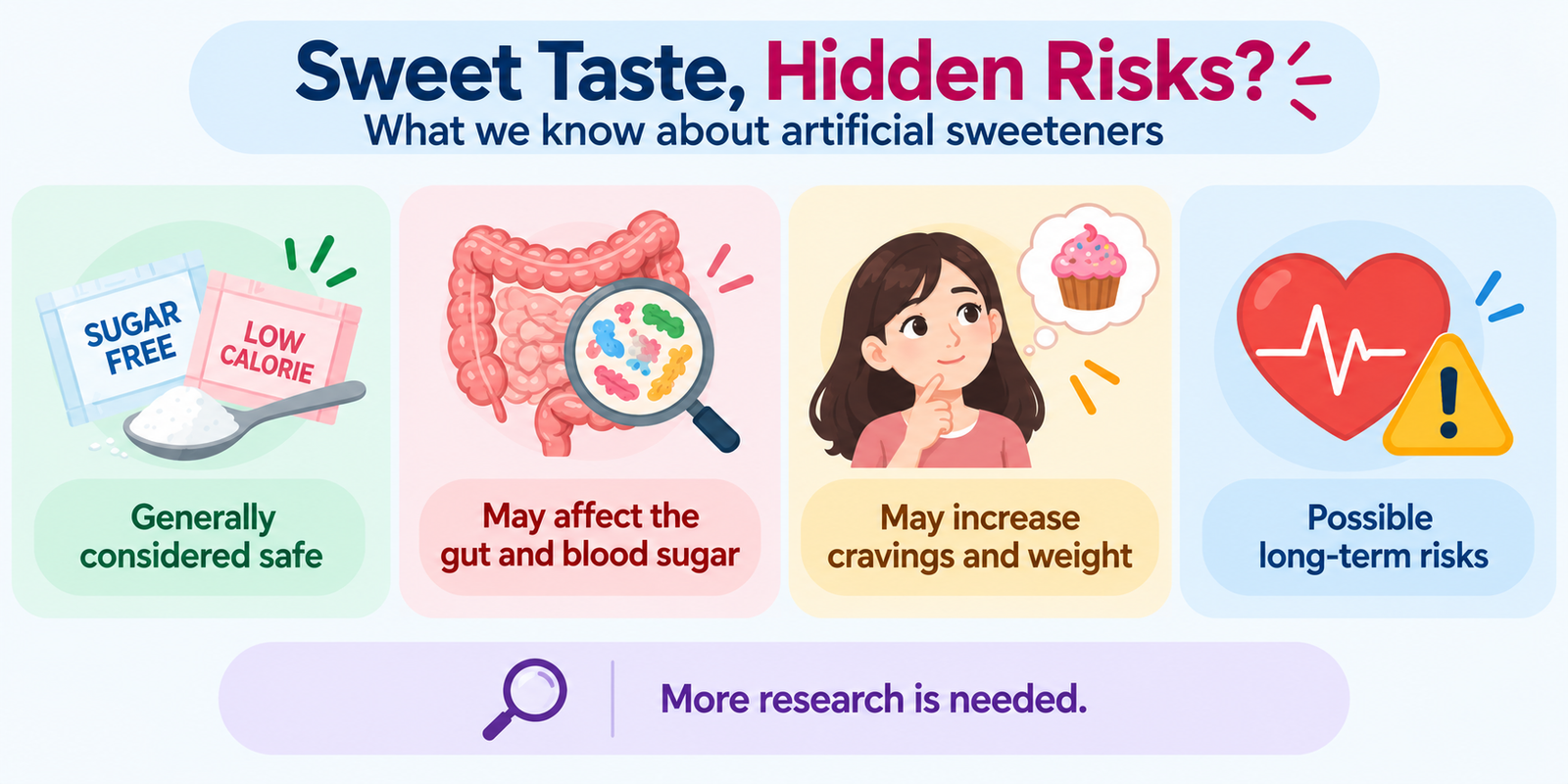
- Most authorities consider approved artificial sweeteners safe when used within recommended limits.
- Some studies link sucralose and saccharin to changes in gut microbiota, insulin response, and glucose levels.
- Sweet taste without calories may affect hunger signals, increase cravings, and potentially contribute to weight gain.
- However, more research is needed to better understand their long-term health impact.
Aspartame Concerns
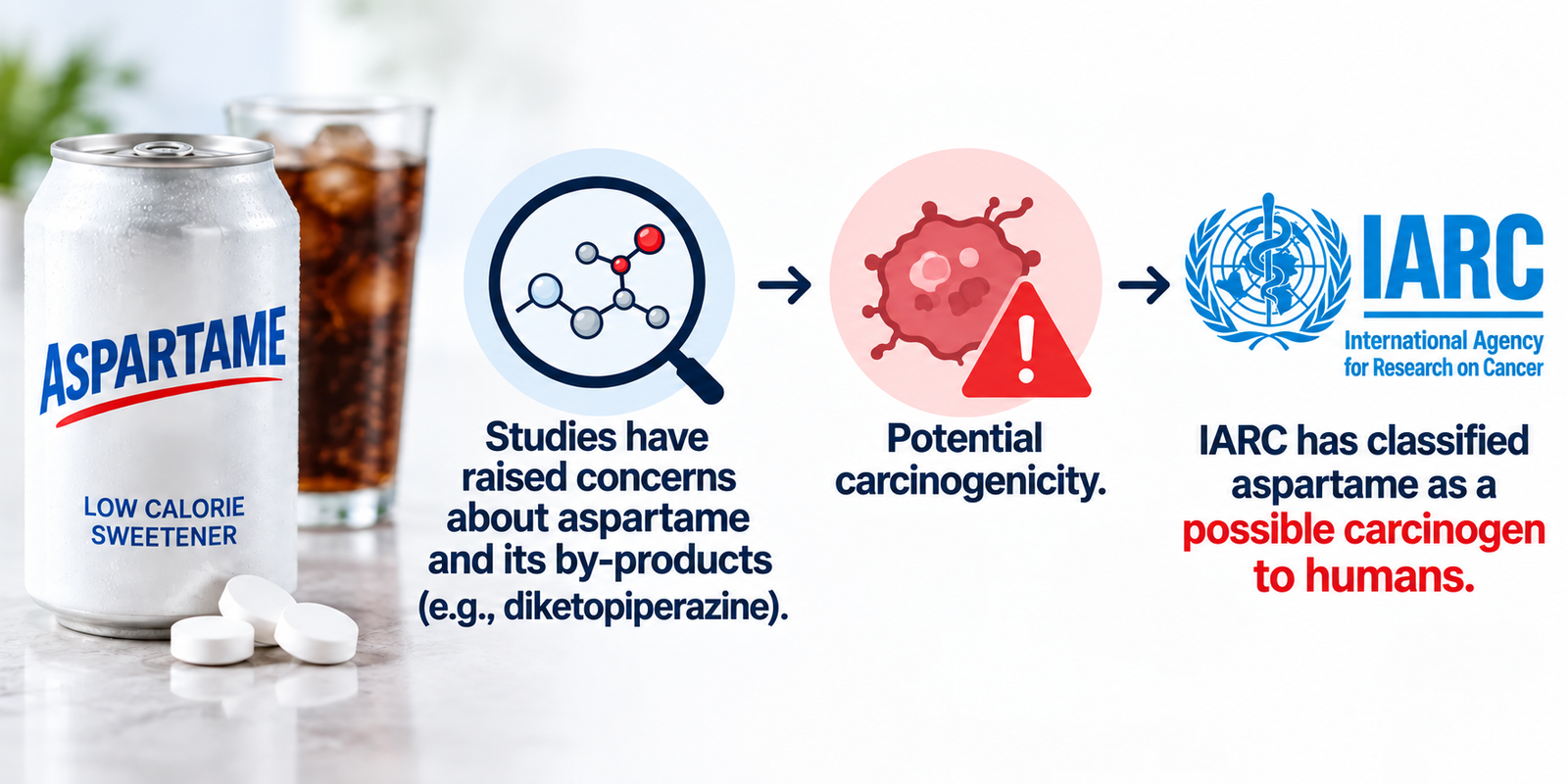
- Aspartame is about 200 times sweeter than sucrose and is widely used as an artificial sweetener worldwide and in India.
- Studies have raised concerns about aspartame and some of its metabolic by-products, including their potential carcinogenic effects.
- In 2023, the International Agency for Research on Cancer (IARC) classified aspartame as “possibly carcinogenic to humans” based on limited evidence.
However, it was concluded that there was no sufficient reason to change the existing acceptable daily intake (ADI) of 0–40 mg/kg body weight per day.
WHO Advice on Non-Sugar Sweeteners
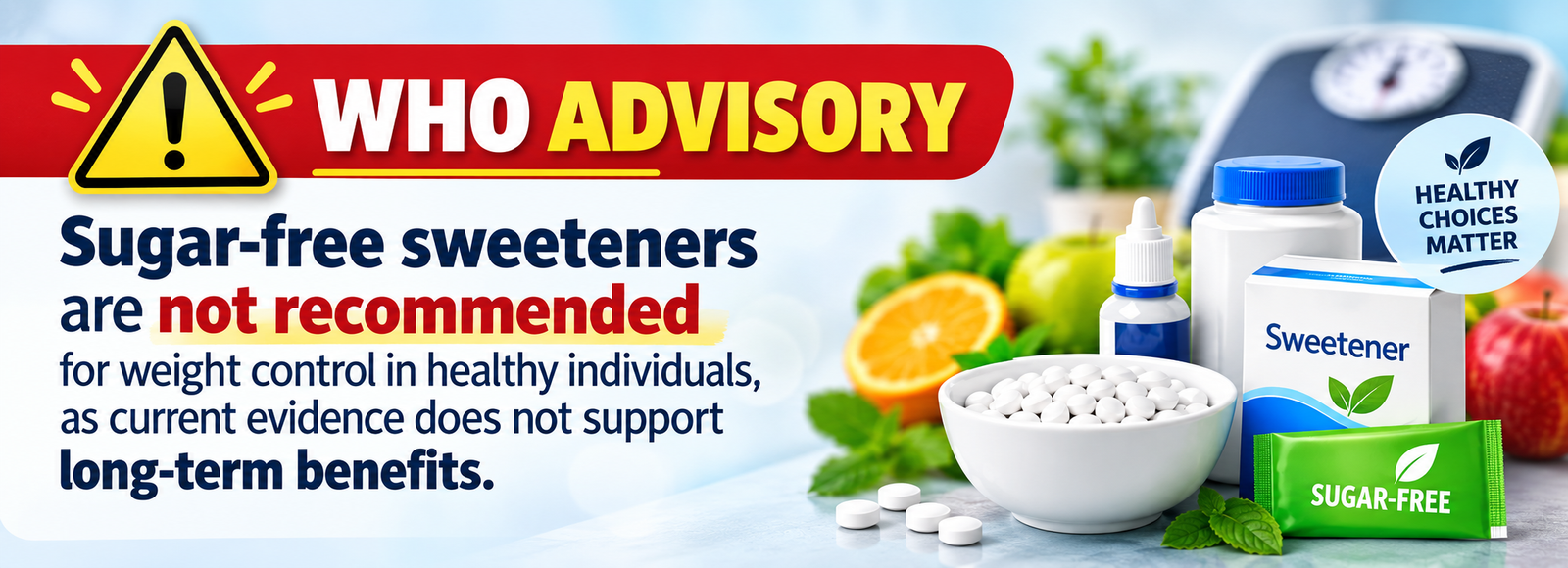
- WHO reviewed available scientific studies on non-sugar sweeteners.
- The evidence suggests non-sugar sweeteners do not provide long-term benefits for weight loss.
- Rather, long-term use may be associated with higher risks of type 2 diabetes and cardiovascular disease.
- Therefore, WHO recommends against using non-sugar sweeteners for weight control.
- Instead, WHO suggests reducing overall sweetness and choosing unsweetened foods and drinks.
Non-sugar sweeteners: Use in children
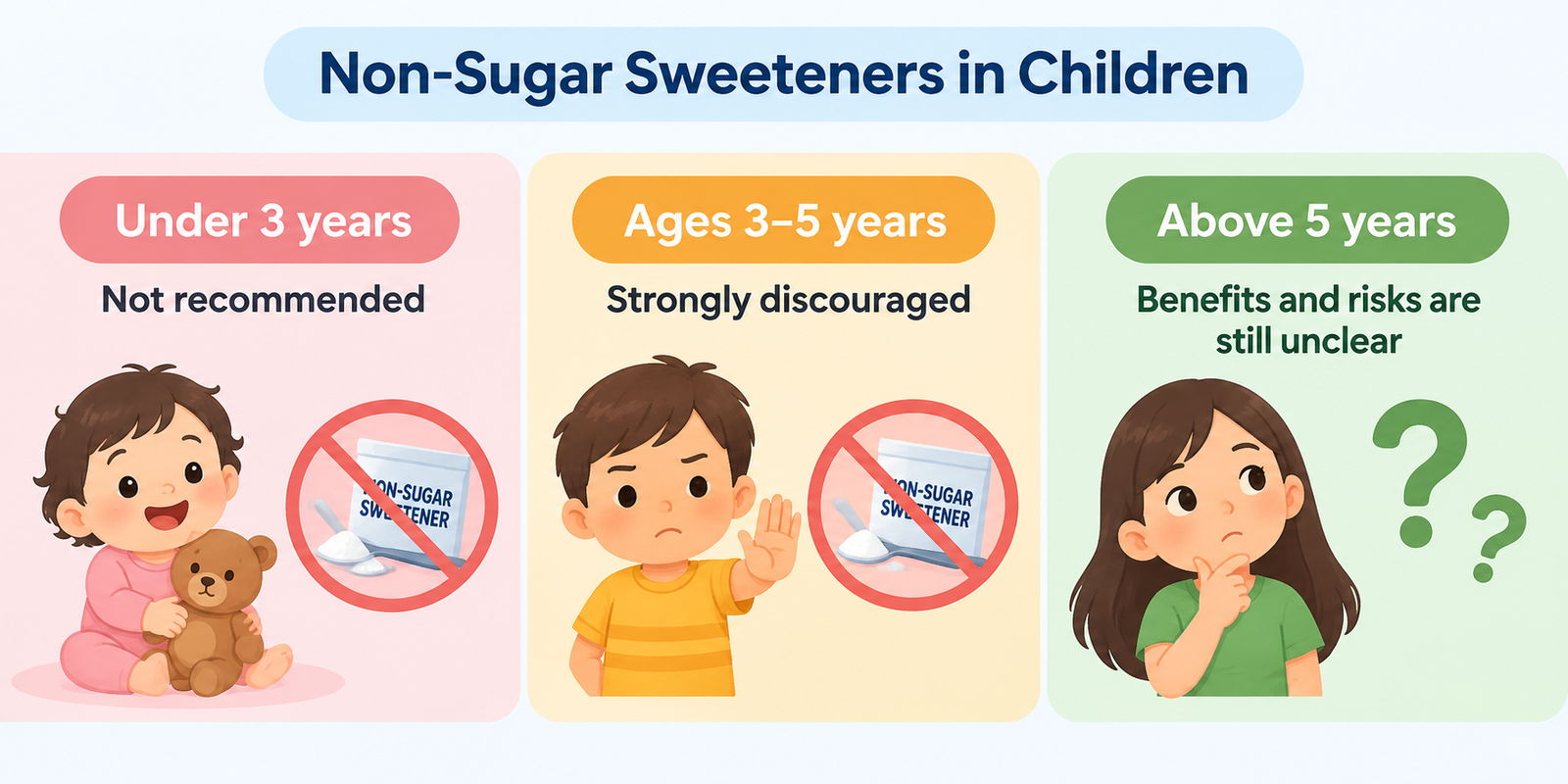
- Early childhood is a very important stage for growth and development, so extra care is needed when assessing risks.
- Non-sugar sweeteners are not recommended for children under 3 and are strongly discouraged up to age 5.
- After age 5, their benefits and risks for children—especially those who are overweight, obese, or have diabetes—are still unclear.
- Also, children tend to consume more per unit of body weight, increasing the risk of exceeding safe intake levels.
Common Sugar Claims on Packaging
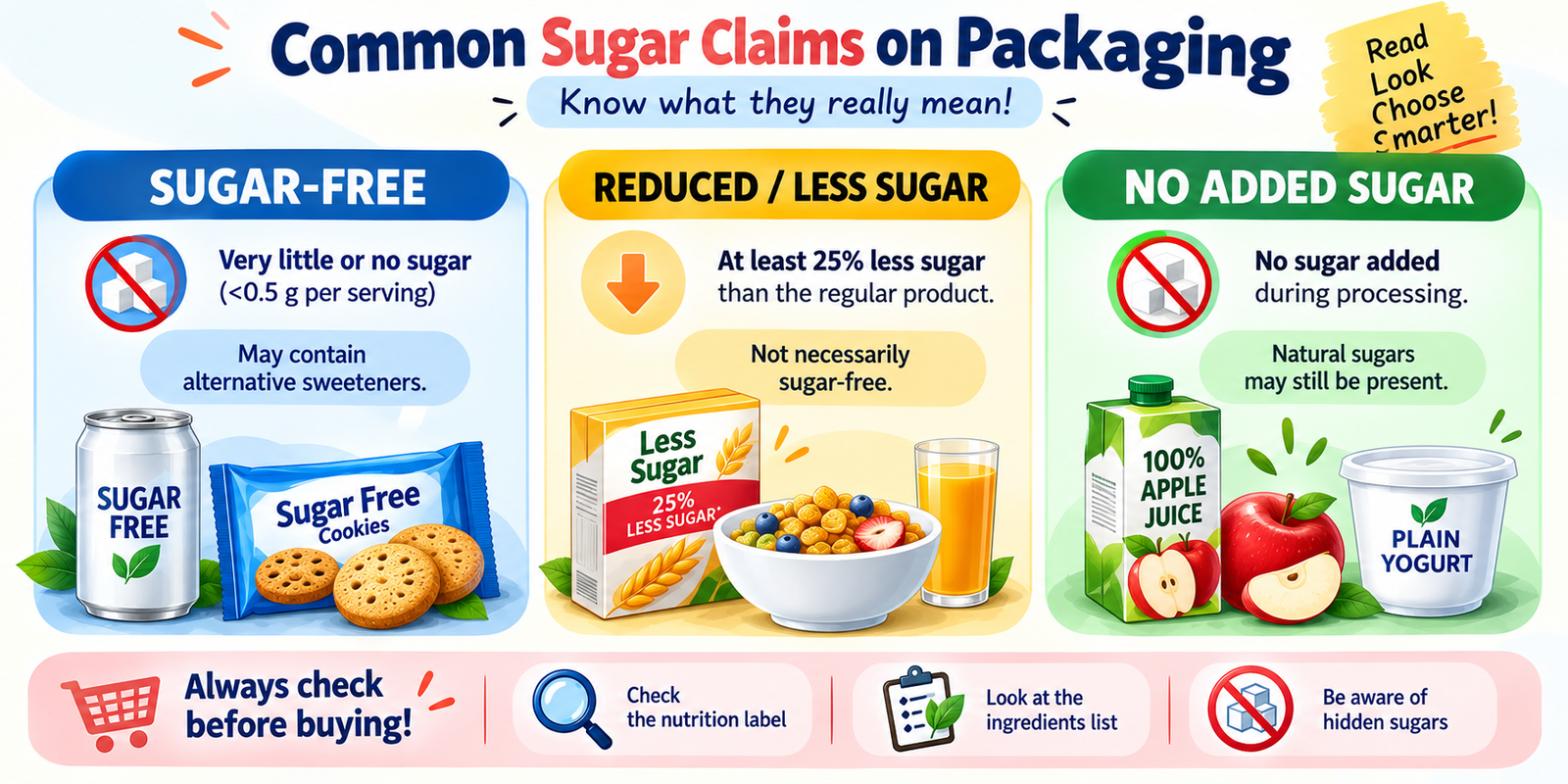
- Sugar free
- Means contains very little or no sugar, both natural and added.
- Typically <0.5 g per serving.
- Sugar is replaced with artificial or alternative sweeteners.
- Reduced/Less Sugar
- Usually reduced sugar, but not zero.
- At least 25% less sugar than the regular version.
- No Added Sugar
- No sugar added during processing.
- May still contain natural sugars (e.g., fruit sugars in juice).
sweeteners E Numbers
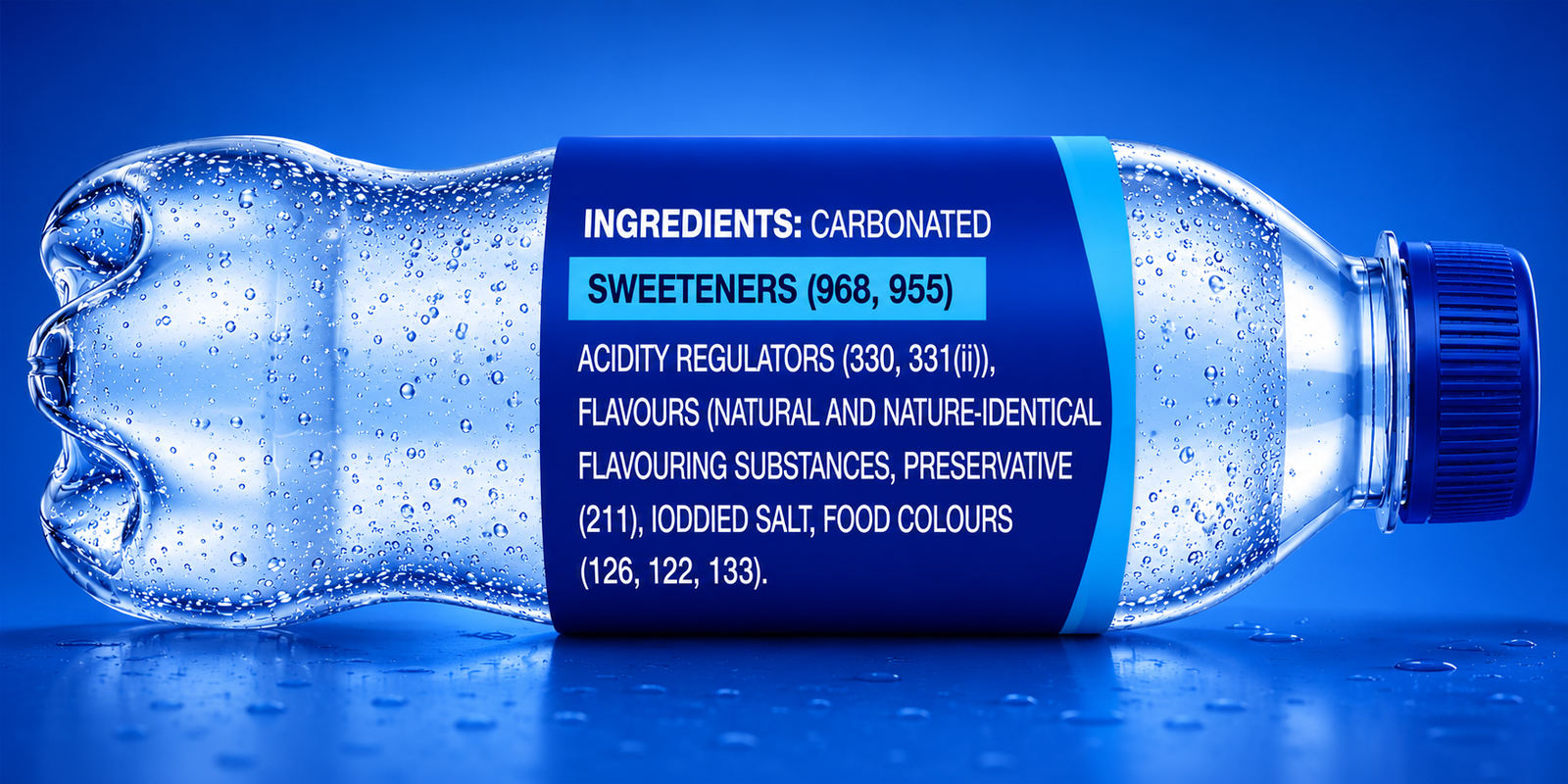
- Sweeteners and other food additives are assigned identification numbers, known as E numbers, which may appear on food labels.
- Some commonly encountered sweetener E numbers include:
- E950 – Acesulfame K
- E951 – Aspartame
- E952 – Cyclamate
- E954 – Saccharin
- E955 – Sucralose
- E960 – Steviol glycosides
- E961 – Neotame
- E968 – Erythritol
- E969 – Advantame
- Sugar alcohols (polyols) include E420 sorbitol, E421 mannitol, E965 maltitol, E966 lactitol, and E967 xylitol.
Key Takeaways
- Sugar-free ≠ automatically healthier.
- Sweeteners come in different types, including natural, artificial, and sugar alcohols.
- Approved sweeteners are generally considered safe when used within limits.
- Some long-term effects are still being studied.
- WHO does not recommend non-sugar sweeteners for weight control.
- Avoid in young children, as Long-term safety remains uncertain.
- Focus on reducing overall sweetness rather than simply using sweeteners.
- Read the label and look beyond claims such as “sugar-free” or “no added sugar.”
Further Reading
- Arias, N., González-Domínguez, R., Jáuregui, O., & Hidalgo, M. (2025). Non-nutritive sweeteners and metabolic health: Current evidence and emerging mechanisms. Current Research in Food Science, 9, 100632. https://doi.org/10.1016/j.crfs.2025.100632
- World Health Organization. (n.d.). Free sugar intake for adults and children. https://www.who.int/tools/elena/interventions/free-sugars-adults-ncds
- Dragomir, N., Grigore, D.-M., & Pogurschi, E. N. (2025). Beyond sugar: A holistic review of sweeteners and their role in modern nutrition. Foods, 14(18), 3182. https://doi.org/10.3390/foods14183182
- Hong, Q. Y., Huang, Y., Yang, J., Su, L. T., Dai, Z. R., & Zhao, C. F. (2025). Food sweeteners: Angels or clowns for human health?. Current research in food science, 10, 101032. https://doi.org/10.1016/j.crfs.2025.
- Sharma, H., Hilal, A., Aseri, G. K., & Jain, N. (2025). Sweet or sour? A review of the Aspartame market landscape, carcinogenicity, and its socioeconomic impact. Journal of food science and technology, 62(1), 24–37. https://doi.org/10.1007/s13197-024-06077-y
- https://www.who.int/news/item/14-07-2023-aspartame-hazard-and-risk-assessment-results-released
- https://www.who.int/news/item/15-05-2023- who-advises-not-to-use-non-sugar-sweeteners-for-weight-control-in-newly-released-guideline
- American Heart Association. (2024, September 23). What’s the difference between sugar-free and no added sugar? https://www.heart.org/en/healthy-living/healthy-eating/eat-smart/sugar/difference-between-sugar-free-and-no-added-sugar
- Sambra, V., López-Arana, S., Cáceres, P., Abrigo, K., Collinao, J., Espinoza, A., Valenzuela, S., Carvajal, P., Prado, G., Peralta, R., & Gotteland, M. (2020). Overuse of non-caloric sweeteners in foods and beverages: A concern for public health? Frontiers in Nutrition, 7, 68. https://doi.org/10.3389/fnut.2020.00068
- Mayo Clinic Staff. (n.d.). Artificial sweeteners: Any effect on blood sugar? Mayo Clinic. https://www.mayoclinic.org/diseases-conditions/diabetes/expert-answers/artificial-sweeteners/faq-20058038
- Campos, M. J., Silva, L. J. G., Pereira, A. M. P. T., & Pena, A. (2025). Non-sugar sweeteners and children: The current picture and controversies. Frontiers in Nutrition, 12, 1676373. https://doi.org/10.3389/fnut.2025.1676373
Disclaimer: The information provided on Medical Pharma Lifestyle Pulse is for educational and informational purposes only and is not intended as medical advice, diagnosis, or treatment. Always consult a qualified healthcare professional before making any decisions about your health, medications, or treatment. Never ignore or delay seeking professional medical advice based on information you have read on this website. While we strive to provide accurate and up-to-date information, we do not guarantee the completeness or accuracy of the content. For more information, please read our full Medical Disclaimer.