
Table of Contents
Introduction
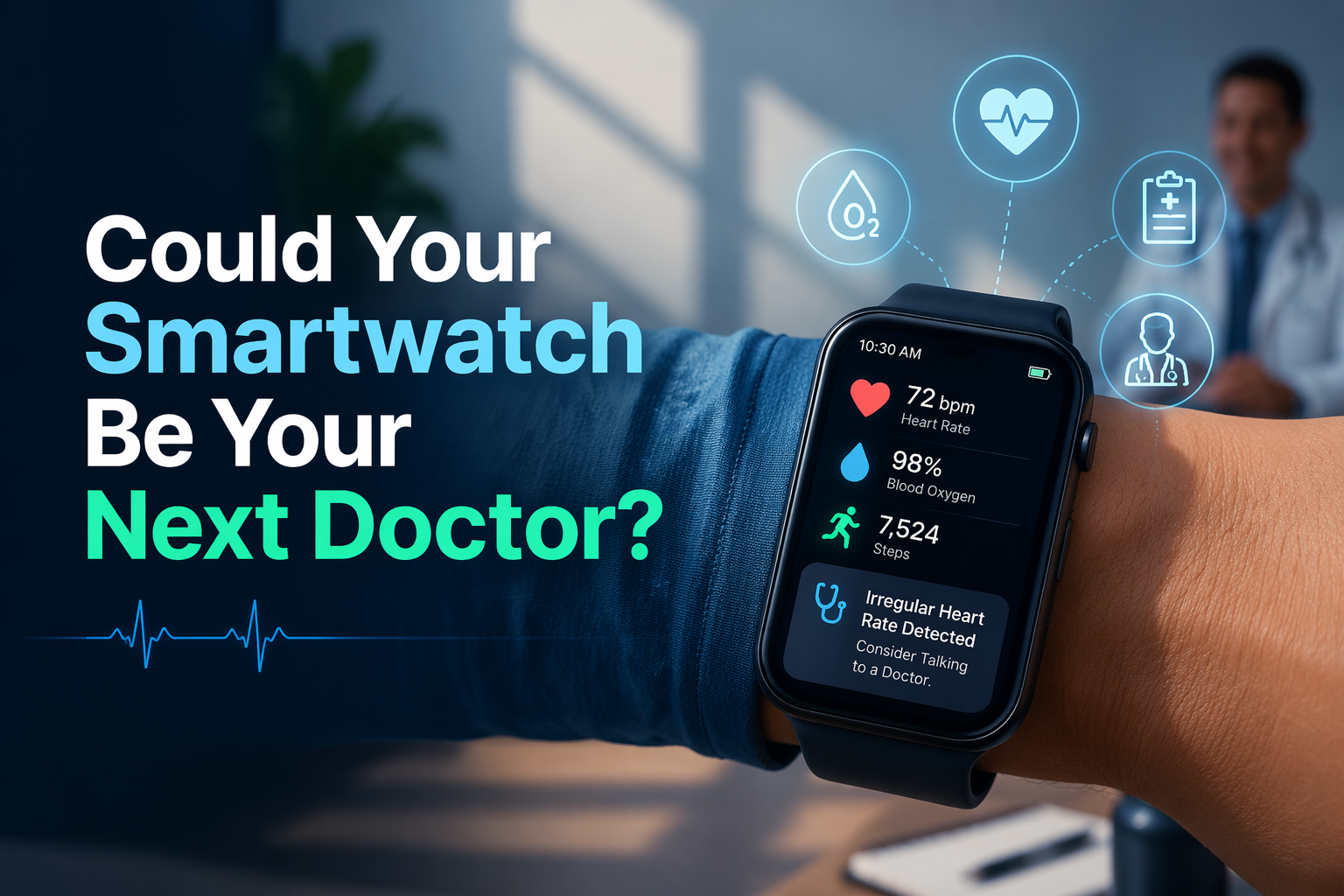
From smartwatches and fitness trackers to wearable heart monitors, health technology has become part of everyday life. These devices can track a range of health and fitness measures, helping people better understand their health and monitor changes over time.
But how accurate are these devices? What can they really tell us about our health, and where are their limitations?
This article explores the types, uses, benefits, and limitations of wearable health technology and explains what you should know before relying on wearable health data.
Classification of Wearable Health Devices
Based on Function
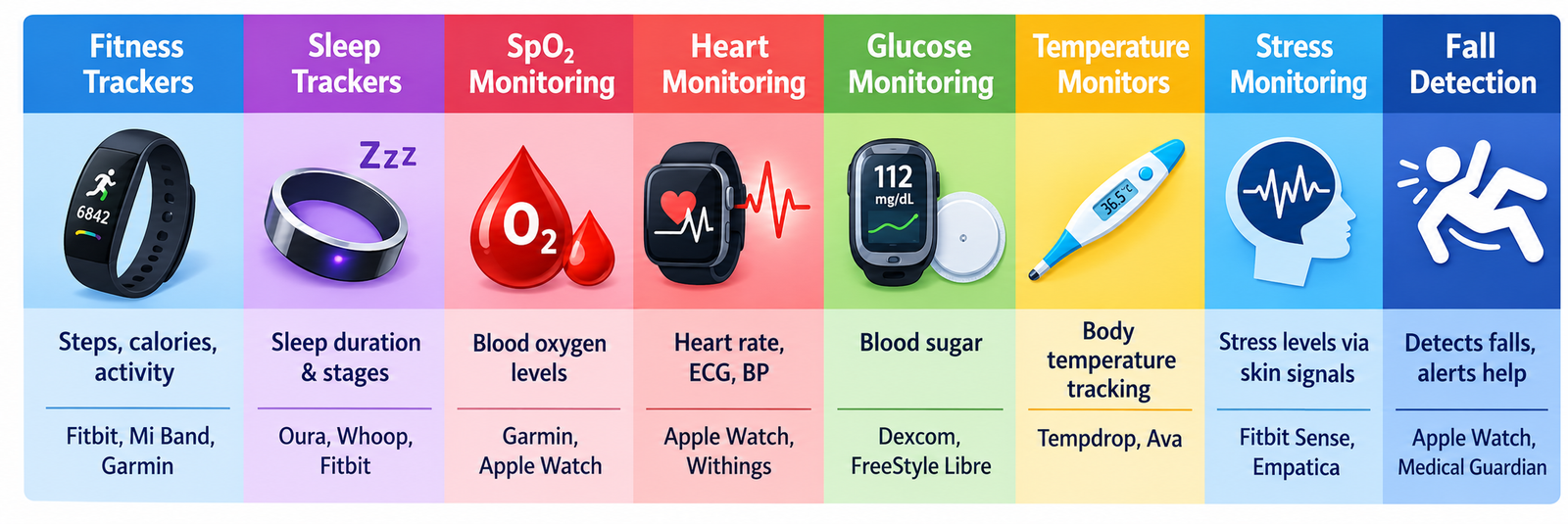
- Fitness and Activity Trackers– Monitor steps, calories burned, distance tracking, and active minutes. Example: Fitbit, Xiaomi Mi Band, Garmin
- Sleep Trackers– Track sleep duration, sleep stages, and disturbances. Example: Oura Ring, Whoop Strap, Fitbit Charge.
- Blood Oxygen Monitoring (SpO₂)– Useful for detecting respiratory issues, such as sleep apnea. Example: Pulse oximeter-enabled smartwatches (e.g., Garmin, Apple Watch Series 6+).
- Heart Rate and Heart Activity Monitoring – Measures heart rate, ECG, and blood pressure. Example: Apple Watch, Withings BPM Core, AliveCor Kardia.
- Glucose Monitoring-Especially important for diabetic patients. Example: Dexcom G6, FreeStyle Libre [Continuous glucose monitoring (CGM)].
- Body Temperature Monitors– Track body temperature for fever, ovulation, or illness monitoring. Example: Tempdrop, Ava Bracelet.
- Stress Monitoring– Measures skin conductance to detect stress levels. Example: Fitbit Sense, Empatica E4.
- Fall Detection – Often used in elderly care or for people with mobility challenges. Example: Medical Guardian, Apple Watch fall detection.
Based on Form Factor
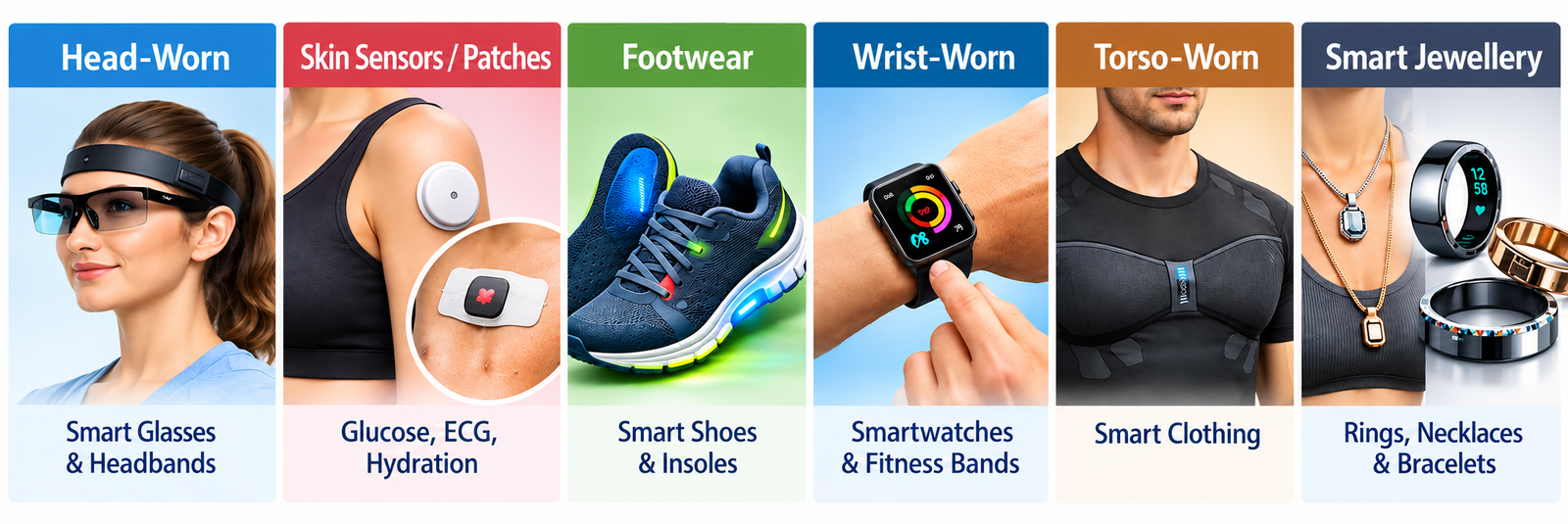
Wearable health devices can be categorized by form factor, which encompasses their physical shape, design, and how and where they are worn.
- Head-Worn– Includes smart glasses, headbands, and other devices worn on the head.
- Patches and Skin-mounted Sensors– For glucose, ECG, hydration, etc.
- Footwear/Smart Insoles– Smart shoes or other devices worn on the feet. Used for gait analysis and pressure monitoring.
- Wrist-Worn– Smartwatches, fitness trackers, and wristbands.
- Torso-Worn– Includes clothing with built-in sensors or technology, such as smart shirts or underwear.
- Smart Jewellery– Devices like smart rings, necklaces, and bracelets.
Key Benefits of Wearable Health Devices
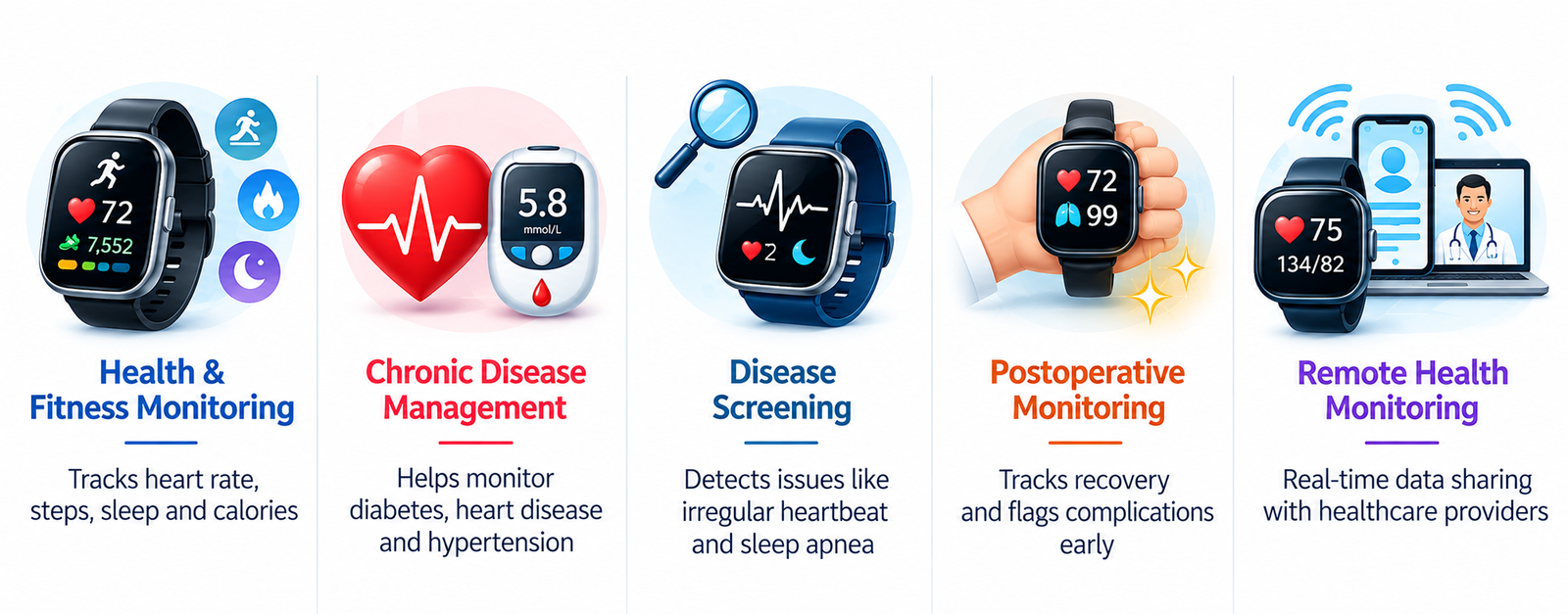
The key role of wearable health devices is to monitor and document a wide range of health data, helping users better understand their health and well-being and potentially share this information with their healthcare providers. The main applications are described below.
Health and Fitness Monitoring
- Wearable devices can track several health and fitness measures, including:
- heart rate
- blood oxygen levels
- sleep quality
- levels of physical activity, such as the number of steps taken and calories burned.
Chronic Disease Management
- Chronic diseases account for a large proportion of deaths worldwide and require regular monitoring. Wearable devices can help monitor people with conditions such as heart disease, diabetes, and some neurological disorders.
- Examples:
- Continuous glucose monitoring (CGM) devices
- Provide real-time glucose readings to help people with diabetes monitor their blood sugar levels.
- Example: Eversense, FreeStyle Libre, and Dexcom G7.
- Wearable ECG monitors
- Record heart activity and can help detect arrhythmias and other heart rhythm problems.
- Example: AliveCor devices, Apple Watch, ZioPatch, and ECG Check.
- Wearable BP monitors
- Some wearable devices can measure or estimate blood pressure and may support convenient BP monitoring. However, accuracy varies between devices, and cuffless technologies are still evolving.
- Example: Omron HeartGuide, Nanowear SimpleSense-BP, and LiveMetric’s cuffless BP sensor.
- Continuous glucose monitoring (CGM) devices
Disease Screening
Wearable devices can continuously monitor certain health signals and may help identify changes that need further medical evaluation.
- Examples
- Atrial Fibrillation Screening
- Atrial fibrillation, or AF/AFib, is a common type of heart rhythm disorder, or arrhythmia.
- Example: AliveCor Heart Monitor, the Irregular Heart Rhythm Notification feature on the Apple and Samsung Galaxy Watch.
- Sleep Apnea Screening
- Sleep apnea causes repeated interruptions in breathing during sleep.
- Example: Drowzle app, SleepCheckRx app, AcuPebble SA100, SANSA patch, and WatchPAT device. These instruments are specifically designed for the initial screening of adults suspected of having obstructive sleep apnea.
- Atrial Fibrillation Screening
Postoperative Monitoring
- Wearable devices can support recovery after surgery by continuously tracking health information.
- They can monitor:
- Heart rate
- Physical activity
- Sleep
- Pain levels
- This information helps patients and healthcare professionals track recovery and identify potential problems early.
Remote Health Monitoring
- Wearable devices are increasingly being used for remote healthcare.
- They can:
- Collect health data using built-in sensors
- Send information wirelessly to healthcare professionals
- Help monitor patients outside the hospital
- Reduce unnecessary hospital visits in some situations
- This allows healthcare professionals to monitor patients remotely and respond to changes when needed.
Limitations of Wearable Health Devices
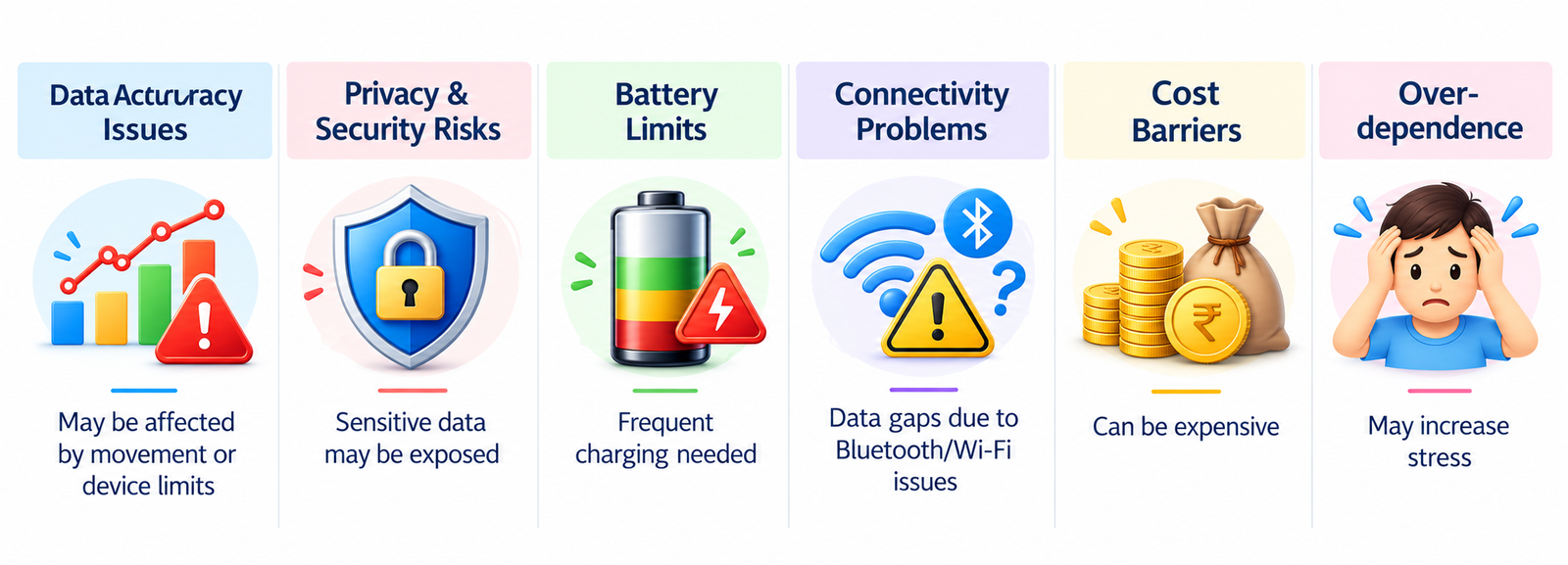
Challenges of Data Accuracy
Wearable health devices face challenges with the accuracy and reliability of the data they collect. Several factors that can affect data accuracy are listed below.
- Improper placement of the device on the body
- Human errors during tracking
- Sensors may experience interference from motion artifacts, diverse skin tones, tattoos, and body hair
- Battery/sensor quality degradation over time
- Software updates or changes in algorithms
- The absence of uniform data collection and analysis techniques across various devices and platforms leads to discrepancies in data reporting.
Data Security and Privacy Issues

The use of wearable health devices brings forth important privacy concerns due to the ongoing collection of sensitive data. Many users may not be fully aware of the risks of unauthorized access or discrimination if their health information is disclosed without their consent. However, even users who are aware of these privacy risks may still choose to share their data.
Beyond data collection, various wearables are instrumental in patient treatment, underscoring the vital importance of ensuring their security and privacy. Violations in these domains can greatly compromise patient health.
Other Practical Issues
- Limitations of Battery Life – Several wearable devices are equipped with batteries with limited lifespans, requiring frequent charging, which may affect data collection effectiveness.
- Connectivity Issues- Interruptions in Bluetooth or Wi-Fi connections can cause data loss or monitoring gaps. Furthermore, there are potential compatibility challenges between different platforms, including iOS and Android.
- Cost Issues – Cost is a critical consideration for wearable health devices, affecting various elements including accessibility, user acceptance, and their sustained usability and efficacy over time.
- Overdependence Issues—People may become fixated on achieving their daily goals. If the metrics do not correspond with their expectations, this can lead to stress, frustration, or compulsive behaviors. Moreover, ongoing monitoring can lead individuals to ignore their natural signals.
The Future of Wearable Health Devices: The Role of AI
Wearable devices are increasingly incorporating artificial intelligence (AI) to analyze health data and identify patterns that may be difficult to detect through conventional monitoring alone.
- Glucose monitoring: AI can analyze continuous glucose data to identify patterns and may help predict changes in glucose levels, supporting earlier intervention in people with diabetes.
- Cardiac monitoring: AI-powered ECG and cardiac monitoring systems can analyze large amounts of heart-rhythm data and may help identify subtle patterns associated with arrhythmias, supporting earlier clinical evaluation.
- Operating rooms and acute care: AI-powered computer vision systems are also being explored in healthcare settings, including operating rooms. Some technologies can be worn by healthcare professionals and use cameras and AI to analyze procedures, workflow, or clinical events in real time.
However, using AI in wearable health technology also brings technical, practical, privacy, and ethical challenges that need to be carefully addressed.
Key Takeaways
- Wearable health tech is rapidly growing and becoming part of daily life.
- Devices track real-time health data like heart rate, sleep, activity, and glucose.
- Useful for chronic disease management and early detection of conditions.
- Enables remote monitoring and better post-care recovery.
- Challenges include data accuracy, privacy risks, cost, and overdependence.
- AI can turn wearable data into useful health insights and early warnings.
- Future success depends on accuracy, security, and responsible use.
Further Reading
- Iqbal, S. M. A., et al. (2021). Advances in healthcare wearable devices. npj Flexible Electronics, 5(1), Article 9. https://www.nature.com/articles/s41528-021-00107-x#Sec1
- Smuck, M., et al. (2021). The emerging clinical role of wearables: factors for successful implementation in healthcare. npj Digital Medicine. https://pmc.ncbi.nlm.nih.gov/articles/PMC7946921/#Sec12
- Lu, L., Zhang, et al.(2020). Wearable Health Devices in Health Care: Narrative Systematic Review. JMIR mHealth and uHealth, 8(11), e18907.https://pmc.ncbi.nlm.nih.gov/articles/PMC7683248/#sec6
- Canali, S., Schiaffonati, V., et al. (2022). Challenges and recommendations for wearable devices in digital health: Data quality, interoperability, health equity, fairness. PLOS digital health, 1(10), e0000104.https://pmc.ncbi.nlm.nih.gov/articles/PMC9931360
- Kamga, P., et al. (2022). The use of wearable ECG devices in the clinical setting: A review. Current Emergency & Hospital Medicine Reports, 10(3), 67–72.https://pmc.ncbi.nlm.nih.gov/articles/PMC9244148
- Didyuk, O., et al. (2021). Continuous Glucose Monitoring Devices: Past, Present, and Future Focus on the History and Evolution of Technological Innovation. Journal of diabetes science and technology, 15(3), 676–683.https://pmc.ncbi.nlm.nih.gov/articles/PMC8120065/#:~
- Healthline Media LLC. (2023, September 5). Best blood pressure monitor watches. Healthline. https://www.healthline.com/health/best-blood-pressure-monitor-watches
- Tamura, T., & Huang, M. (2025). Cuffless blood pressure monitor for home and hospital use. Sensors, 25(3), 640. https://www.mdpi.com/1424-8220/25/3/640
- Ding, E. Y., et al. (2020). Emerging technologies for identifying atrial fibrillation. Circulation Research, 127(1), 128–142. https://pmc.ncbi.nlm.nih.gov/articles/PMC8386822/#:~:text
- American Academy of Sleep Medicine. (2023). Novel devices and applications for diagnosing obstructive sleep apnea [Montage, 8(2)]. E. Jerkins, et al. https://aasm.org/novel-devices-applications-diagnosing-obstructive-sleep-apnea
- Liao, Y., et al. (2019). The future of wearable technologies and remote monitoring in health care. ASCO Educational Book: American Society of Clinical Oncology. Annual Meeting, 39, 115–121.https://pmc.ncbi.nlm.nih.gov/articles/PMC8325475
- Bellini, V., et al. (2024). Wearable devices for postoperative monitoring in surgical ward and the chain of liability. Journal of Anesthesia, Analgesia and Critical Care, 4, Article 19. https://janesthanalgcritcare.biomedcentral.com/articles/10.1186/s44158-024-00154-6
- Sivakumar, C. L. V., et al. (Year). Addressing privacy concerns with wearable health monitoring technology. Journal/Conference Name, Volume(Issue), pages. https://wires.onlinelibrary.wiley.com/doi/abs/10.1002/widm.1535
- Zhang, B., et al. (2025). A survey on security and privacy issues in wearable health monitoring devices. Computers & Security, 155, Article 104453. https://www.sciencedirect.com/science/article/pii/S0167404825001427#d1e5736
- Mahajan, A., Heydari, K. & Powell, D. Wearable AI to enhance patient safety and clinical decision-making. npj Digit. Med. 8, 176 (2025). https://doi.org/10.1038/s41746-025-01554-w
Disclaimer: The information provided on Medical Pharma Lifestyle Pulse is for educational and informational purposes only and is not intended as medical advice, diagnosis, or treatment. Always consult a qualified healthcare professional before making any decisions about your health, medications, or treatment. Never ignore or delay seeking professional medical advice based on information you have read on this website. While we strive to provide accurate and up-to-date information, we do not guarantee the completeness or accuracy of the content. For more information, please read our full Medical Disclaimer.