
Table of Contents
Introduction
Atherosclerotic cardiovascular disease (ASCVD) remains one of the leading causes of illness and death worldwide despite the availability of cholesterol-lowering medications. Research has consistently shown that lowering low-density lipoprotein cholesterol (LDL-C), often called “bad cholesterol,” significantly reduces the risk of heart attacks, strokes, and other cardiovascular events. The greater and longer the reduction in LDL-C, the greater the protection against cardiovascular disease.
Current treatment guidelines recommend aggressive LDL-C lowering, especially for people with established cardiovascular disease or those at high risk. However, many patients do not achieve their target LDL-C levels with statins alone, highlighting the need for additional treatment options.
One of the effective way to further reduce LDL-C is by inhibiting proprotein convertase subtilisin/kexin type 9 (PCSK9). Injectable PCSK9 inhibitors have been shown to lower LDL-C by about 60% and reduce the risk of major cardiovascular events. However, their use has been limited due to the need for injections, high cost, and access challenges.
The US FDA’s approval of Lipfendra (enlicitide decanoate), the first oral PCSK9 inhibitor, on July 16, 2026, marks a major milestone in cholesterol management. Offering the benefits of PCSK9 inhibition in a once-daily tablet has the potential to improve convenience, increase treatment adherence, and help more patients.
What Is LIPFENDRA (Enlicitide)?
- Lipfendra (enlicitide decanoate) is a small-molecule oral PCSK9 inhibitor developed by Merck.
- It is approved for use alongside a healthy diet and regular exercise to reduce LDL-C in adults with:
- Hypercholesterolemia
- Heterozygous Familial Hypercholesterolemia (HeFH)
How Does LIPFENDRA Work?
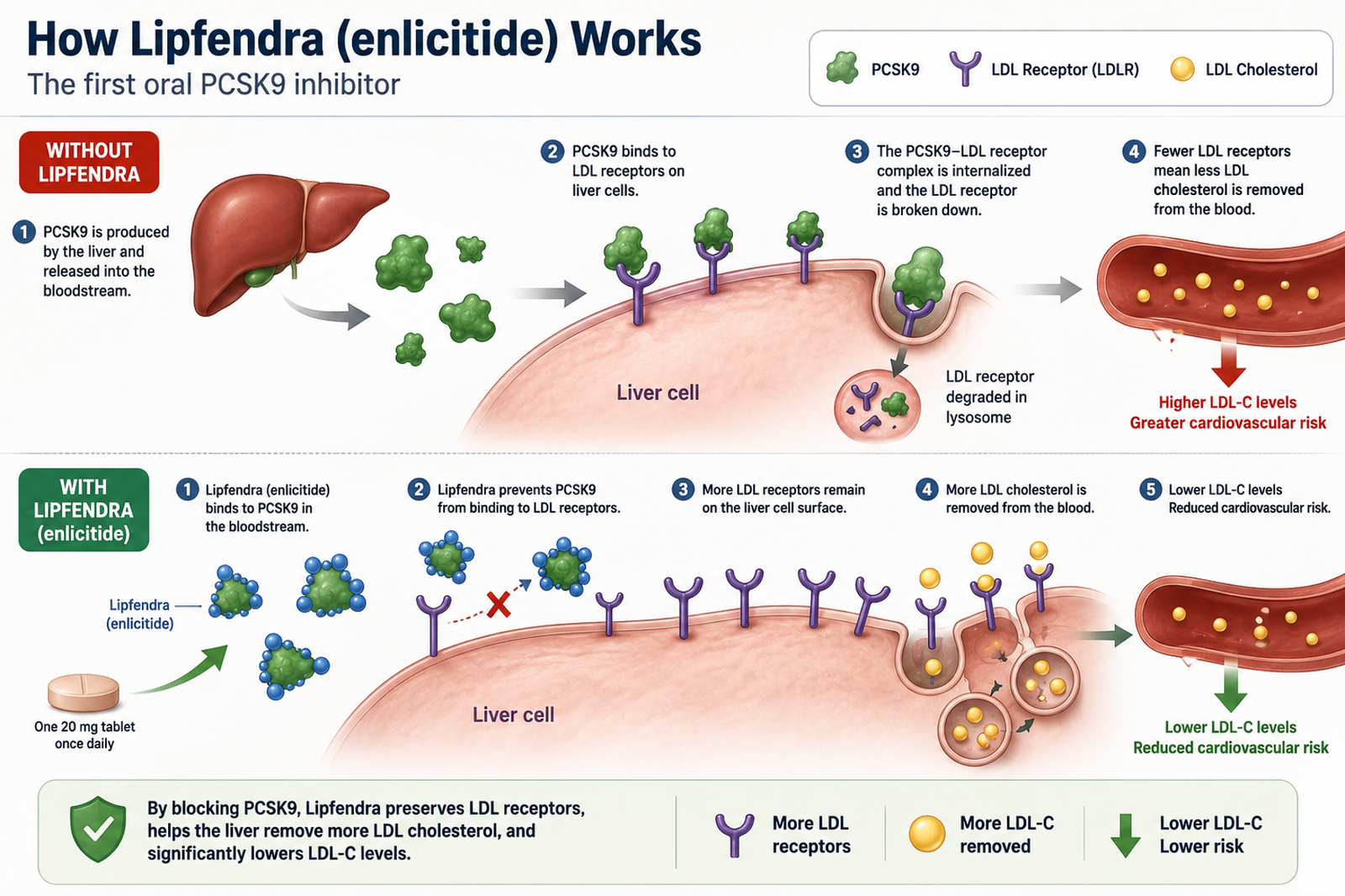
PCSK9 is a protein produced by the liver that plays an important role in regulating cholesterol levels. Normally, LDL receptors on liver cells remove LDL-C from the bloodstream. However, PCSK9 binds to these LDL receptors and causes their breakdown, leaving fewer receptors available to clear LDL-C. As a result, higher PCSK9 activity leads to fewer LDL receptors, higher LDL-C levels, and an increased risk of cardiovascular disease.
Lipfendra (enlicitide) works by binding to PCSK9 in the bloodstream and preventing it from attaching to LDL receptors. This protects the receptors from degradation, allowing more LDL receptors to remain on the surface of liver cells. With more receptors available, the liver can remove more LDL-C from the blood, leading to a significant reduction in LDL-C levels.
In simple terms:
➡️ Lipfendra blocks PCSK9
➡️ More LDL receptors remain on liver cells
➡️ More LDL-C is removed from the bloodstream
➡️ LDL-C levels decrease significantly
Which Clinical Trials Supported the Approval?
The FDA approval was based on two large Phase 3 studies from the CORALreef clinical trial program.
CORALreef Lipids trial (Week 24)
- Study design: Multicenter, randomized, double-blind, placebo-controlled Phase 3 trial Population:2,904 adults with hypercholesterolemia (with or without HeFH)
- Risk profile: History of ASCVD or at high risk for a first major ASCVD event.
- Randomization: 2:1 to LIPFENDRA 20 mg once daily (n=1,935) or placebo (n=969)
- Treatment duration:52 weeks
- Background therapy: Stable moderate- or high-intensity statin therapy (unless statin intolerance was documented), with or without other lipid-lowering therapy
- Eligibility: Required additional LDL-C lowering despite background lipid-lowering treatment
- Key exclusion: Use of other PCSK9 inhibitors was not permitted
- Results : Percent Change in Lipid Parameters from Baseline to Week 24
- Achieved a 56% placebo-adjusted reduction in LDL-C [95% confidence interval (CI): −61 to −51; p<0.001].
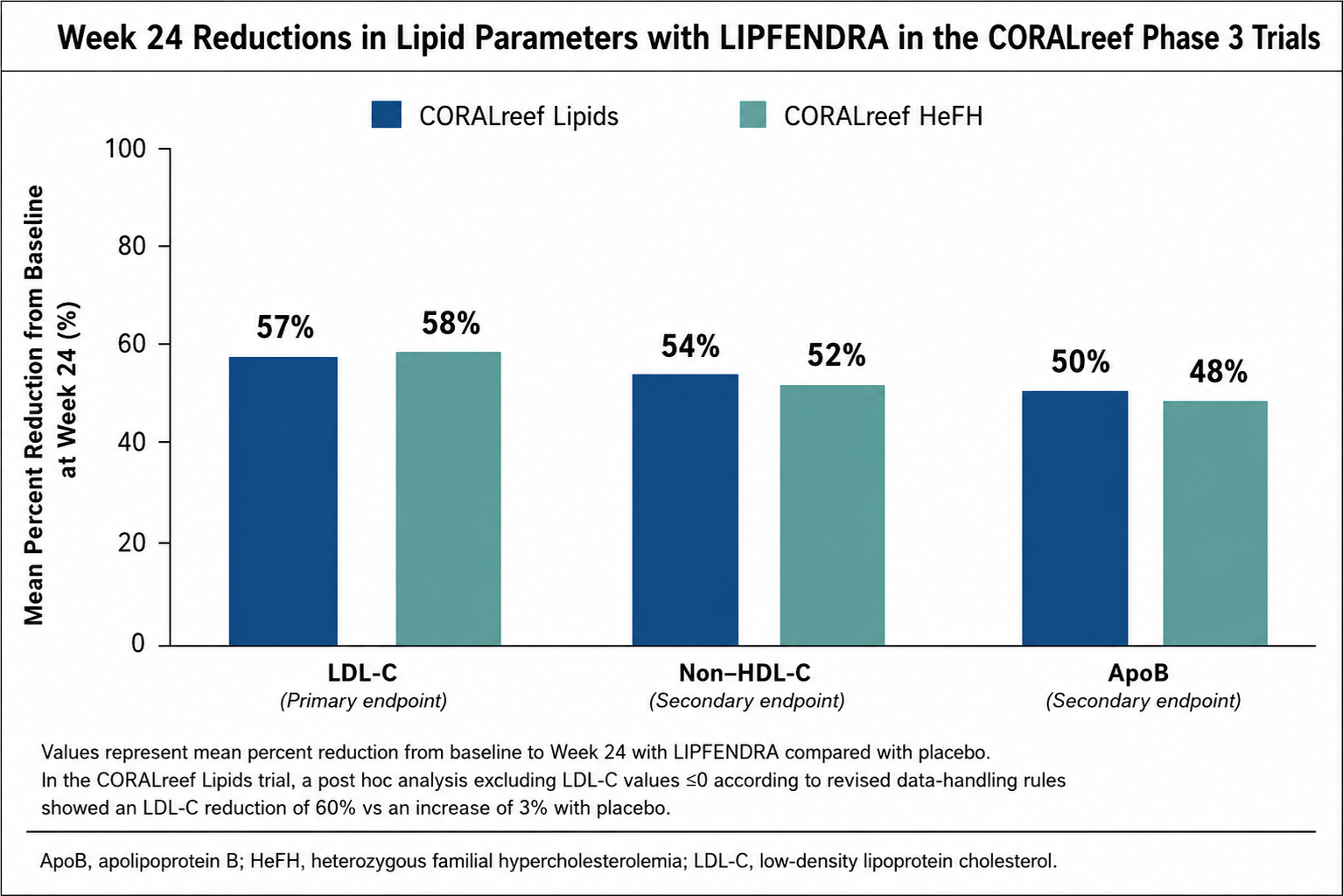
- Produced a 57% reduction in LDL-C from baseline compared with a 3% increase with placebo (primary endpoint).
- In a post hoc analysis excluding LDL-C values ≤0 according to revised data-handling rules, demonstrated a 60% placebo-adjusted reduction in LDL-C (95% CI: -62, -57%)
- Significantly reduced secondary lipid parameters, including:
- 54% reduction in Non-HDL Cholesterol (Non-HDL- C)
- 50% reduction in Apolipoprotein B (ApoB)
CORALreef HeFH trial (Week 24)
- Study design: Multicenter, randomized, double-blind, placebo-controlled Phase 3 trial
- Population: 303 adults with HeFH
- Randomization: 2:1 to LIPFENDRA 20 mg once daily (n=202) or placebo (n=101)
- Treatment duration: 52 weeks
- Background therapy: Stable moderate- or high-intensity statin therapy, with or without other lipid-lowering therapy
- Eligibility: Required additional LDL-C lowering despite background lipid-lowering treatment
- HeFH diagnosis: Confirmed by clinical criteria or genetic testing (genotyping)
- Results: Percent Change in Lipid Parameters from Baseline to Week 24
- Achieved a 59% placebo-adjusted reduction in LDL-C (95% CI: −66 to −53; p<0.001).
- Produced a 58% reduction in LDL-C from baseline compared with a 3% increase with placebo (primary endpoint).
- Significantly improved secondary lipid parameters, including:
- 52% reduction in Non-HDL C
- 48% reduction in ApoB
What Is the Safety Profile of LIPFENDRA?
LIPFENDRA demonstrated a generally favorable and consistent safety profile across both Phase 3 CORALreef trials, with low discontinuation rates due to adverse events.
CORALreef Lipids
- Overall frequency of adverse reactions was similar between the LIPFENDRA and placebo groups.
- Treatment discontinuation due to adverse reactions was comparable between both groups.
CORALreef HeFH
- Overall safety profile was generally consistent with that observed in the CORALreef Lipids trial.
- The most common adverse reactions reported more frequently with LIPFENDRA than placebo were:
- Diarrhea: 7% vs 2% with placebo
- Dizziness: 9% vs 4% with placebo
- Treatment discontinuation due to adverse reactions was similar between the LIPFENDRA and placebo groups.
How Is Lipfendra Taken?
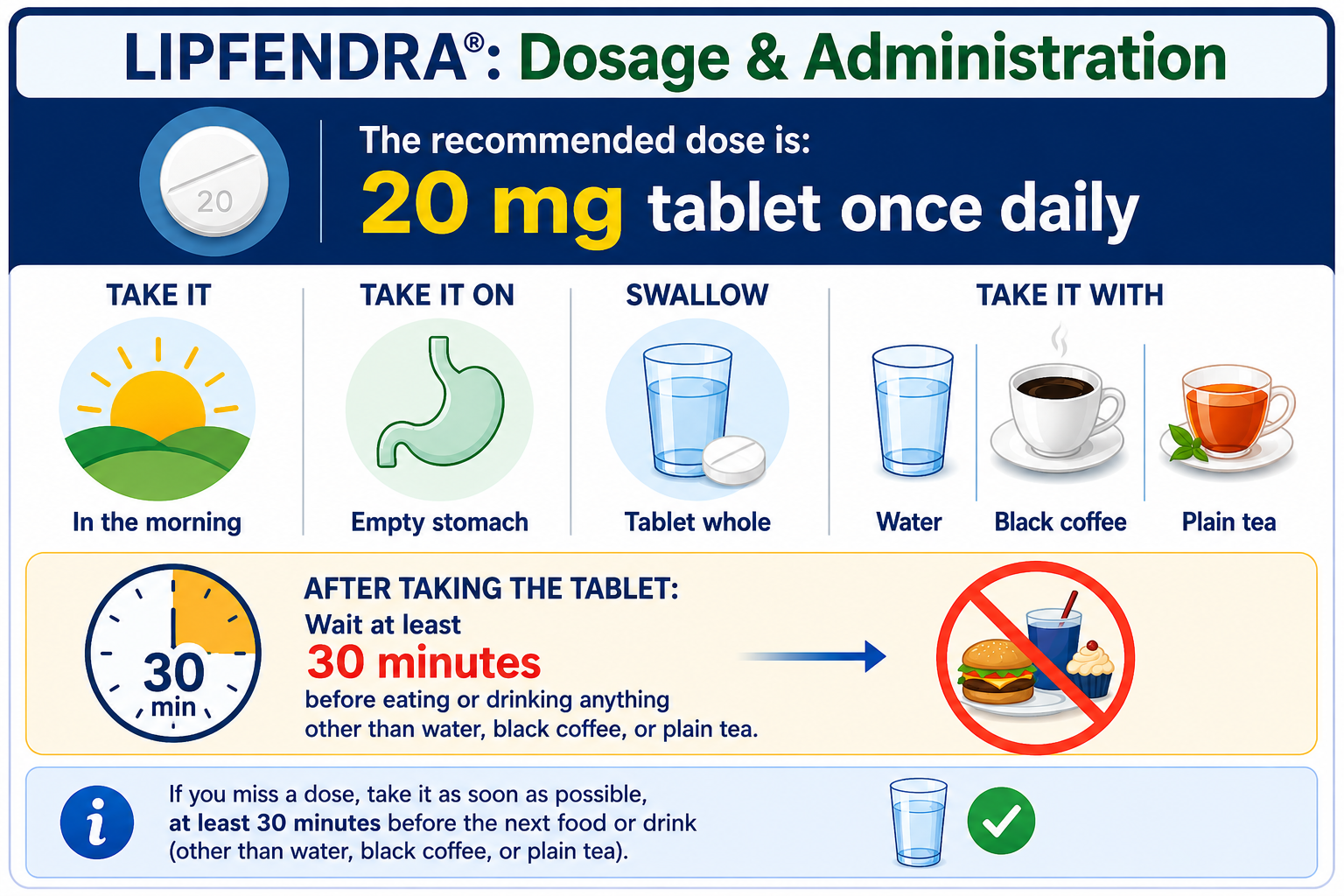
- The recommended dose is: 20 mg tablet once daily
- For best absorption:
- Take it in the morning
- Take it on an empty stomach
- Swallow the tablet whole
- Take it with: Water, Black coffee or Plain tea.
- After taking the tablet:
- Wait at least 30 minutes before eating or drinking anything other than water, black coffee, or plain tea.
- Missed Dose
- If a dose is missed, take it as soon as possible, provided it is at least 30 minutes before your next food or drink (except water, black coffee, or plain tea). Do not take two doses on the same day to make up for the missed dose.
Why Is This Approval Important?
Heart disease remains the leading cause of death worldwide, and lowering LDL-C is one of the most effective ways to reduce cardiovascular risk. Until now, PCSK9 inhibitors such as evolocumab and alirocumab were available only as injections.
The availability of the first oral PCSK9 inhibitor, Lipfendra, represents an important milestone by:
- ✅ Expanding treatment options
- ✅Improving convenience
- ✅ Potentially increasing patient adherence
- ✅Delivering substantial LDL-C reduction comparable to injectable PCSK9 therapies
As more oral lipid-lowering therapies become available, managing high cholesterol may become easier for many patients.
Key Takeaways
📌 Lipfendra (enlicitide) is the first FDA-approved oral PCSK9 inhibitor.
📌 It is approved for adults with hypercholesterolemia, including HeFH.
📌 It lowers LDL-C by preventing PCSK9 from destroying LDL receptors.
📌 Clinical trials showed approximately 56–60% reductions in LDL-C after 24 weeks.
📌 It is taken as one 20 mg tablet once daily on an empty stomach.
📌 The most commonly reported side effects are diarrhea and dizziness.
Further Reading
- U.S. Food and Drug Administration. (2026, July 17). FDA approves first oral PCSK9 inhibitor to lower LDL cholesterol in adults with high cholesterol. https://www.fda.gov/news-events/press-announcements/fda-approves-first-oral-pcsk9-inhibitor-lower-ldl-cholesterol-adults-high-cholesterol
- Catapano, A. L., Mikhailova, E., Navar, A. M., Banka, P., Corral, P., Saxena, M., Steg, P. G., Verma, S., Kordahi, A. Y., Mendizabal, G., Zhu, P., Ballantyne, C. M., & the CORALreef AddOn Investigators. (2026). Oral PCSK9 inhibitor enlicitide versus oral nonstatin therapies: A phase 3 randomized clinical trial. Journal of the American College of Cardiology. Advance online publication. https://doi.org/10.1016/j.jacc.2026.03.036
- Ballantyne, C. M., Gellis, L., Tardif, J.-C., Banka, P., Navar, A. M., Asprusten, E. A., Scott, R., Stroes, E. S. G., Froman, S., Mendizabal, G., Wang, F., & Catapano, A. L. (2026). Efficacy and safety of oral PCSK9 inhibitor enlicitide in adults with heterozygous familial hypercholesterolemia: A randomized clinical trial. JAMA, 335(2), 129–139. https://doi.org/10.1001/jama.2025.20620
- Joszt, L. (2026, July 16). FDA approves enlicitide, first oral PCSK9 for high cholesterol. The American Journal of Managed Care. https://www.ajmc.com/view/fda-approves-enlicitide-first-oral-pcsk9-for-high-cholesterol
- Merck Sharp & Dohme LLC. (2026, July). LIPFENDRA® (enlicitide) tablets, for oral use: Prescribing information. https://www.merck.com/product/usa/pi_circulars/l/lipfendra/lipfendra_pi.pdf
Disclaimer: The information provided on Medical Pharma Lifestyle Pulse is for educational and informational purposes only and is not intended as medical advice, diagnosis, or treatment. Always consult a qualified healthcare professional before making any decisions about your health, medications, or treatment. Never ignore or delay seeking professional medical advice based on information you have read on this website. While we strive to provide accurate and up-to-date information, we do not guarantee the completeness or accuracy of the content. For more information, please read our full Medical Disclaimer.