
Table of Contents
Introduction
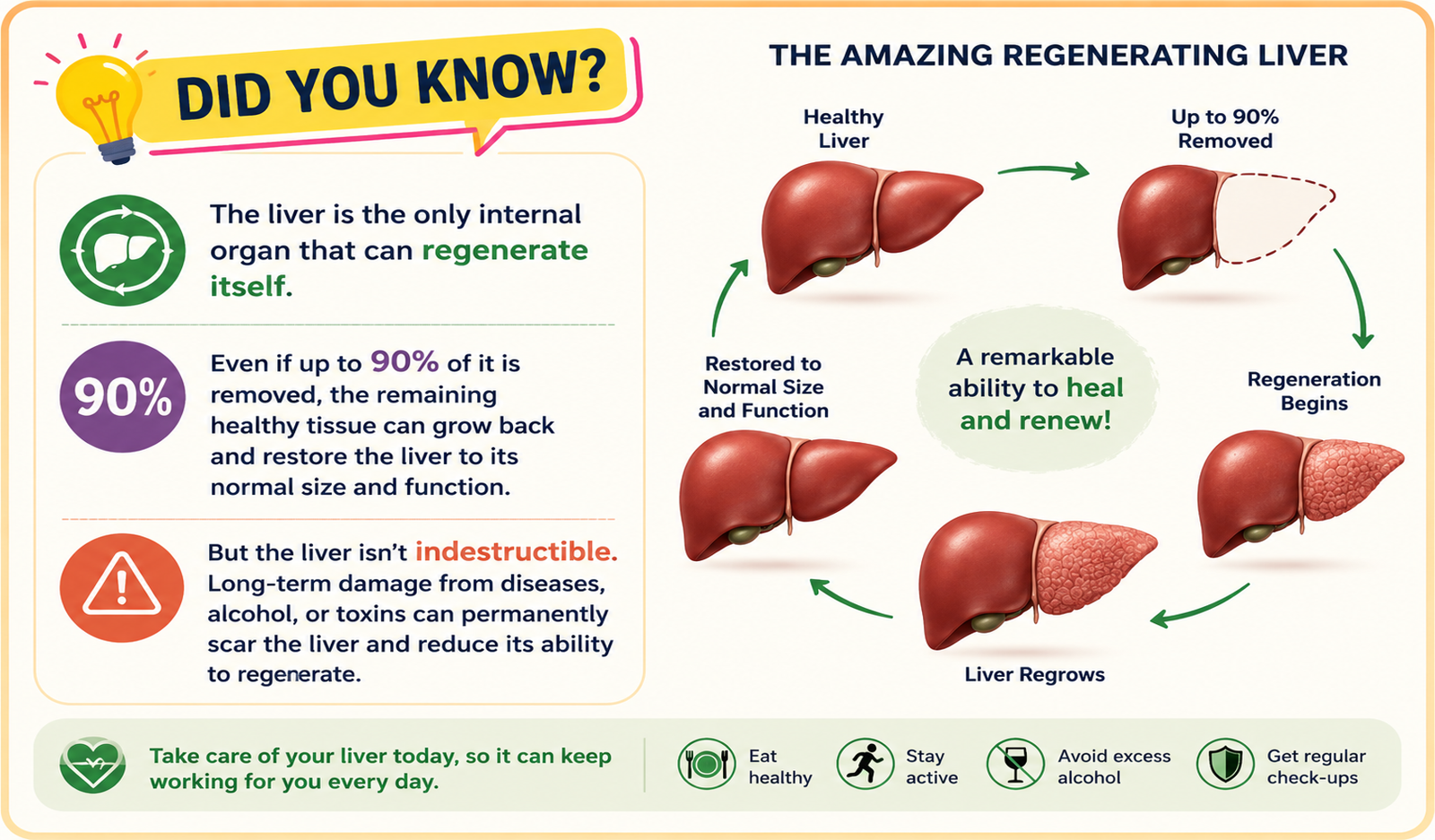
The liver is the second-largest organ in the human body (after the skin). It performs hundreds of essential functions that keep your body healthy, making it one of the body’s most important organs. Understanding the liver’s structure and functions can help you appreciate its importance and take steps to keep it healthy.
Size, Shape, and Appearance
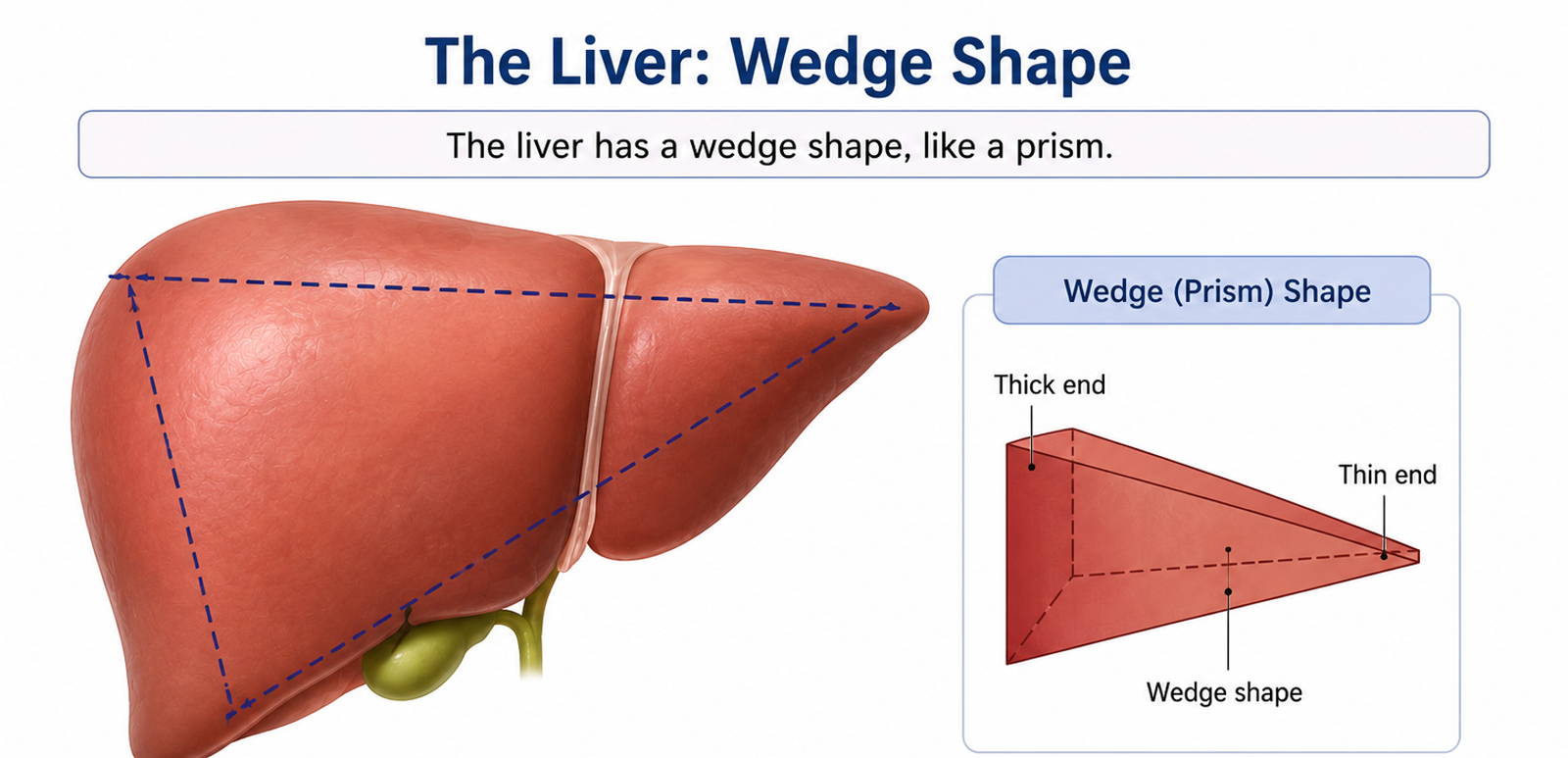
- a prism- or wedge-shaped organ.
- Pinkish-brown in color, soft in texture, and rich in blood supply.
- Its weight can vary between 1.2 and 1.8 kg in humans (1.4–1.8 kg in adult men and 1.2–1.4 kg in adult women)
Location
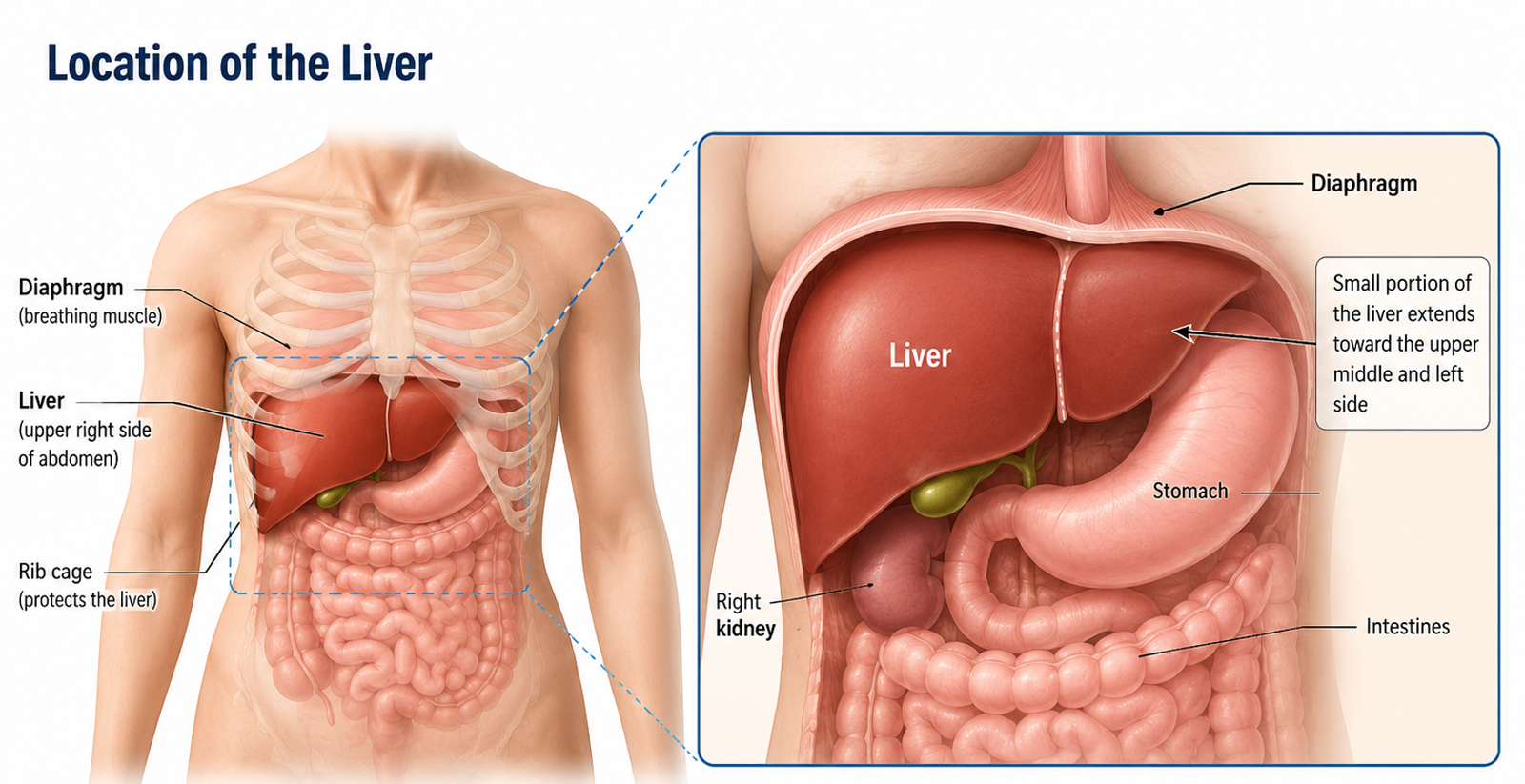
- It is located in the upper right abdomen, just beneath the diaphragm and protected by the lower rib cage.
- It lies above the stomach, right kidney, and intestines, with a small portion extending toward the upper-middle and left sides of the abdomen.
Lobes
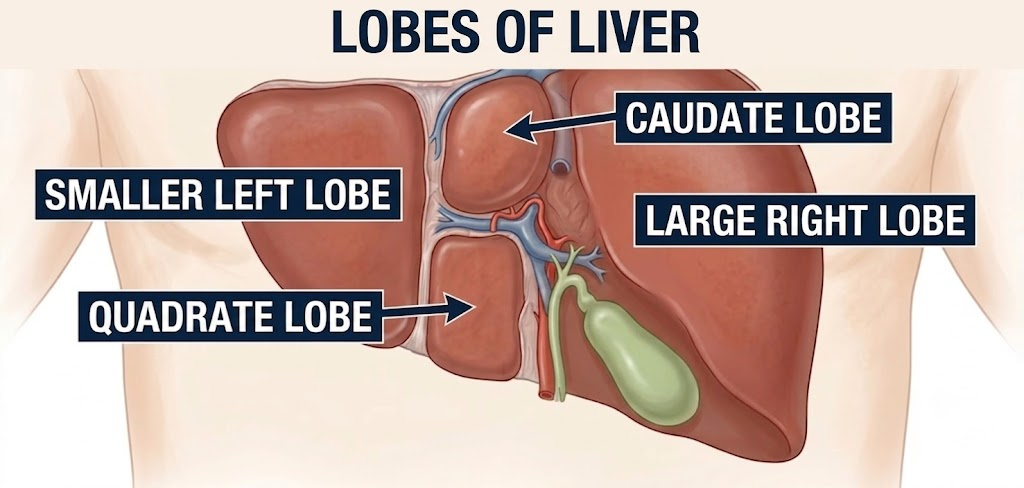
- The liver is divided into two main parts: a large right lobe and a smaller left lobe.
- It also has two smaller lobes, the quadrate and caudate, located on the underside of the liver.
Blood Supply
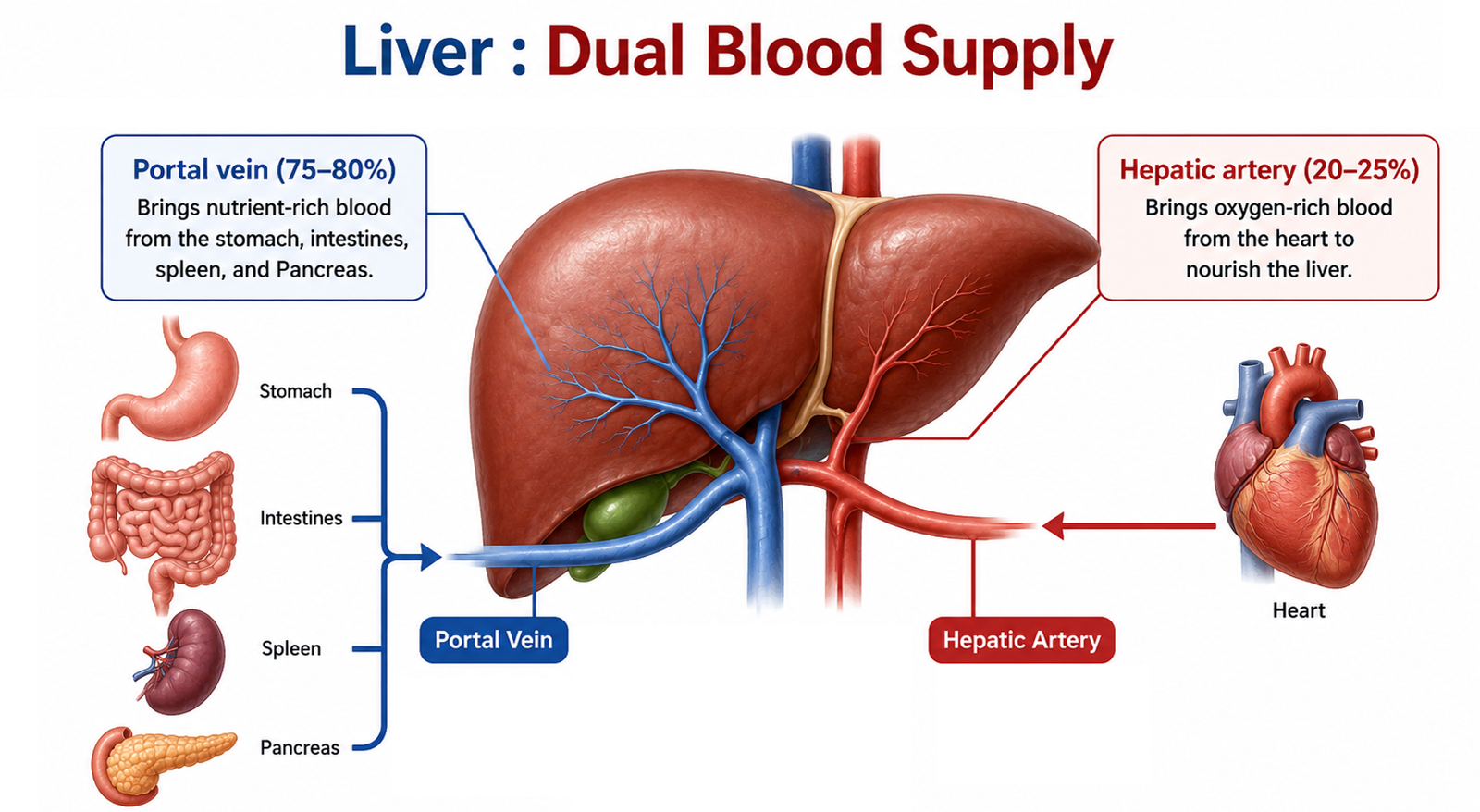
- It has a dual blood supply, meaning it receives blood from two sources:
- This dual system ensures a continuous flow of nutrients and oxygen, supporting the vital functions.
Biliary System
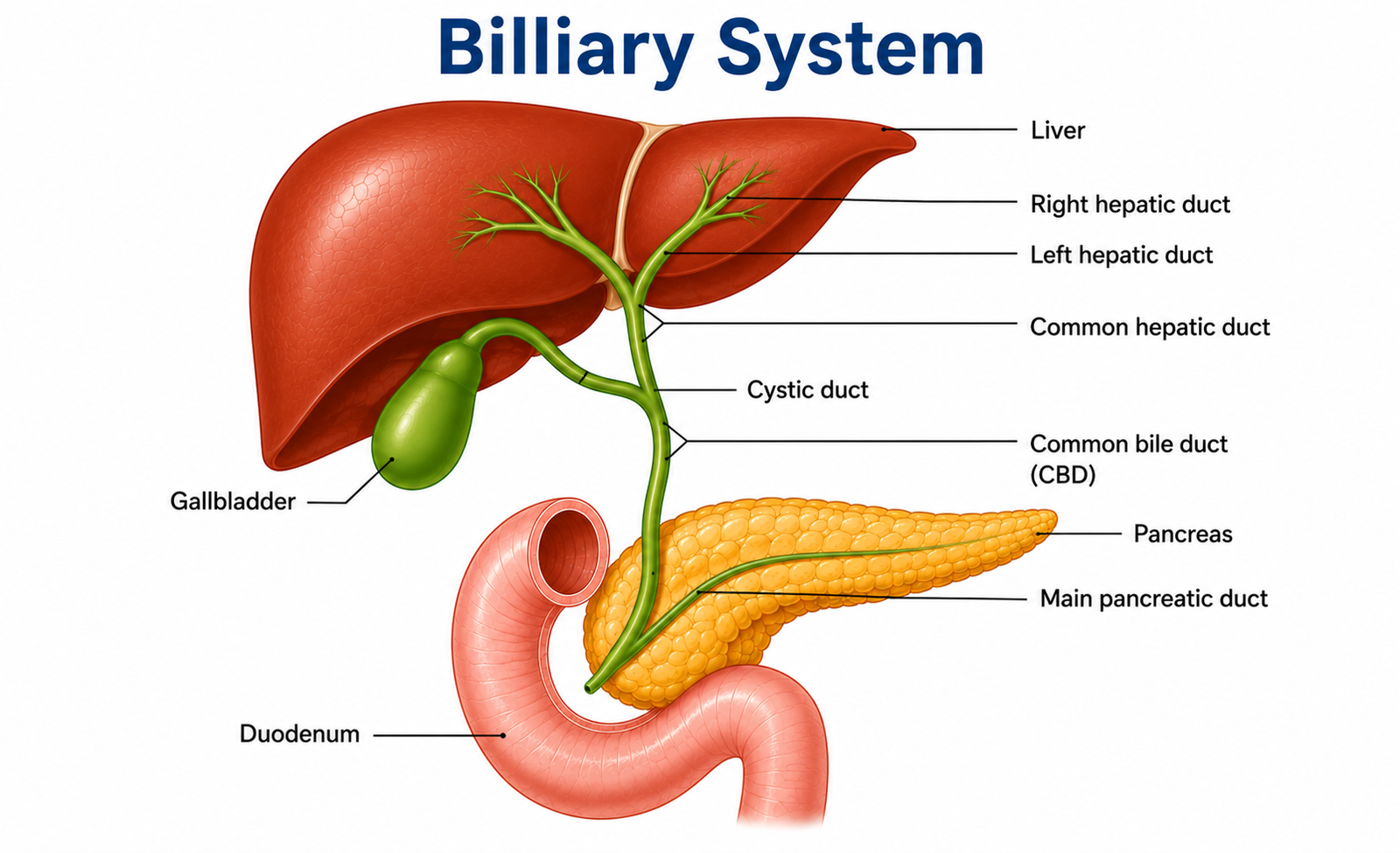
- The biliary system produces, stores, and transports bile.
- The liver produces bile.
- The gallbladder stores and concentrates bile.
- Bile helps digest fats and absorb vitamins A, D, E, and K.
- Bile flows through the hepatic ducts, cystic duct, and common bile duct to the duodenum.
- The biliary system is essential for digestion and waste removal.
Functions
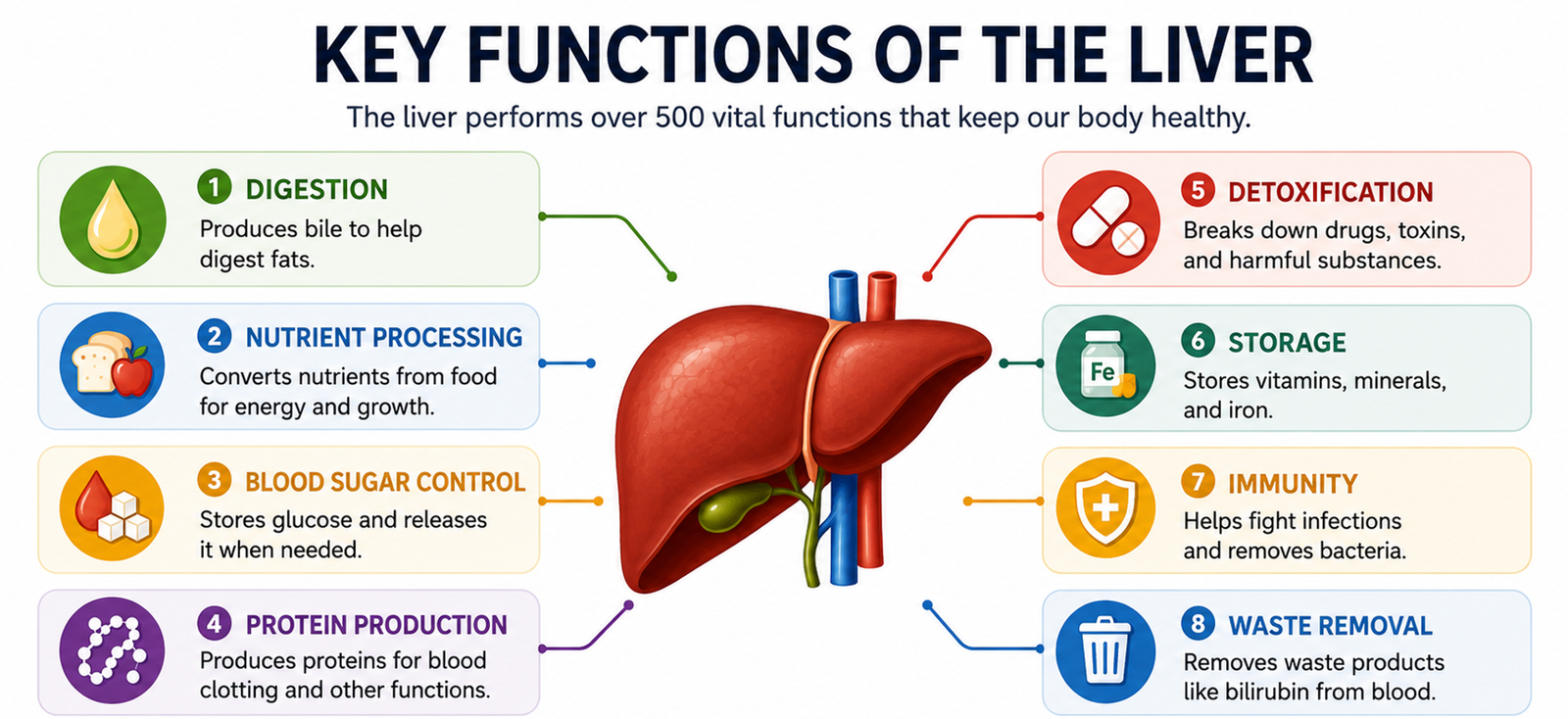
- Producing bile, which helps digest fats and remove waste products.
- Processing nutrients from food and converting them into forms the body can use.
- Regulating blood sugar levels by storing and releasing glucose when needed.
- Producing proteins essential for blood clotting and other body functions.
- Breaking down medications, toxins, and harmful substances.
- Storing important nutrients such as iron and vitamins.
- Supporting the immune system by helping fight infections.
- Removing waste products, including bilirubin, from the blood.
In simple terms, it acts as the body’s chemical processing plant, detoxification center, and energy storehouse, helping maintain overall health and well-being.
Further Reading
- Kalra, A., Yetiskul, E., Wehrle, C. J., & Tuma, F. (2026). Physiology, liver. In StatPearls. StatPearls Publishing. https://www.ncbi.nlm.nih.gov/books/NBK535438/
- Bazira, P. J. (2023). Anatomy of the liver. Surgery, 41(6), 313–318. https://doi.org/10.1016/j.mpsur.2023.02.024
- Kapoor, V. K., & Hoagland, T. M. (2025, March 7). Liver anatomy: Overview, gross anatomy, microscopic anatomy. Medscape. https://emedicine.medscape.com/article/1900159-overview
- National Institutes of Health. (2021, March 9). Cells that maintain and repair the liver identified. https://www.nih.gov/news-events/nih-research-matters/cells-maintain-repair-liver-identified
Disclaimer: The information provided on Medical Pharma Lifestyle Pulse is for educational and informational purposes only and is not intended as medical advice, diagnosis, or treatment. Always consult a qualified healthcare professional before making any decisions about your health, medications, or treatment. Never ignore or delay seeking professional medical advice based on information you have read on this website. While we strive to provide accurate and up-to-date information, we do not guarantee the completeness or accuracy of the content. For more information, please read our full Medical Disclaimer.