
Table of Contents
Introduction
Imagine getting a small cut—and it keeps bleeding longer than usual. For someone with hemophilia, this isn’t just a one-time worry; it’s a part of everyday life. Even minor injuries can lead to prolonged bleeding, making simple situations feel stressful.
The reassuring part? Hemophilia is manageable. With modern treatments, early diagnosis, and proper care, people can live full, active, and healthy lives.
Let’s break it down in a simple and clear way.
What is Hemophilia?
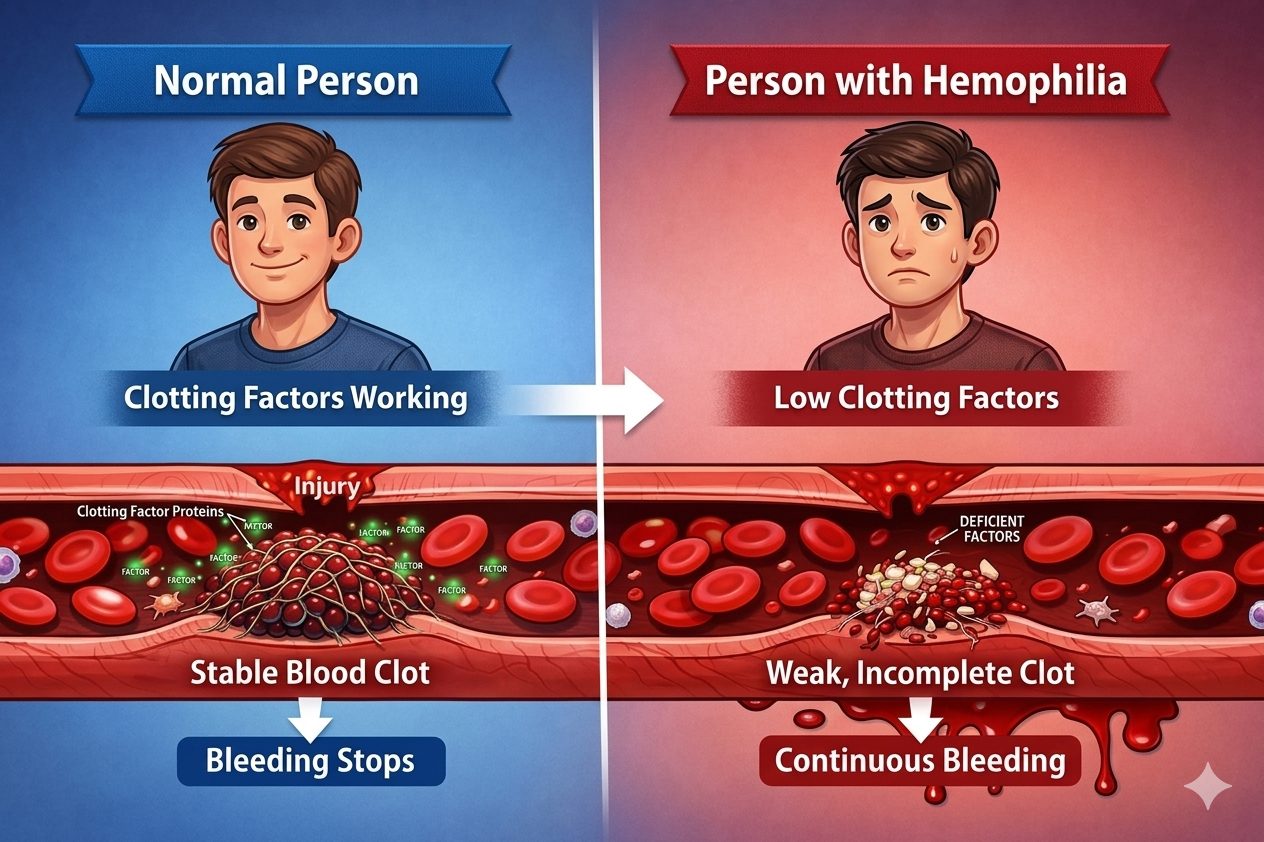
Hemophilia is a rare genetic disorder in which the blood lacks or has low levels of certain proteins (called clotting factors) needed for normal clotting.
Normally, when a person bleeds, the body triggers a step-by-step process involving these clotting factors to form a stable clot and stop the bleeding.
In affected individuals, one of these clotting factors is missing or insufficient, so the clot forms more slowly—or may not form properly—leading to prolonged bleeding.
Types of Hemophilia
🔹Hemophilia A
- Caused by a deficiency of Factor VIII (most common, 80% to 85% of all cases)
🔹Hemophilia B
- Caused by a deficiency of Factor IX
🔹Hemophilia C
- Caused by a deficiency of Factor XI (Rare)
Who is at Risk?
- The biggest risk factor is having a family history of the condition. If other family members are affected, the chances of inheriting it are higher.
- much more common in males than in females. This is because males have only one X chromosome, so a single faulty gene can cause the condition. Females, who have two X chromosomes, are more likely to be carriers rather than affected.
How does it Pass Through Families?
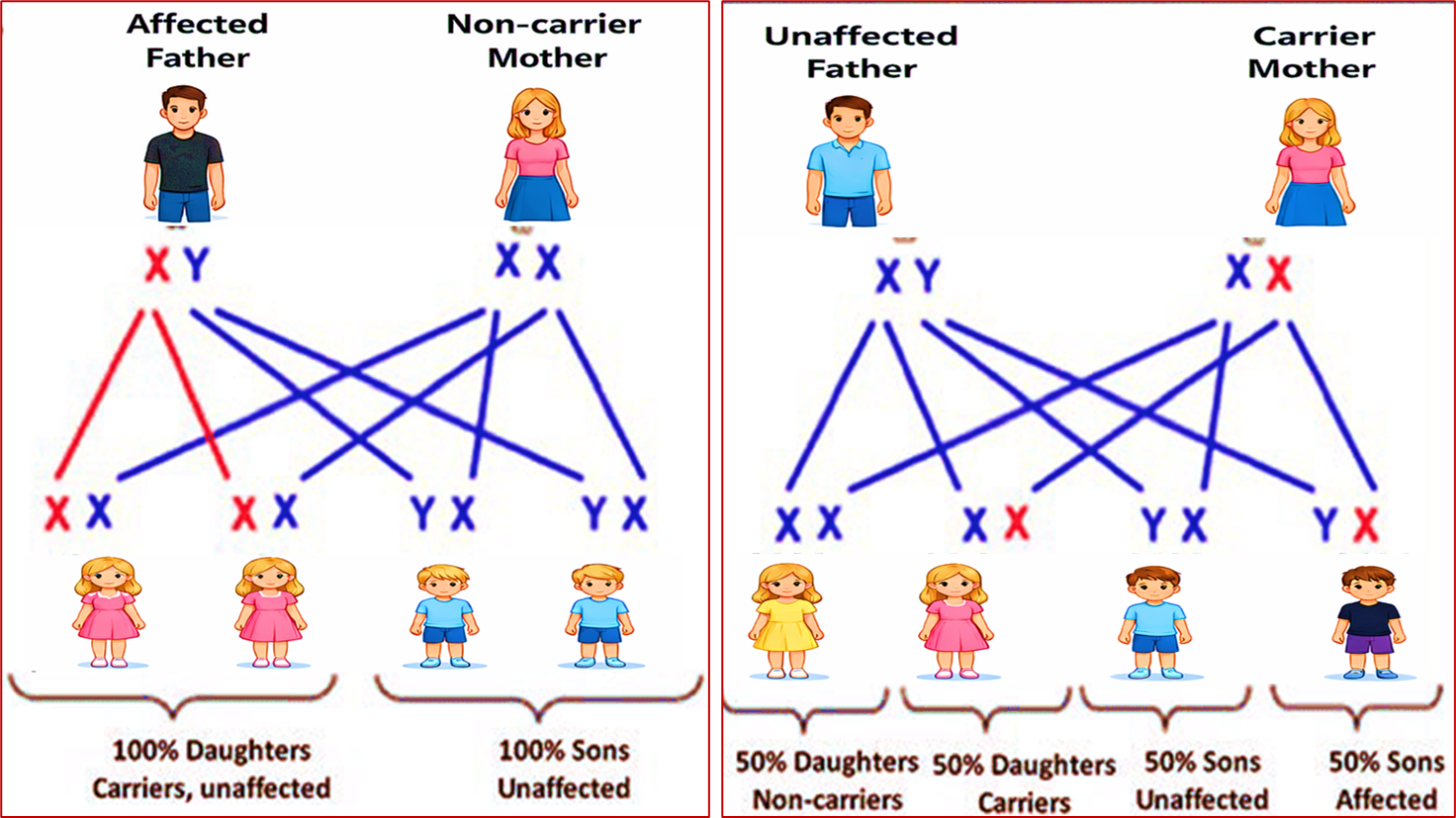
Humans have chromosomes that determine sex:
- Males have XY chromosomes
- Females have XX chromosomes
The genes responsible for clotting factors VIII and IX are located on the X chromosome.
- If a father is affected, all his daughters will be carriers, but none of his sons will be affected.
- If a mother is a carrier, each child has:
- 50% chance of having an affected son
- 50% chance of having a carrier daughter
Although rare, females can also be affected. This can happen if:
- Both parents pass on the faulty gene
- One X chromosome doesn’t function properly
Classification Based on Severity
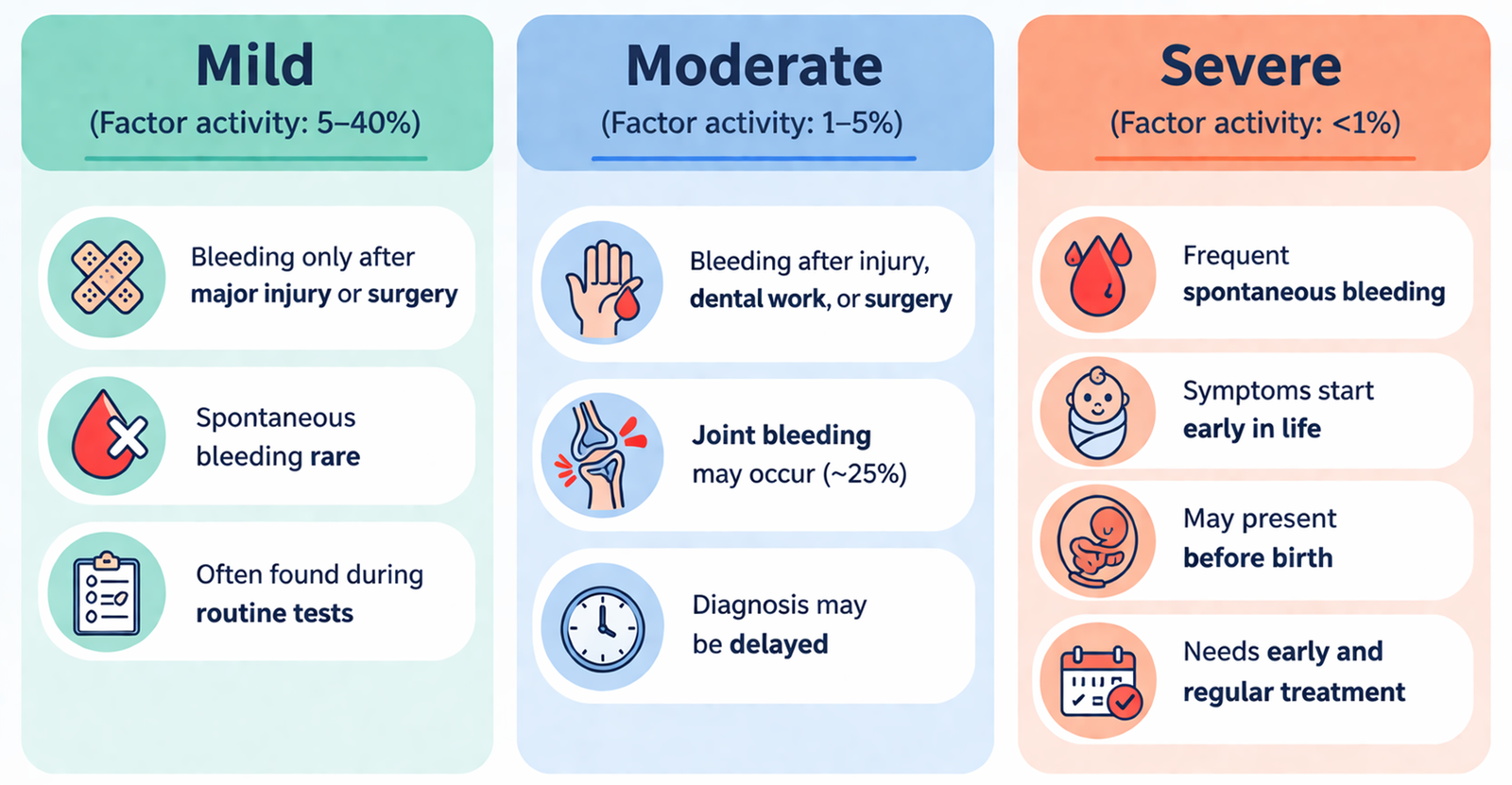
🔹 Mild (5%–40% factor activity)
- Bleeding usually occurs only after major injury, trauma, or surgery
- Spontaneous bleeding (Bleeding without any obvious injury) is rare
- Often diagnosed accidentally during routine tests or before surgery
🔹 Moderate (1%–5% factor activity)
- Bleeding happens after:
- Injury
- Dental procedures
- Surgery
- Joint bleeding may occur (seen in ~25% of patients)
- Diagnosis is often delayed due to less obvious symptoms
🔹 Severe (<1% factor activity)
- Frequent spontaneous bleeding (without injury)
- Symptoms appear early in life (first few months)
- Can even present before birth (in the uterus) due to a lack of clotting factors from the mother
- Requires early diagnosis and regular management
Signs and Symptoms
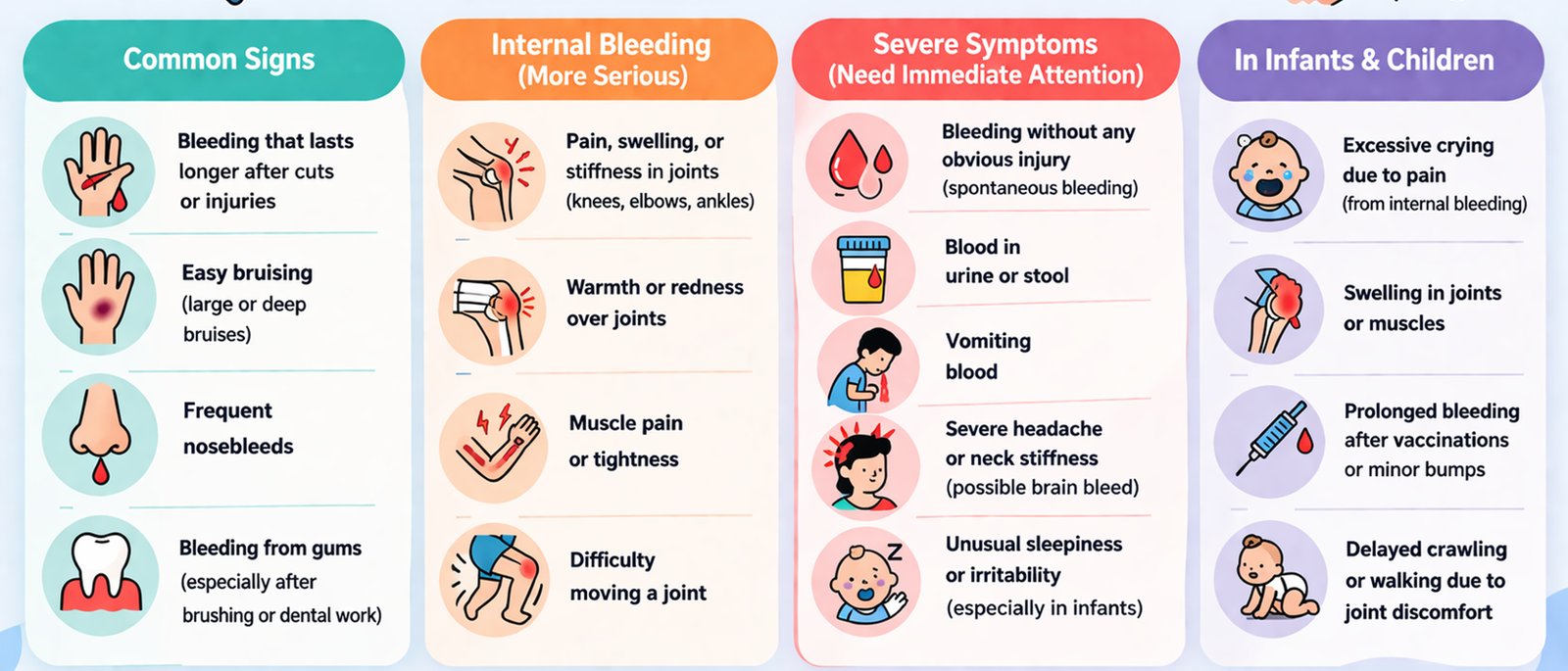
🔹 Common Signs
- Bleeding that lasts longer than usual after cuts or injuries
- Easy bruising (large or deep bruises)
- Frequent nosebleeds
- Bleeding from gums (especially after brushing or dental work)
🔹 Internal Bleeding
Bleeding can also occur inside the body, especially in joints and muscles:
- Pain, swelling, or stiffness in joints (knees, elbows, ankles)
- Warmth or redness over joints
- Muscle pain or tightness
- Difficulty moving a joint
🔹 Severe Symptoms (Need Immediate Attention)
- Bleeding without any obvious injury (spontaneous bleeding)
- Blood in urine or stool
- Vomiting blood
- Severe headache or neck stiffness (possible brain bleed)
- Unusual sleepiness, irritability (especially in infants)
🔹 In Infants & Children
- Excessive crying due to pain (from internal bleeding)
- Swelling in joints or muscles
- Prolonged bleeding after vaccinations or minor bumps
- Delayed crawling or walking due to joint discomfort
Who should get tested or screened?
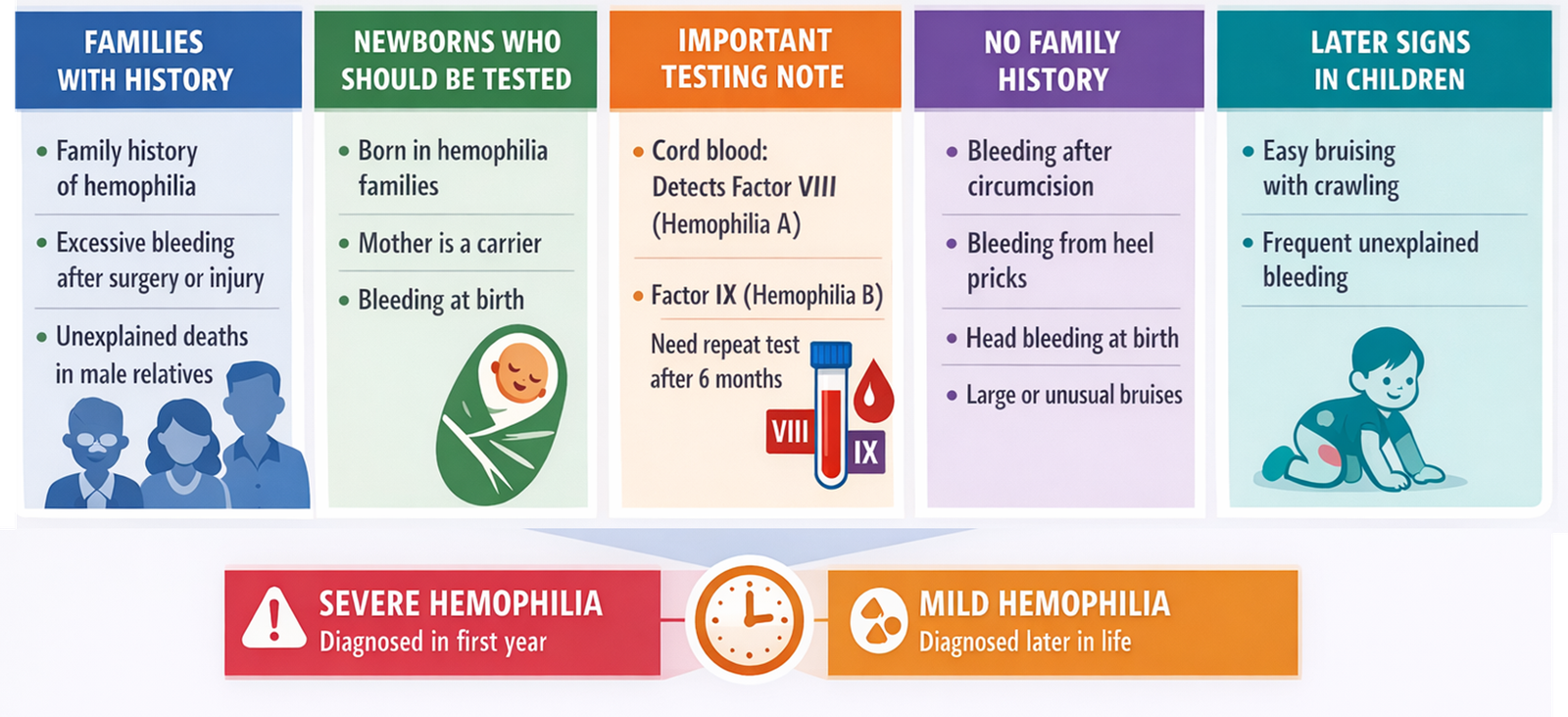
🔹 Families with History
- Family history of hemophilia
- History of excessive bleeding (after surgery/injury)
- Unexplained deaths in male relatives (maternal uncles, cousins, grandfathers)
🔹 Newborns Who Should Be Tested
- Babies born in families with hemophilia
- Babies whose mothers are carriers
- Babies showing bleeding at birth
🔹 Important Testing Note
- Umbilical cord blood test helps detect low factor VIII (Hemophilia A)
- Factor IX (Hemophilia B) takes more time to develop and is not at a normal level until a baby is at least 6 months of age → repeat testing after 6 months
🔹 Families with No History
(~1 in 3 cases have no family history) Test if the newborn shows:
- Prolonged bleeding after circumcision
- Bleeding after heel prick or blood tests
- Bleeding in the head after a difficult delivery
- Large or unusual bruises
Diagnostic Tests
Always check with your doctor for a proper diagnosis before going for any of the tests listed below
🔹Complete Blood Count (CBC)
- Measures hemoglobin, RBCs, WBCs, platelets
- May show low hemoglobin if heavy bleeding
🔹 Activated Partial Thromboplastin Time (APTT)
- Measures the clotting time of factors VIII, IX, XI, and XII
🔹Prothrombin Time (PT)
- Measures clotting factors I, II, V, VII, X
🔹Fibrinogen Test
- Assesses clotting ability (Factor I)
- Done if PT/APTT is abnormal
🔹Clotting Factor Tests (Factor Assays)
- Measure the activity of clotting factors VIII and IX
- Confirm the diagnosis
- Identify type (A or B)
- Determine severity (mild, moderate, severe)
- Essential for planning treatment
Treatment Strategies
🔹 Act early, don’t ignore symptoms
- Prompt attention to bleeding episodes is essential.
🔹 Start treatment without delay
- Early use of clotting factor replacement helps prevent complications.
🔹 Prevent long-term disability
- Timely treatment reduces joint damage and other lasting effects.
🔹Include physiotherapy in care
- Regular physiotherapy helps maintain joint function and prevents deformities.
Caring for a Person with Hemophilia
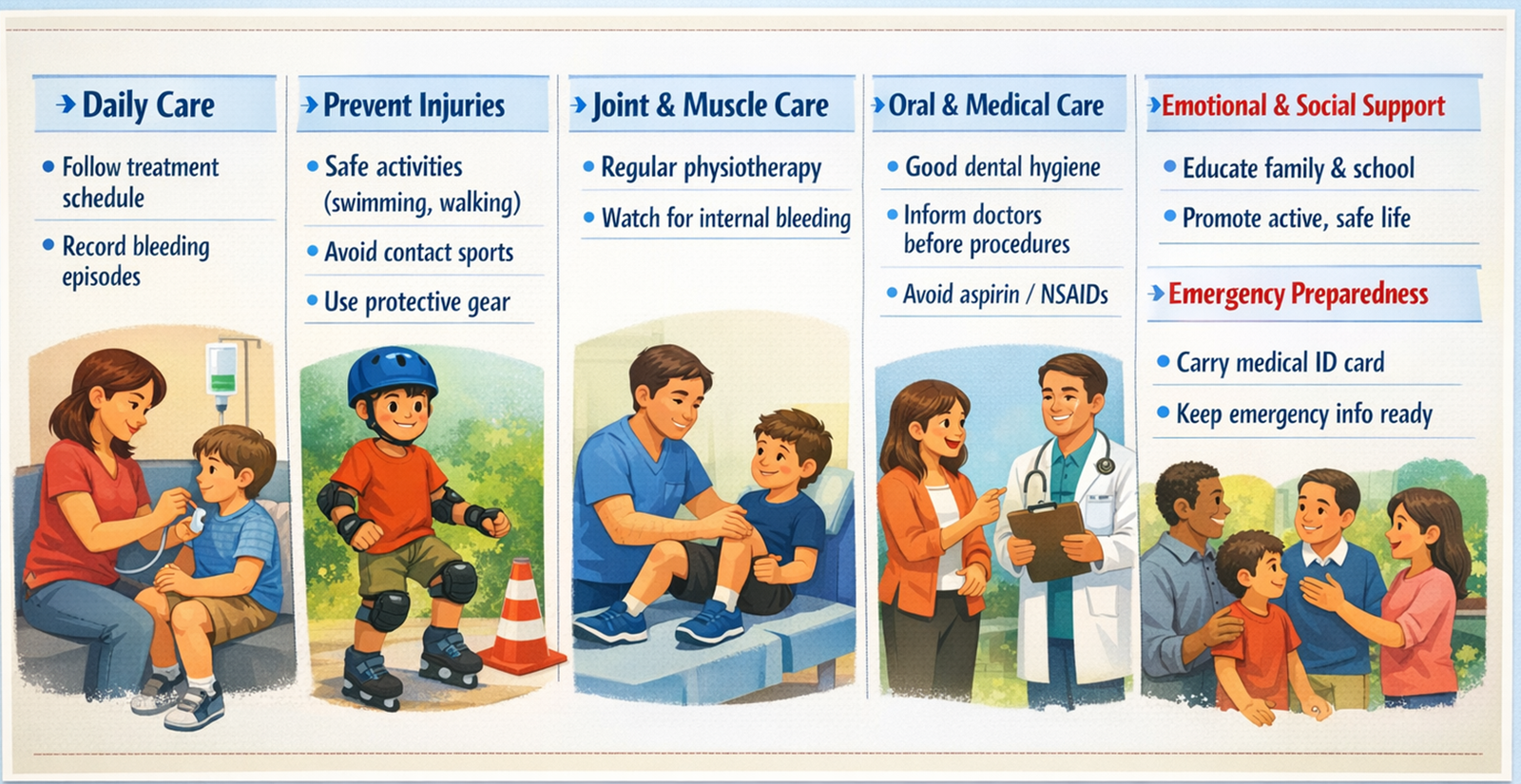
🔹 Daily Care
- Follow the regular treatment schedule as advised by the doctor
- Keep a record of bleeding episodes
🔹 Prevent Injuries
- Encourage safe physical activities (swimming, walking)
- Avoid contact sports like football or boxing
- Use protective gear (helmets, knee/elbow pads)
🔹 Joint & Muscle Care
- Regular physiotherapy to prevent joint damage
- Watch for signs of internal bleeding
🔹 Oral & Medical Care
- Maintain good dental hygiene to avoid gum bleeding
- Inform doctors/dentists before any procedure
- Avoid medicines like aspirin/NSAIDs
🔹 Emotional & Social Support
- Educate family, school, and caregivers
- Encourage a normal, active life with precautions
- Support mental well-being
🔹 Emergency Preparedness
- Carry a medical ID card/bracelet
- Keep emergency contact and treatment details handy
Hemophilia Care in India
Hemophilia is a high-cost, low-volume disease, meaning it affects a relatively small number of people but requires expensive, lifelong treatment. Because of its rarity, it has not always been a priority for governments seeking to develop comprehensive care systems.
In such situations, patient organizations play a crucial role. These groups bring individuals and families together under one umbrella, empowering them to advocate for their rights, raise awareness, and push for better diagnosis, treatment, and overall management of the condition.
The Hemophilia Federation of India (HFI) is one such organization that has made a significant impact. It has played a stellar role in advancing hemophilia care in India—improving access to treatment, strengthening support systems, and continuing to work towards higher standards of care across the country.
Key Takeaways
- Hemophilia is a rare inherited bleeding disorder caused by low levels of clotting factors.
- Mainly affects males; females are usually carriers, rarely affected.
- Severity (mild–severe) depends on clotting factor levels.
- Symptoms include easy bruising, prolonged bleeding, and joint/muscle bleeds.
- Severe cases can cause spontaneous bleeding requiring urgent care.
- Early diagnosis and timely replacement of clotting factors are crucial.
- Physiotherapy, safe activity, and injury prevention help long-term health.
- Always inform healthcare providers before any procedure.
- With proper care and precautions, individuals can lead normal, active lives.
Further Reading
- Centers for Disease Control and Prevention.Hemophilia. Updated March 5, 2025. Accessed April 16, 2026. https://www.cdc.gov/hemophilia/index.html
- MedlinePlus. Hemophilia. Updated December 22, 2023. Accessed April 16, 2026. https://medlineplus.gov/hemophilia.html
- National Center for Biotechnology Information.Hemophilia B. In: GeneReviews®. Updated August 7, 2025. Accessed April 16, 2026. https://www.ncbi.nlm.nih.gov/books/NBK551607/
- Hemophilia: clinical and molecular aspects. Accessed April 16, 2026. http://pmc.ncbi.nlm.nih.gov/articles/PMC6825087/
Disclaimer: The information provided on Medical Pharma Lifestyle Pulse is for educational and informational purposes only and is not intended as medical advice, diagnosis, or treatment. Always consult a qualified healthcare professional before making any decisions about your health, medications, or treatment. Never ignore or delay seeking professional medical advice based on information you have read on this website. While we strive to provide accurate and up-to-date information, we do not guarantee the completeness or accuracy of the content. For more information, please read our full Medical Disclaimer.