
On 18 May 2026, AstraZeneca announced the US approval of Baxfendy (baxdrostat), a first-in-class aldosterone synthase inhibitor (ASI) for adults with hypertension inadequately controlled on existing antihypertensive therapies. Baxfendy offers a novel approach for lowering blood pressure in patients who remain inadequately controlled despite standard antihypertensive therapy.
Hypertension, often called the “silent killer,” Remains one of the biggest global health challenges. According to the latest report released by the World Health Organization, nearly 1.4 billion people were living with hypertension in 2024. Alarmingly, only about one in five patients had their blood pressure adequately controlled through medications or lifestyle modifications. Uncontrolled hypertension contributes to more than 10 million deaths every year and remains a leading cause of heart attack, stroke, chronic kidney disease, heart failure, and dementia.
The burden is particularly concerning because hypertension is both preventable and treatable. Yet, despite the availability of multiple antihypertensive drugs, many patients continue to have poorly controlled blood pressure, especially those with resistant hypertension. This growing global burden highlights the urgent need for newer and more targeted therapies that can provide better blood pressure control and reduce long-term cardiovascular and kidney complications.
Current Therapies and Their Limitations
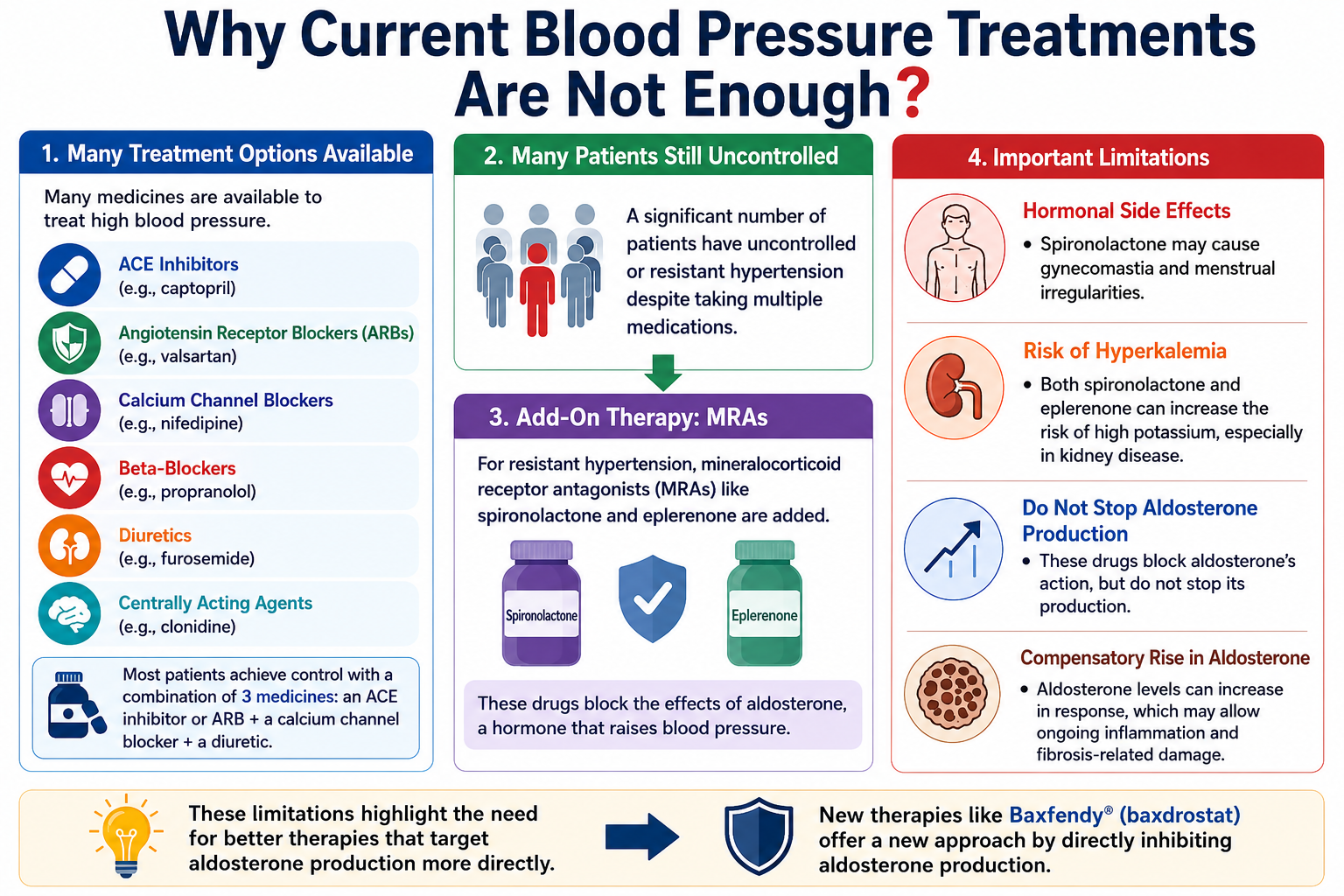
Several medications are currently available for the treatment of hypertension, including ACE inhibitors, angiotensin receptor blockers, calcium channel blockers, beta-blockers, diuretics, and centrally acting agents. Most patients achieve blood pressure control with a combination of these therapies, usually involving an ACE inhibitor or ARB, a calcium channel blocker, and a diuretic.
However, a significant number of patients continue to have uncontrolled or resistant hypertension despite receiving multiple medications. In such cases, mineralocorticoid receptor antagonists like spironolactone and eplerenone are often added because they block the effects of aldosterone, a hormone that increases blood pressure.
Although effective, these drugs have important limitations. Spironolactone may cause hormonal side effects such as gynecomastia and menstrual irregularities, while both spironolactone and eplerenone can increase the risk of hyperkalemia, particularly in patients with kidney disease.
In addition, these drugs block the action of aldosterone but do not stop its production. This can lead to a compensatory rise in aldosterone levels, potentially allowing ongoing inflammation and fibrosis-related damage. These limitations highlight the need for newer therapies that target aldosterone production more directly, such as Baxfendy (baxdrostat).
Baxfendy (Baxdrostat)- Mechanism of Action
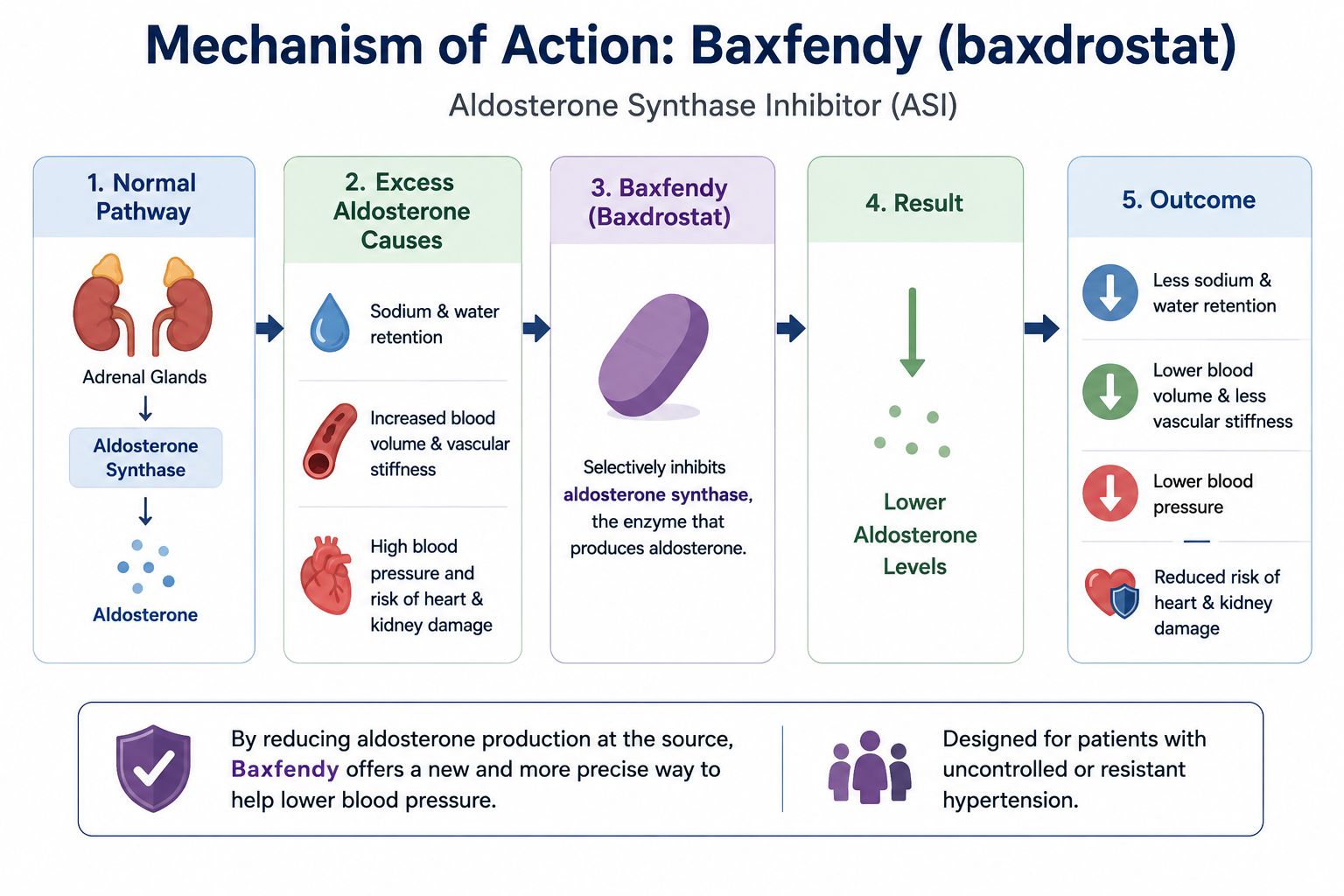
Baxfendy (baxdrostat) works by selectively inhibiting aldosterone synthase, the enzyme responsible for the final step in aldosterone production in the adrenal glands.
Normally, aldosterone increases sodium and water retention while promoting potassium excretion. Excess aldosterone can lead to increased blood volume, vascular stiffness, and persistently elevated blood pressure, along with greater cardiovascular and kidney damage.
Unlike mineralocorticoid receptor antagonists such as spironolactone and eplerenone, which only block the action of aldosterone at its receptor, Baxfendy acts earlier in the pathway by reducing aldosterone production itself.
Baxfendy (Baxdrostat)- Evidence Supporting FDA Approval
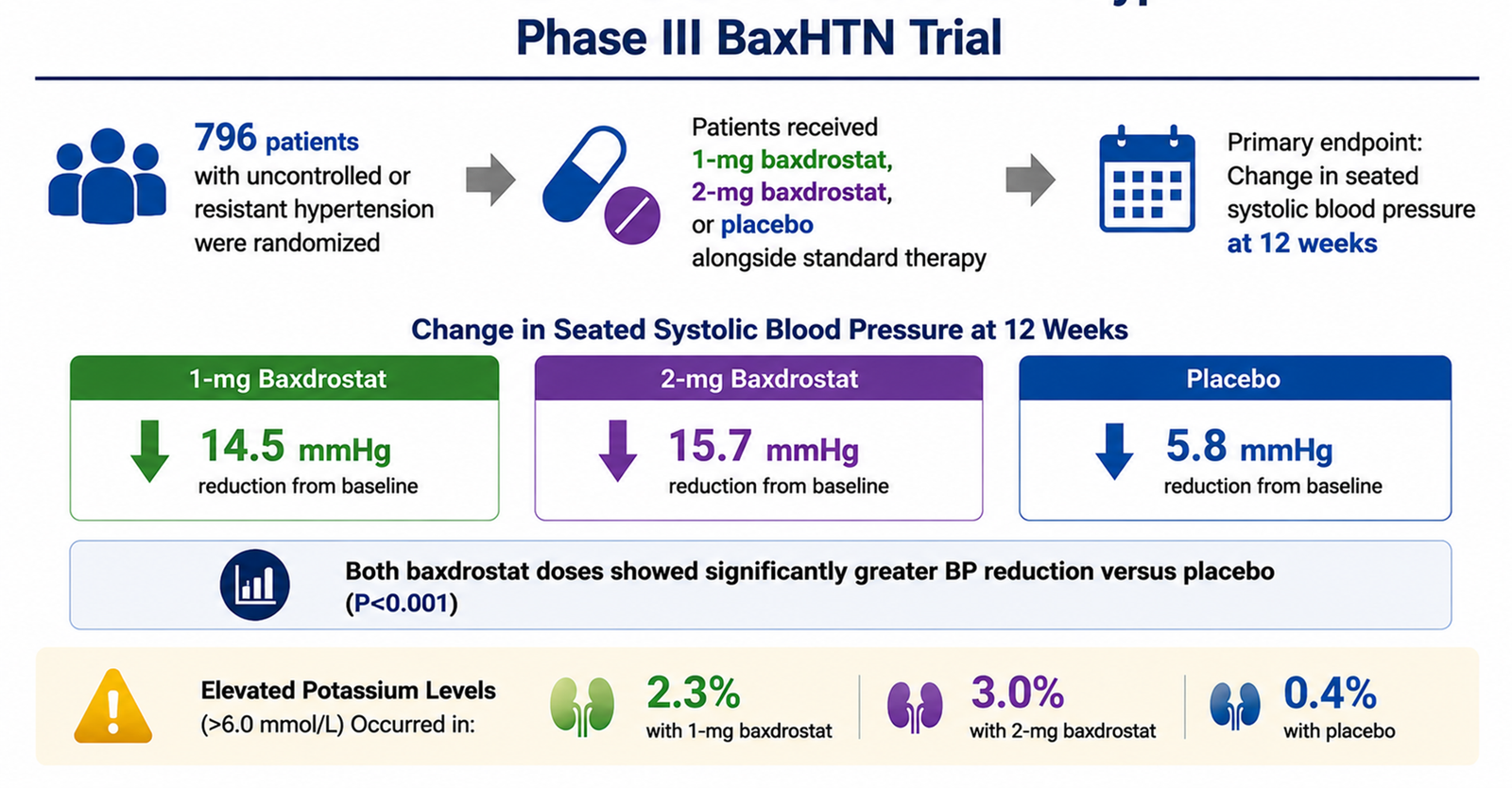
The approval was supported by findings from the Phase III BaxHTN trial, published in the New England Journal of Medicine by John M. Flack and colleagues. The study demonstrated clinically meaningful reductions in systolic blood pressure (SBP) when baxdrostat was added to standard antihypertensive therapy.
For the 2 mg dose:
- Mean seated SBP reduction from baseline was 15.7 mmHg
- Placebo-adjusted reduction was 9.8 mmHg
- Results were statistically significant (p<0.001)
For the 1 mg dose:
- Mean seated SBP reduction from baseline was 14.5 mmHg
- Placebo-adjusted reduction was 8.7 mmHg
- Results were also highly significant (p<0.001)
Importantly, benefits were observed in both uncontrolled hypertension and treatment-resistant hypertension subgroups.
These reductions are clinically relevant because even modest decreases in SBP are associated with substantial reductions in cardiovascular risk.
Baxfendy (Baxdrostat)- Dosing and Administration
Baxfendy is approved for use in combination with other antihypertensive agents.
Recommended dosing includes:
- 2 mg orally once daily for most patients
- 1 mg once daily for patients at increased risk of hyperkalemia or hyponatremia
The medication may be taken with or without food.
Baxfendy (Baxdrostat)- Safety Considerations
As with other therapies affecting the renin-angiotensin-aldosterone system, electrolyte monitoring remains important.
Hyperkalemia
Hyperkalemia was the most common adverse reaction observed in clinical trials. Serum potassium should be assessed before initiation and monitored periodically during treatment, especially in high-risk patients.
Hyponatremia
Serum sodium monitoring is also recommended because baxdrostat may increase the risk of hyponatremia in susceptible individuals.
Careful patient selection and regular biochemical monitoring will therefore be essential in routine clinical practice.
A Potential Shift in Hypertension Management
The approval of Baxfendy arrives at a critical time. Despite decades of therapeutic advances, resistant and uncontrolled hypertension remain major unmet clinical needs worldwide.
The emergence of aldosterone synthase inhibition represents more than just another antihypertensive drug—it signals a potential paradigm shift toward precision targeting of hormonal pathways driving cardiovascular and renal risk.
Whether Baxfendy will significantly alter long-term outcomes in real-world practice remains to be seen. However, its approval offers renewed hope for millions of patients struggling to achieve blood pressure control despite multidrug therapy.
As global hypertension rates continue to rise, innovative therapies such as Baxfendy (Baxdrostat) may become increasingly important in reducing the enormous burden of cardiovascular and kidney disease worldwide.
Further Reading
- World Health Organization. (2025, September 23). Uncontrolled high blood pressure puts over a billion people at risk. World Health Organization
- Sternberg, J. Z., & Cole, B. K. (2016). Aldosterone synthase inhibitors for treatment of hypertension and cardiovascular disease. ACS Pharmacology & Translational Science, 6(1), 1–12. ACS Publications
- AstraZeneca. (2025). BaxHTN phase III trial results: Baxdrostat in uncontrolled and resistant hypertension [PDF]. Clinical trial PDF report
- Flack, J. M., Azizi, M., Brown, J., Dwyer, J. P., Fronczek, J., Jones, E. S. W., Perl, S., Shibata, H., Wang, J. G., Wilderäng, U., Wittes, J., & Williams, B. (2025). Efficacy and safety of baxdrostat in uncontrolled and resistant hypertension. New England Journal of Medicine. Advance online publication. New England Journal of Medicine https://doi.org/10.1056/NEJMoa2507109
Disclaimer: The information provided on Medical Pharma Lifestyle Pulse is for educational and informational purposes only and is not intended as medical advice, diagnosis, or treatment. Always consult a qualified healthcare professional before making any decisions about your health, medications, or treatment. Never ignore or delay seeking professional medical advice based on information you have read on this website. While we strive to provide accurate and up-to-date information, we do not guarantee the completeness or accuracy of the content. For more information, please read our full Medical Disclaimer.