
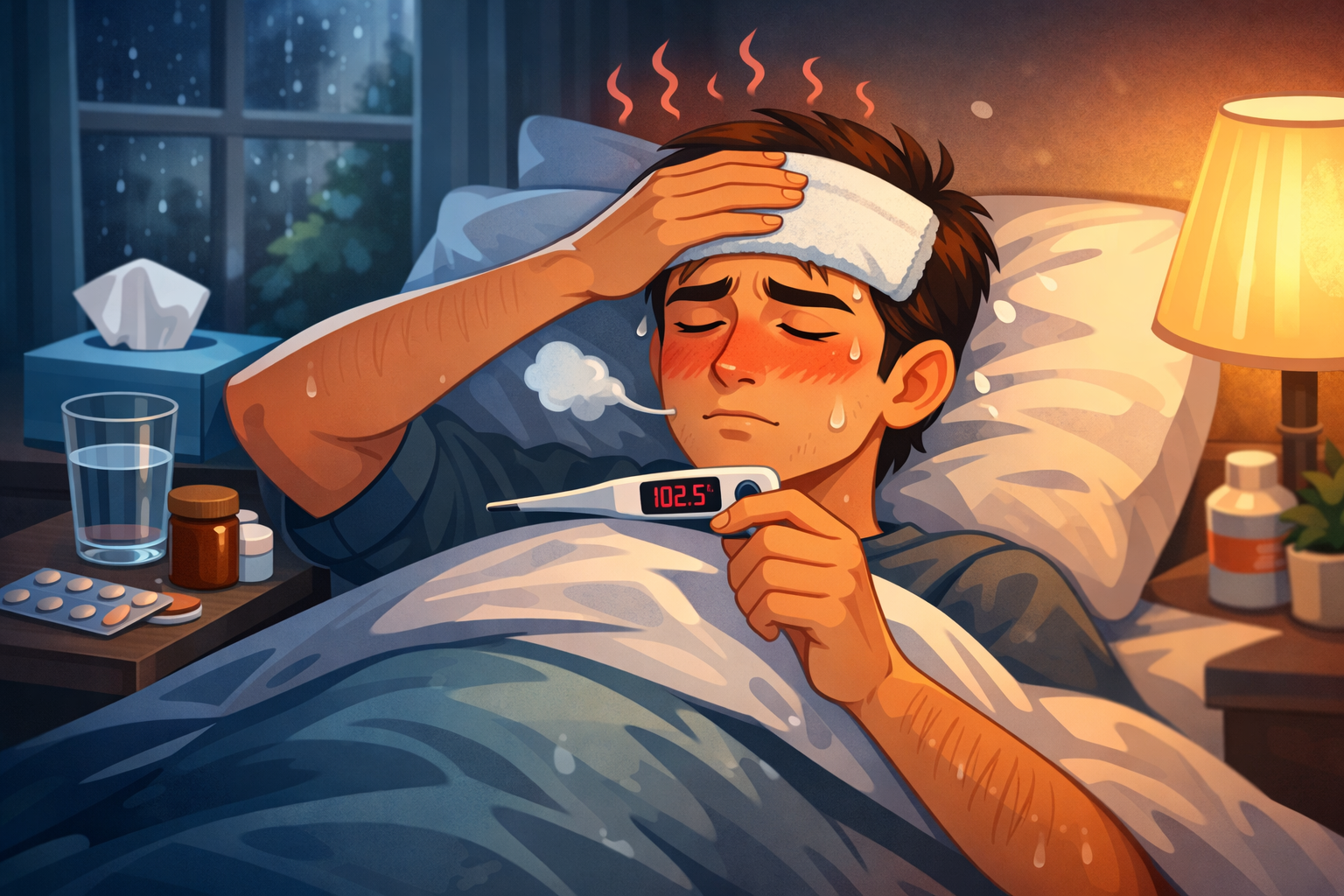
Fever is something almost everyone experiences at some point in life—whether it’s a young child, an adult, or an elderly person. While it can feel worrying, most fevers are the body’s natural response to infection and can often be managed safely at home. Knowing what to do first can help you stay calm, provide the right care, and avoid unnecessary panic before seeking medical advice when needed.
What is fever?
- Fever is a temporary rise in body temperature, usually above 100.4°F (38°C), often caused by an infection or illness.
🏠 First Steps at Home
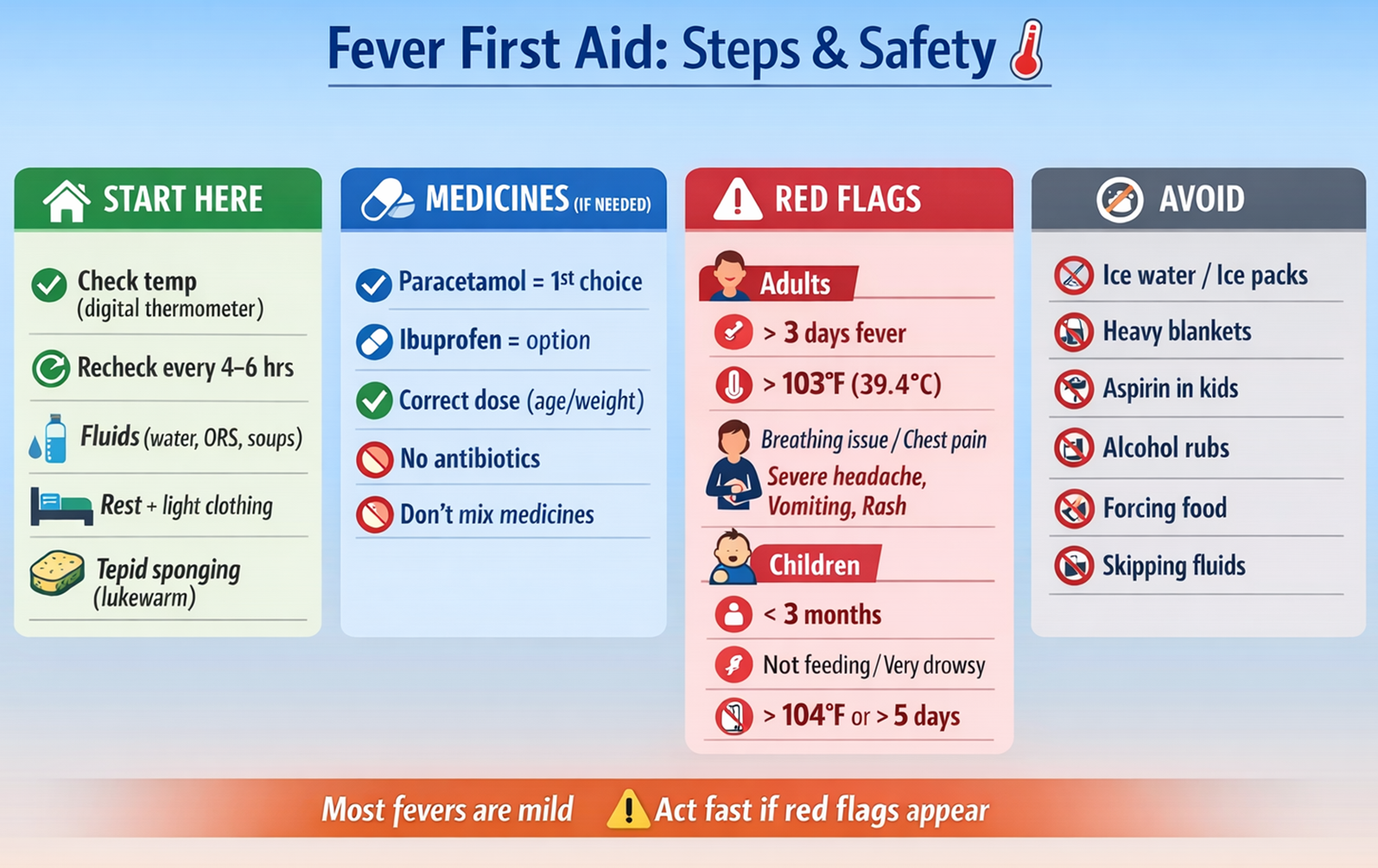
- ✅ Check temperature properly (use a digital thermometer)
- 🔁 Recheck every 4–6 hours
- 💧 Stay hydrated – water, ORS, soups, coconut water
- 🍲 Eat light, easy-to-digest food (if appetite allows)
- 🛌 Rest well – your body needs energy to recover
- 👕 Wear light clothing – avoid heavy blankets
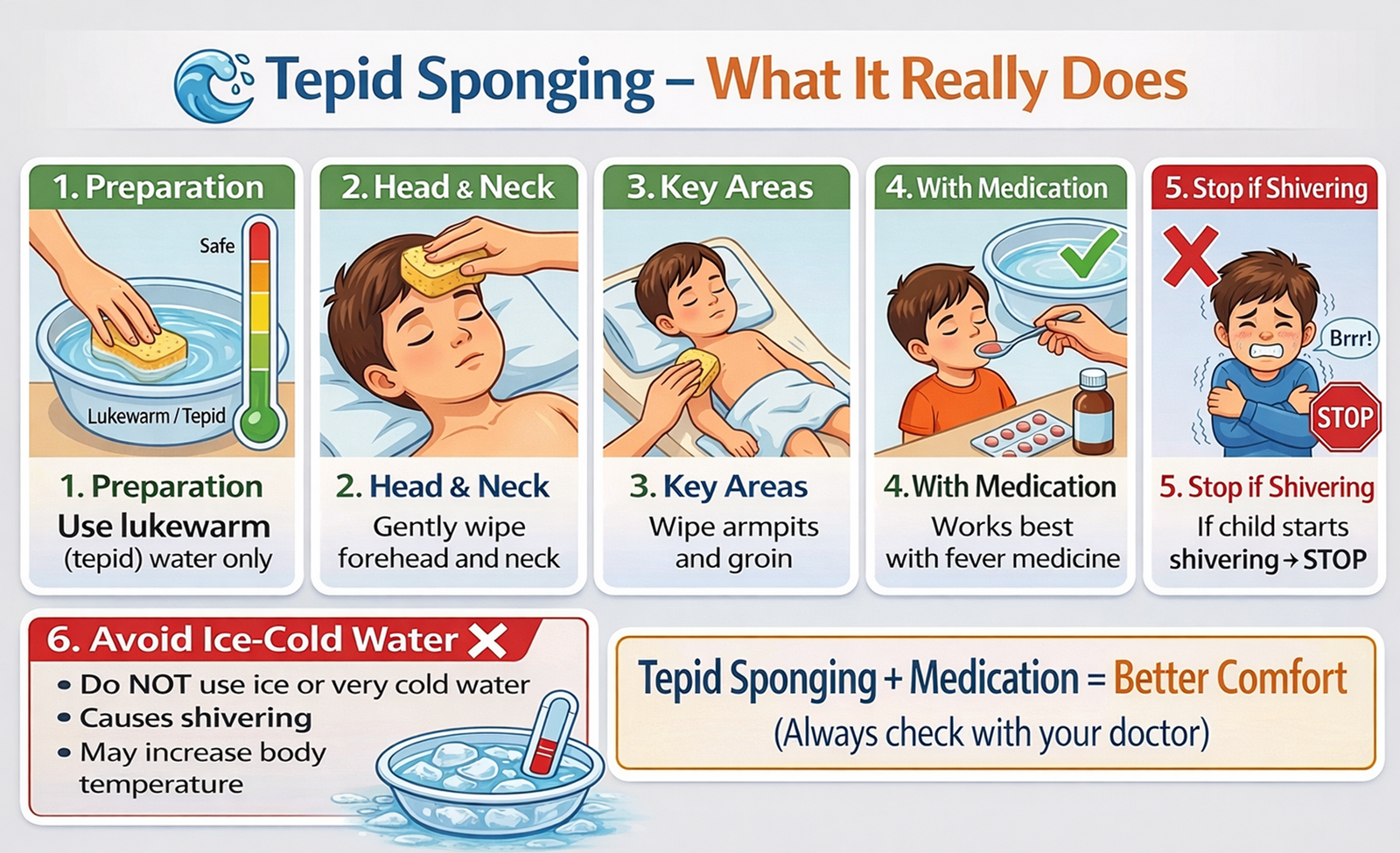
- 🌡️ Tepid sponging – use lukewarm water to gently cool the body
💊 Medicines (if needed)
- Paracetamol is the safe first choice
- Ibuprofen can also be used
- Doses as recommended by the doctor
- Avoid self-medicating with antibiotics
- Do not combine multiple medicines without advice
🚨 Red Flags – When to Worry?
👨 Adults
- Duration > 3 days
- Temperature > 103°F (39.4°C)
- Severe headache
- vomiting, or rash
- Difficulty breathing
- Chest pain
🧒 Children
- Age < 3 months
- Very drowsy, irritable, or inconsolable crying
- Not feeding / unable to keep fluids down
- Breathing difficulty
- Neck stiffness or severe headache
- Seizures or abnormal movements/behaviour
- Temperature > 104°F (40°C)
- Duration > 5 days
❌ What NOT to Do?
🚫 Do NOT use ice-cold water or ice packs
– Cold exposure can cause shivering, which actually raises body temperature.
🚫 Avoid overdressing or heavy blankets
– Too much covering traps heat and can worsen a fever.
🚫 Do NOT self-medicate with multiple drugs
– Avoid mixing medicines (such as paracetamol and ibuprofen) unless advised by a doctor.
🚫 Do NOT give aspirin to children
– Linked to Reye’s syndrome, a rare but serious condition.
🚫 Avoid alcohol rubs or sponging
– Can be absorbed through the skin and may be harmful, especially in children.
🚫 Do NOT force food
– Loss of appetite is common—focus more on fluids than heavy meals.
🚫 Avoid dehydration
– Skipping fluids can worsen weakness and delay recovery.
🚫 Do NOT delay medical care if warning signs appear
– If symptoms worsen (rash, breathing difficulty, confusion), consult a doctor.
Further Reading
- https://journals.lww.com/rrp/fulltext/2025/01000/recent_concepts_in_fever_management__improving_our.4.aspx
- https://www.mayoclinic.org/diseases-conditions/fever/symptoms-causes/syc-20352759
- https://pmc.ncbi.nlm.nih.gov/articles/PMC5615271/#sec2-children-04-00081
- https://iapindia.org/pdf/IAP-Guidelines-for-Fever.pdf
- https://www.nhs.uk/symptoms/fever-in-children