
Table of Contents
Introduction
Water makes up about 60% of the human body and is essential for keeping the body healthy and functioning properly. Since the body loses water every day through breathing, sweating, and urination, it needs to be replaced regularly. But how much water do you really need? Here are some simple facts to help you understand your daily hydration needs.
Why Is Water Essential for the Body?
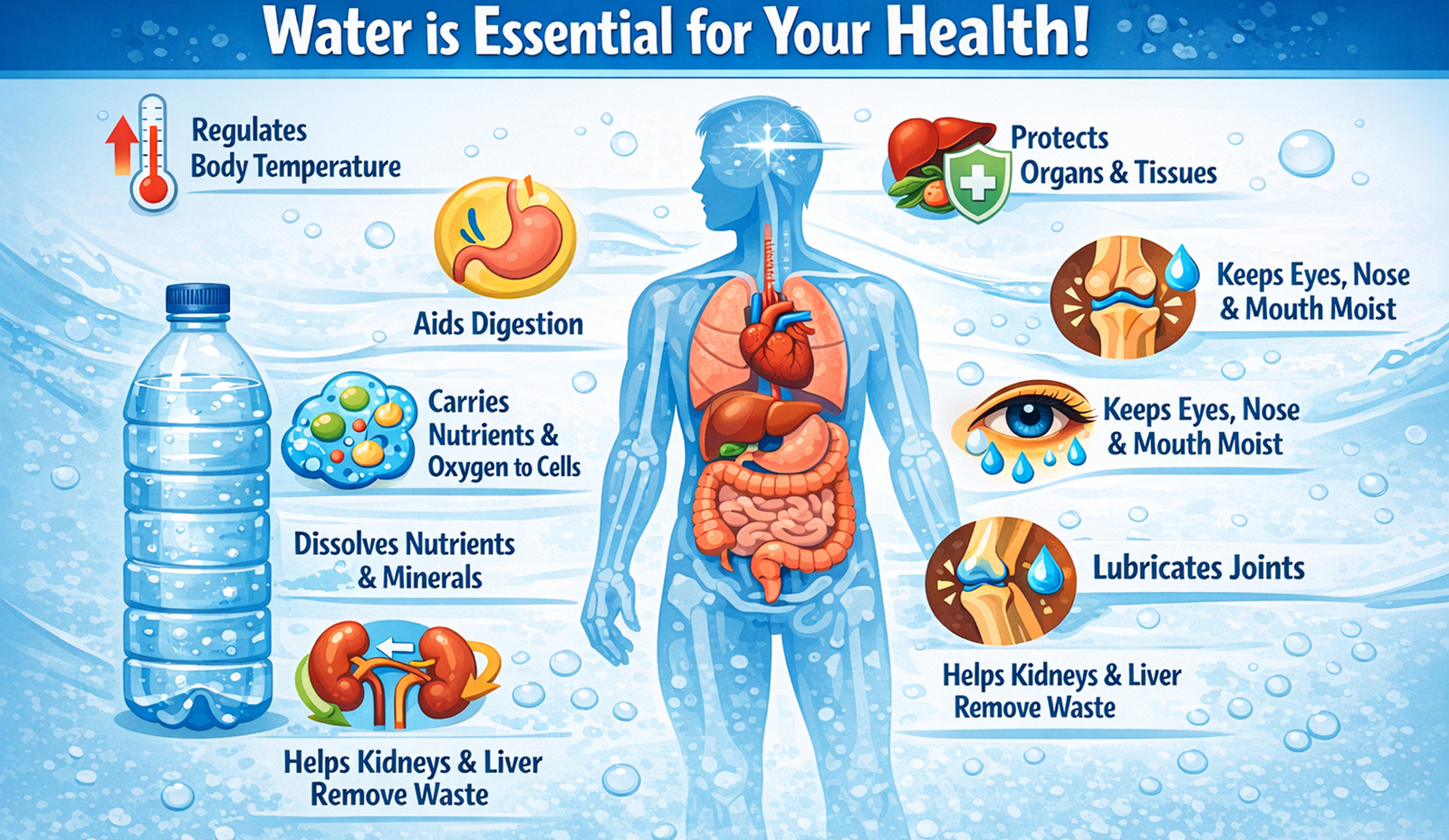
Drinking water benefits the body in multiple ways, including:
- Regulating body temperature
- Protecting organs and tissues
- Aiding digestion
- Carrying nutrients and oxygen to cells
- Dissolving nutrients and minerals so the body can absorb them easily
- Keeping the eyes, nose, and mouth moist
- Lubricating joints
- Helping the kidneys and liver remove waste
How Much Water to Drink Each Day?
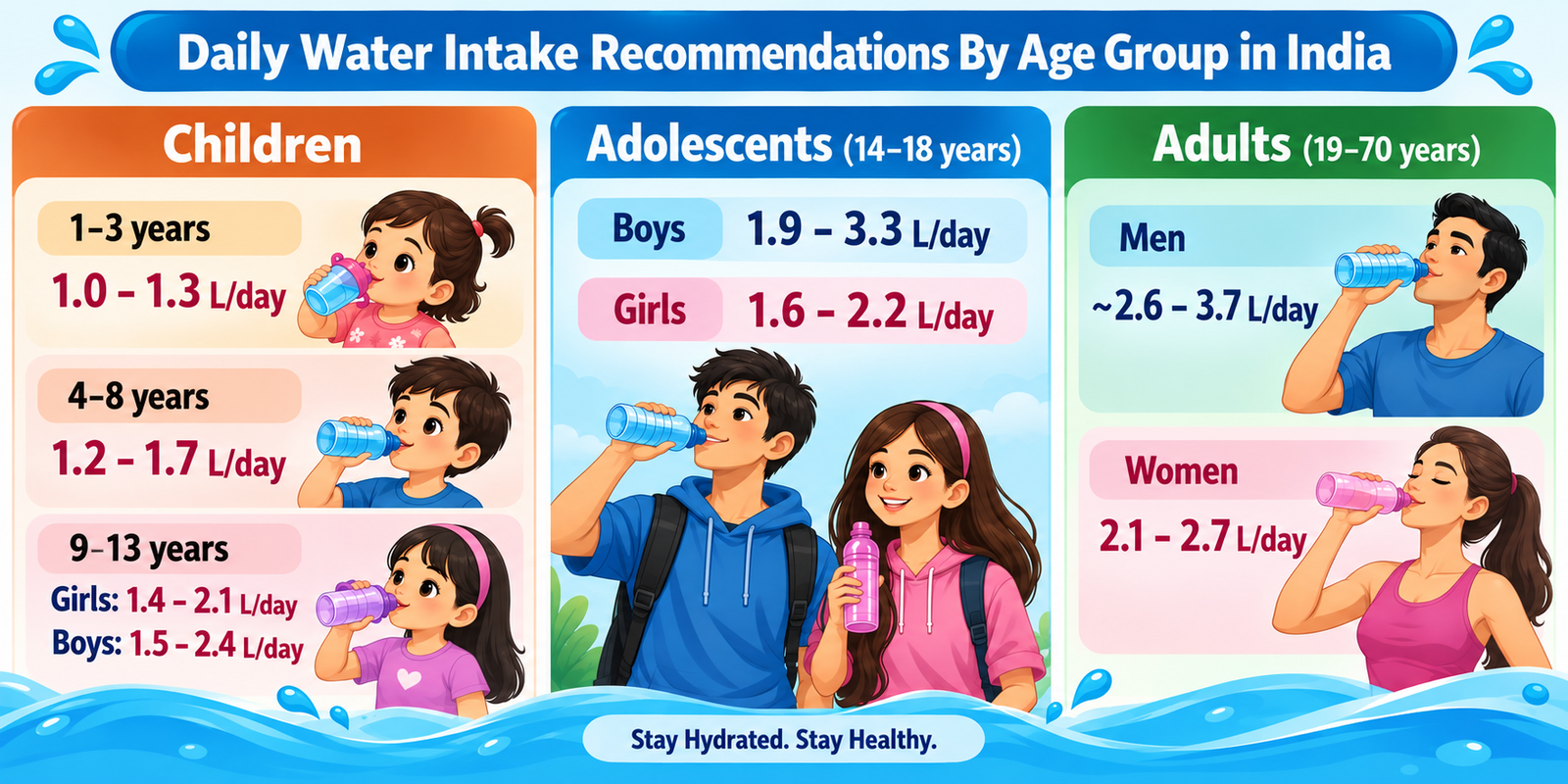
Children
- 11–20 kg body weight
- For the first 10 kg of body weight – 100 ml/kg.
- For any weight above 10 kg, add 50 ml/kg
- > 20 kg body weight
- 1500 ml for the first 20 kg of body weight.
- For any weight above 20 kg – add 20 ml/kg.
- Maximum limit
- Total fluid intake should not exceed about 2.4 liters at one time.
Adults
- Basic daily requirement
- Body weight (kg) × 0.03 = litres/day
- Moderate-to-vigorous physical activity
- Add about 350 mL for every 30 minutes of exercise
- Light exercise
- Increase intake by 0.5–1.0 litres/day.
- Athletes and outdoor workers, especially in hot climates like India, may need extra fluids and electrolytes during long periods of activity.

What Causes Your Body to Lose Water?
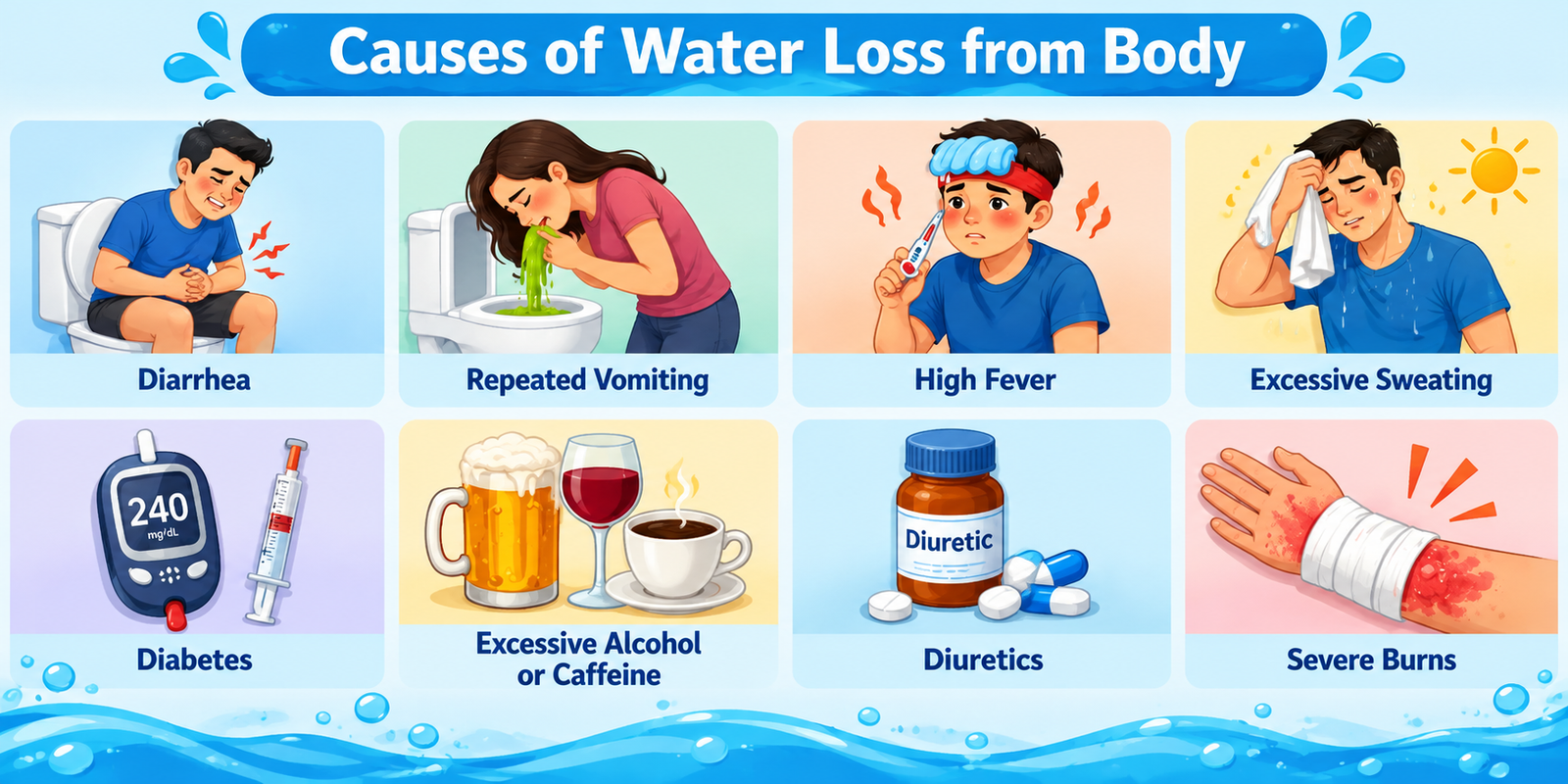
Some common causes of water loss include:
- Diarrhea or loose motions – Causes rapid loss of water and electrolytes.
- Vomiting – Prevents fluids from staying in the body.
- High fever – Increases water loss through sweating.
- Excessive sweating – Common during heat or intense physical activity.
- Diabetes – High blood sugar can increase urination and fluid loss.
- Alcohol or excess caffeine – Can increase urine output and fluid loss.
- Diuretics (“water pills”) – Medications that increase urination.
- Severe burns – Skin damage can lead to significant fluid loss.
Warning Signs You May Be Dehydrated
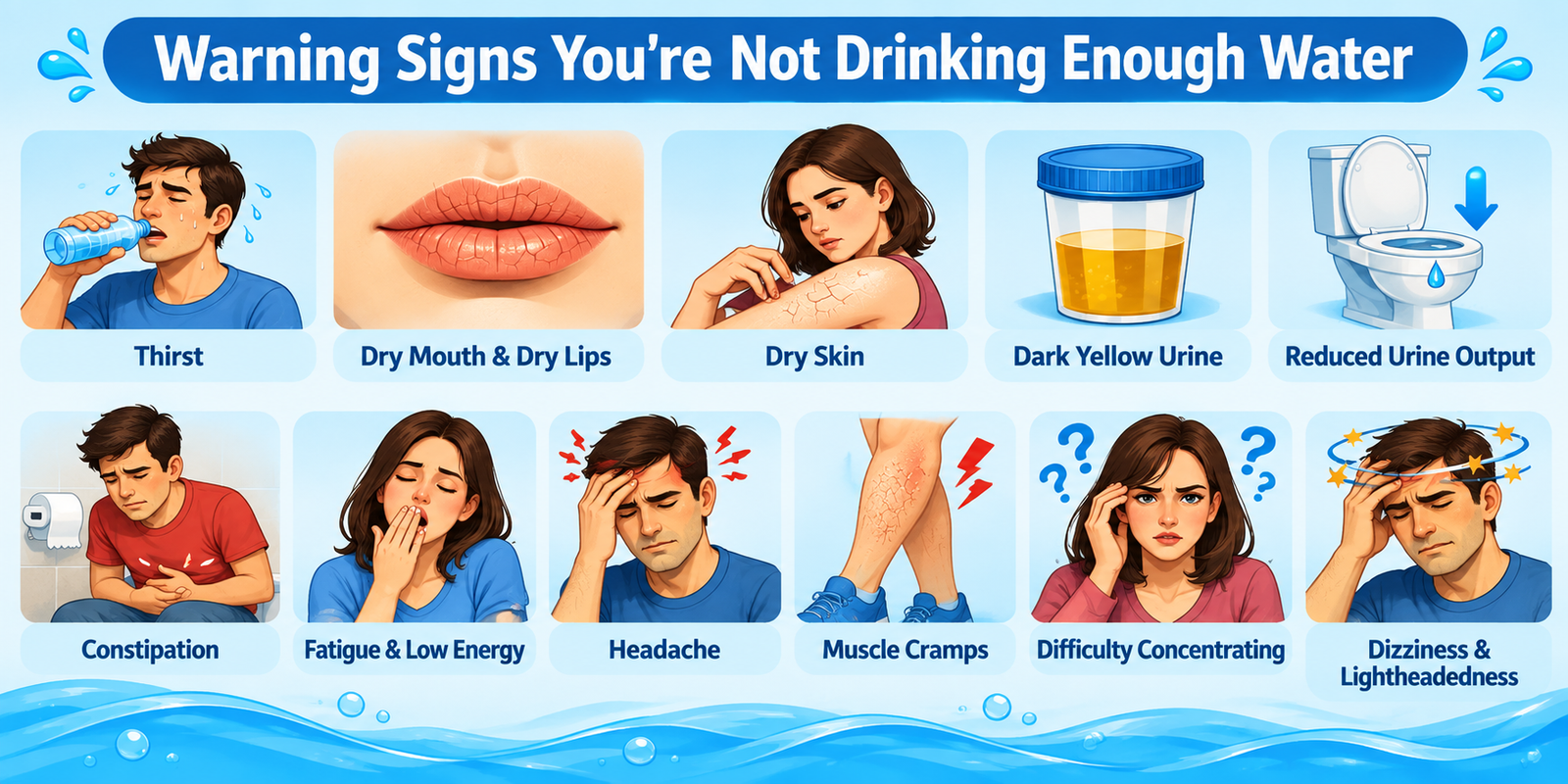
Common signs of dehydration include:
- Thirst – One of the earliest signs your body needs fluids.
- Dry mouth or lips – Reduced saliva can make the mouth feel sticky.
- Dark yellow urine – Often indicates the body is conserving water.
- Reduced urination – Urinating less frequently than usual.
- Constipation – Low fluid intake can slow bowel movements.
- Fatigue or low energy – Dehydration may cause tiredness or weakness.
- Headache – Lack of fluids can trigger headaches.
- Muscle cramps – Caused by fluid and electrolyte imbalance.
- Difficulty concentrating – Mild dehydration can affect focus and memory.
- Dizziness or lightheadedness – May occur when fluid levels drop.
- Dry skin – Skin may appear dull or less elastic.
Simple Tips to Drink More Water Daily
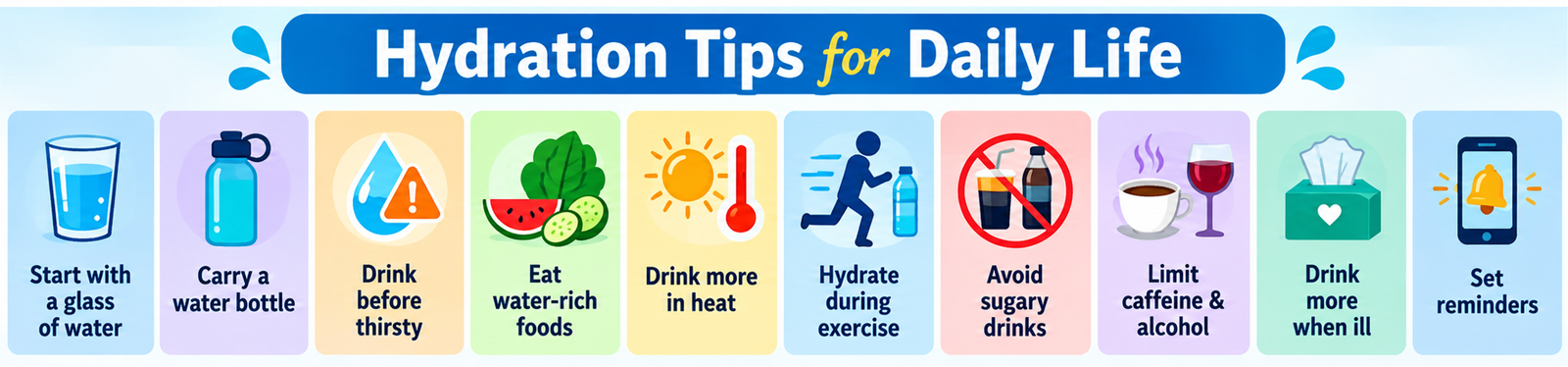
Staying well hydrated need not be difficult. Follow simple daily habits such as:
- Start your day with water – it replenishes the fluids lost overnight.
- Carry a bottle – Makes it easier to drink regularly.
- Drink regularly – Don’t wait until you feel very thirsty.
- Eat water-rich foods – Fruits and vegetables add to fluid intake.
- Drink more in hot weather – Heat increases sweating and fluid loss.
- Hydrate during exercise – Drink before, during, and after activity.
- Avoid sugary drinks – They add extra sugar without improving hydration.
- Limit caffeine and alcohol – Excess amounts can increase fluid loss.
- Drink more when ill – Fever, vomiting, or diarrhea increase water loss.
- Set reminders if needed – Helps build a regular hydration habit.
What to Drink and Limit for Better Hydration?
Choosing the right beverages is important for maintaining healthy hydration. Some drinks help the body stay hydrated, while others should be limited.
Better Choices for Hydration
- Plain water – The best and most natural way to stay hydrated.
- Milk – Provides fluids along with nutrients such as calcium and protein.
- Buttermilk – Helps with hydration and digestion.
- Coconut water – A natural source of electrolytes that can help replace fluids lost through sweating.
- Infused Water – Add cucumber slices and lemon to your water bottle for flavor without sugar.
- Soups – Contribute to daily fluid intake, especially during illness.
- Herbal Teas – Peppermint or chamomile teas are refreshing and caffeine-free.
Drinks to Limit
- Sugary beverages – Soft drinks, sweetened juices, and energy drinks.
- Highly caffeinated drinks – Large amounts of coffee or energy drinks.
- Alcoholic beverages – Alcohol can contribute to dehydration.
- Artificially sweetened drinks – These may not provide the same health benefits as water.
Is More Water Always Good?
- Not necessarily. While staying hydrated is important, drinking excessive water should be avoided in certain conditions, because it can disturb the body’s fluid and electrolyte balance. Conditions Where Excess Intake Should Be Avoided:
- Hyponatremia (Low Sodium Levels) – Drinking too much water can dilute sodium levels in the blood, leading to headaches, nausea, confusion, and in severe cases, brain swelling.
- Chronic Kidney Disease – When kidneys are not functioning properly, they may not efficiently remove excess water, causing fluid overload.
- Syndrome of Inappropriate Antidiuretic Hormone Secretion – This condition causes the body to retain water, so drinking excessive water can worsen the imbalance.
- Liver Cirrhosis – Advanced liver disease can cause fluid buildup (ascites), and excess water intake may worsen fluid retention.
- During Intense Endurance Sports – Drinking too much water without replacing electrolytes during long activities may lead to low sodium levels.
Key Takeaways
- Stay hydrated – Water supports essential body functions.
- Know your needs – Requirements vary with body weight, activity, weather, and health.
- Drink more when active – Exercise and heat increase fluid loss.
- Watch for dehydration – Thirst, dark urine, fatigue, and dizziness are common signs.
- Choose wisely – Water, milk, buttermilk, and other low-sugar fluids are good options.
- Limit sugary drinks & alcohol – They are not ideal hydration choices.
- Replace lost fluids – Extra care is needed during fever, vomiting, diarrhea, or heavy sweating.
- Seek medical guidance when needed – especially with kidney, liver, or electrolyte problems.
Further Reading
- Davy, B. M., Davy, K. P., Savla, J. T., & Katz, B. (2025). Water intake, hydration, and weight management: The glass is half-full! Physiology & Behavior. https://doi.org/10.1016/j.physbeh.2025.115154
- Mayo Clinic Staff. (n.d.). Water: How much should you drink every day? Mayo Clinic. https://www.mayoclinic.org/healthy-lifestyle/nutrition-and-healthy-eating/in-depth/water/art-20044256.
- Banerjee, S. (2025). Estimating daily water intake requirements by age group in India: A systematic approach. Indian Journal of Public Health Research & Development. https://jpmhh.org/archive/volume/11/issue/2/article/25633/pdf.
- Centers for Disease Control and Prevention. (2024, January 2). About water and healthier drinks. https://www.cdc.gov/healthy-weight-growth/water-healthy-drinks/index.html
Disclaimer: The information provided on Medical Pharma Lifestyle Pulse is for educational and informational purposes only and is not intended as medical advice, diagnosis, or treatment. Always consult a qualified healthcare professional before making any decisions about your health, medications, or treatment. Never ignore or delay seeking professional medical advice based on information you have read on this website. While we strive to provide accurate and up-to-date information, we do not guarantee the completeness or accuracy of the content. For more information, please read our full Medical Disclaimer.