
Table of Contents
Introduction
Liver Function Tests (LFTs) are among the most commonly ordered blood tests. Abnormal LFT results are common, occurring in about 8 out of every 100 people. In many cases, especially when there are no symptoms, these changes are temporary. About 3 out of 10 people have normal test results when the test is repeated a few weeks later. Therefore, a single abnormal result does not always indicate a serious liver problem, and your doctor may recommend repeating the test before ordering further investigations.
In this blog, you’ll learn the basics of Liver Function Tests (LFTs), why they’re done, what the different test results mean, and when abnormal results may require further investigation.
What is a liver function test (LFT)?
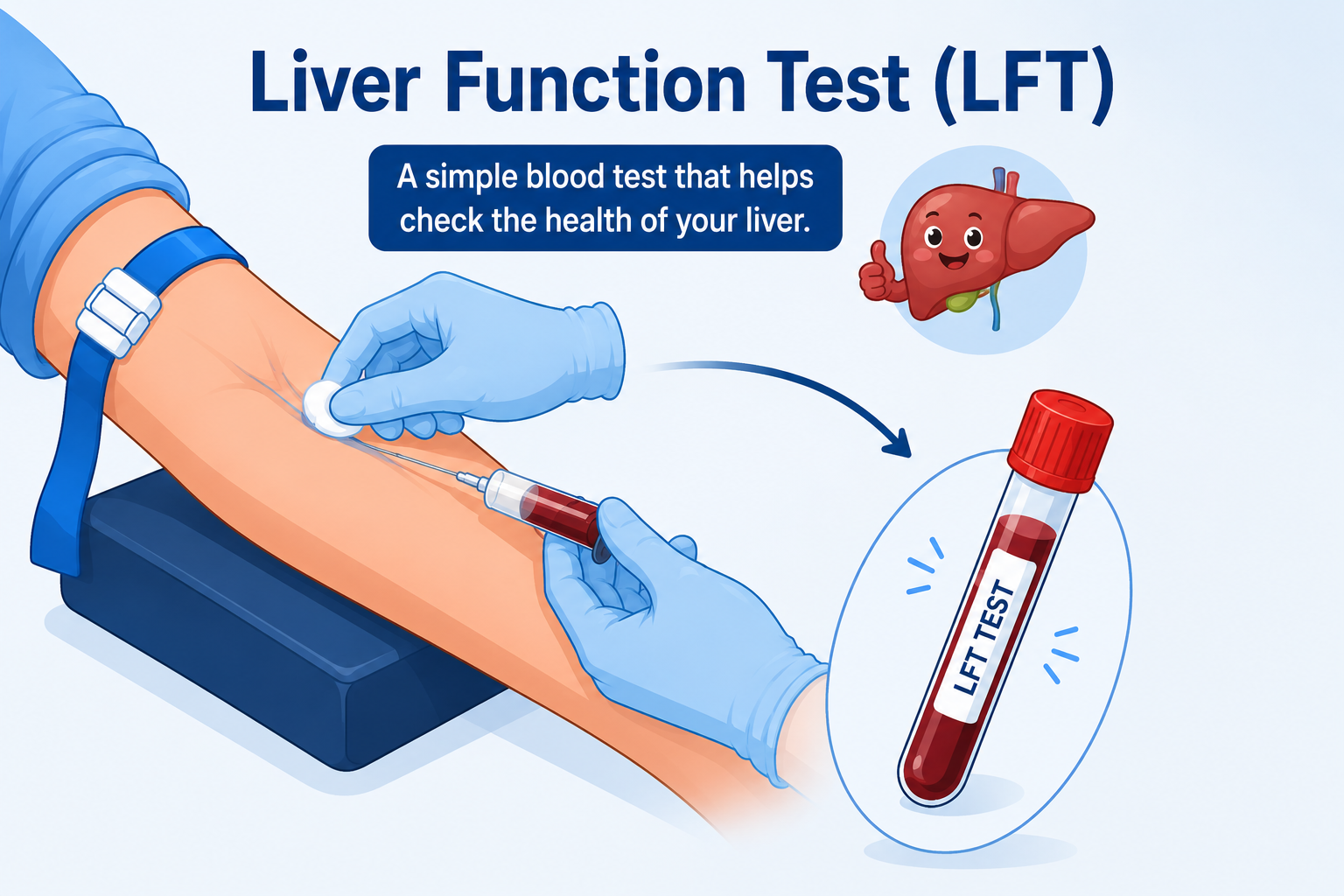
A Liver Function Test (LFT) is a group of blood tests that helps check how well your liver is working. These tests measure different enzymes, proteins, and substances made or processed by the liver. They can help detect liver inflammation, damage, and Bile duct blockage, and assess the liver’s ability to perform its normal functions. LFTs are also used to monitor liver diseases and the effects of certain medicines.
When is an LFT Recommended?
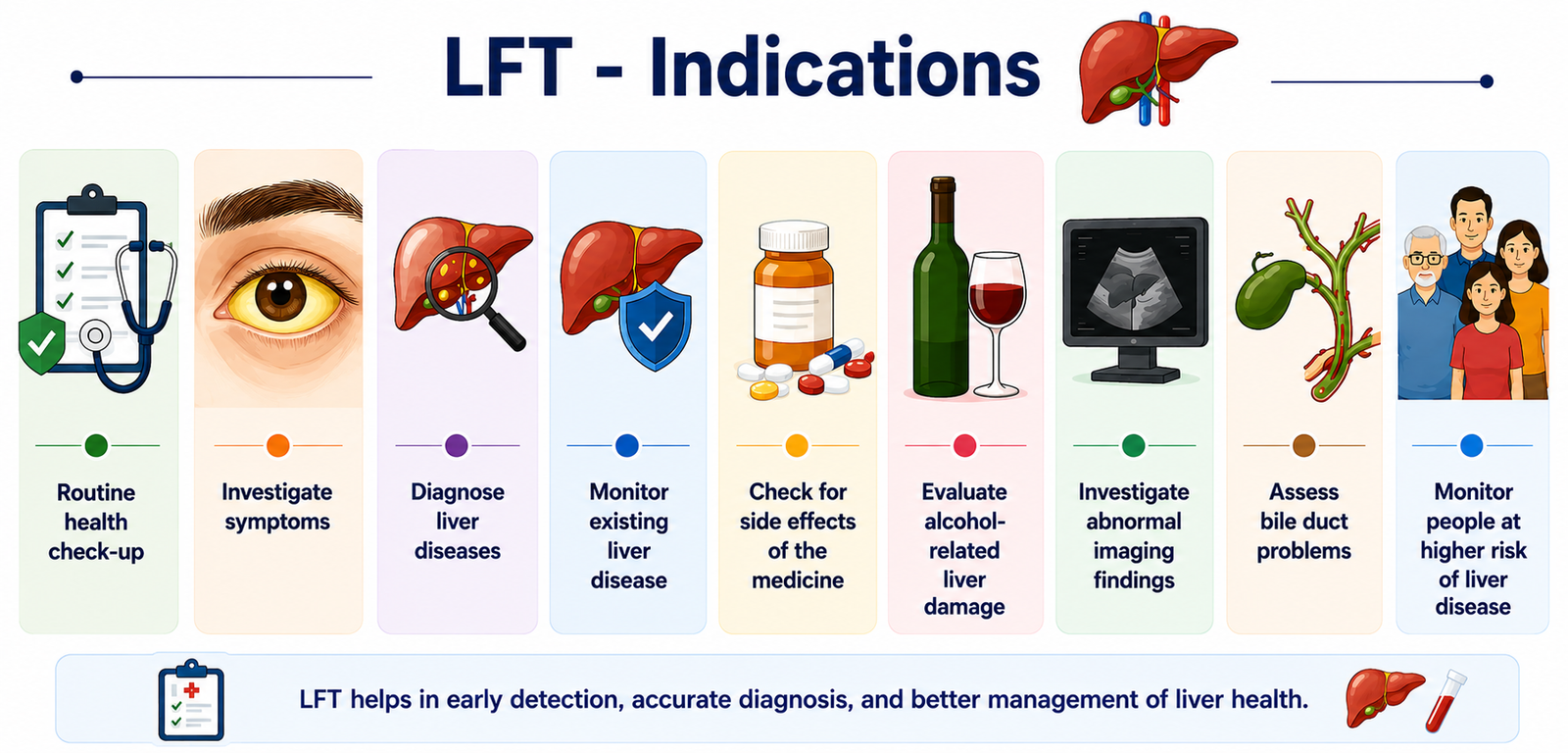
A Liver Function Test (LFT) may be recommended:
- As part of a routine health check-up, especially in people with risk factors or before certain medical procedures.
- Investigate symptoms such as yellowing of the skin or eyes (jaundice), dark urine, pale stools, abdominal pain, Nausea, vomiting, Fatigue, itching, or unexplained weight loss.
- Diagnose liver diseases such as fatty liver disease, Hepatitis, cirrhosis, or liver damage.
- Monitor existing liver disease and assess how well treatment is working.
- Check for side effects of medicines that may affect the liver.
- Evaluate alcohol-related liver damage in people who consume alcohol regularly.
- Investigate abnormal imaging findings, such as an ultrasound showing a fatty liver or other liver changes.
- Assess bile duct problems, including blockage or inflammation.
- Monitor people at higher risk of liver disease, such as those with obesity, diabetes, high cholesterol, viral hepatitis, or a family history of liver disease.
What is the procedure for LFT?
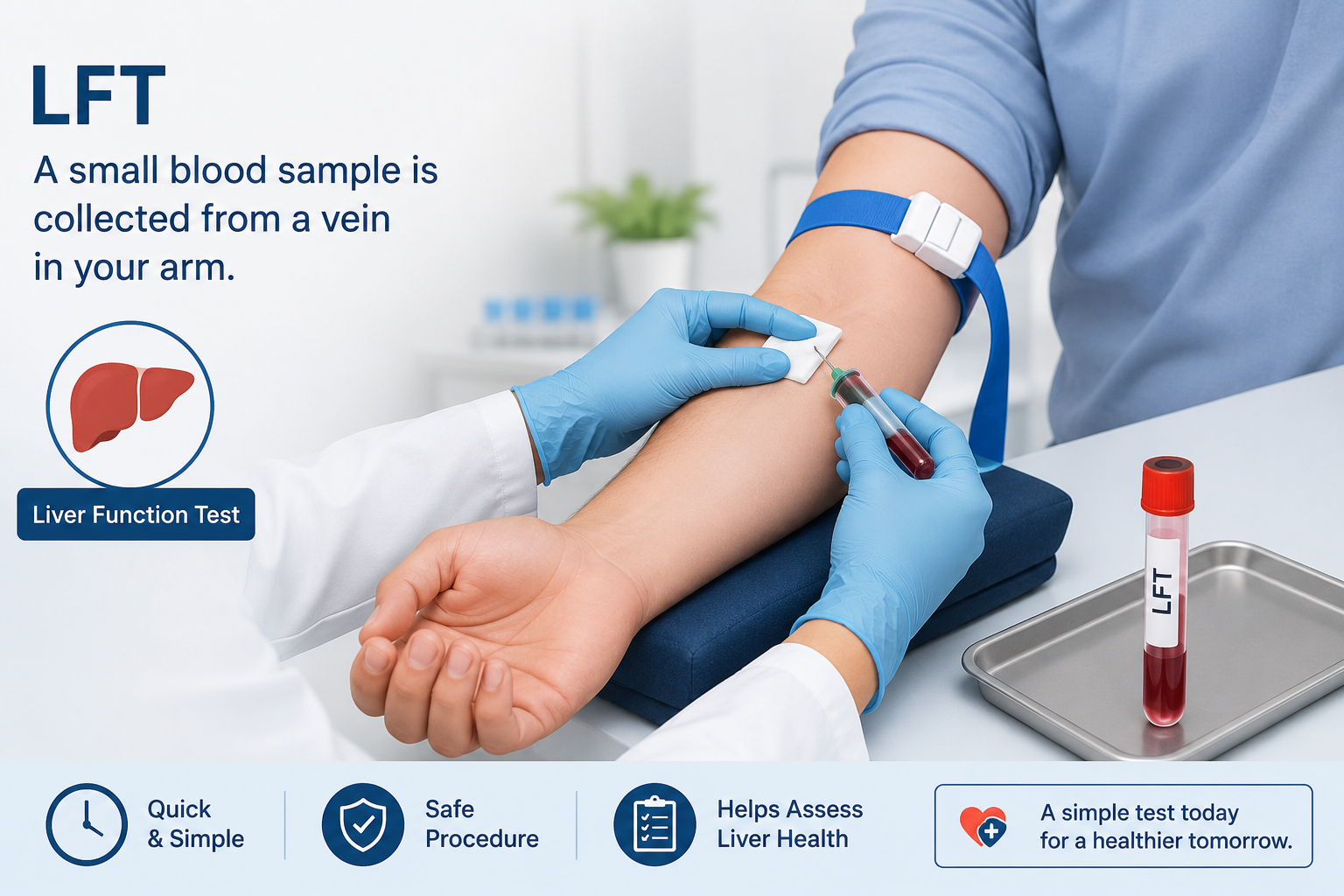
- A Liver Function Test is a simple blood test.
- A small blood sample is collected from a vein in your arm.
- The procedure takes only a few minutes.
- You can usually resume your normal activities immediately after the test.
- Results are often available within 24 hours, although this may vary by laboratory.
Do You Need to Fast for an LFT?
- Usually, no. Most Liver Function Tests do not require fasting. However, your doctor may ask you to fast if the LFT is being performed alongside other blood tests, such as a lipid profile or a blood sugar test. Always follow the instructions given by your healthcare provider or laboratory.
How to Prepare for an LFT
- Before your test:
- Avoid alcohol for 24–48 hours.
- Tell your doctor about all prescription medicines, over-the-counter drugs, herbal supplements, and vitamins you are taking, as some can affect liver test results.
- Follow any fasting instructions your doctor or laboratory recommends.
What Does an LFT Routinely Include?
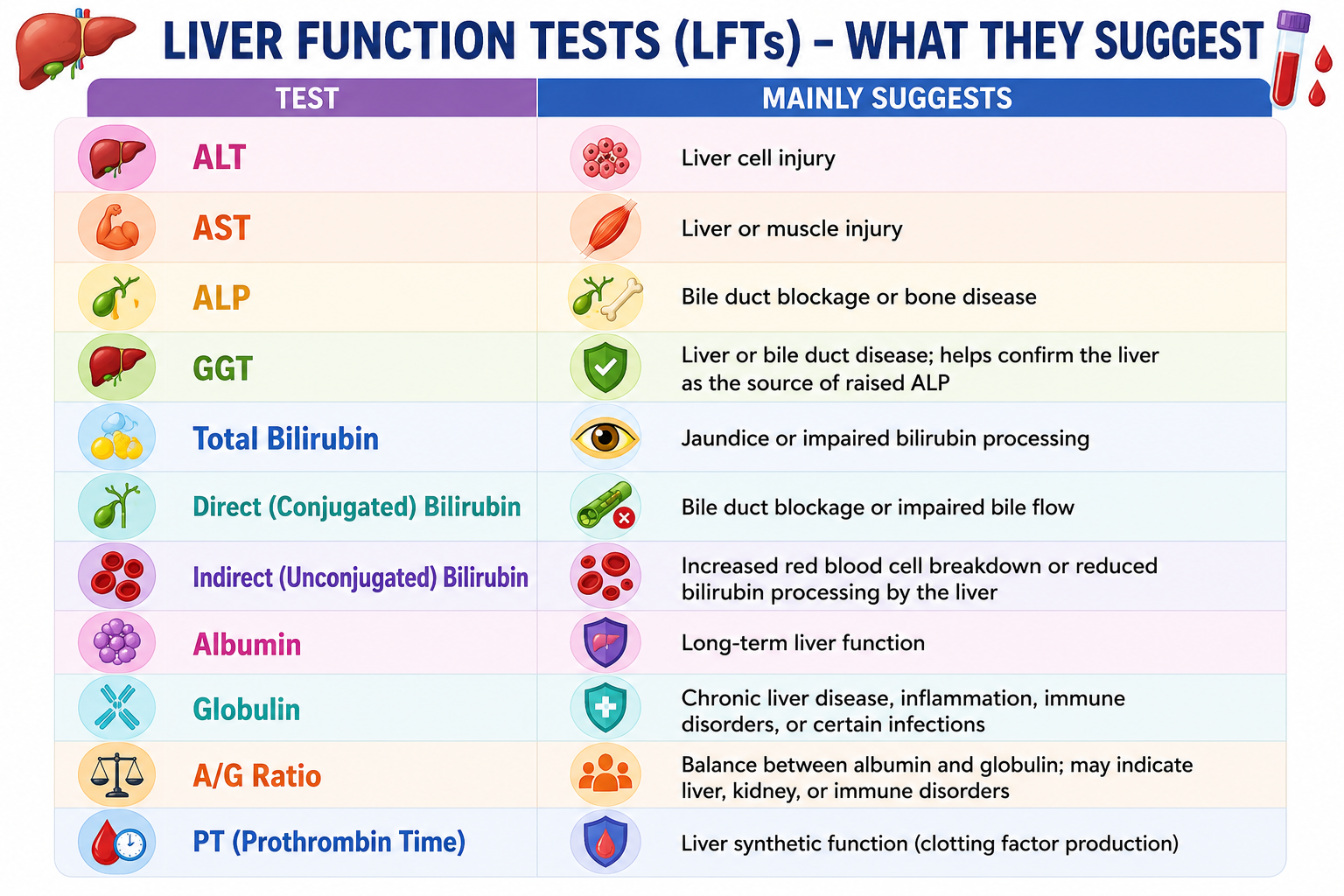
Alanine Transaminase (ALT)
- Other name: Alanine aminotransferase (ALT), formerly called Serum Glutamate Pyruvate Transaminase (SGPT).
- What it is: An enzyme found mainly in the liver.
- What it shows: High ALT levels mean liver cells are damaged or inflamed.
- Common causes: Fatty liver disease, hepatitis, alcohol-related liver disease, and certain medicines.
Aspartate Aminotransferase (AST)
- Other name: Aspartate aminotransferase (AST), formerly called Serum Glutamic Oxaloacetic Transaminase (SGOT).
- What it is: An enzyme found in the liver, heart, muscles, and other organs.
- What it shows: High AST levels can indicate liver damage, but they may also rise due to heart or muscle injury.
- Common causes: Liver disease, alcohol-related liver damage, heart attack, and muscle injury.
Total Bilirubin
- What it is: A yellow pigment formed when old red blood cells break down.
- What it shows: High bilirubin levels may mean the liver is not processing it properly or there is a blockage in the bile ducts.
- Common signs: Yellowing of the skin and eyes (jaundice).
Direct Bilirubin (Conjugated Bilirubin)
- What it is: The form of bilirubin that has been processed by the liver and is ready for excretion in bile.
- What it shows: High direct bilirubin levels may indicate a blockage in the bile ducts or liver diseases that affect bile flow.
- Common causes: Gallstones, Bile Duct obstruction, Hepatitis, Cirrhosis, and certain liver disorders.
Indirect Bilirubin (Unconjugated Bilirubin)
- What it is: The form of bilirubin that has not yet been processed by the liver.
- What it shows: High indirect bilirubin levels may indicate increased red blood cell breakdown or reduced liver ability to process bilirubin.
- Common causes: Hemolytic anemia, Gilbert syndrome, newborn jaundice, and certain inherited disorders.
Alkaline Phosphatase (ALP)
- What it is: An enzyme found in the liver, bile ducts, and bones.
- What it shows: High ALP levels may suggest a blocked bile duct or liver disease. It can also rise in bone disorders and during pregnancy.
Gamma-Glutamyl Transferase (GGT)
- What it is: An enzyme found in the liver and bile ducts.
- What it shows: High GGT levels often indicate liver or bile duct problems and may be linked to heavy alcohol use.
- Note: GGT is usually interpreted along with other liver tests.
Albumin
- What it is: A protein made by the liver.
- What it shows: Low albumin levels may suggest long-term liver disease or poor liver function. They can also occur due to poor nutrition, kidney disease, or severe illness.
Globulin
- What it is: A group of proteins in the blood made by the liver and the immune system. Globulins help fight infections, transport substances, and support blood clotting.
- What it shows: Abnormal globulin levels may indicate liver disease, chronic inflammation, infections, immune disorders, or certain blood cancers.
- Common causes:
- High globulin: Chronic liver disease (especially cirrhosis), chronic infections, autoimmune diseases, and Multiple myeloma.
- Low globulin: Liver disease, kidney disease (protein loss), malnutrition, or certain immune deficiency disorders.
Albumin/Globulin (A/G) Ratio
- What it is: The albumin-to-globulin ratio in the blood.
- What it shows: An abnormal A/G ratio may help identify liver disease, kidney disease, chronic inflammation, or disorders affecting protein production.
- Common causes:
- Low A/G ratio: Cirrhosis, chronic liver disease, autoimmune diseases, chronic infections, or Multiple Myeloma.
- High A/G ratio: Low globulin levels due to certain genetic disorders or reduced antibody production.
Prothrombin Time (PT)
- Why it matters: It helps assess your liver’s ability to make clotting factors and your risk of bleeding.
- What it is: A test that measures how long it takes your blood to clot.
- What it shows: A prolonged PT may indicate that the liver is not producing enough clotting proteins or that you have a vitamin K deficiency.
What is the normal reference range?
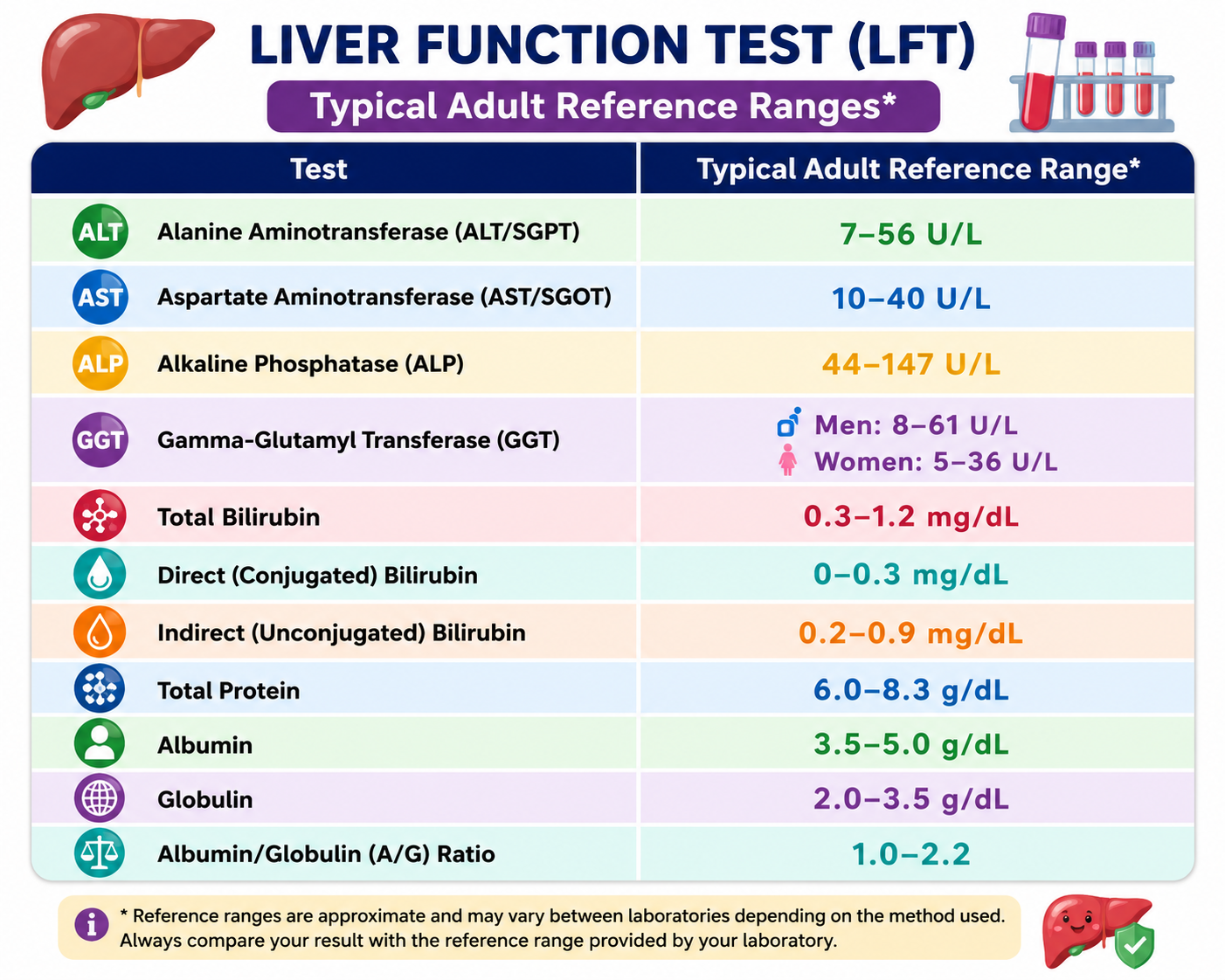
Note: The liver function test reference ranges shown are commonly used adult values for educational purposes. Always interpret your test results using the reference interval provided by the laboratory that performed the test, as ranges may vary by assay and methodology.
Frequently Asked Questions (FAQs)
- Can liver enzymes be high for reasons other than liver disease?
- Yes. Liver enzyme levels may temporarily increase due to:
- Certain medicines or supplements
- Intense exercise
- Pregnancy (ALP may rise in the third trimester)
- Recent illness or infection
- Should I be worried if my liver enzymes are slightly high?
- Not necessarily. Mild elevations are common and may be temporary. Your doctor will consider your symptoms, medical history, and other test results before making a diagnosis.
- Will I need the test again?
- Yes. In many cases, your doctor will repeat the blood test to confirm the result before ordering further investigations.
- What happens if the liver enzyme levels remain high?
- If the abnormality persists, your doctor may recommend:
- A detailed medical history and physical examination
- Additional blood tests
- An ultrasound or other imaging tests
- In some cases, a liver biopsy
- If the abnormality persists, your doctor may recommend:
- Does the degree of elevation matter?
- Yes. Doctors often classify liver enzyme elevations as:
- Mild: Up to 5 times the normal limit
- Moderate: 5–10 times the normal limit
- Severe: More than 10 times the normal limit
- Higher levels may require more urgent evaluation.
- Yes. Doctors often classify liver enzyme elevations as:
- What should I do if my liver enzymes are high?
- Follow your doctor’s advice, attend follow-up appointments, avoid alcohol unless advised otherwise, and do not stop or start any medication without consulting your healthcare provider.
Key Takeaways
- 🩸 LFT is a group of blood tests, not a single test.
- ⚠️ Mild abnormalities are common and are often temporary.
- ✅ One abnormal result does not always mean liver disease.
- 🩺 Doctors interpret all LFT results together, along with your symptoms and medical history, rather than relying on a single test.
- 🔍 Further tests or repeat testing may be needed if abnormalities persist or if liver disease is suspected.
Further Reading
- Lala, V., Zubair, M., & Minter, D. A. (2023). Liver function tests. In StatPearls. StatPearls Publishing. https://www.ncbi.nlm.nih.gov/books/NBK482489
- Sawieres, S. (2022, January 25). Liver function tests: Indication and interpretation. The Pharmaceutical Journal. https://pharmaceutical-journal.com/article/ld/liver-function-tests-indication-and-interpretation
- Cleveland Clinic. (2022, September 11). Liver function tests: Types, purpose & results interpretation. https://my.clevelandclinic.org/health/diagnostics/17662-liver-function-tests
- National Library of Medicine. (2024, November 4). Globulin test. MedlinePlus. https://medlineplus.gov/lab-tests/globulin-test/
- Malakouti, M., Kataria, A., Ali, S. K., & Schenker, S. (2017). Elevated liver enzymes in asymptomatic patients – What should I do? Journal of Clinical and Translational Hepatology, 5(4), 394–403. https://doi.org/10.14218/JCTH.2017.00027