
Table of Contents
Introduction
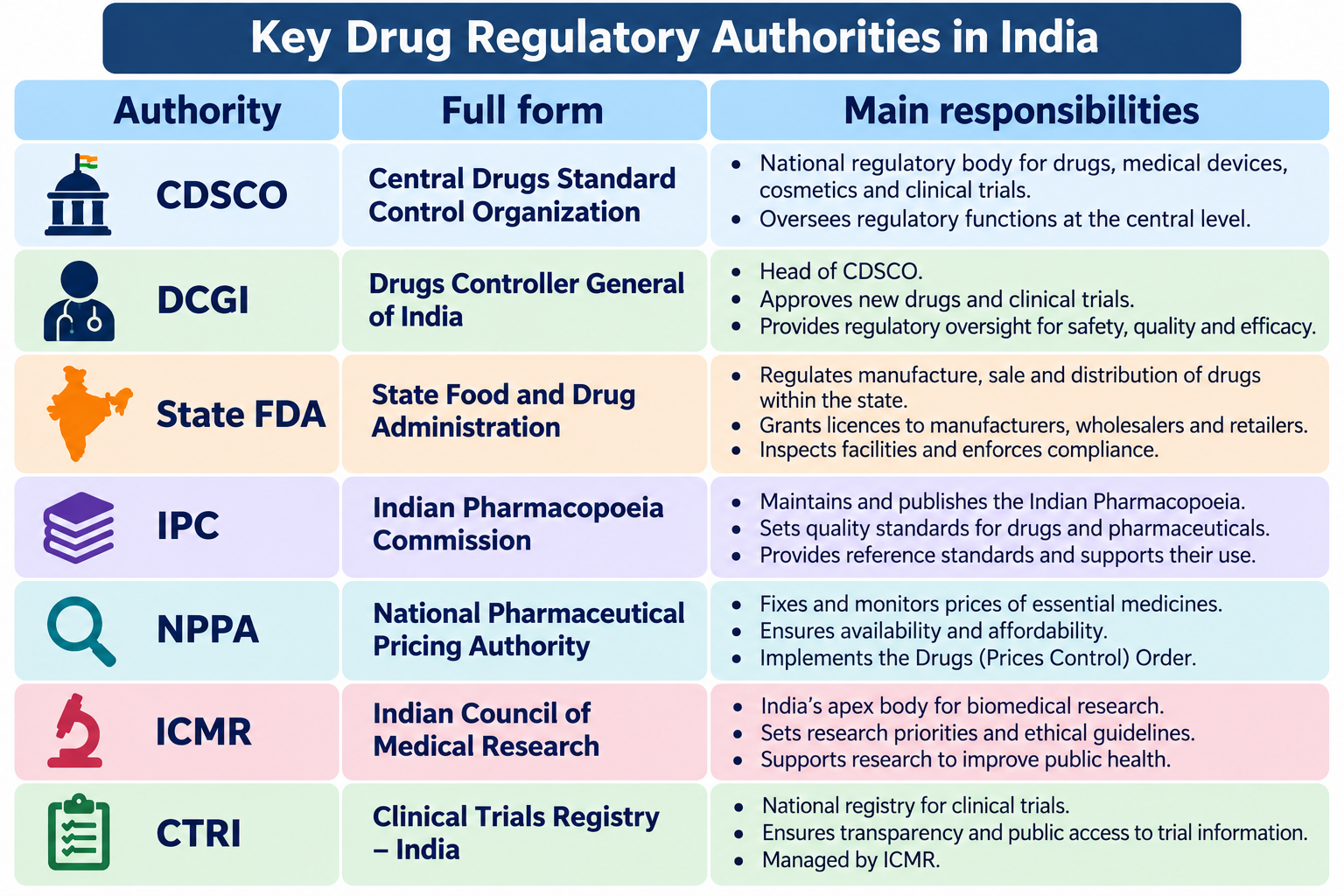
India’s drug regulatory framework is a system of laws, authorities, and procedures that ensures the safety, quality, and efficacy of medicines. It involves central and state regulatory authorities, along with organizations responsible for drug standards, pricing, biomedical research, and clinical trial registration. Together, these bodies help ensure that medicines meet required standards and are used safely.
Why Does Drug Regulation Matter?
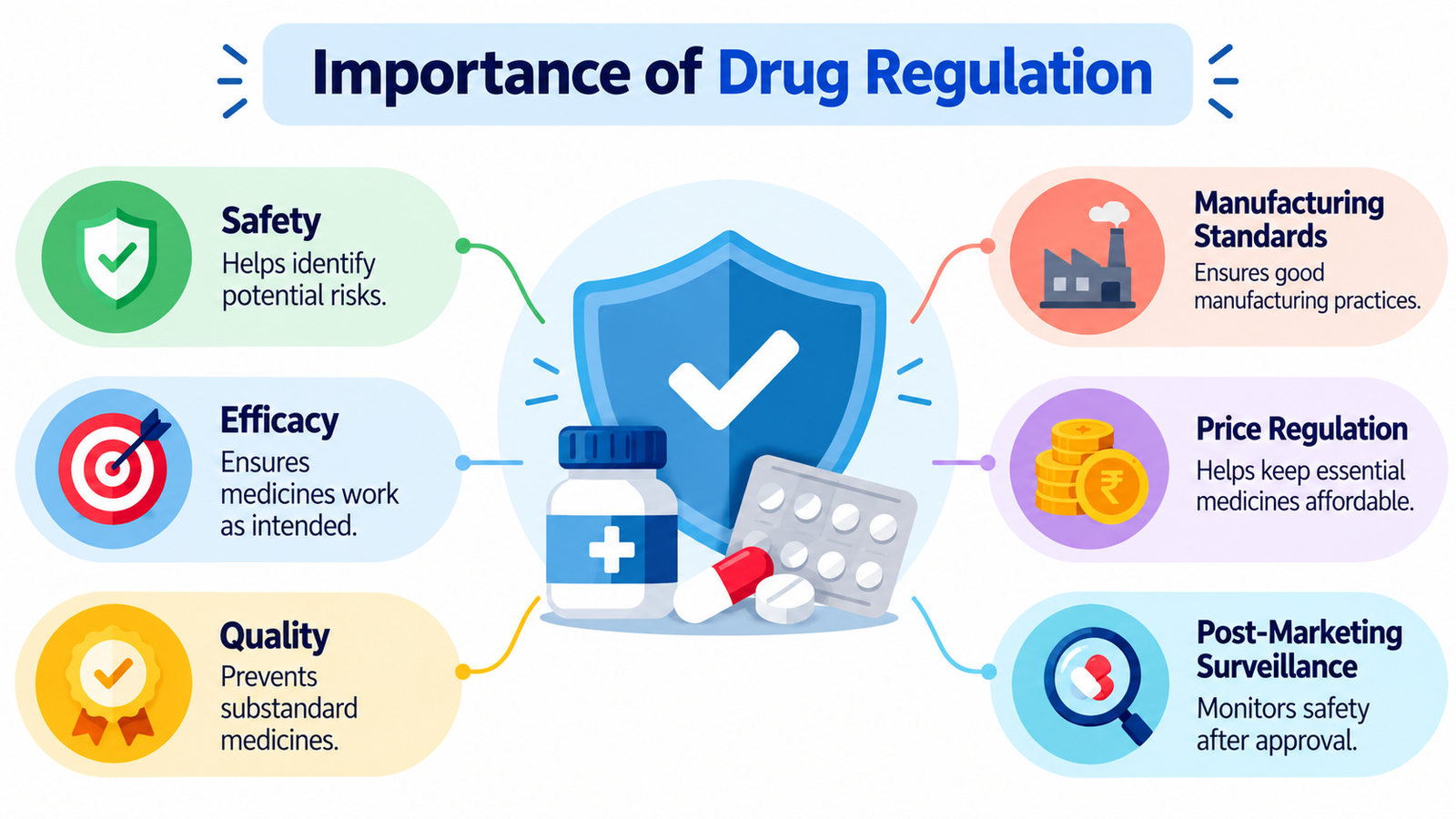
- Drug regulation helps ensure that medicines available to patients are safe, effective, and of acceptable quality.
- It protects public health by setting standards for how medicines are developed, tested, manufactured, marketed, and monitored after approval.
- Whether you buy a medicine from a pharmacy, learn about a new treatment, or consider participating in a clinical trial, India’s drug regulatory system helps protect patients and support responsible healthcare.
Key Indian Regulatory Authorities
Central Drugs Standard Control Organization (CDSCO)
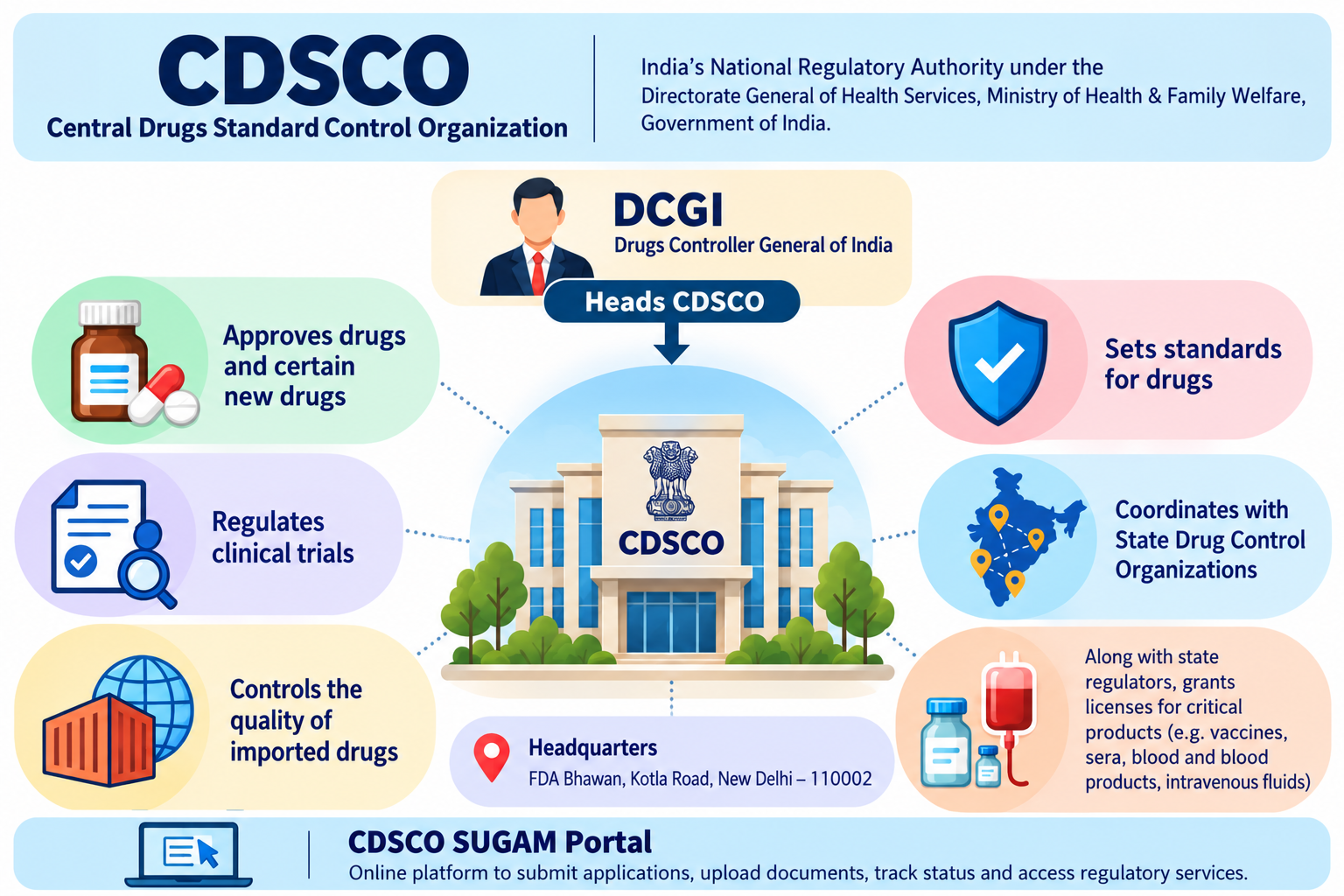
- CDSCO is India’s National Regulatory Authority under the Directorate General of Health Services, Ministry of Health & Family Welfare, Government of India.
What does CDSCO do?
- Approves drugs and certain new drugs
- Regulates clinical trials.
- Sets standards for drugs.
- Controls the quality of imported drugs.
- Coordinates with State Drug Control Organizations.
- Helps ensure uniform enforcement of the Drugs & Cosmetics Act and Rules.
- Along with state regulators, grants licenses for certain critical products such as vaccines, sera, blood and blood products, and Intravenous fluids.
- Its headquarters is located at FDA Bhawan, Kotla Road, New Delhi – 110002.
Head of CDSCO
- The Drugs Controller General of India (DCGI) heads the CDSCO and functions under the Ministry of Health & Family Welfare, Government of India.
- The DCGI also plays an important role in establishing and maintaining standards for the manufacturing, sale, import, and distribution of drugs in India.
- DCGI is responsible for approval of licenses of specified categories of Drugs such as blood and blood products, Intravenous fluids, vaccines, and Sera.
- The present DCGI is Dr. Rajeev Singh Raghuvanshi.
CDSCO SUGAM Portal
- The CDSCO SUGAM Portal is an online regulatory platform developed by the CDSCO to provide digital access to various regulatory services.
- It enables applicants and stakeholders to submit applications, upload documents, track application status, and access regulatory approvals and related services online, helping make the drug regulatory process more transparent and efficient.
Official Website: CDSCO
Official Portal: CDSCO SUGAM Portal
State Food and Drug Administration (FDA)
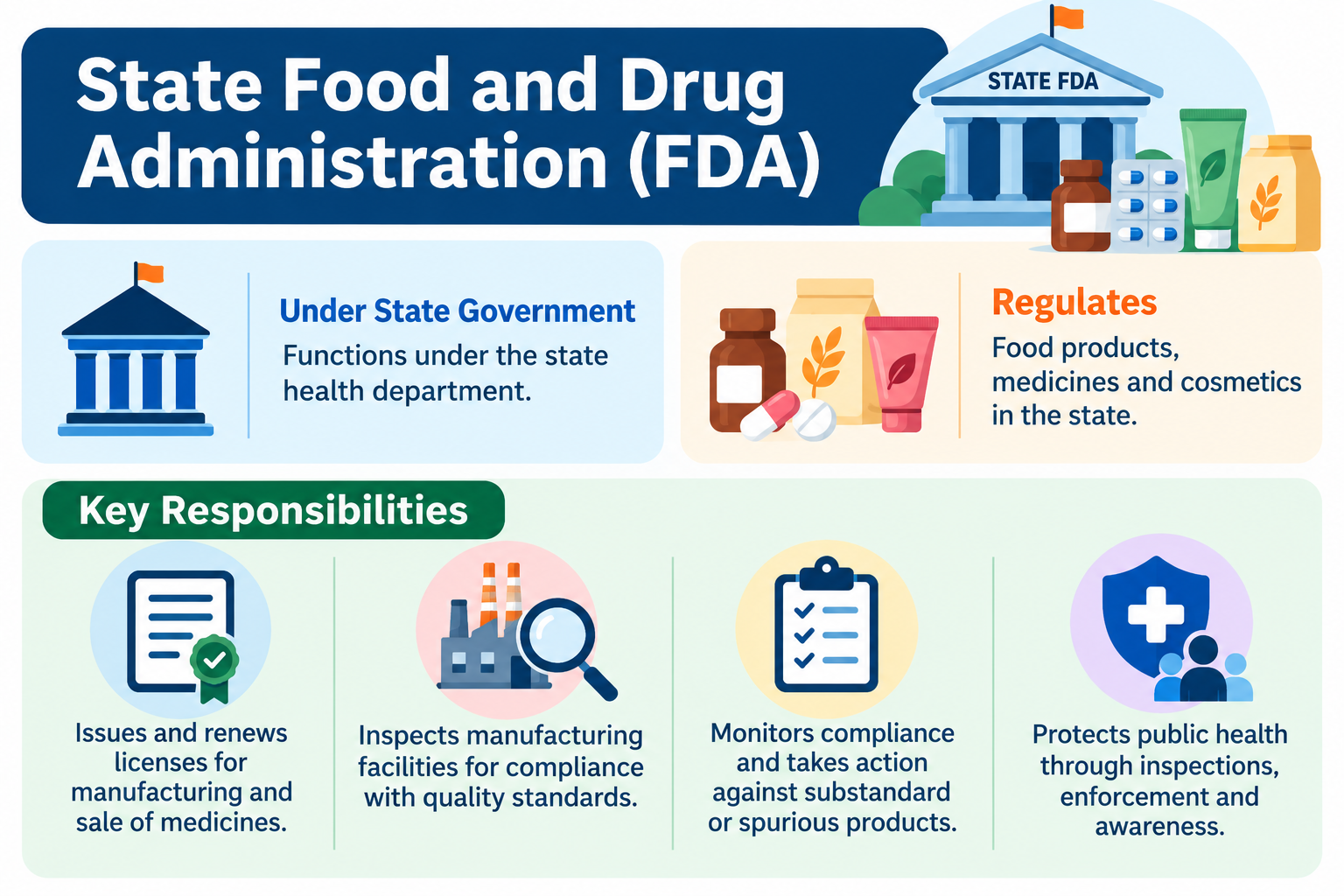
- The State FDA functions under the respective state government’s health department and is responsible for regulating food products, medicines, and cosmetics within its jurisdiction.
key responsibilities
- Include issuing and renewing licenses for pharmaceutical manufacturing and the retail and wholesale sale of medicines.
- Conducts inspections of manufacturing facilities to assess compliance with Good Manufacturing Practices and applicable regulatory requirements.
- Monitors compliance with relevant laws and regulations and takes action against substandard, misbranded, spurious, adulterated, or prohibited products.
- Through inspections, enforcement activities, and public awareness initiatives, State FDAs play an important role in safeguarding public health and ensuring the safety and quality of regulated products.
Indian Pharmacopeia Commission (IPC)
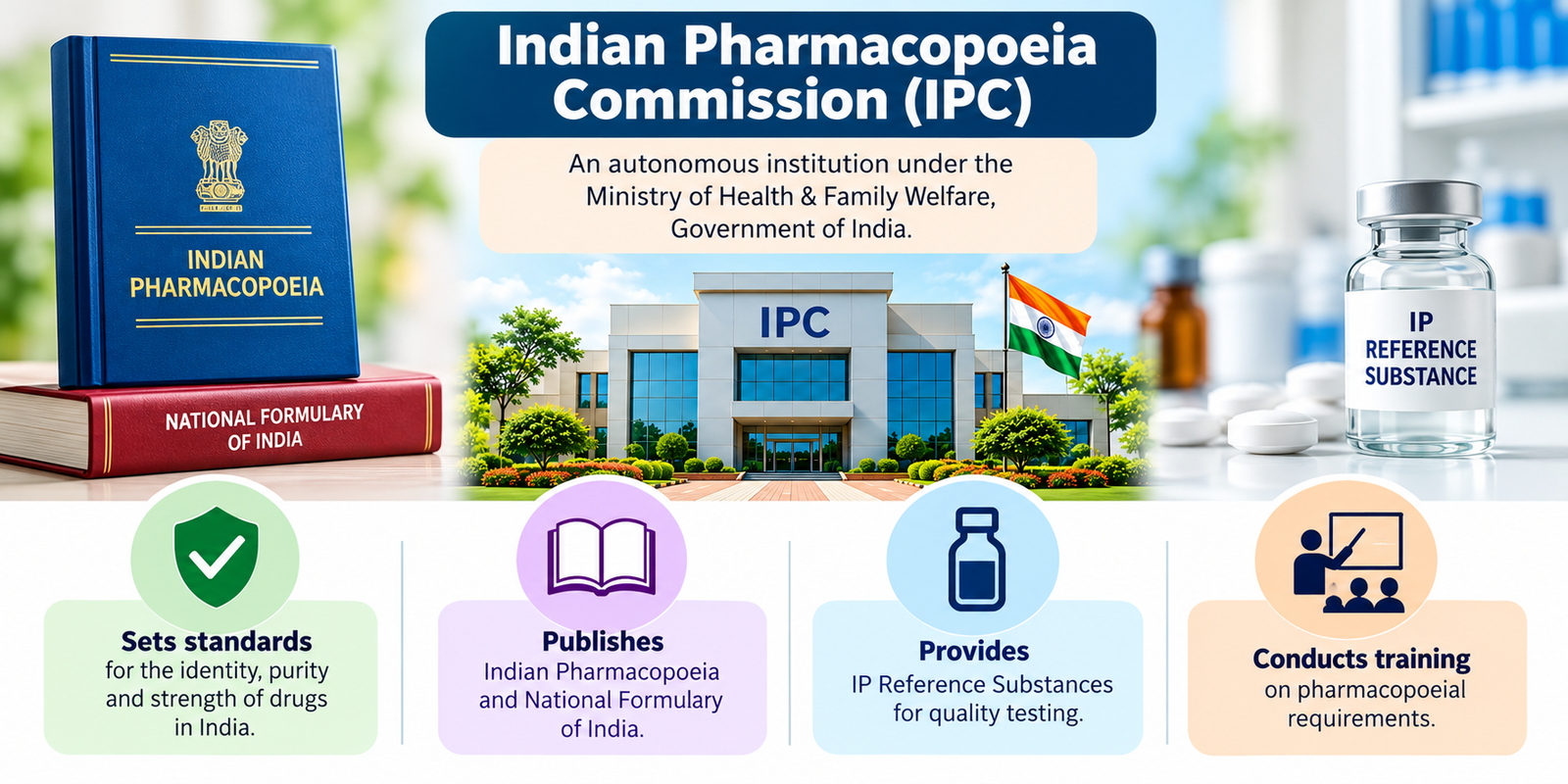
- The IPC is an autonomous institution under the Ministry of Health & Family Welfare, Government of India, established to maintain and publish the Indian Pharmacopeia, India’s official book of standards for medicines.
- The IPC specifies standards for the identity, purity, and strength of drugs manufactured, imported, distributed, or sold in India.
- It regularly revises and publishes the Indian Pharmacopeia and National Formulary of India, provides IP Reference Substances, and conducts training on pharmacopoeial requirements.
Official Website: IPC
National Pharmaceutical Pricing Authority (NPPA)
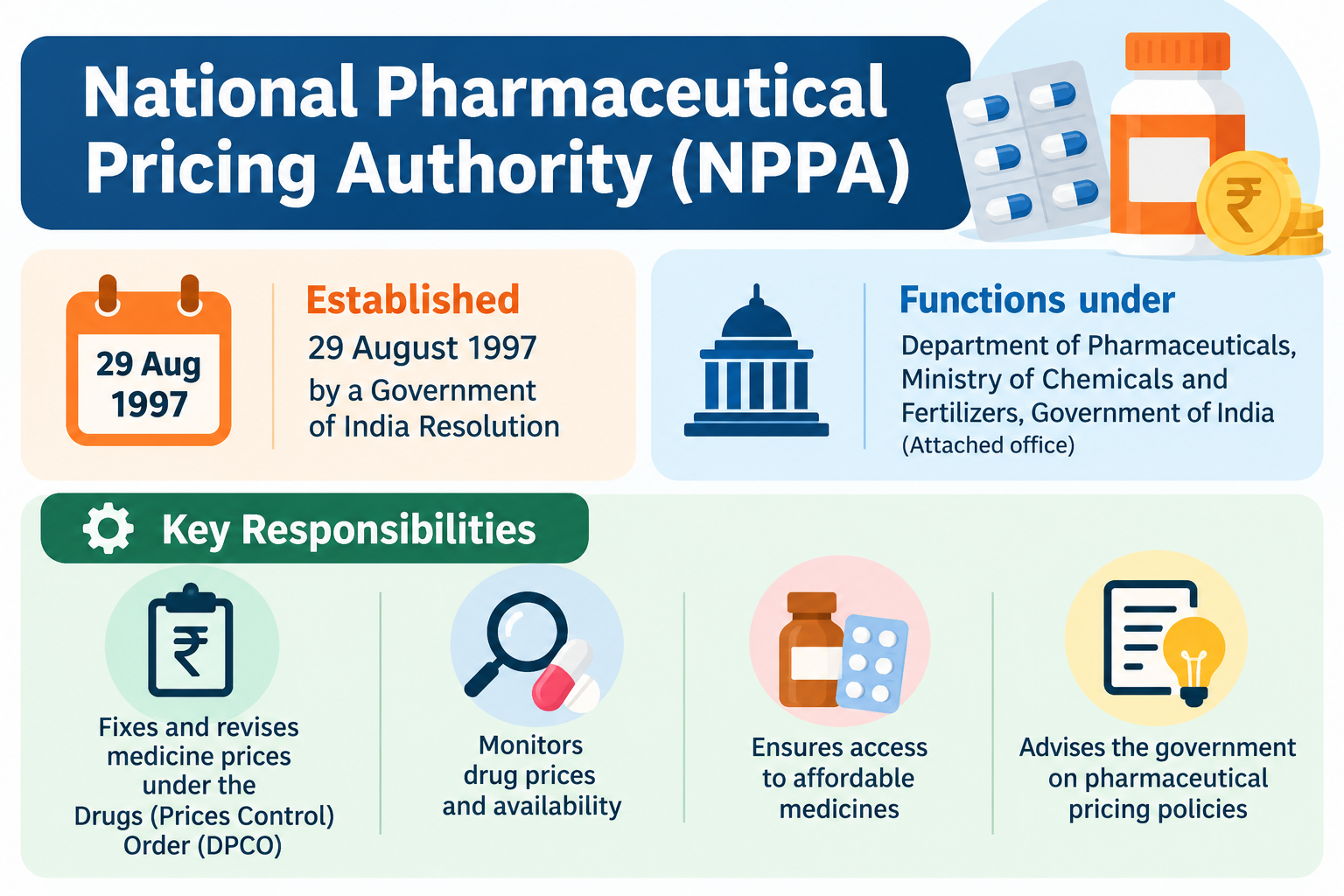
- The NPPA was established on 29 August 1997 through a Government of India Resolution.
- It functions as an attached office of the Department of Pharmaceuticals, Ministry of Chemicals and Fertilizers, and serves as an independent regulator for drug pricing.
- Its key responsibilities include fixing and revising medicine prices under the Drugs (Prices Control) Order (DPCO), monitoring drug prices and availability, ensuring access to affordable medicines, and advising the government on pharmaceutical pricing policies.
Official Website: NPPA
Indian Council of Medical Research (ICMR)
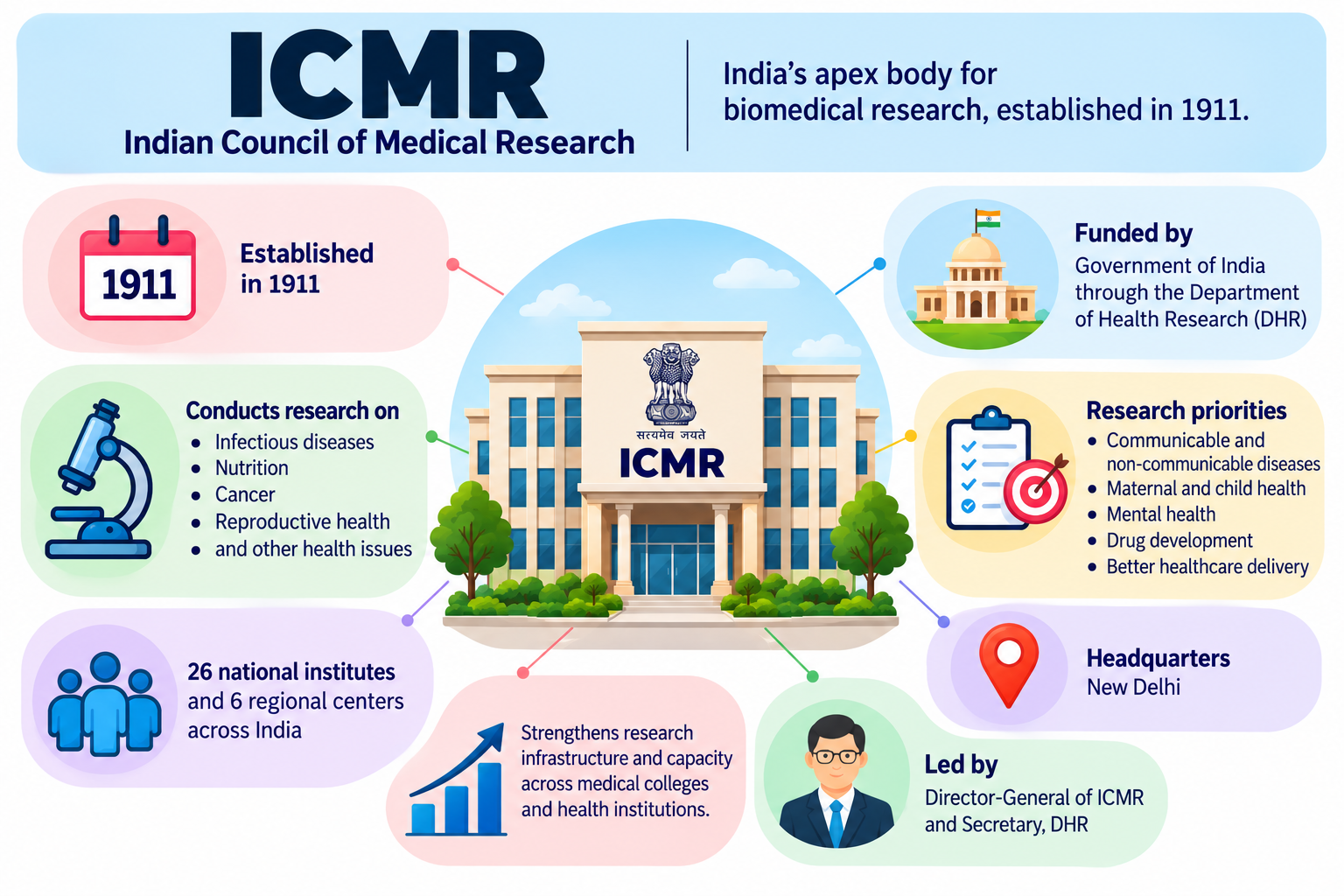
- ICMR, established in 1911, is India’s apex body for biomedical research and is one of the oldest and largest medical research bodies in the world.
- The ICMR is funded by the Government of India through the Department of Health Research (DHR), Ministry of Health and Family Welfare, with its headquarters in Delhi.
- ICMR’s 26 national institutes and six regional centers conduct research on infectious diseases, nutrition, cancer, reproductive health, and other health issues.
Key Responsibilities
- Research on communicable and non-communicable diseases, maternal and child health, mental health, and drug development.
- Conducts and funds medical research to address national health challenges.
- Supports the development of innovative diagnostics, treatments, and vaccines.
- Develops evidence-based guidelines to inform healthcare policies.
- Improves healthcare delivery and promotes public health in India.
- Strengthens research infrastructure, collaboration, and scientific training across India.
Head of ICMR
- The Director-General of the ICMR and Secretary of the DHR is the senior official responsible for leading the council’s biomedical research activities.
- Dr. Rajiv Bahl has been serving as Director-General of ICMR and Secretary of DHR.
Official Website: ICMR
Clinical Trials Registry–India (CTRI)
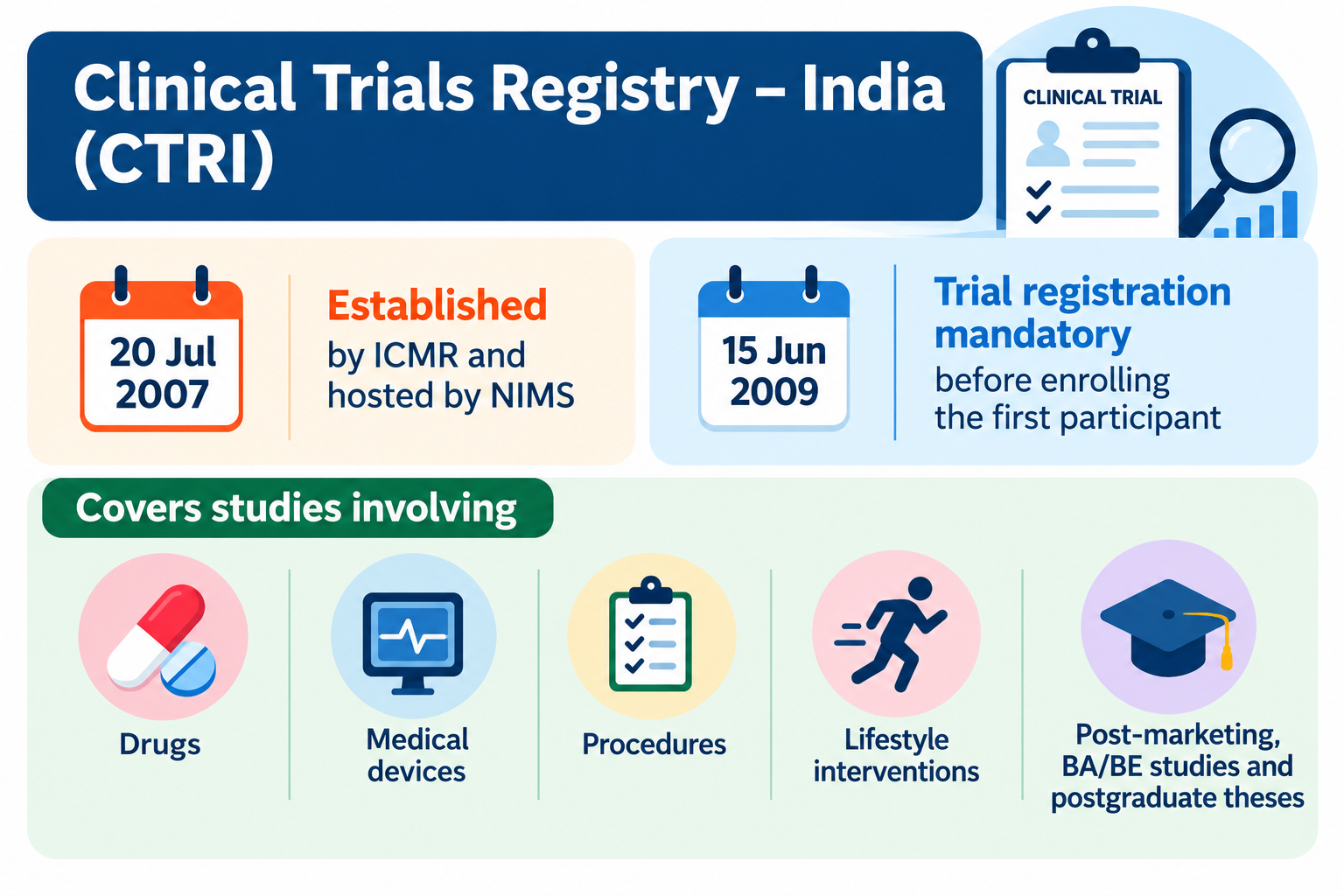
- The CTRI is an online public registry established by the ICMR and hosted by the National Institute of Medical Statistics, launched on 20th July 2007.
- Since 2009, CDSCO has mandated that all regulatory clinical trials be registered with the CTRI.
- It covers studies involving drugs, medical devices, procedures, lifestyle interventions, post-marketing surveillance, bioavailability/bioequivalence (BA/BE) studies, and clinical studies conducted as part of a postgraduate thesis.
CDSCO Clinical Trial Approval: 10 Key Steps
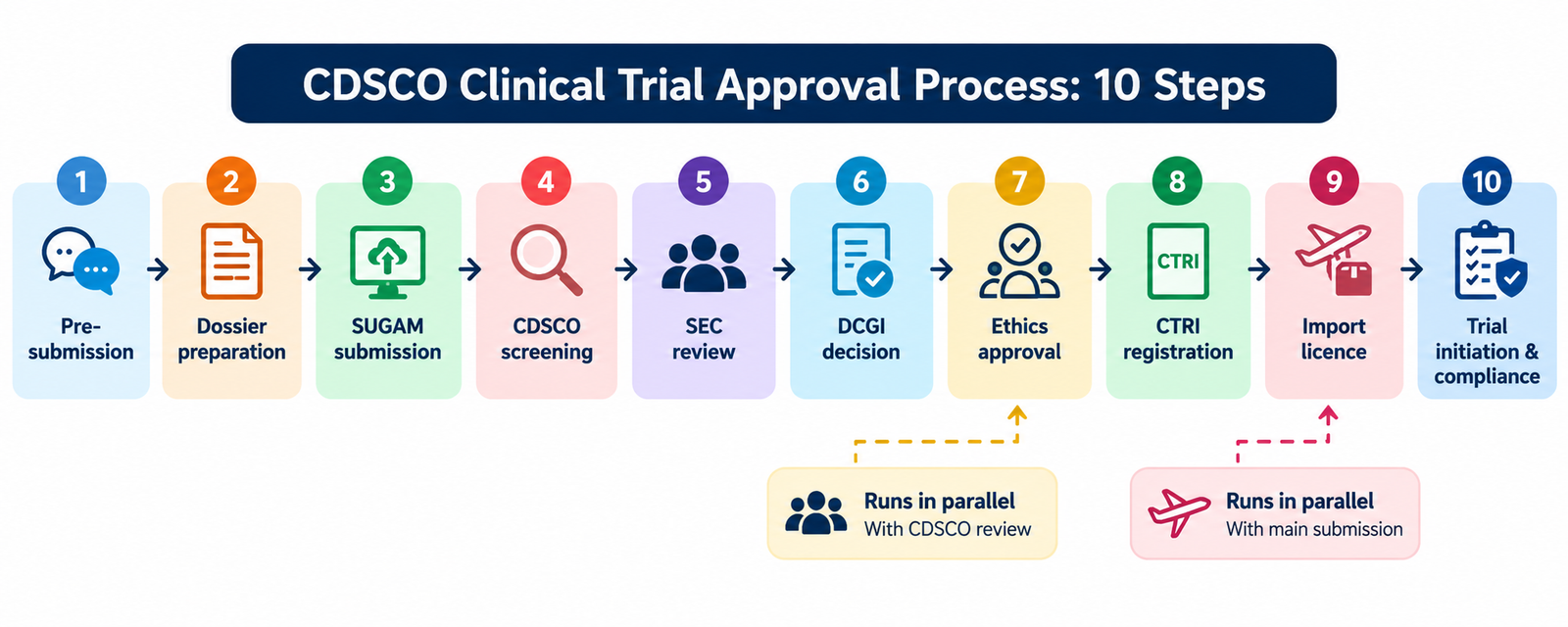
- Pre-submission: Clarify the approval process with CDSCO.
- Dossier Preparation: Prepare all required documents.
- SUGAM Submission: Submit the application through the SUGAM portal.
- Technical Screening: CDSCO checks the application.
- Special Expert Committee Review: Experts evaluate the trial’s safety and scientific merits.
- DCGI Decision: Receive the regulatory decision.
- Ethics Committee Approval: Obtain approval from the Ethics Committee at each study site.
- CTRI Registration: Register the trial before enrolling the first participant.
- Import License: Obtain the required license for importing trial drugs, if applicable.
- Trial Initiation and Monitoring: Start the trial after meeting applicable requirements and follow safety reporting rules.
Official Website: CTRI
The Bottom Line
India’s drug regulatory framework involves multiple authorities working together to safeguard public health. While CDSCO and State Drug Control Authorities oversee the safety, quality, and regulation of medicines, the Indian Pharmacopeia Commission establishes official drug standards, and the National Pharmaceutical Pricing Authority helps regulate medicine prices. ICMR and CTRI support the ethical conduct and transparency of biomedical research. Understanding their distinct roles helps patients, healthcare professionals, and researchers navigate India’s healthcare and pharmaceutical landscape.


