
Table of Contents
Introduction
Menopause is a natural and important stage of women’s life, but the changes it brings can sometimes feel overwhelming. Every woman’s experience is different. As a woman spends one-third of her life in this phase, severe menopausal symptoms reduce the quality of life of a woman
Despite its impact on women’s health and well-being, it remains an overlooked topic in India. Reproductive health policies largely focus on mothers and children, with limited attention to middle-aged and older women. Although organizations such as the Indian Menopause Society work to address this gap, India-specific research and public awareness remain limited.
Understanding menopause is the first step towards taking charge of your health. It helps you recognize changes in your body, manage symptoms, and make informed decisions about your well-being.
What Is Menopause?
- Menopause is the point in life when periods stop permanently because ovarian function and hormone production—particularly estrogen—decline.
- It is confirmed when a woman has no period for 12 consecutive months, with no other cause.
At What Age Does it Usually Occur?
- The majority of women normally attain menopause in the age bracket of 45 to 55.
- If it starts before the age of 40, it is generally classified as premature menopause.
- Between 40 and 44, it is early menopause
- After the age of 55 years is described as late menopause
As per available evidence, Indian women reach menopause at an average age of 46.2 years, earlier than women in Western countries, who typically reach menopause at around 51 years.
What Are the Stages of Menopause?
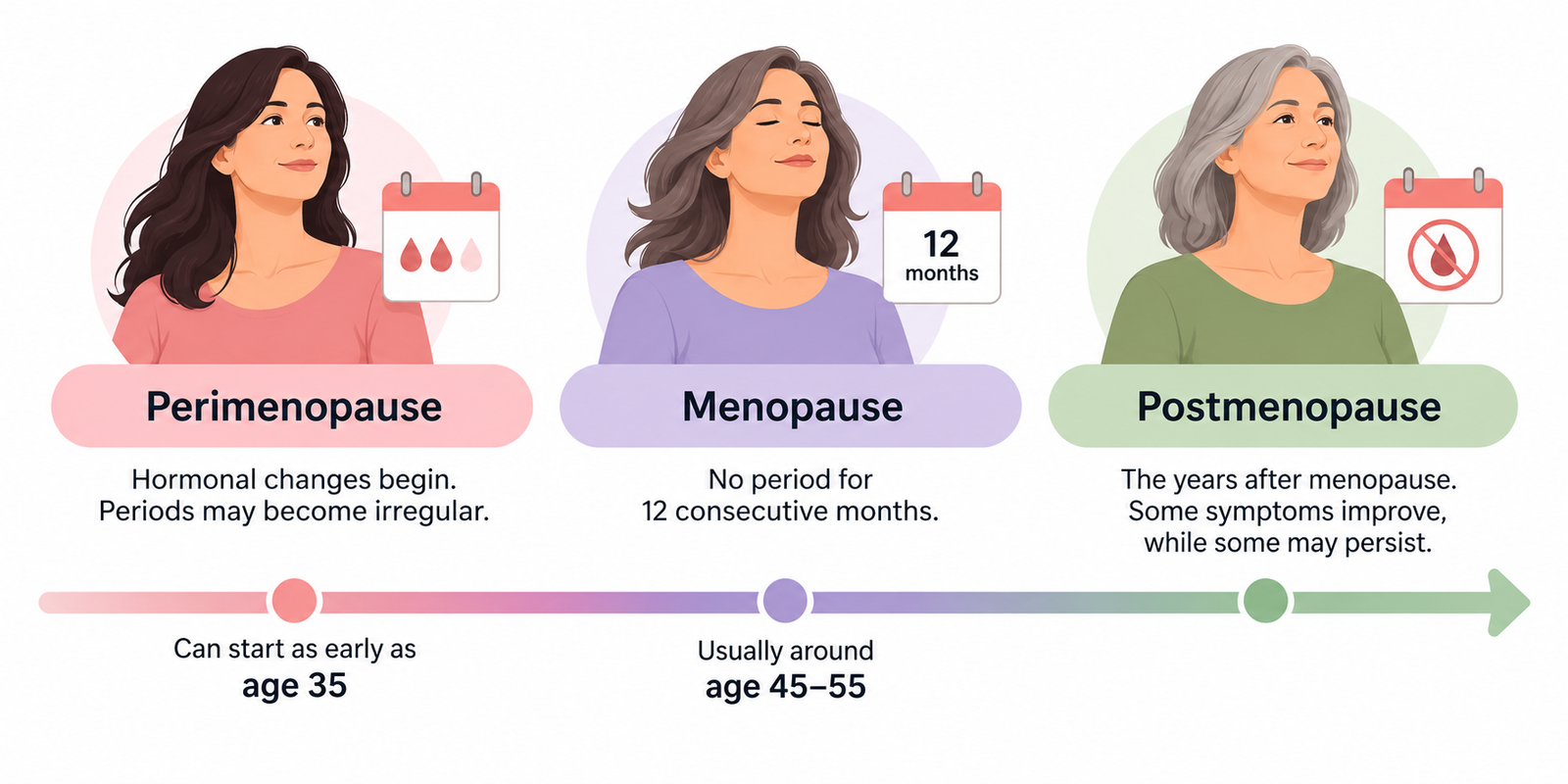
Perimenopause
- The transitional phase prior to menopause, characterized by gradual hormonal changes that may lead to moderate to severe symptoms.
- Perimenopause can begin at different ages. Most women notice changes in their 40s, but some may experience early signs in their 30s, while others may not notice changes until their 50s.
- Irregular periods are often one of the first signs.
- Perimenopause is variable in its onset, overall length, severity of symptoms, and impact on functioning but is generally understood to last between 5–10 years.
Menopause
- The milestone reached after 12 consecutive months without a period, when there is no other explanation for the absence of menstruation.
Postmenopause
- The years following menopause. Some symptoms improve, while some may persist.
What are the Common Symptoms?
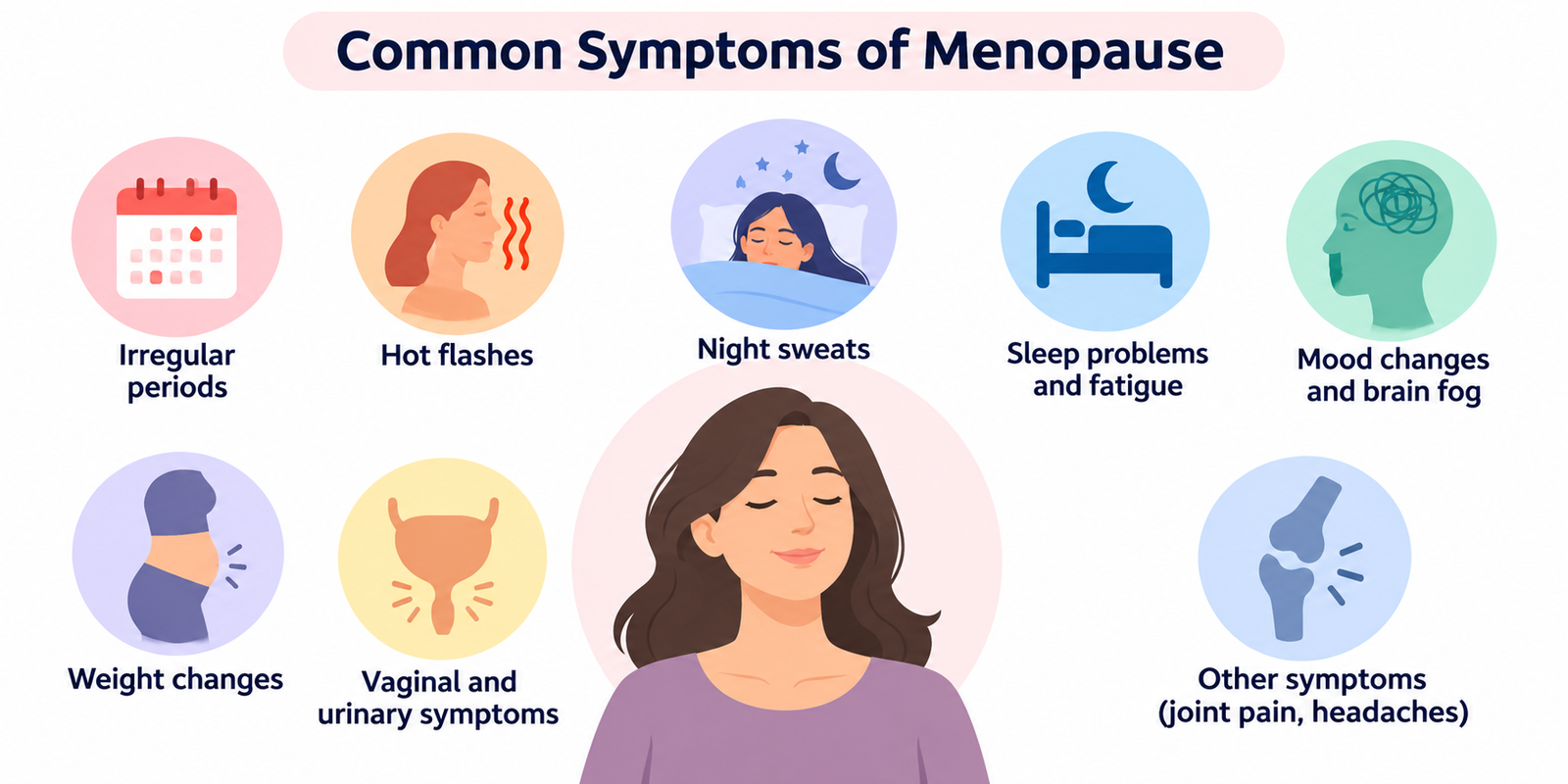
- Up to 80% of peri/postmenopausal women suffer from menopause-related symptoms.
- Some people experience mild changes, while others find that symptoms interfere with sleep, work, and everyday activities.
- Common Symptoms include:
- Irregular periods: Heavier, lighter, or irregular periods.
- Hot flashes: Sudden heat, sweating, or flushing.
- Night sweats: Sweating that disrupts sleep.
- Sleep problems and fatigue: Poor sleep and daytime tiredness.
- Mood changes and brain fog: Irritability, anxiety, low mood, or forgetfulness.
- Weight changes: Weight gain and increased abdominal fat.
- Vaginal symptoms: Dryness, discomfort during sex.
- Urinary symptoms: Urinary urgency or recurrent urinary infections.
- Other symptoms: Headaches, joint aches, reduced sexual desire, palpitations, and skin or hair changes.
Long-Term Health Effects of Menopause
- Lower estrogen levels can increase the risk of certain health conditions, particularly:
- Osteoporosis: Reduced estrogen can lead to bone loss, making bones weaker and increasing the risk of fractures.
- Heart disease: The risk of heart disease may increase after menopause due to changes in cholesterol levels, blood pressure, and other risk factors.
- Metabolic health: Abdominal fat and insulin resistance may increase, particularly with aging and reduced muscle mass.
How to Manage Menopause Symptoms?
Adopt healthy lifestyle habits
- Eat a balanced diet with vegetables, fruits, whole grains, pulses, nuts, seeds, and adequate protein.
- Include weight-bearing activity, such as brisk walking, and resistance exercises to support muscle and bone health.
- Maintain a consistent sleep schedule and keep the bedroom cool and comfortable.
- Try yoga, meditation, breathing exercises, or other relaxing activities to manage stress.
- Notice personal triggers: caffeine, alcohol, spicy foods, and hot drinks may worsen hot flashes in some people.
- Avoid smoking to protect heart and bone health.
Menopausal hormone therapy
- Menopausal hormone therapy (MHT), also called hormone replacement therapy (HRT), replaces hormones that decline during menopause.
- It is one of the most effective treatments for hot flashes and night sweats. It may also improve sleep problems, mood changes, memory concerns, and muscle or joint discomfort.
⚠️MHT should be started only after consulting a doctor, who can assess its benefits and risks based on your health and medical history.
Other treatment options
- Certain prescription medicines can reduce hot flashes when HRT is unsuitable or not preferred.
- Vaginal moisturizers and lubricants can relieve dryness and discomfort during sexual activity.
- Persistent anxiety or depression may require specific assessment and treatment.
- Menopause-specific cognitive behavioral therapy (CBT) may help with hot flashes, sleep problems, and associated anxiety or low mood.
Essential Health Check-ups After Menopause
- Regular health check-ups can help identify health risks early and support healthy aging. Discuss the following with your healthcare provider:
- Blood pressure: Monitor regularly to assess the risk of hypertension and heart disease.
- Blood sugar and cholesterol: Check as recommended, based on your age and individual risk factors.
- Bone health: Discuss osteoporosis risk and whether a bone mineral density scan is needed.
- Breast and cervical cancer screening: Follow age-appropriate screening recommendations.
When Should You See a Doctor?
- Heavy or unusual bleeding, bleeding between periods, or bleeding after sex.
- Bleeding after 12 months without periods.
- Symptoms before age 45, especially if periods stop before age 40.
- Hot flashes or sleep disturbances that interfere with daily life.
- Persistent low mood, anxiety, fatigue, or other symptoms that concern you.
- Chest pain, severe breathlessness, or fainting require emergency medical care.
Myths and Facts
Myth 1: Menopause happens suddenly
Fact: Menopause is usually preceded by perimenopause, a transition that can last several years.
Myth 2: Menopause happens at the same age for every woman.
Fact: The timing varies. Menopause commonly occurs between 45 and 55 years, but it can happen earlier or later.
Myth 3: Every woman experiences hot flashes
Fact: Hot flashes are the most common symptom, but symptoms can vary from person to person.
Myth 4: Menopause means the end of sexual life.
Fact: Women can continue to enjoy a fulfilling sex life. Vaginal dryness or discomfort can often be managed with appropriate treatment.
Myth 5: Hormone therapy is unsafe for every woman.
Fact: Menopausal hormone therapy can effectively relieve symptoms in suitable women. Its benefits and risks depend on individual health, age, medical history, and treatment timing.
Myth 6: Menopause symptoms must be tolerated.
Fact: Effective treatments and lifestyle strategies are available. Women should seek medical advice if symptoms affect their quality of life.
Myth 7: Pregnancy is impossible during menopause.
Fact: Pregnancy is still possible during perimenopause because ovulation may occur unpredictably. Once natural menopause is confirmed after 12 consecutive months without a period, spontaneous pregnancy is no longer expected. However, the timing of stopping contraception should be discussed with a healthcare professional.
Why Menopause Education Matters?
In India, menopause remains an under-discussed topic, often surrounded by stigma, cultural barriers, and limited access to reliable health information.
Menopause education programs can play an important role in improving awareness, correcting misconceptions, and helping women understand this natural phase of life. These programs can also help women recognize and manage psychological symptoms such as mood swings, anxiety, and emotional distress.
Integrating menopause education into community health programs, workplace wellness initiatives, and routine healthcare services can empower Indian women to seek timely support and make informed decisions about their health and well-being.
Key Takeaway
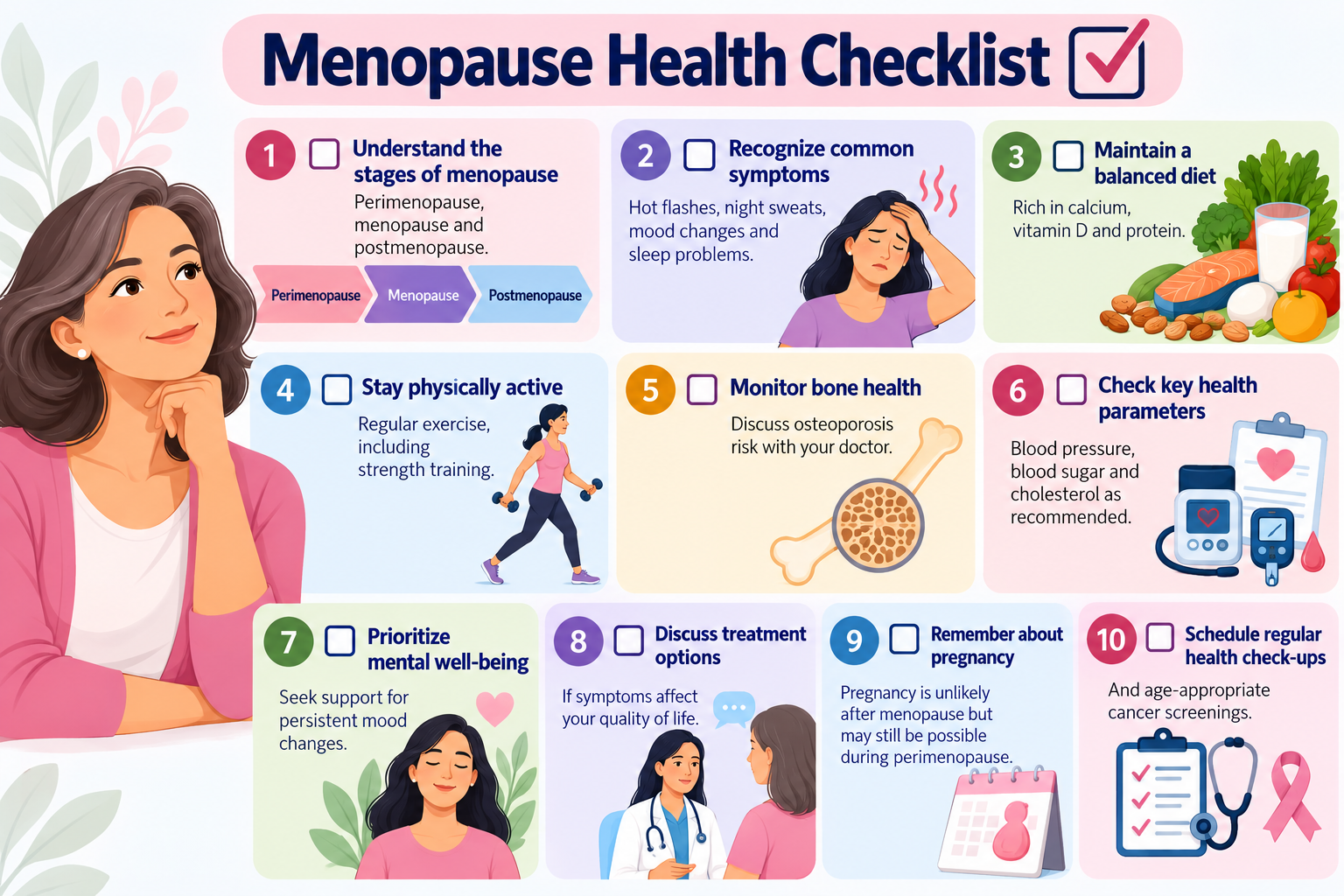
Menopause is a natural transition, not a condition that women must endure. From lifestyle changes and symptom management to appropriate medical treatment and preventive health check-ups, several options can help women navigate this phase comfortably.
Remember: Menopause is natural. Awareness is powerful. Seek medical advice when symptoms affect your quality of life, and take proactive steps towards healthy aging.
Further Reading
- World Health Organization. Menopause: Fact sheet. https://www.who.int/news-room/fact-sheets/detail/menopause
- National Institute for Health and Care Excellence (NICE). Menopause: Identification and management. https://www.nice.org.uk/guidance/ng23/chapter/Recommendations
- NHS. Treatment for menopause and perimenopause. https://www.nhs.uk/conditions/menopause-and-perimenopause/treatment/
- NHS. Lifestyle changes to help menopause symptoms. https://www.nhs.uk/conditions/menopause-and-perimenopause/things-you-can-do/
- Halder, P., Kansal, S., Mamgai, A., Rathor, S., Das, A., & Garg, G. (2025). Untimely Menopause, State-wise Prevalence and Determinants: Insights from Longitudinal Aging Study in India (LASI-1). Journal of obstetrics and gynaecology of India, 75(2), 106–114. https://doi.org/10.1007/s13224-024-02094-1
- Kundu, S., & Acharya, S. S. (2024). Exploring the triggers of premature and early menopause in India: a comprehensive analysis based on National Family Health Survey, 2019-2021. Scientific reports, 14(1), 3040. https://doi.org/10.1038/s41598-024-53536-9
- Di Carlo, C., Cagnacci, A., Gambacciani, M., Palacios, S., Rebelo, C., Coronado, P., Presa, J., Sánchez, S., Fatela, A., Gomes Ferreira, M., & Nappi, R. E. (2025). Persistent gaps in menopause care: current recommendations of the POESIT group. Maturitas, 199, 108607. https://doi.org/10.1016/j.maturitas.2025.108607
- Namazi, M., Sadeghi, R., & Behboodi Moghadam, Z. (2019). Social Determinants of Health in Menopause: An Integrative Review. International journal of women’s health, 11, 637–647. https://doi.org/10.2147/IJWH.S228594


