
Table of Contents
Introduction
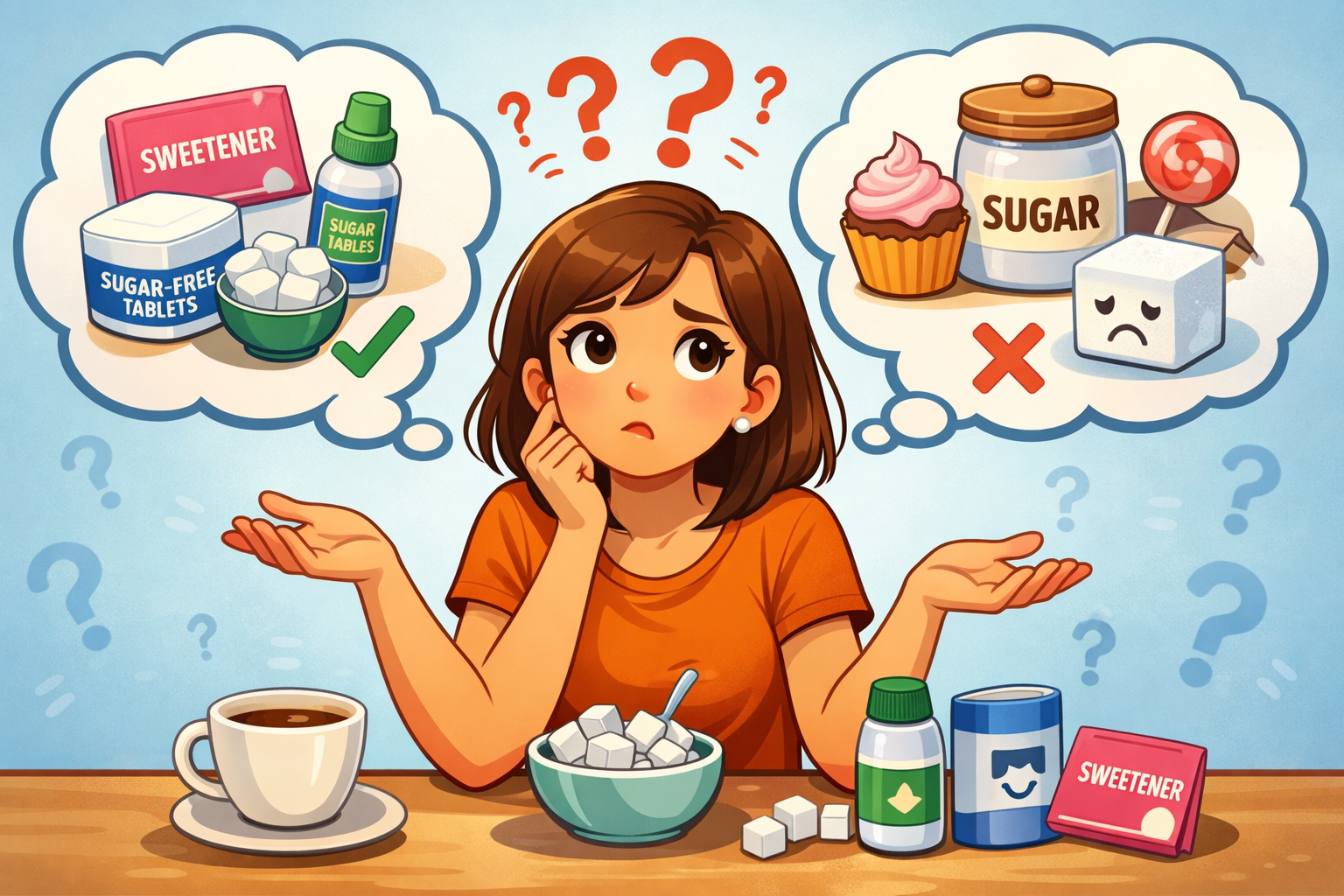
Sugar-free products are everywhere today—but are they truly a healthier choice or just a smart marketing shift? As rates of obesity and diabetes continue to rise globally, especially in countries like India, reducing excess sugar intake has become a key public health priority.
The World Health Organisation (WHO) recommends:
👉 Keeping added (free) sugar below 10% of total daily calories
👉 Ideally, reducing it further to below 5% for additional health benefits
In simple terms: less sugar often supports better health 👍
This growing awareness has led many people to swap regular sugar for “sugar-free” alternatives—found in everything from diet beverages to low-calorie desserts. These substitutes, including both artificial and natural sweeteners, are now widely used to cut calories and manage blood glucose levels.
However, the story isn’t that straightforward. While sweeteners can offer benefits, concerns remain about their long-term impact on metabolism, gut health, and overall well-being.
This blog takes a balanced look at sweeteners—their types, benefits, potential risks, and practical use—so you can make informed choices about including them in your daily diet.
sweeteners – Definition
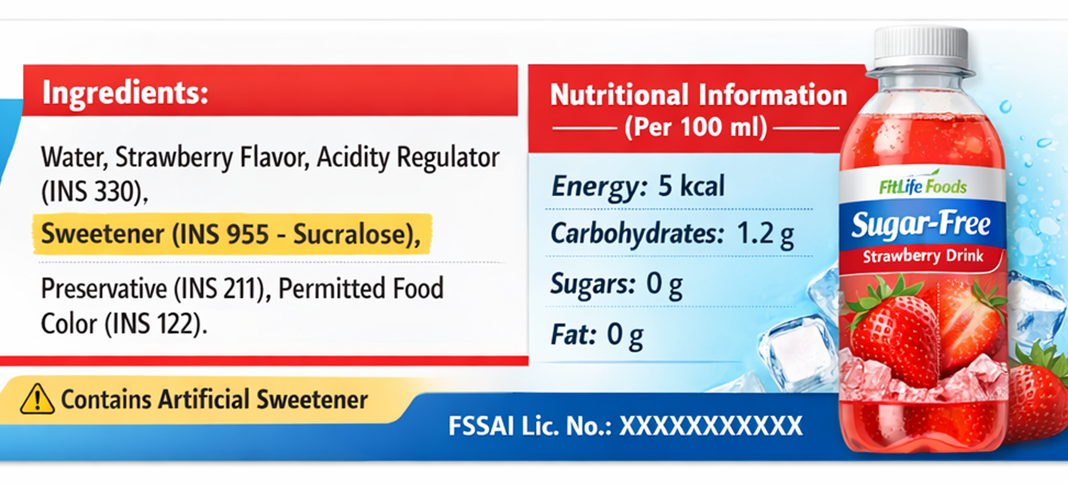
Sweeteners are substances added to foods and beverages to provide sweetness, often as a substitute for sugar. They are widely used in the food industry because they offer sweetness while offering advantages such as lower calorie content, greater stability, and cost-effectiveness.
different Types of sweeteners
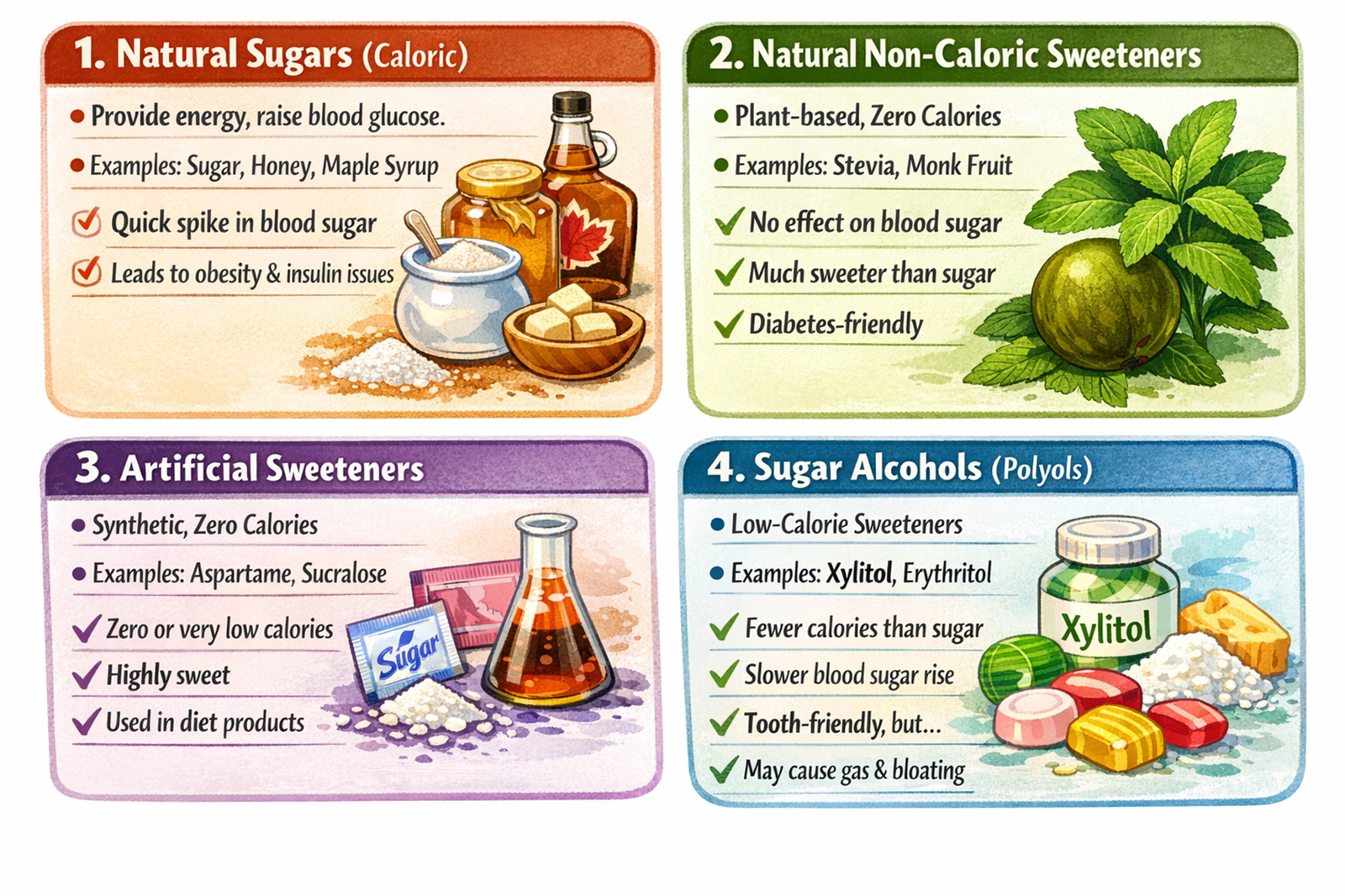
🧂 1. Natural Sweeteners (Caloric or Nutritive)
- These provide energy and raise blood glucose.
- Examples: Table sugar (sucrose), glucose, fructose, honey, jaggery (gur), maple syrup
- Key Points:
- Causes a quick spike in blood glucose
- Excess intake causes obesity, insulin resistance, and dyslipidemia
🌿 2. Natural Non-Caloric or Non-Nutritive Sweeteners
- Plant-derived with little to no calories.
- Examples: Stevia (steviol glycosides), monk fruit (Luo Han Guo)
- Key Points:
- No significant effect on blood glucose levels
- Very sweet, thus used in tiny amounts
- Common in diabetes-friendly products
🧪 3. Artificial Sweeteners (Non-Nutritive/Noncaloric)
- Synthetic sugar substitutes.
- Examples: Aspartame, sucralose, saccharin, acesulfame potassium (Ace-K), neotame, advantame
- Key Points:
- Very low or zero calories
- Highly sweet
- Used in sugar-free/diet products
🍬 4. Sugar Alcohols (Polyols)
- Processed from natural sources.
- Examples: Xylitol, erythritol, sorbitol, maltitol, mannitol, isomalt
- Key Points:
- Lower calories than sugar
- Slower blood glucose rise
- Tooth-friendly (especially xylitol)
Natural vs Artificial Non-Sugar Sweetener
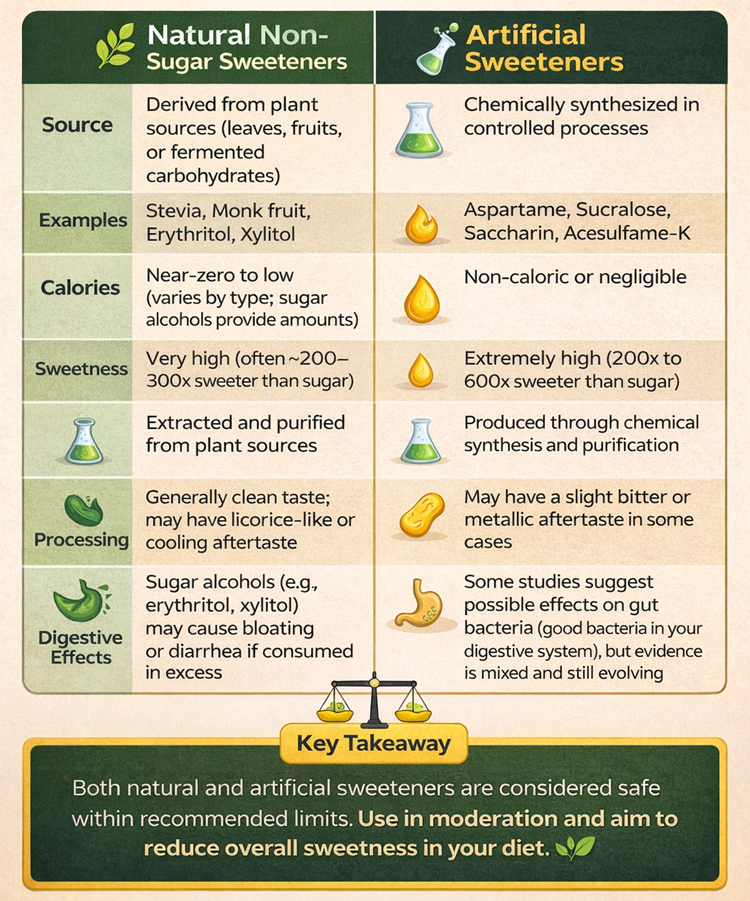
- Natural non-sugar sweeteners, such as stevia and monk fruit, are derived from plants, while artificial sweeteners like aspartame and sucralose are produced synthetically. Both provide intense sweetness with little to no calories and are widely used as sugar substitutes.
- From a health and safety perspective, both types are considered acceptable when consumed within recommended limits.
- However, they may differ in taste profiles, costs, and consumer preferences. Some people prefer natural options because of their origins, while others choose artificial sweeteners for their greater availability and stability in processed foods.
- In practice, the choice depends on personal preference, taste, and usage rather than a clear health advantage.
Uses of Non-Sugar Sweeteners
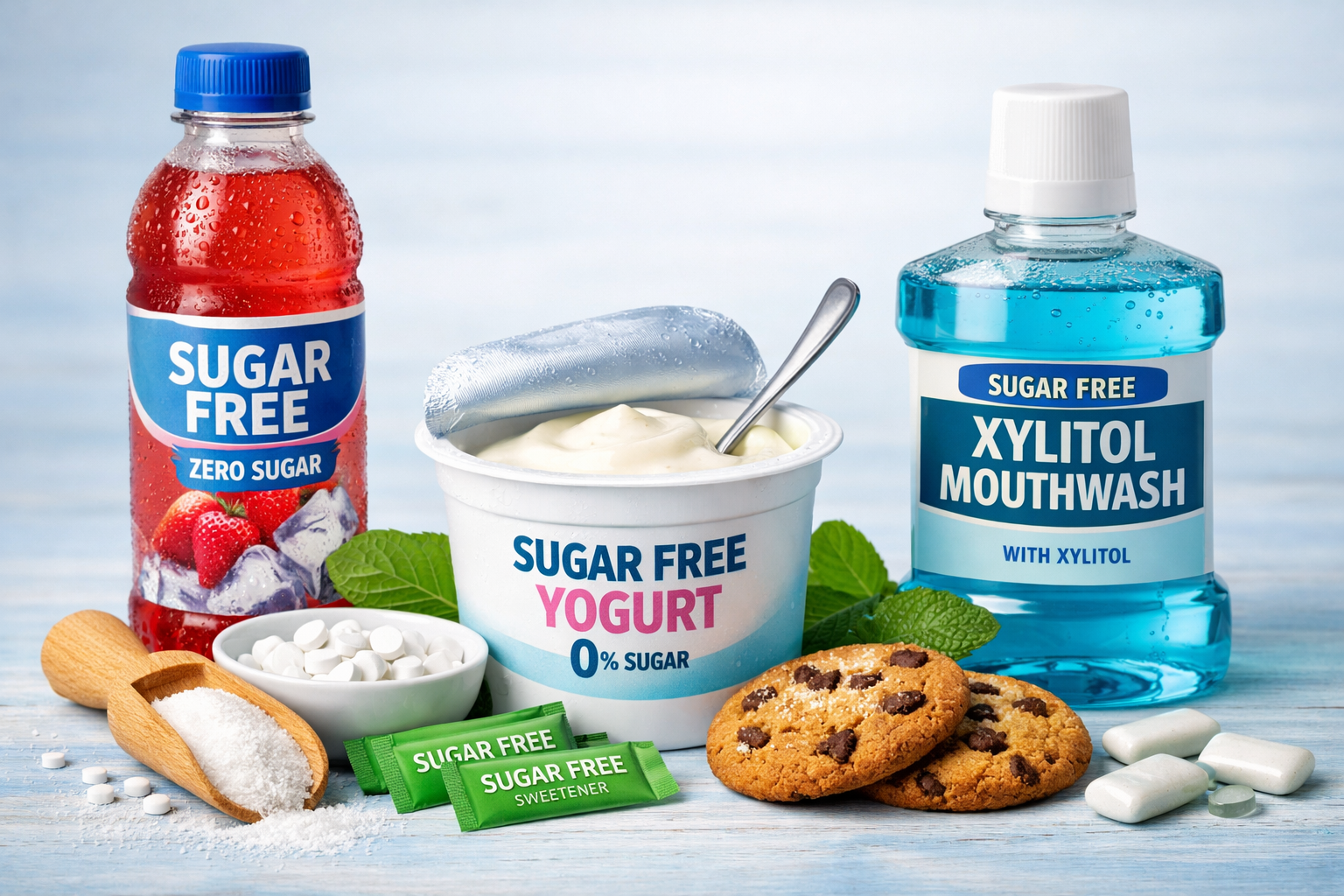
- Sugar-free beverages
- rely on high-intensity sweeteners that provide sweetness with little or no calories. These are much sweeter than sugar, so only a tiny amount is needed.
- Food products
- Sweeteners are widely added to packaged foods to provide sweetness with or without calories. You’ll find them in biscuits, yoghurts, desserts, protein bars, jams, and “sugar-free” products.
- Special Uses
- Xylitol is widely used not only in foods but also in oral care products such as toothpaste and mouthwash.
Non-sugar sweeteners – Acceptable Daily Intakes
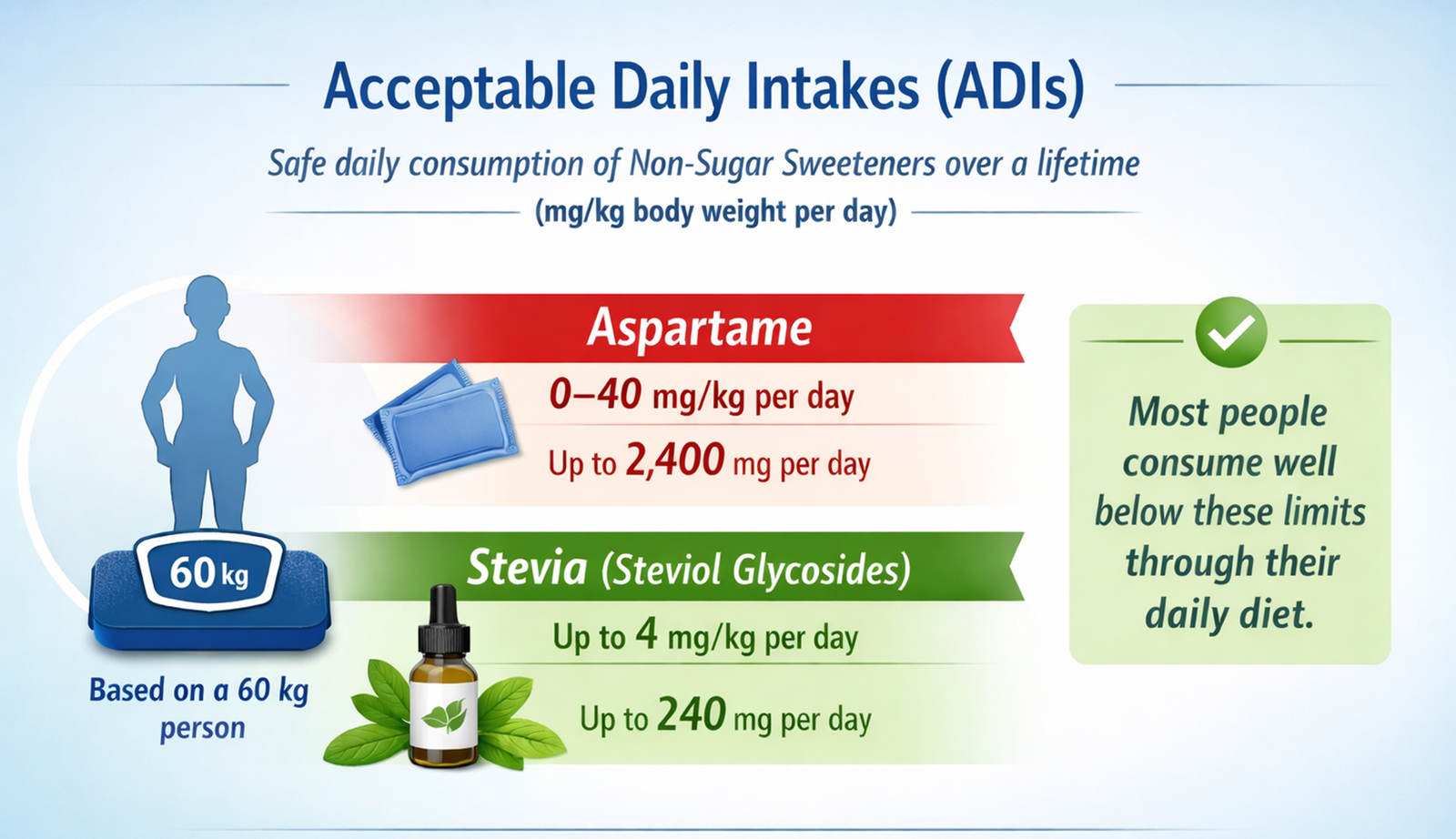
- Non-sugar sweeteners have established Acceptable Daily Intakes (ADIs).
- An ADI is the amount of a substance that can be consumed daily over a lifetime without appreciable health risk. It is usually expressed as mg per kg of body weight per day (mg/kg/day).
- Examples
- Aspartame – 0–40 mg/kg/day
- Stevia – 4mg/kg/day.
Non-sugar sweeteners and E Numbers
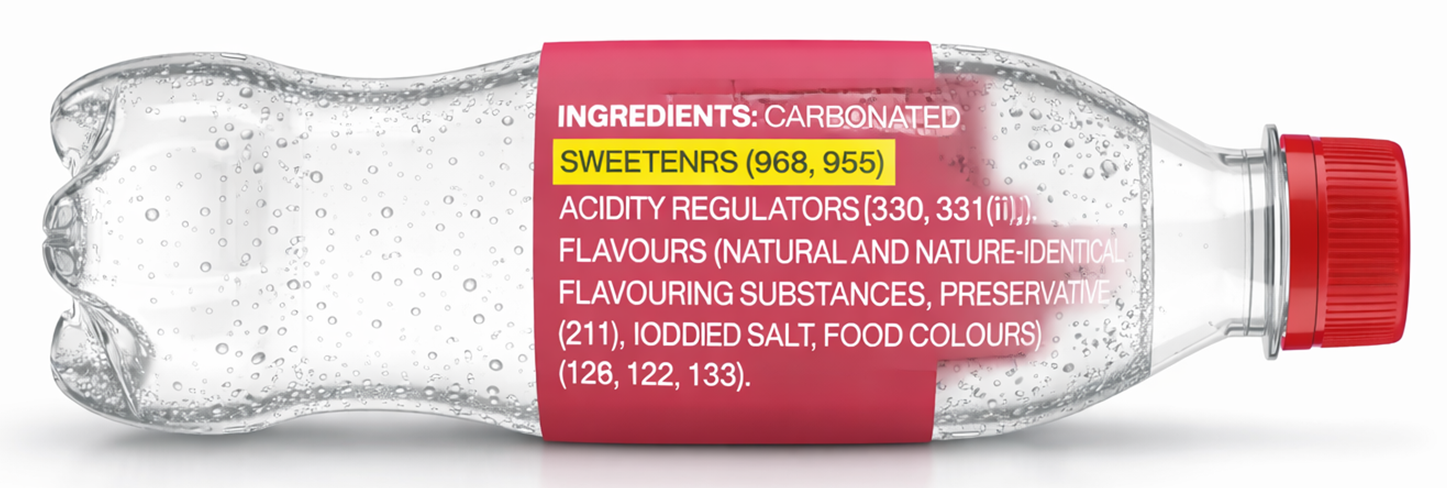
Sweeteners are assigned identification numbers that appear on food labels. Most sugar substitutes fall in the 900 series.
🍬 High-Intensity / Artificial Sweeteners (E950–E969)
- Examples: E950 Acesulfame K • E951 Aspartame • E952 Cyclamate • E953 Isomalt • E954 Saccharin • E955 Sucralose • E957 Thaumatin • E959 Neohesperidine DC • E960 Stevia • E961 Neotame • E962 Aspartame-Acesulfame salt • E968 Erythritol • E969 Advantame.
🍭Sugar Alcohols (Polyols)
- Examples: E420 Sorbitol • E421 Mannitol • E965 Maltitol • E966 Lactitol • E967 Xylitol
Common Sugar Claims on Packaging
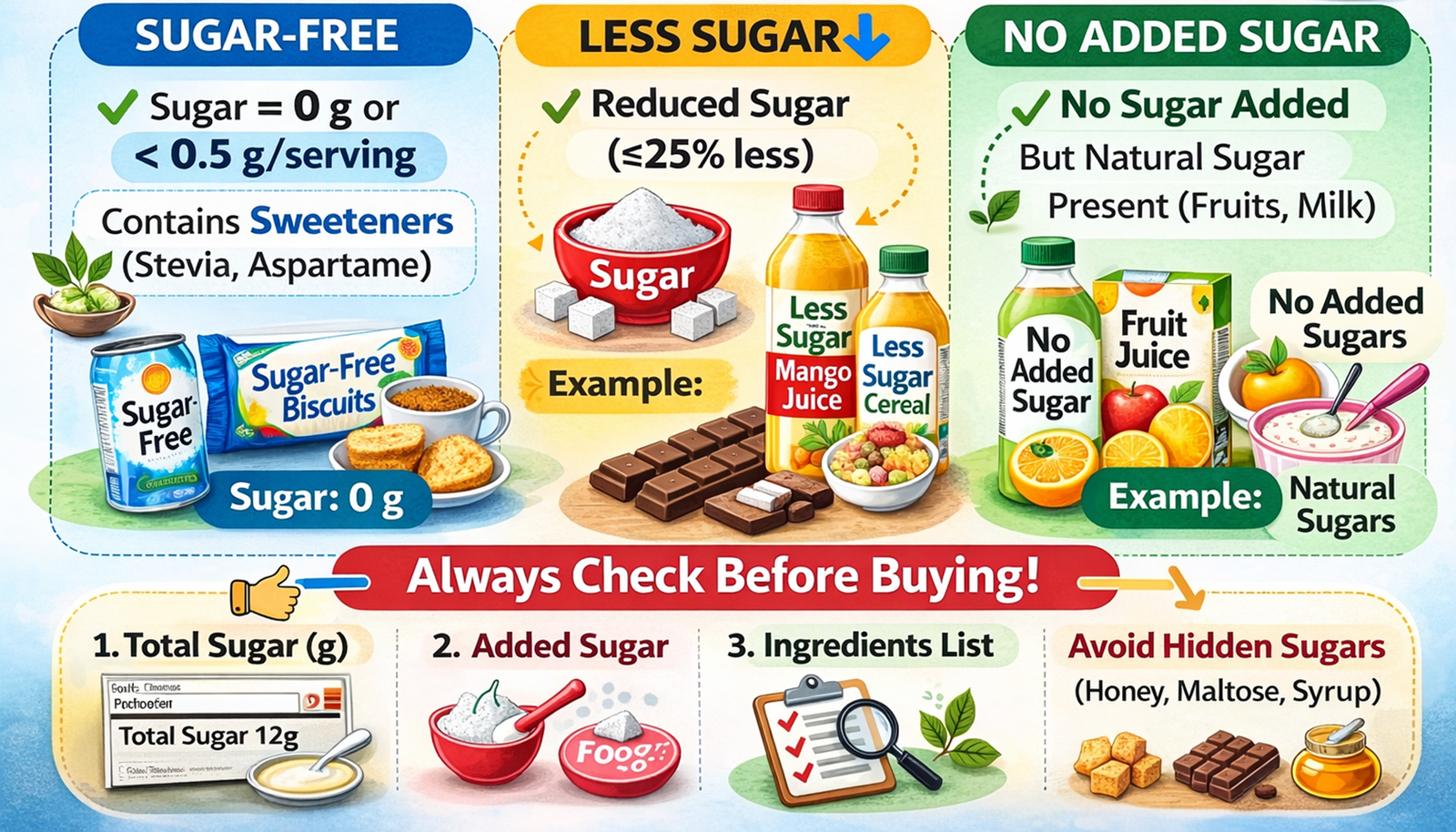
- Sugar free
- Means contains very little or no sugar (typically <0.5 g per serving).
- Sugar is replaced with artificial or alternative sweeteners.
- Reduced/Less Sugar
- Usually reduced sugar, but not zero.
- at least 25% less sugar than the regular version.
- No Added Sugar
- No sugar added during processing.
- May still contain natural sugars (e.g., fruit sugars in juice).
Controversies of Artificial Sweeteners
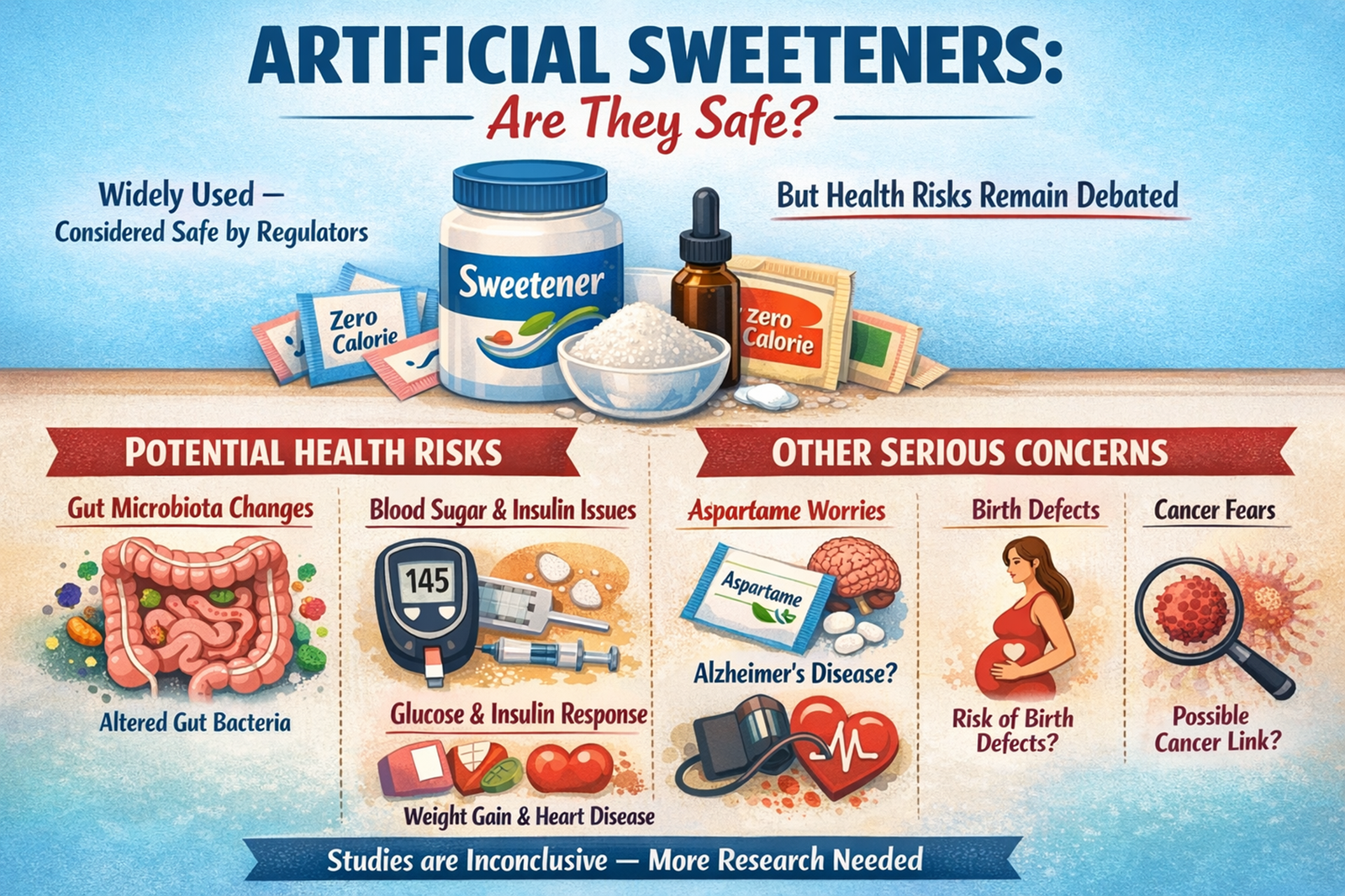
- Artificial sweeteners are widely used, but their health effects remain debated. Most regulatory authorities consider them safe, as they are either not absorbed by the body or are broken down into harmless substances.
- However, some studies have linked artificial sweeteners like sucralose and saccharin to altering gut microbiota, insulin response and glucose levels in some individuals.
- Some studies suggest potential for weight gain, high blood pressure, and heart disease.
- There are also concerns—especially about aspartame—being associated with conditions like Alzheimer’s disease, birth defects, and cancer, although evidence is not yet conclusive.
Overuse of Non-Sugar Sweeteners
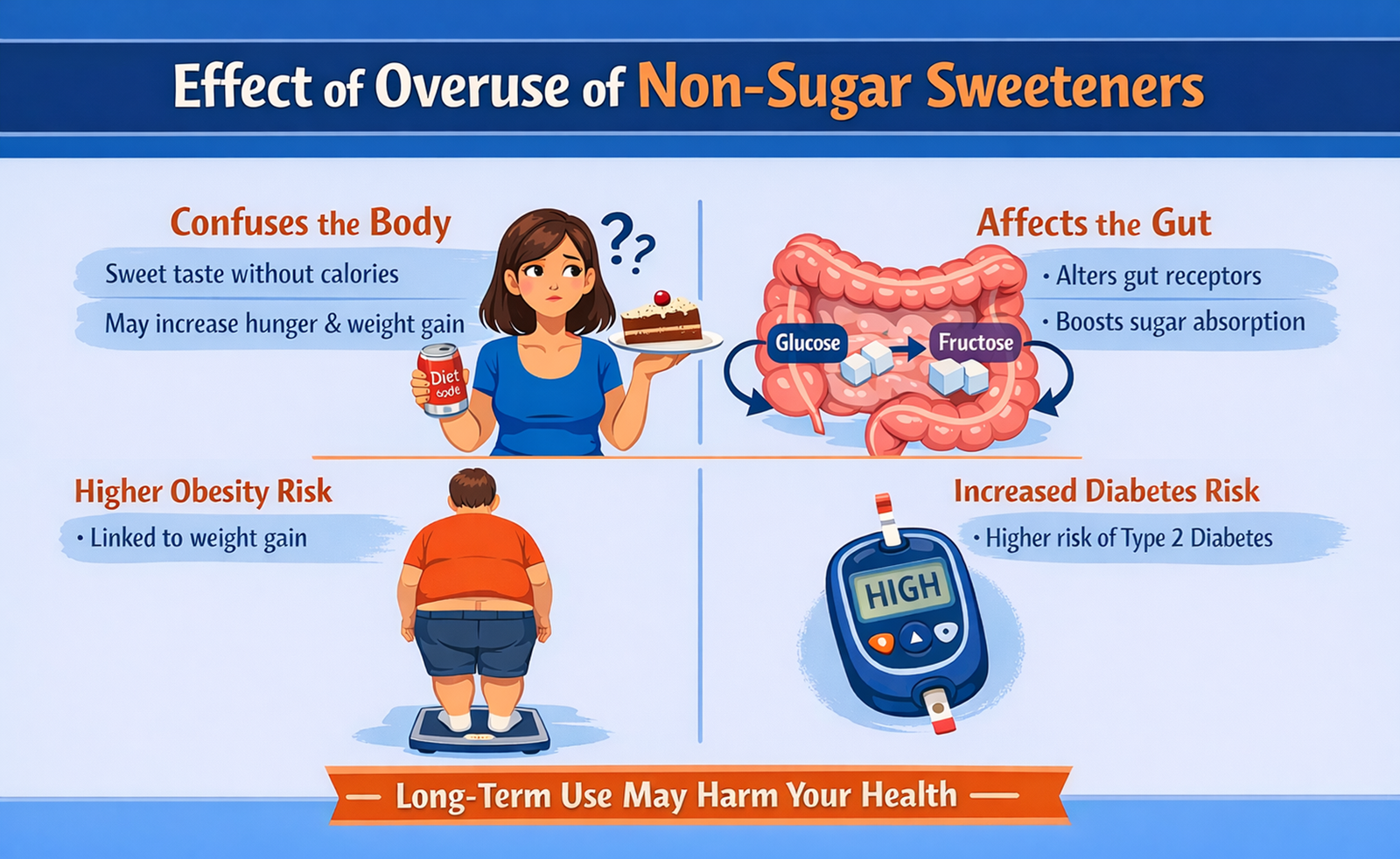
- Non-sugar sweeteners can help reduce added sugar intake when used in moderation. However, frequent or excessive use may not provide additional health benefits and could influence appetite, taste preferences, or overall food choices in some individuals.
- Research on their effects on metabolism and gut health is still evolving, and findings remain mixed.
- Practical takeaway: Use sweeteners as a tool—not a replacement for a balanced diet. Moderation is key.
Non-sugar sweeteners: Use in children
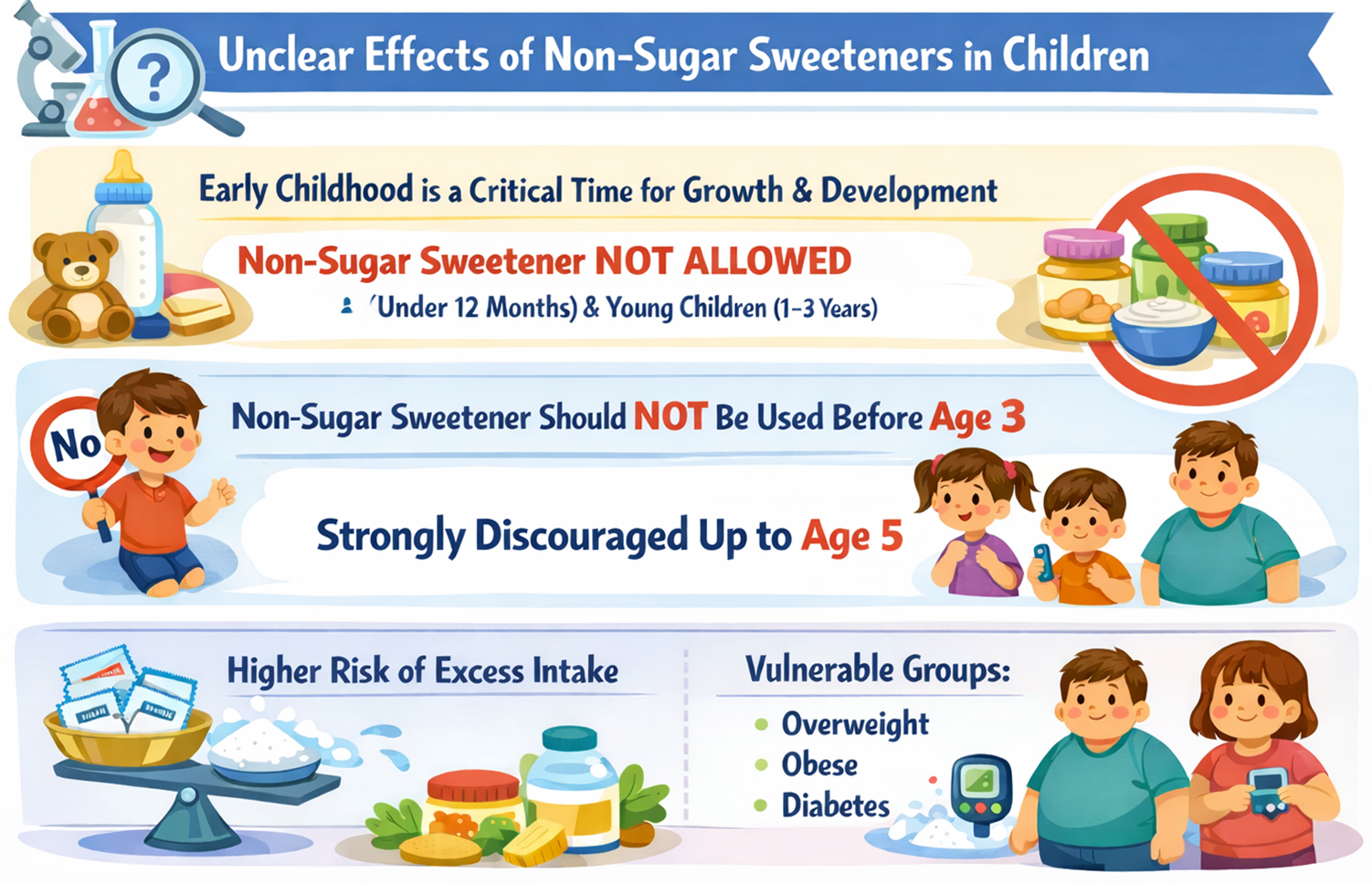
- Scientific evidence on the effects of non-sugar sweeteners in children remains unclear.
- Early childhood is a very important stage for growth and development, so extra care is needed when assessing risks.
- To protect children’s health, non-sugar sweeteners are not allowed in foods for infants (below 12 months) and young children (1–3 years), including special dietary foods, unless specifically permitted.
- Most experts agree that non-sugar sweeteners should not be used before age 3 and are strongly discouraged up to age 5.
- Also, children tend to consume more per unit of body weight, increasing the risk of exceeding safe intake levels. This risk is higher in vulnerable groups like overweight, obese, and diabetic children.
- Even after this age, there is still uncertainty—especially about their benefits and risks in children who are overweight, obese, or have diabetes.
Key Takeaways
- “Sugar-free” doesn’t mean risk-free — always look beyond the label
- WHO recommends limiting added sugar to <10% of daily calories (ideally <5%)
- Sweeteners come in different types — natural, artificial, and sugar alcohols, each with different effects
- Non-caloric sweeteners can help reduce sugar intake, especially for weight and glucose control
- Not all sugar-free products are low-calorie — check the full nutrition label
- Excess use may not provide added benefits and could influence appetite or food choices
- Gut health and metabolic effects are still being studied — evidence is evolving
- Sugar alcohols may cause digestive discomfort if consumed in large amounts
- Reading food labels is essential to avoid misleading claims like “no added sugar” or “reduced sugar”
- Moderation is key — focus on overall diet quality rather than just replacing sugar
- Non-sugar sweeteners are not recommended for young children– their safety remains uncertain
Conclusion
Sugar-free products can be a helpful tool—especially for reducing added sugar intake and managing blood glucose levels. However, they are not a magic solution for better health. The overall quality of the diet still matters far more than simply replacing sugar with alternatives.
While most approved sweeteners are considered safe within recommended limits, their long-term effects are still being studied. Over-reliance on highly sweet foods—whether from sugar or substitutes—may continue to reinforce cravings and unhealthy eating patterns.
The key lies in awareness and balance. Reading labels carefully, understanding different types of sweeteners, and using them in moderation can help you make smarter choices.
Ultimately, the goal isn’t just to go “sugar-free”—it’s to build a healthier, more sustainable way of eating where sweetness is enjoyed mindfully, not habitually.
Further Reading
- Arias, N., González-Domínguez, R., Jáuregui, O., & Hidalgo, M. (2025). Non-nutritive sweeteners and metabolic health: Current evidence and emerging mechanisms. Current Research in Food Science, 9, 100632. https://doi.org/10.1016/j.crfs.2025.100632
- World Health Organization. (n.d.). Free sugars intake for adults and children. https://www.who.int/tools/elena/interventions/free-sugars-adults-ncds
- Zhang, Y., et al. (2024). [Article title: Foods journal, article 14-03182]. Foods, 14(3), Article 3182. https://doi.org/10.3390/foods140303182https://www.fda.gov/consumers/consumer-updates/how-sweet-it-all-about sweeteners#:~:text=Sweeteners%20Approved%20as%20Food%20Additives,the%20appro
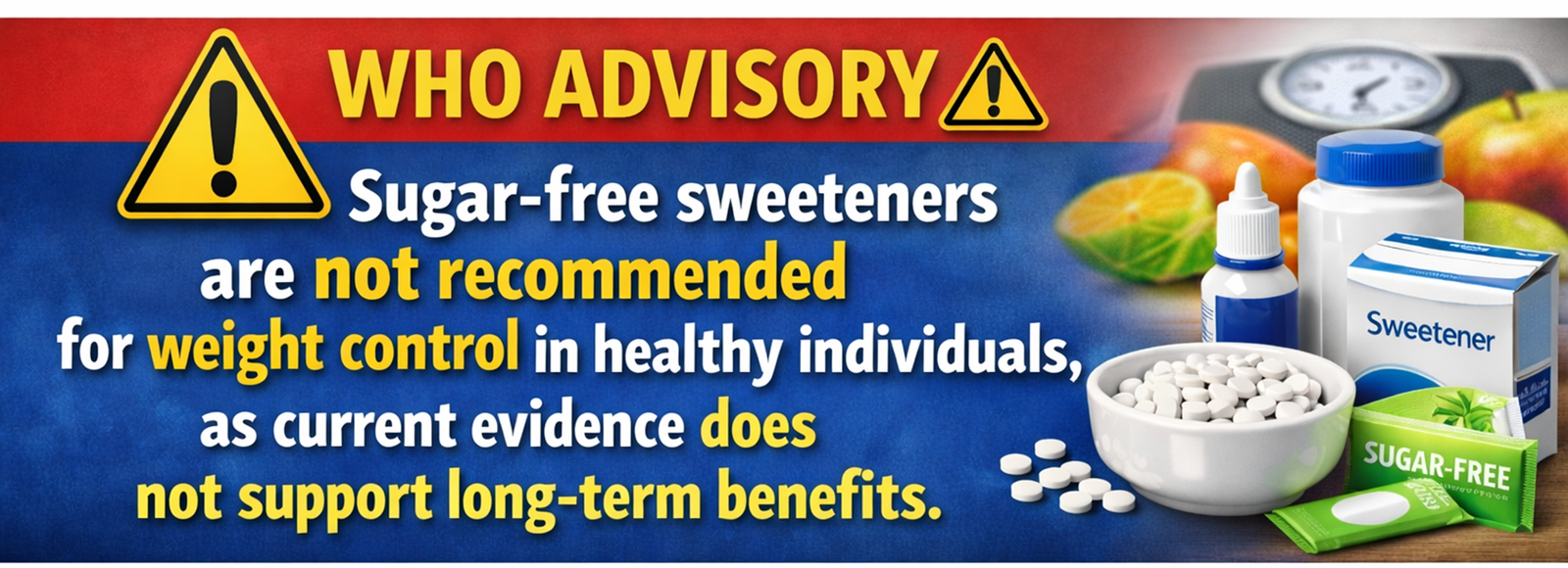
- Dragomir, N., Grigore, D.-M., & Pogurschi, E. N. (2025). Beyond sugar: A holistic review of sweeteners and their role in modern nutrition. Foods, 14(18), 3182. https://doi.org/10.3390/foods14183182https://www.who.int/news/item/15-05-2023-who-advises-not-to-use-non-sugar-sweeteners-for-weight-control-in-newly-released-guideline
- American Heart Association. (2024, September 23). What’s the difference between sugar free and no added sugar? https://www.heart.org/en/healthy-living/healthy-eating/eat-smart/sugar/difference-between-sugar-free-and-no-added-sugar
- Sambra, V., López-Arana, S., Cáceres, P., Abrigo, K., Collinao, J., Espinoza, A., Valenzuela, S., Carvajal, P., Prado, G., Peralta, R., & Gotteland, M. (2020). Overuse of non-caloric sweeteners in foods and beverages: A concern for public health? Frontiers in Nutrition, 7, 68. https://doi.org/10.3389/fnut.2020.00068
- Mayo Clinic Staff. (n.d.). Artificial sweeteners: Any effect on blood sugar? Mayo Clinic. https://www.mayoclinic.org/diseases-conditions/diabetes/expert-answers/artificial-sweeteners/faq-20058038
- Campos, M. J., Silva, L. J. G., Pereira, A. M. P. T., & Pena, A. (2025). Non-sugar sweeteners and children: The current picture and controversies. Frontiers in Nutrition, 12, 1676373. https://doi.org/10.3389/fnut.2025.1676373