
Table of Contents
Introduction
A heart attack at 40 is no longer rare in India. Our country is facing a growing heart disease crisis, and it is affecting people at younger ages than ever before. Many heart attacks now happen before 40, and more than half of heart-related deaths occur before 50.
One of the major reasons behind this early heart disease is unhealthy lipid levels — also known as dyslipidemia.
The good news? Abnormal cholesterol levels can be detected years before a heart attack happens. And that is where a simple blood test — the lipid profile — becomes extremely important.
So before you ignore your report or glance at just one number, let’s understand what your complete lipid profile really means.
What are lipids?
Lipids, including cholesterol, are fatty substances that are essential for many important functions in the body. They help store and provide energy, absorb certain vitamins (such as A, D, E, and K), and play a key role in hormone production.
However, while lipids are necessary for good health, having too much of certain types in the blood can be harmful.
What are the factors that lead to high lipid levels?
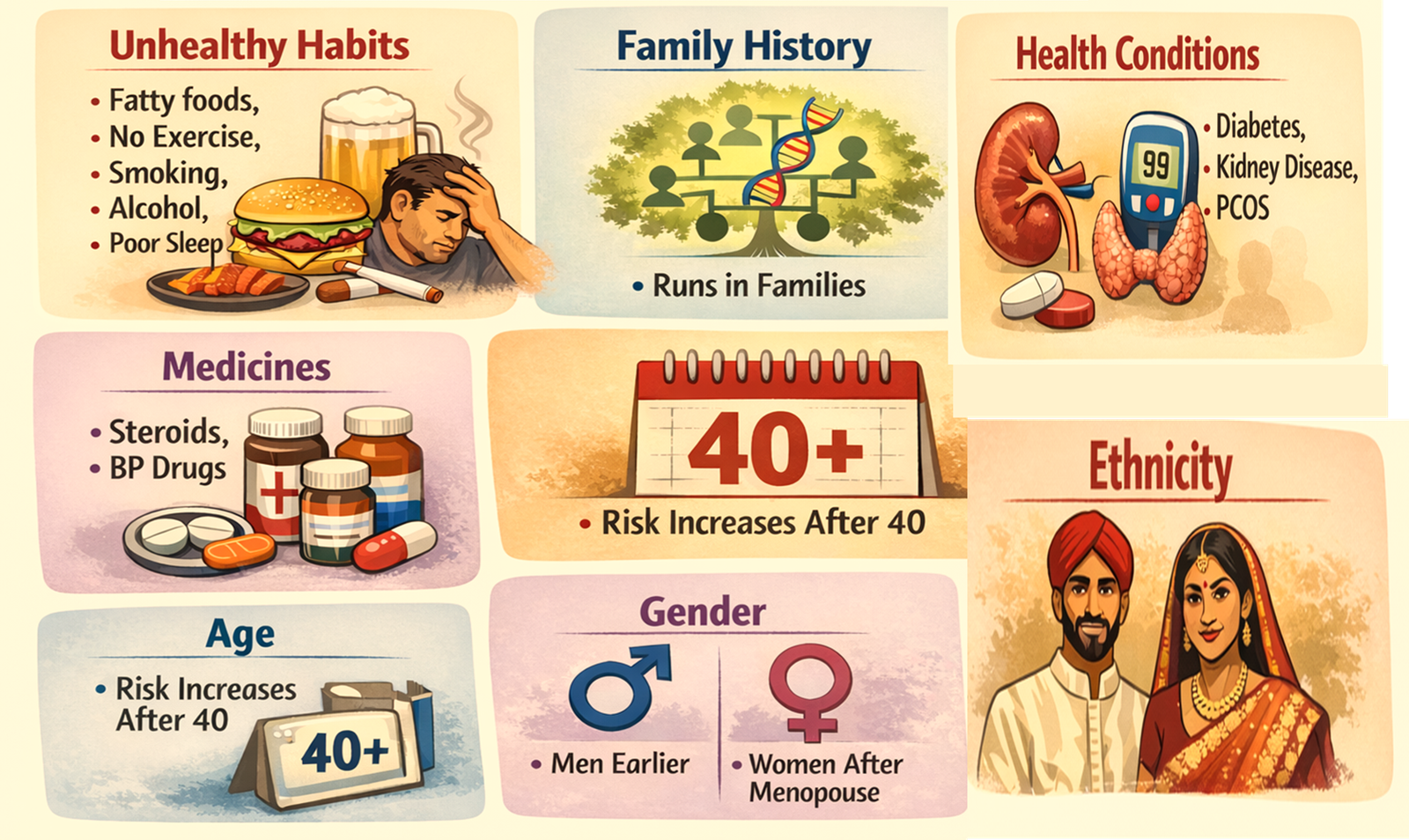
🧑🍳 Unhealthy habits
- Eating too much fatty foods (red meat, butter, cheese)
- Not exercising
- Smoking
- Too much alcohol
- Stress
- Poor sleep
🧬 Family history (genetics)
- Runs in the family.
- Some people inherit conditions like familial hypercholesterolemia.
🏥 Health conditions
- Diabetes
- hypothyroidism
- Kidney disease
- Polycystic ovary syndrome (PCOS)
💊 Certain medicines
- Steroids (like prednisone)
- Some BP medicines (beta-blockers, diuretics)
- Acne medicines (retinoids)
- Chemotherapy drugs for cancer
- Immunosuppressants for organ transplant
🎂 Age
- Risk increases as you get older (especially after 40).
⚧️ Gender
- Men: higher risk at a younger age.
- Women: risk increases after menopause.
🌍Ethnicity
- Some ethnicities, such as Asian Americans, including those of Indian descent, are more likely to have high levels of “bad” cholesterol than other groups
What are the Harmful effects of High lipid levels?
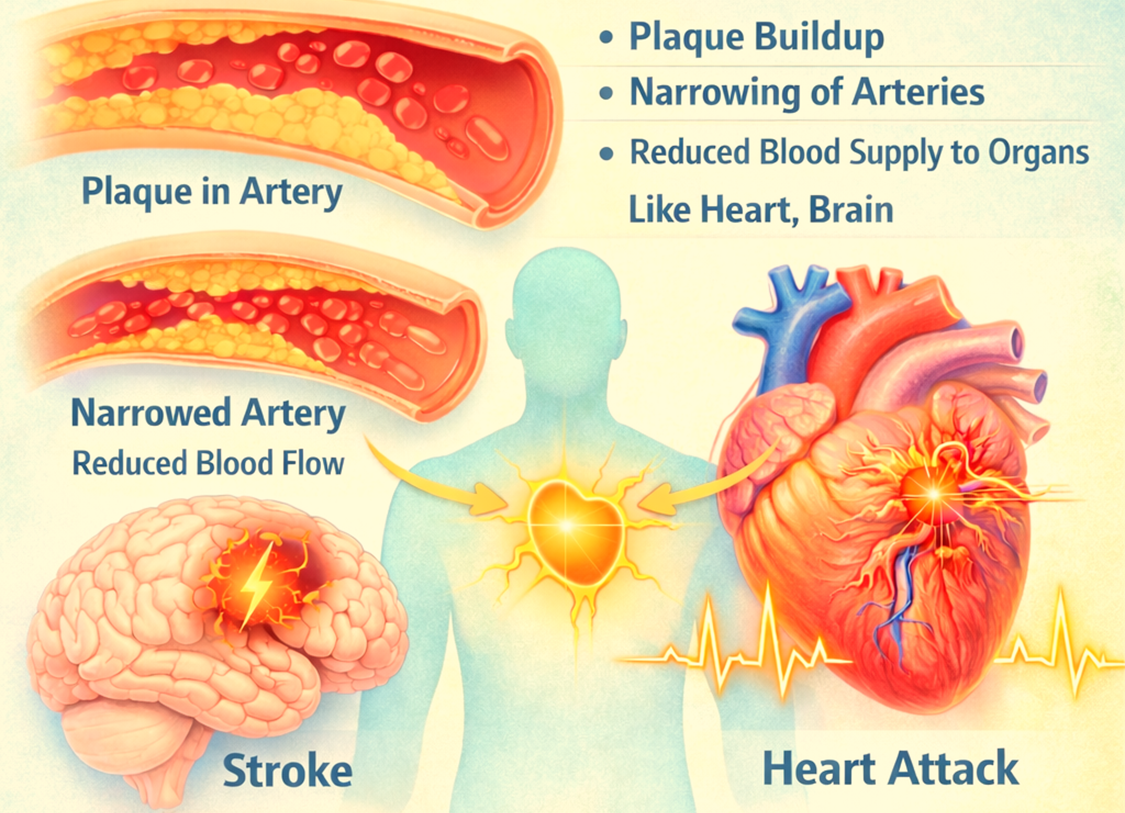
- Excess cholesterol collects on the walls of arteries, forming a sticky substance called plaque.
- Over time, plaque builds up and narrows the arteries, reducing blood flow.
- Decreased blood flow can cause chest pain and may lead to a heart attack.
- Blocked or narrowed arteries supplying the brain can result in a stroke.
🧪 Take action: Go for a lipid profile test to check your lipid levels and protect your heart.
What Is the Lipid Profile Test?
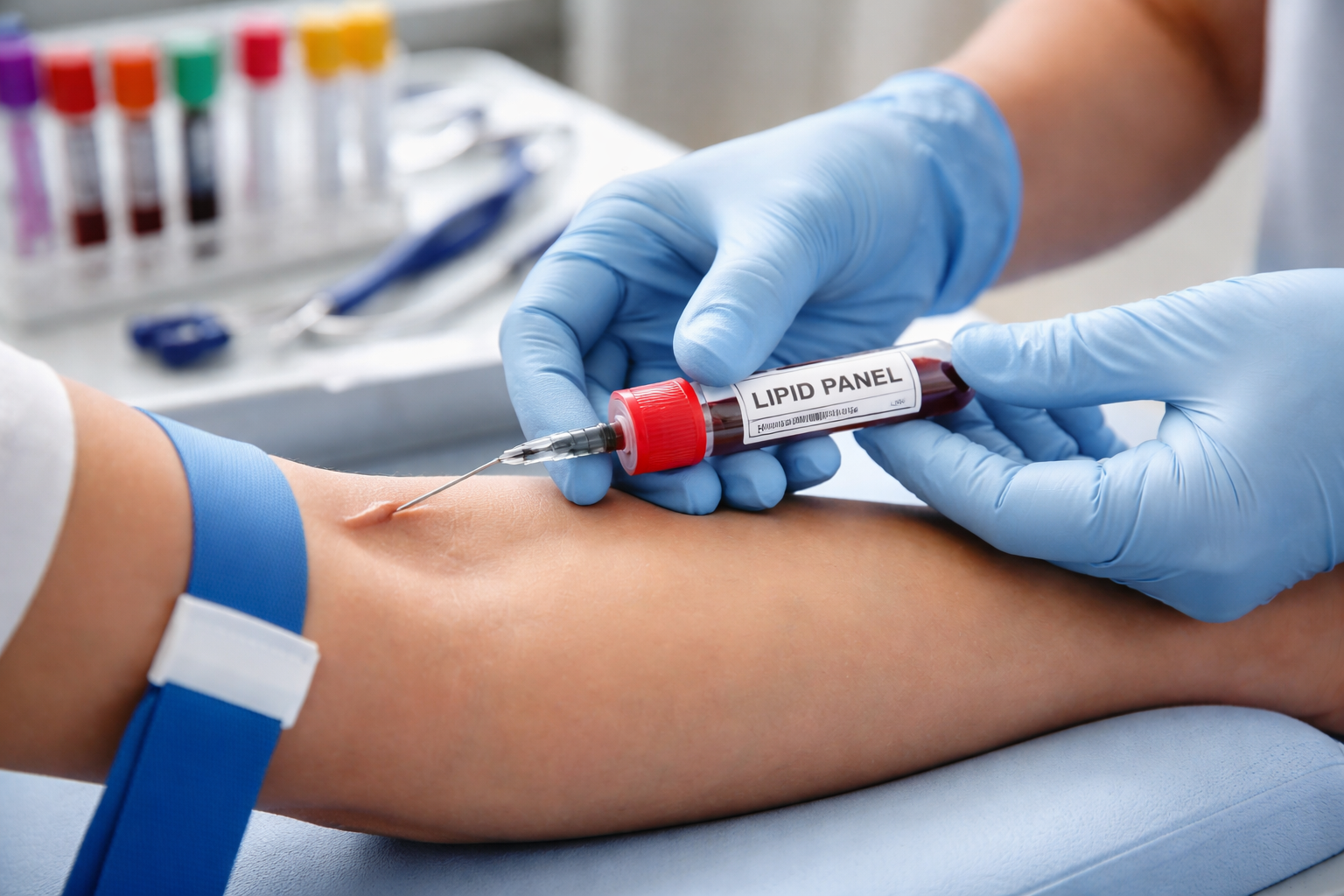
A lipid profile (also called a lipid panel) is a simple blood test that measures the levels of different types of fats — called lipids — in your blood. A small blood sample is usually needed, and it’s quite common for the blood to be drawn from a vein on the inside of your elbow.
Who Should Get Tested?
🌍 International guidelines
- All Adults aged 20 years and older should undergo a lipid profile test.
- Low-risk individuals: If results are normal and no risk factors are present, testing may be repeated every 4–6 years.
- High-risk individuals (diabetes, smoking, hypertension, obesity, or family history of heart disease):
Testing is recommended every 1–2 years, or more frequently as advised by a physician.
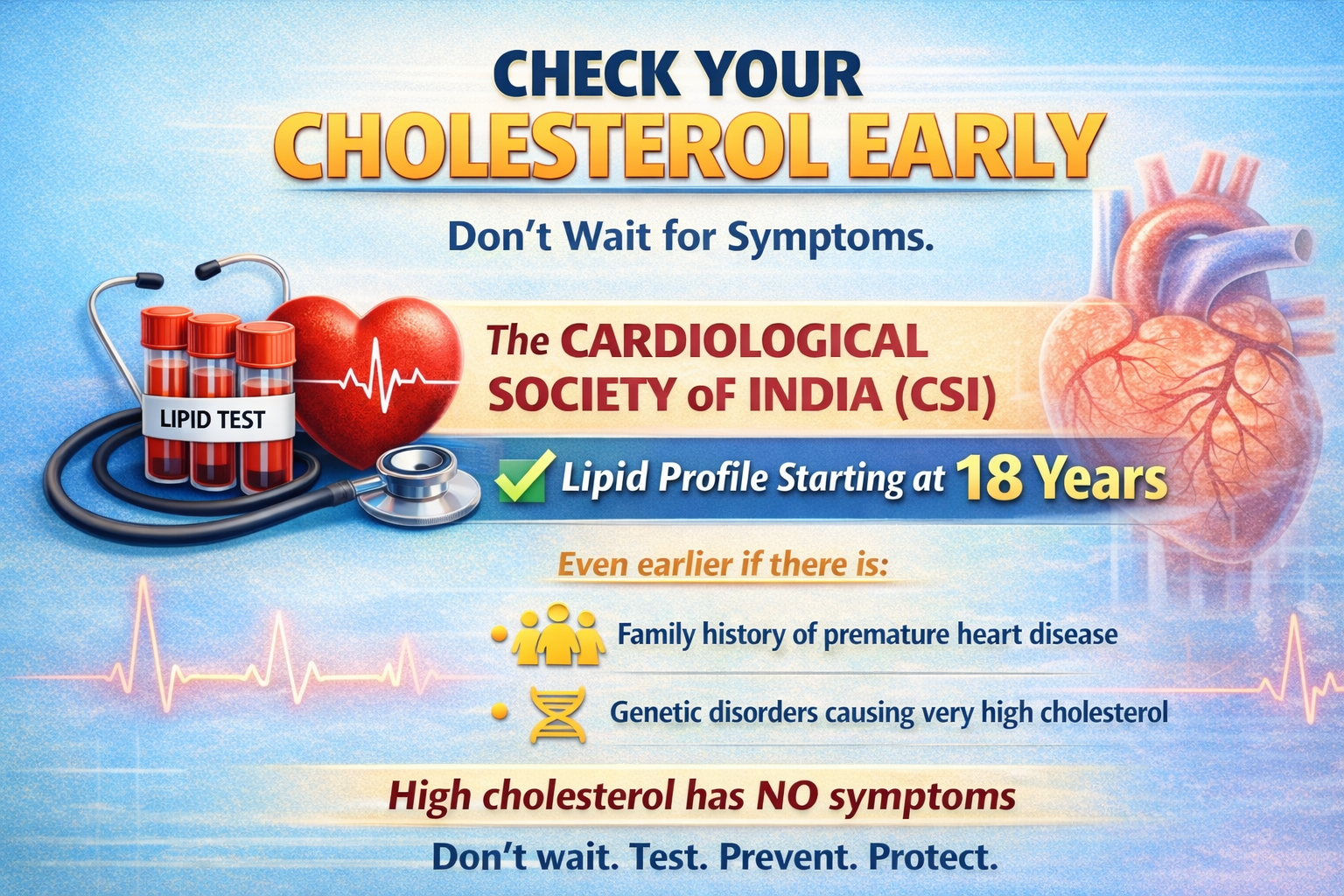
❤️ Cardiological Society of India (CSI)
- recommends earlier screening starting at age 18.
- Early screening is recommended in individuals with:
- A family history of premature heart disease
- Genetic disorders causing markedly elevated cholesterol levels
👨🦳Adults Aged (45–65 Years)
- Men and women in this age group should be screened every 1 to 2 years, even if no major risk factors are present.
👴Older Adults (> 65 Years)
- A lipid profile test should be done annually.
How should I prepare for the test?
- ⏳ Fast for 9–12 hours (only water allowed).
- 🍺 Avoid alcohol for 24 – 48 hours before the test.
- 🥗 Eat a light, normal meal the night before (no heavy or fatty foods).
- 💧 Stay well-hydrated (drink water).
- 💊Inform the healthcare provider about any medications or supplements you are taking, as certain medications can affect lipid levels.
What does a routine lipid profile test measure?
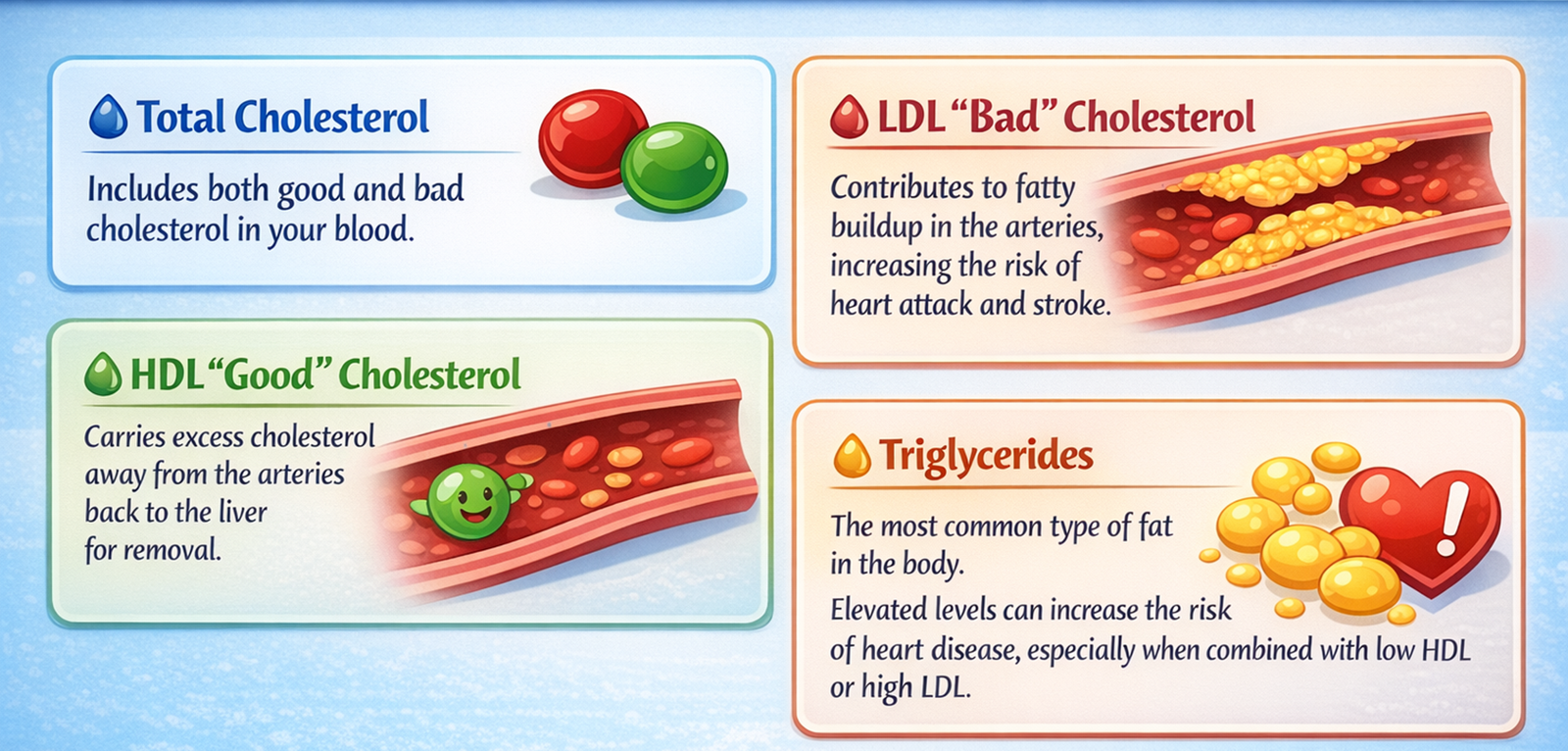
A standard lipid profile commonly measures the following types of fats in your blood :
- This is the overall amount of cholesterol in your blood.
- It includes both “good” and “bad” cholesterol — so by itself, it does not give the full picture.
- Cholesterol travels through the blood on proteins called “lipoproteins.” Two types of lipoproteins that carry cholesterol are LDL and HDL.
- LDL, also known as Bad cholesterol.
- LDL carries cholesterol to the arteries.
- When LDL levels are high, it can deposit in the artery walls and form plaque.
- Lower LDL levels are generally better for heart health.
- HDL, also known as Good cholesterol.
- HDL helps to remove excess cholesterol from the blood and return it to the liver.
- Thus, higher HDL levels are protective and good for the heart.
- Triglycerides are the most common type of fat in our bodies and are found in foods such as butter, oils, and other fats.
- High triglyceride levels, especially along with high LDL cholesterol or low HDL cholesterol, are harmful.
What are the Reference Ranges for Adults?
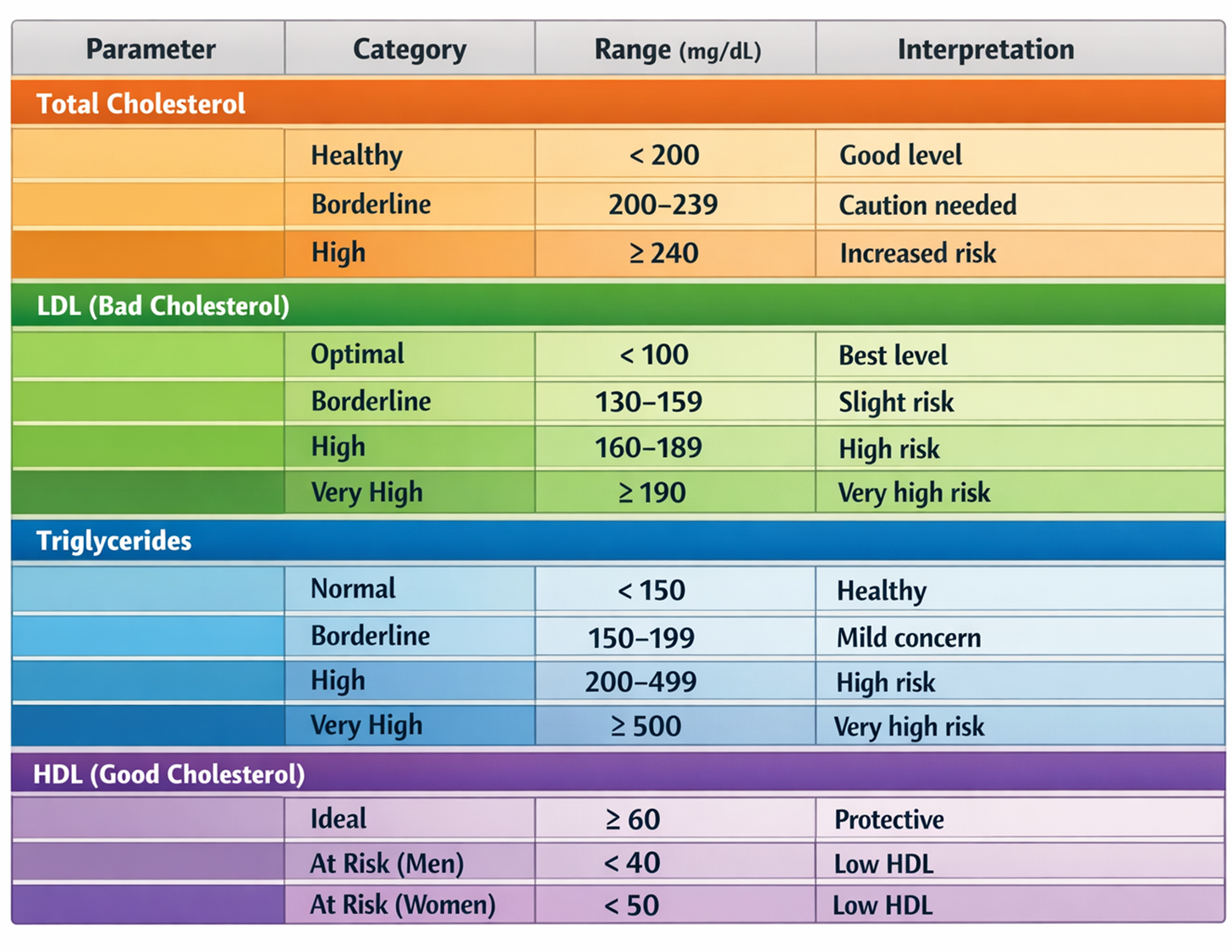
Which other parameters are shown in the Report?
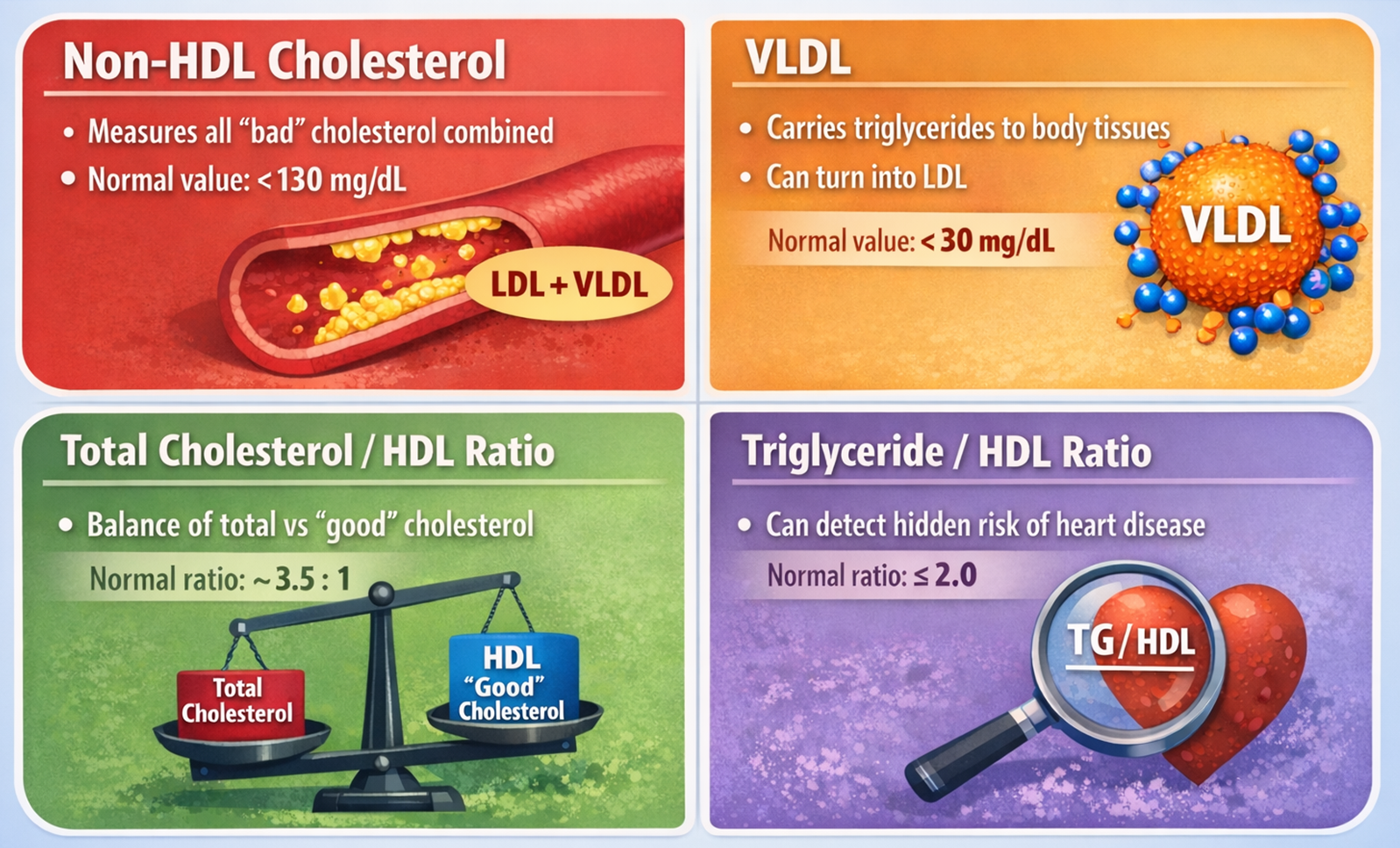
- Non-HDL = Total Cholesterol – HDL cholesterol
- It represents all the “bad” cholesterol particles combined, including LDL, very low-density LDL (VLDL), intermediate-density LDL (IDL), and lipoprotein(a).
- It offers a more complete picture of heart disease risk than LDL alone, particularly in people with high risk.
- Normal levels = < 130 mg/dL.
- VLDL carries triglycerides from the liver to body tissues.
- If VLDL levels are high, it can lead to plaque buildup in arteries and increase the risk of heart disease.
- normal range = < 30 mg/dL.
- It tells us the balance between:
- Total cholesterol (overall load)
- HDL (“good” cholesterol )
- A higher ratio indicates a higher risk of Heart disease.
- Normal ratio = 3.5:1
- The triglyceride-to-HDL ratio is very useful for identifying your risk of heart disease and insulin resistance, even if you are otherwise healthy.
- Even if total cholesterol looks “normal,” a high TG/HDL ratio can still signal hidden risk.
- normal ratio = ≤ 2.0
Are Routine Lipid Profile enough to assess your real heart risk?
Although the standard lipid panel is widely used and useful for assessing heart risk, it does not always give the full picture.
Even if your cholesterol is “normal,” you can still develop heart disease due to inflammation, genetics, or the type of cholesterol particles.
This means that a normal LDL number does not always guarantee protection, and an advanced lipid test may sometimes be needed to better understand the true risk of heart disease.
Which patients should undergo advanced lipid testing?
- Patients who should consider advanced lipid testing:
- 👨👩👧 Family history of early heart disease
- ❤️ Heart attack or stroke at a young age (you or close family)
- 🔁 Repeated heart problems despite cholesterol treatment
- 🧬 Hidden cholesterol risk suspected by your doctor
- ⚖️ Unclear overall heart risk
🚨 Do not go for advanced lipid tests unless they are specifically advised by your doctor.
Which tests are done in advanced lipid testing?
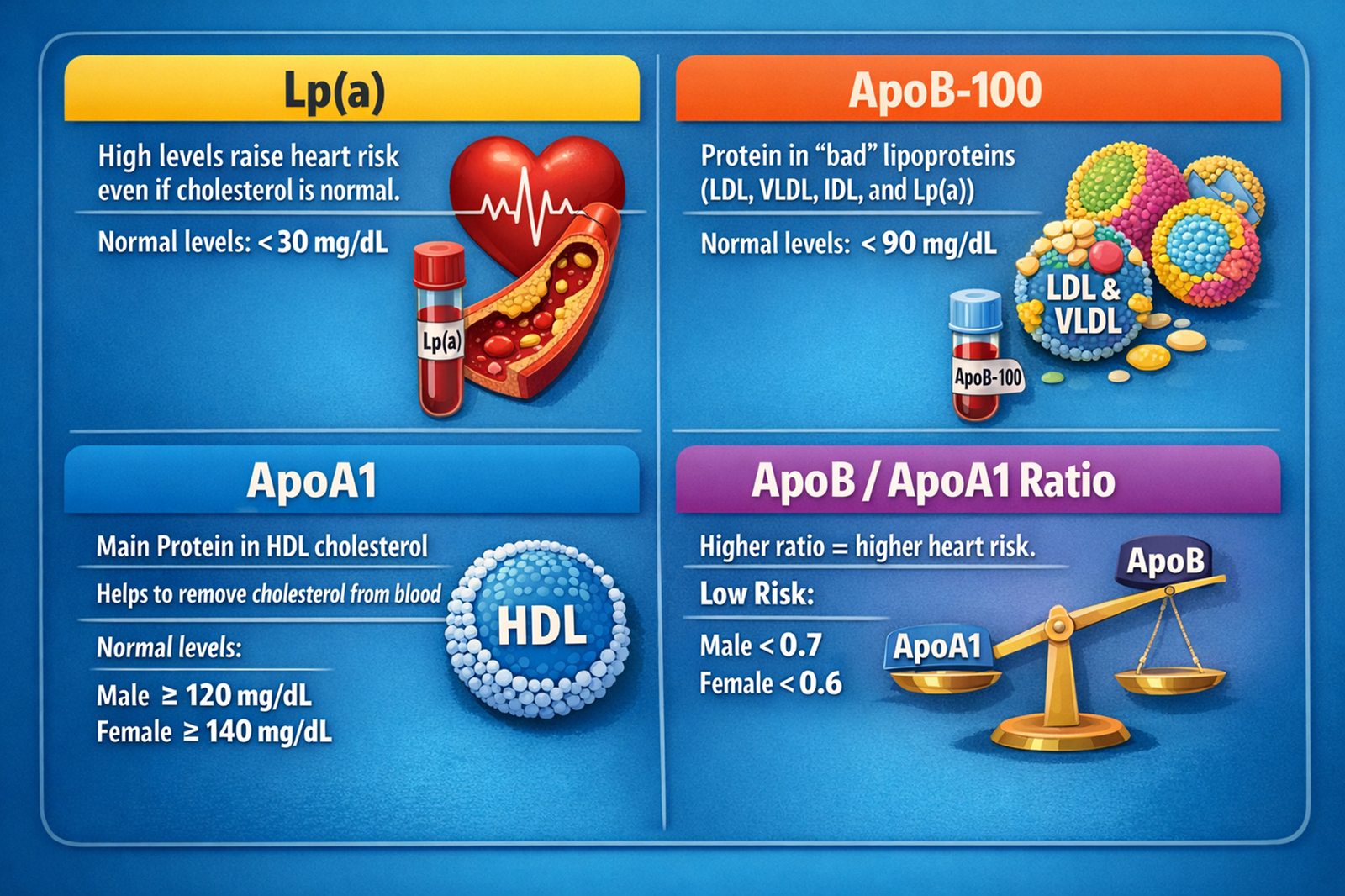
- A special type of cholesterol particle is mostly determined by your genes.
- Can increase heart disease risk, even if regular cholesterol is normal.
- 📊 Normal Levels < 30 mg/dL
- ApoB 100 is a protein found in “bad” cholesterol particles present in LDL, VLDL, IDL, and Lp(a)
- A higher ApoB-100 level indicates greater plaque formation in blood vessels and a higher risk of developing heart disease.
- ApoB levels are higher in males than in females and tend to increase with age.
- 📊 Norma Levels: < 90 mg/dL
- ApoA1 is the main protein in HDL (good cholesterol).
- It helps remove extra cholesterol from tissues and carries it to the liver for clearance.
- Higher ApoA1 levels are associated with a lower risk of a first heart attack, even more strongly than HDL cholesterol alone.
- 📊 Levels
- Adult male ≥120 mg/dl
- Adult Female ≥140 mg/dl
- A higher ratio indicates a greater likelihood of cholesterol accumulating in the arteries, increasing the risk of heart disease.
- 📊 Levels
- Adult male ratio – <0.7 Low Risk
- Adult Female ratio – <0.6 Low Risk
Key Takeaways
- A lipid profile is more than just total cholesterol — it gives a complete picture of your heart risk.
- Normal cholesterol does NOT always mean low risk. Hidden factors like inflammation, genetics, and particle number matter.
- Start testing early — as young as 18–20 years, especially if you have risk factors or family history.
- Repeat testing regularly based on your risk (every 1–2 years for high-risk individuals).
- LDL can build up in arteries, while HDL helps remove excess cholesterol.
- Triglyceride and cholesterol ratios can reveal hidden heart risk.
- Non-HDL cholesterol is a better indicator of all “bad” cholesterol combined.
- some people may need advanced lipid tests such as Lp(a), ApoB, and ApoA1.
- Do not undergo advanced tests without medical advice.
Conclusion
Your lipid profile is not just a routine test—it’s an early warning system for your heart. Long before symptoms appear, changes in these numbers quietly reflect what’s happening inside your arteries. Taking the time to understand your report, getting tested regularly, and acting early can make the difference between prevention and disease. Don’t wait for a problem to arise—take charge of your heart health today.
Further Reading
- Aggarwal, A., & Jain, A. (2021). Lipid guidelines: Consensus and differences in the Indian context. Journal of the Indian Medical Association, 15(2). https://journals.lww.com/jimi/fulltext/2021/15020/lipid_guidelines__consensus_and_differences_in_the.5.aspx
- Ahmed, S., Shah, P., & Ahmed, O. (2023). Biochemistry, lipids. In StatPearls. StatPearls Publishing. https://www.ncbi.nlm.nih.gov/books/NBK525952/
- American Heart Association. (2024). HDL (good), LDL (bad) cholesterol and triglycerides. https://www.heart.org/en/health-topics/cholesterol/hdl-good-ldl-bad-cholesterol-and-triglycerides
- National Heart, Lung, and Blood Institute. (n.d.). High blood triglycerides. https://www.nhlbi.nih.gov/health/high-blood-triglycerides
- National Lipid Association. (n.d.). Advanced lipid testing tear sheet. https://www.lipid.org/sites/default/files/advanced-lipid-testing-tear-sheet_0.pdf
- Sawhney, J. P. S., Ramakrishnan, S., Madan, K., Ray, S., Jayagopal, P. B., Prabhakaran, D., Nair, T., Zachariah, G., Jain, P., Dalal, J., Radhakrishnan, S., Chopra, A., Kalra, S., Mehta, A., Pancholia, A. K., Kabra, N. K., Kahali, D., Ghose, T., … Gupta, R. (2024).
CSI clinical practice guidelines for dyslipidemia management: Executive summary. Indian Heart Journal, 76(Suppl 1), S6–S19. https://doi.org/10.1016/j.ihj.2023.11.271 - Berger, J. H., Chen, F., Faerber, J. A., O’Byrne, M. L., & Brothers, J. A. (2021). Adherence with lipid screening guidelines in standard- and high-risk children and adolescents. American Heart Journal, 232, 39–46. https://pmc.ncbi.nlm.nih.gov/articles/PMC7854880/
- National Heart, Lung, and Blood Institute. (n.d.). Blood cholesterol: Diagnosis. https://www.nhlbi.nih.gov/health/blood-cholesterol/diagnosis
- Virani, S. S. (2011). Non-HDL cholesterol as a metric of good quality of care: Opportunities and challenges. Texas Heart Institute Journal, 38(2), 160–162. https://pmc.ncbi.nlm.nih.gov/articles/PMC3066801/
- Chen, J., et al. (2024). Unlocking the mysteries of VLDL: Exploring its production, intracellular trafficking, and metabolism as therapeutic targets. Lipids in Health and Disease, 23(1), 14. https://pmc.ncbi.nlm.nih.gov/articles/PMC10785355/
- Kosmas, C. E., Rodriguez Polanco, S., Bousvarou, M. D., Papakonstantinou, E. J., Peña Genao, E., Guzman, E., & Kostara, C. E. (2023). The triglyceride/high-density lipoprotein cholesterol (TG/HDL-C) ratio as a risk marker for metabolic syndrome and cardiovascular disease. Diagnostics, 13(5), 929. https://pmc.ncbi.nlm.nih.gov/articles/PMC10001260/
- American Heart Association. (2024). Lipoprotein (a): What it is, test, levels & risks. https://www.heart.org/en/health-topics/cholesterol/genetic-conditions/lipoprotein-a-risks
- Rosenson, R. S. (2025). Lipoprotein (a). Medscape. https://emedicine.medscape.com/article/2088118-overview
- Kounatidis, D., et al. (2024). ApoB100 and atherosclerosis: What’s new in the 21st century? Metabolites, 14(1), 123. https://pmc.ncbi.nlm.nih.gov/articles/PMC10890411/
- Bhale, A. S., & Venkataraman, K. (2022). Leveraging knowledge of HDL’s major protein ApoA1. Biomedicine & Pharmacotherapy, 152, 113223. https://www.sciencedirect.com/science/article/pii/S075333222201023X
- Elhomsy, G., & Griffing, G. T. (2021). Apolipoprotein A-I. Medscape. https://emedicine.medscape.com/article/2087313-overview
- Mayo Clinic Laboratories. (n.d.). Apolipoprotein A1 and B, serum (APOAB). https://pediatric.testcatalog.org/show/APOAB