
Table of Contents
Introduction
High blood pressure (BP), or hypertension, often has no obvious symptoms, making regular monitoring important for maintaining good health. Measuring your blood pressure at home can help you track your readings and share useful information with your doctor.
However, measuring blood pressure correctly is just as important as measuring it regularly. Incorrect positioning, using the wrong cuff size, or measuring immediately after exercise or caffeine consumption can affect your readings.
In this guide, we’ll explore simple tips to help you measure your blood pressure accurately at home, record your readings, and understand what they mean.
Who Should Monitor BP at Home?
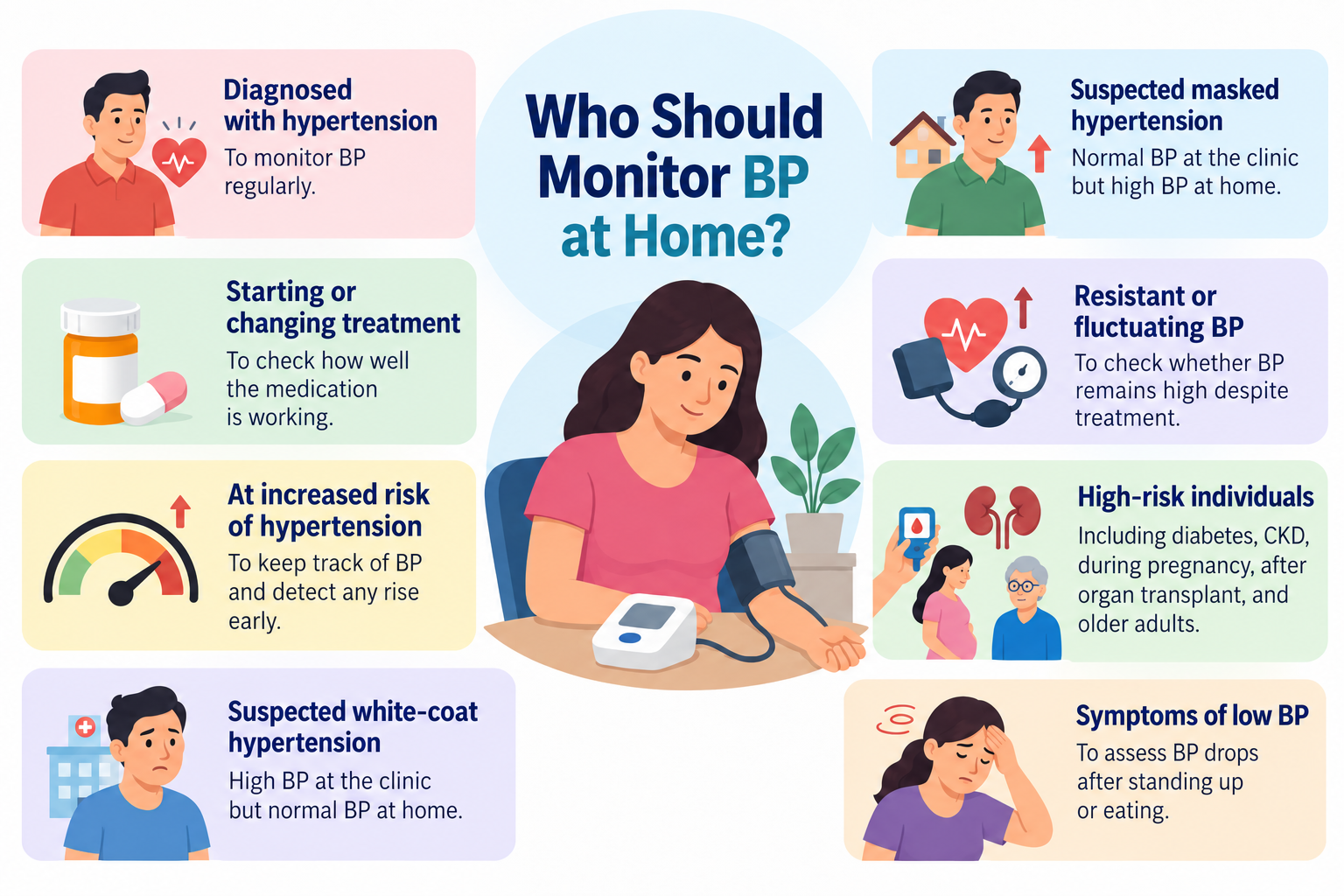
- People diagnosed with hypertension: To monitor BP regularly.
- People starting or changing treatment: To check how well the medication is working.
- People at increased risk of hypertension: To keep track of BP and detect any rise early.
- Suspected white-coat hypertension: High BP at the clinic but normal BP at home.
- Suspected masked hypertension: Normal BP at the clinic but high BP at home.
- Resistant or fluctuating BP: To check whether BP remains high despite treatment.
- High-risk individuals: People with diabetes, Chronic kidney disease, during pregnancy, after organ transplant, and older adults.
- People with symptoms of low BP: To assess BP drops after standing up or eating.
What are the Parts of a Home BP Device?
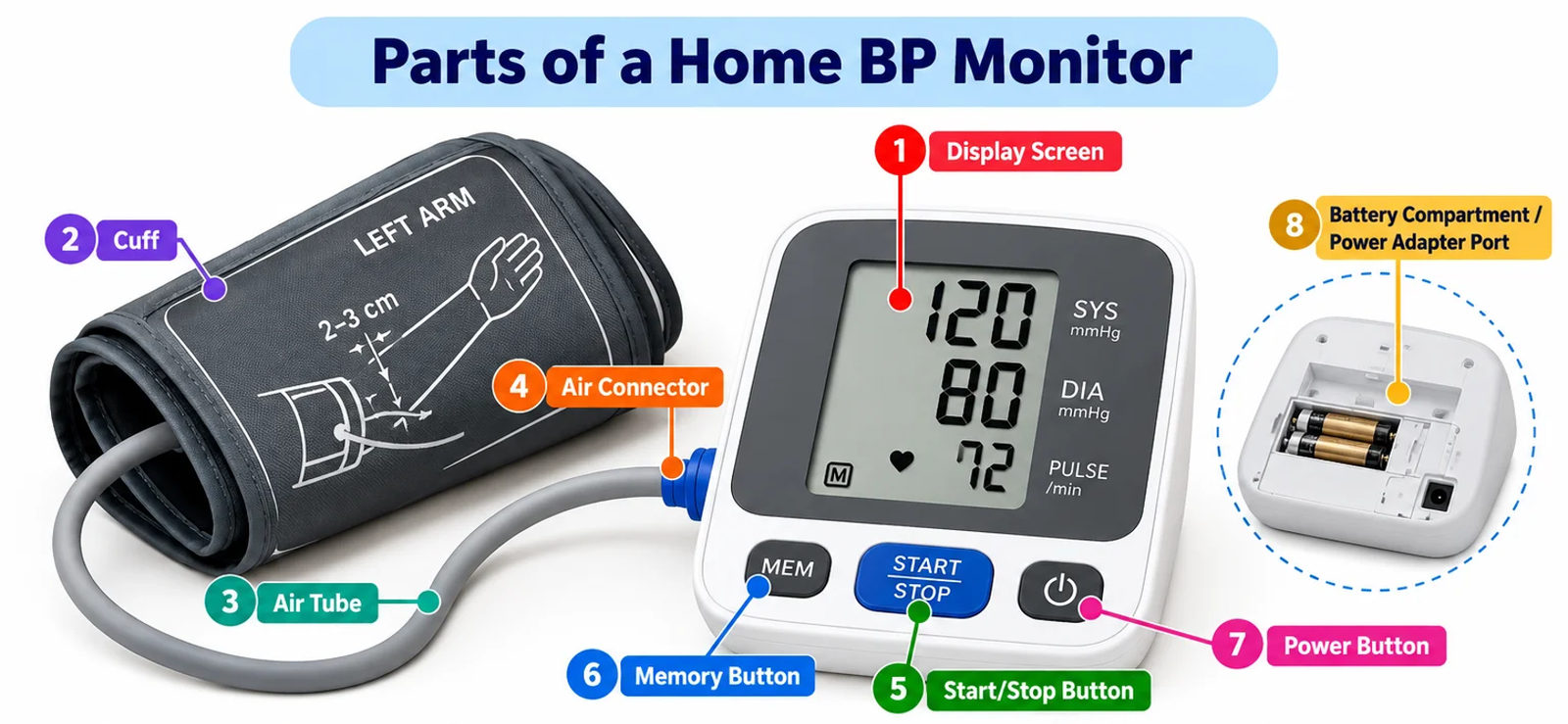
A digital home blood pressure monitor (upper-arm type) consists of these main parts:
- Display Screen: Shows BP and pulse rate.
- Cuff: Wraps around the upper arm to measure BP.
- Air Tube: Connects the cuff to the monitor.
- Air Connector: Links the air tube to the monitor.
- Start/Stop Button: Starts and stops BP measurement.
- Memory Button: Stores and displays previous readings.
- Power Button: Switches the device on or off (may be combined with Start/Stop).
- Battery Compartment/Power Adapter Port: Supplies power to the device.
Note: The exact buttons and design may vary between BP monitor models.
How to Choose a Device?
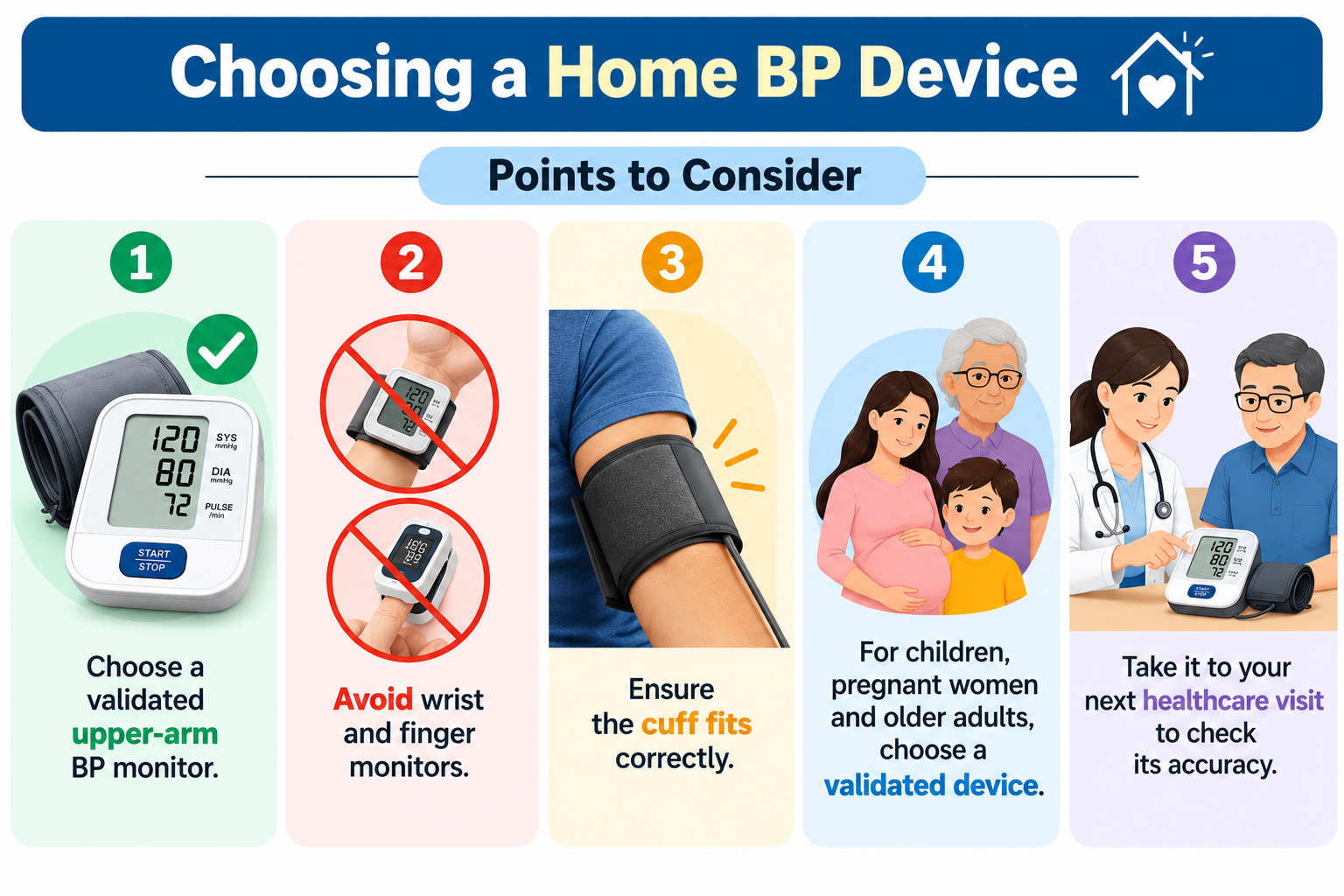
- Choose an automatic, validated upper-arm BP monitor.
- Avoid wrist and finger monitors, as they may be less reliable.
- Ensure the cuff fits your upper arm correctly.
- For children, pregnant women, and older adults, choose a monitor validated for their use.
- Take your monitor to your next healthcare visit to check its accuracy and ensure correct usage.
How to Check if a Device Is Validated?
- Check trusted online registries: Verify your BP monitor model on these websites:
- Check product details: Look for recognized validation or certification information on the product packaging or instruction manual.
What are the Standard Cuff Sizes?
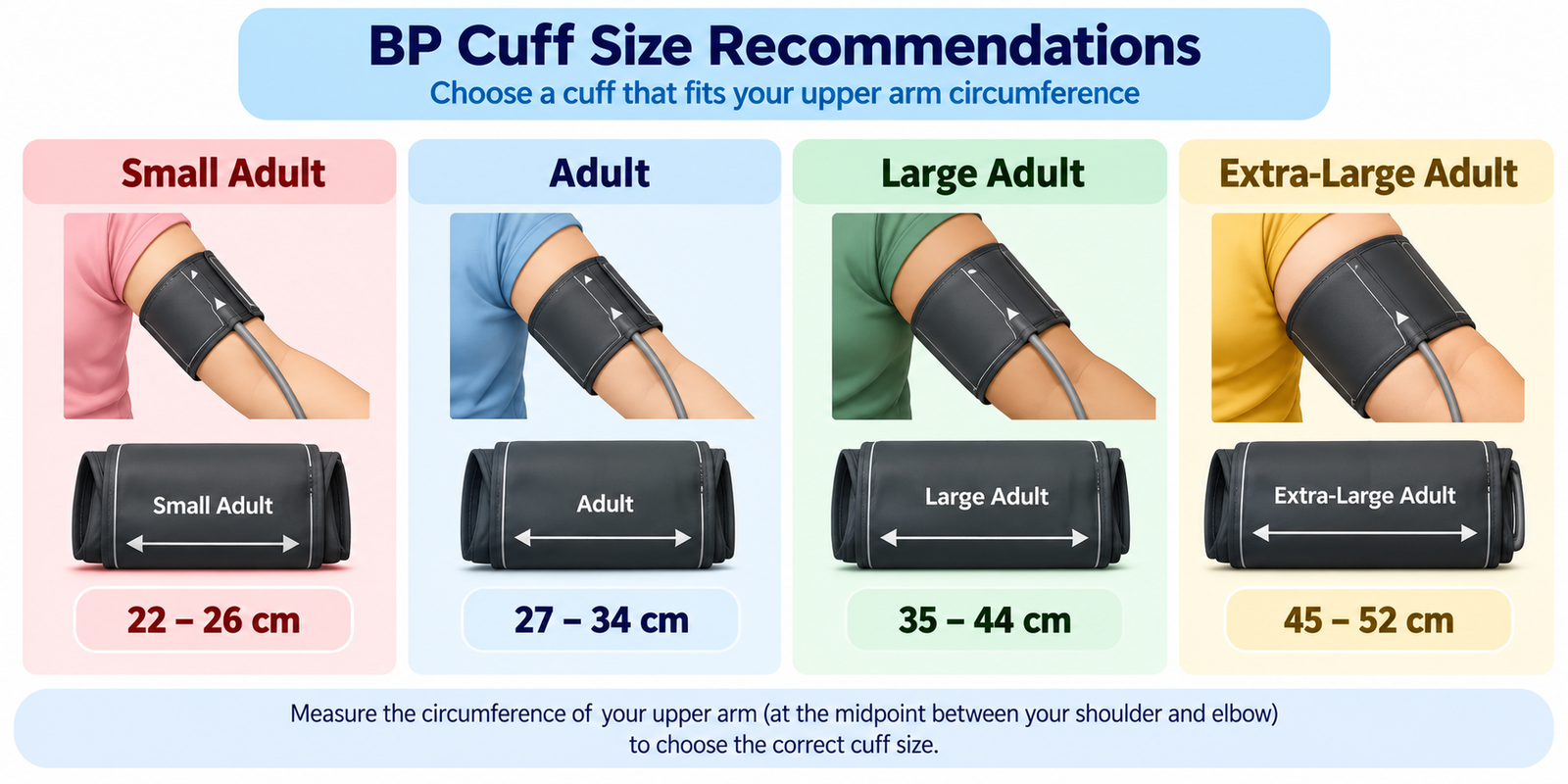
- Choose the correct cuff size based on upper arm circumference:
- Small Adult: 22–26 cm
- Adult: 27–34 cm
- Large Adult: 35–44 cm
- Extra-Large Adult: 45–52 cm
Remember: Always follow the manufacturer’s specified arm circumference range, as cuff-size categories may vary between devices.
How Often Should You Measure?
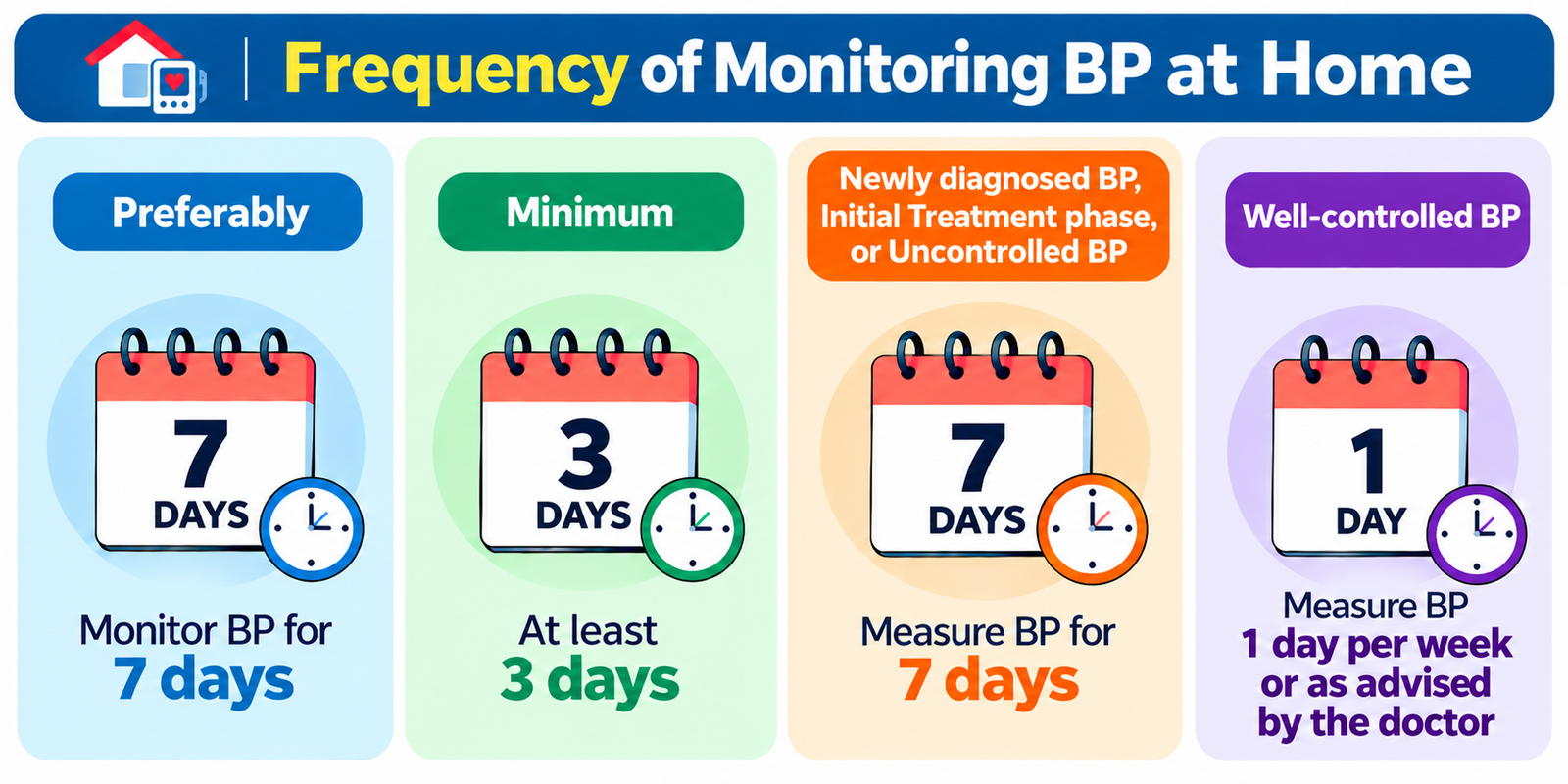
- Preferably: Monitor BP for 7 days.
- Minimum: At least 3 days.
- Newly diagnosed high BP, initial treatment phase, or uncontrolled BP: Measure BP for 7 days.
- Well-controlled BP: Monitoring may be reduced to once weekly or as advised by the doctor.
How to Prepare for the Measurement?
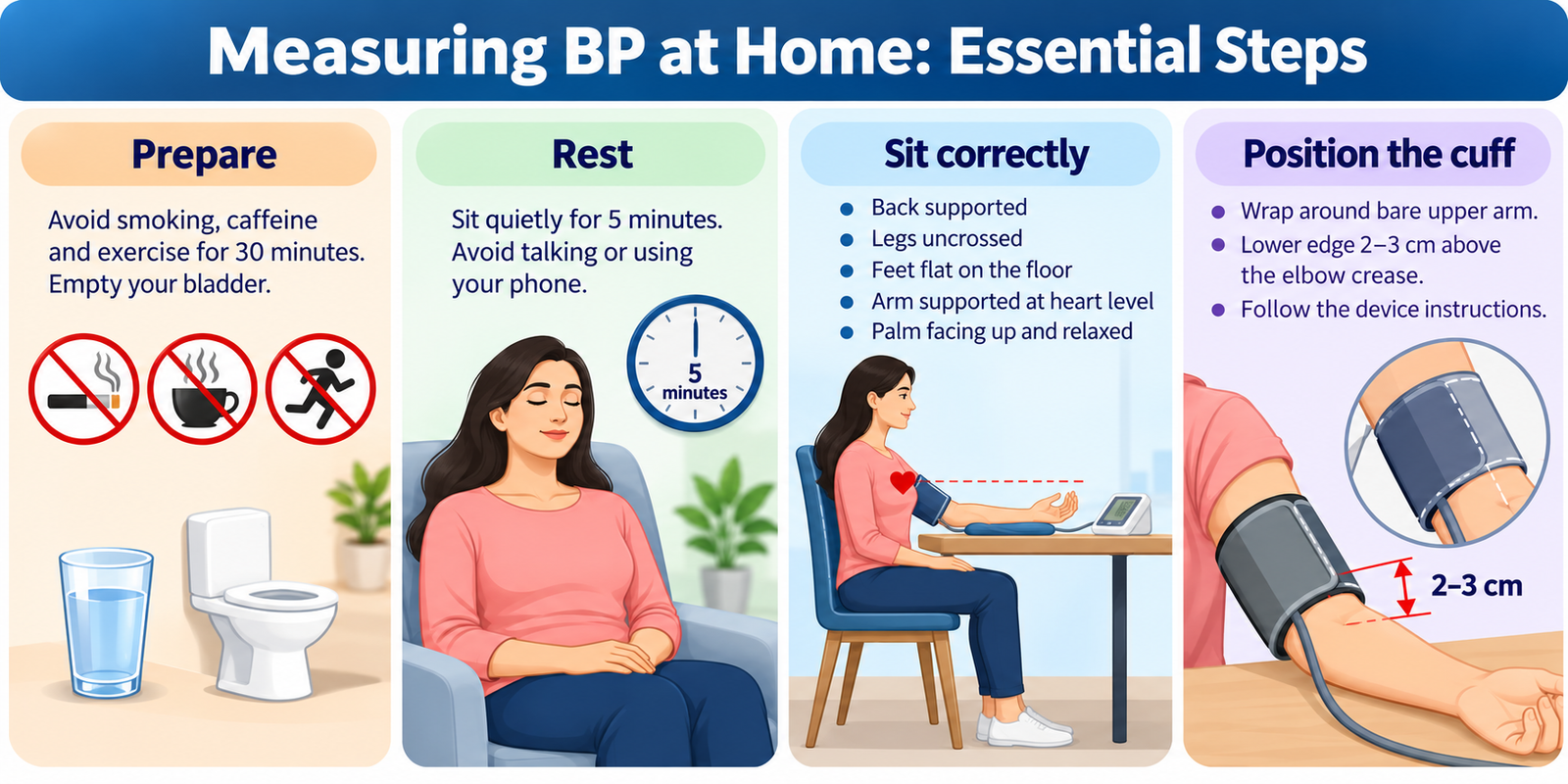
- Prepare
- Avoid smoking, caffeine, and exercise for 30 minutes before measuring.
- Go to the washroom and Empty your bladder.
- Rest
- Sit quietly for 5 minutes. Avoid talking or using your phone.
- Sit correctly
- Keep your back supported.
- Keep your legs uncrossed.
- Feet flat on the floor.
- Arm supported at heart level.
- Keep your palm facing upward and arm muscles relaxed.
- Position the cuff
- Wrap the cuff around your bare upper arm, with its lower edge approximately 2–3 cm above the elbow crease.
How to Monitor During the First Week
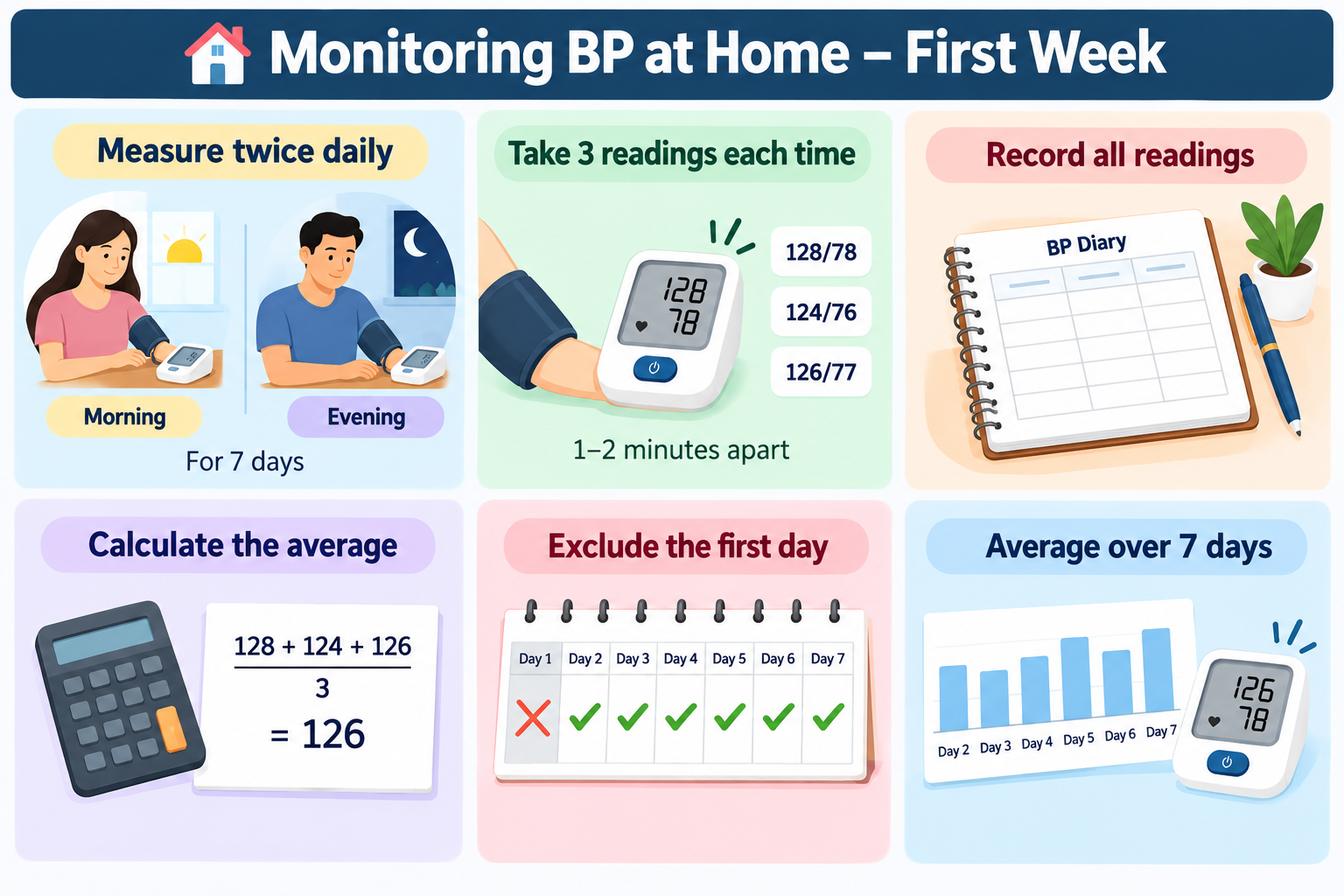
- Monitoring period: Measure your BP twice daily for 7 consecutive days — in the morning, within one hour of waking (before breakfast and BP medication), and in the evening at the same time each day.
- Number of readings: Take 2-3 readings each time, 1–2 minutes apart.
- Record all readings: Note down every reading in a BP diary or logbook.
- Calculate the average: Average the readings from each session. If using 3 readings, add them together and divide by 3.
- Exclude the first day: Discard all readings taken on Day 1, as you may still be getting familiar with the device.
- At the end of 7 days: Calculate the average of the recorded readings (excluding Day 1) to get a more reliable estimate of your usual BP.
After the first week, you can reduce monitoring, as advised by your doctor.
Limitations of Home BP Monitoring
- Non-validated devices, poor calibration, or incorrect cuff placement can affect readings
- Frequent measurements may cause stress or anxiety
- Patients may change doses without medical advice
- Cannot assess night BP or dipping patterns
- May give inaccurate readings in certain patients, such as those with severe arrhythmias
Home Blood Pressure Monitoring Checklist
Use this simple checklist every time you measure your BP at home to ensure accurate readings.
1. Before Measuring
- ☐ Avoid smoking, caffeine, and exercise for 30 minutes.
- ☐ Empty your bladder.
- ☐ Rest quietly for 5 minutes.
2. Check Your Device
- ☐ Use a validated automatic upper-arm BP monitor.
- ☐ Ensure the cuff is the correct size.
- ☐ Place the cuff on your bare upper arm, just above the elbow.
3. Maintain Correct Position
- ☐ Sit with your back supported.
- ☐ Keep both feet flat on the floor.
- ☐ Support your arm at heart level.
- ☐ Avoid talking or using your phone.
4. Measure Your BP
- ☐ Measure at the same time each day, as advised.
- ☐ Take 2- 3 readings, 1-2 minutes apart.
- ☐ Follow your healthcare professional’s monitoring schedule.
5. Record Your Readings
- ☐ Record both BP readings and pulse rate.
- ☐ Maintain a BP log.
- ☐ Share your readings with your healthcare professional.
Remember: Home BP monitoring complements regular medical check-ups; it does not replace them.
Further Reading
- American Heart Association. (2025, August 14). Home blood pressure monitoring. https://www.heart.org/en/health-topics/high-blood-pressure/understanding-blood-pressure-readings/monitoring-your-blood-pressure-at-home.
- Mayo Clinic Staff. (2026, January 21). Get the most out of home blood pressure monitoring. Mayo Clinic. https://www.mayoclinic.org/diseases-conditions/high-blood-pressure/in-depth/high-blood-pressure/art-20047889.
- Picone, D. S., Padwal, R., Campbell, N. R. C., Boutouyrie, P., Brady, T. M., Olsen, M. H., Delles, C., Lombardi, C., Mahmud, A., Meng, Y., Mokwatsi, G. G., Ordunez, P., Phan, H. T., Pucci, G., Schutte, A. E., Sung, K. C., Zhang, X. H., Sharman, J. E., & Accuracy in Measurement of Blood Pressure (AIM-BP) Collaborative (2020). How to check whether a blood pressure monitor has been properly validated for accuracy. Journal of clinical hypertension (Greenwich, Conn.), 22(12), 2167–2174. https://doi.org/10.1111/jch.14065.
- Blood Pressure UK. (n.d.). How to measure your blood pressure at home. https://www.bloodpressureuk.org/your-blood-pressure/how-to-lower-your-blood-pressure/monitoring-your-blood-pressure-at-home/how-to-measure-your-blood-pressure-at-home/
- Verma, N., Maheshwari, A., Verma, S., Patni, B., Gupta, R., Narasingan, S. N., Muruganathan, A., Nambiar, A., Maheshwari, B., Aruyerchelvan, B., Agarwal, D., Darya, S. S., Ramchandani, G. D., Gupta, A., Gupta, A., Singla, S., Patil, S., Patra, S., Verma, A. S., … Swamy, P. (2026). Guidelines on home blood pressure monitoring in India. Hypertension Journal, 12(1), 41–54. https://9vom.in/journals/index.php/htnj/article/view/1173.
Disclaimer: The information provided on Medical Pharma Lifestyle Pulse is for educational and informational purposes only and is not intended as medical advice, diagnosis, or treatment. Always consult a qualified healthcare professional before making any decisions about your health, medications, or treatment. Never ignore or delay seeking professional medical advice based on information you have read on this website. While we strive to provide accurate and up-to-date information, we do not guarantee the completeness or accuracy of the content. For more information, please read our full Medical Disclaimer.


