
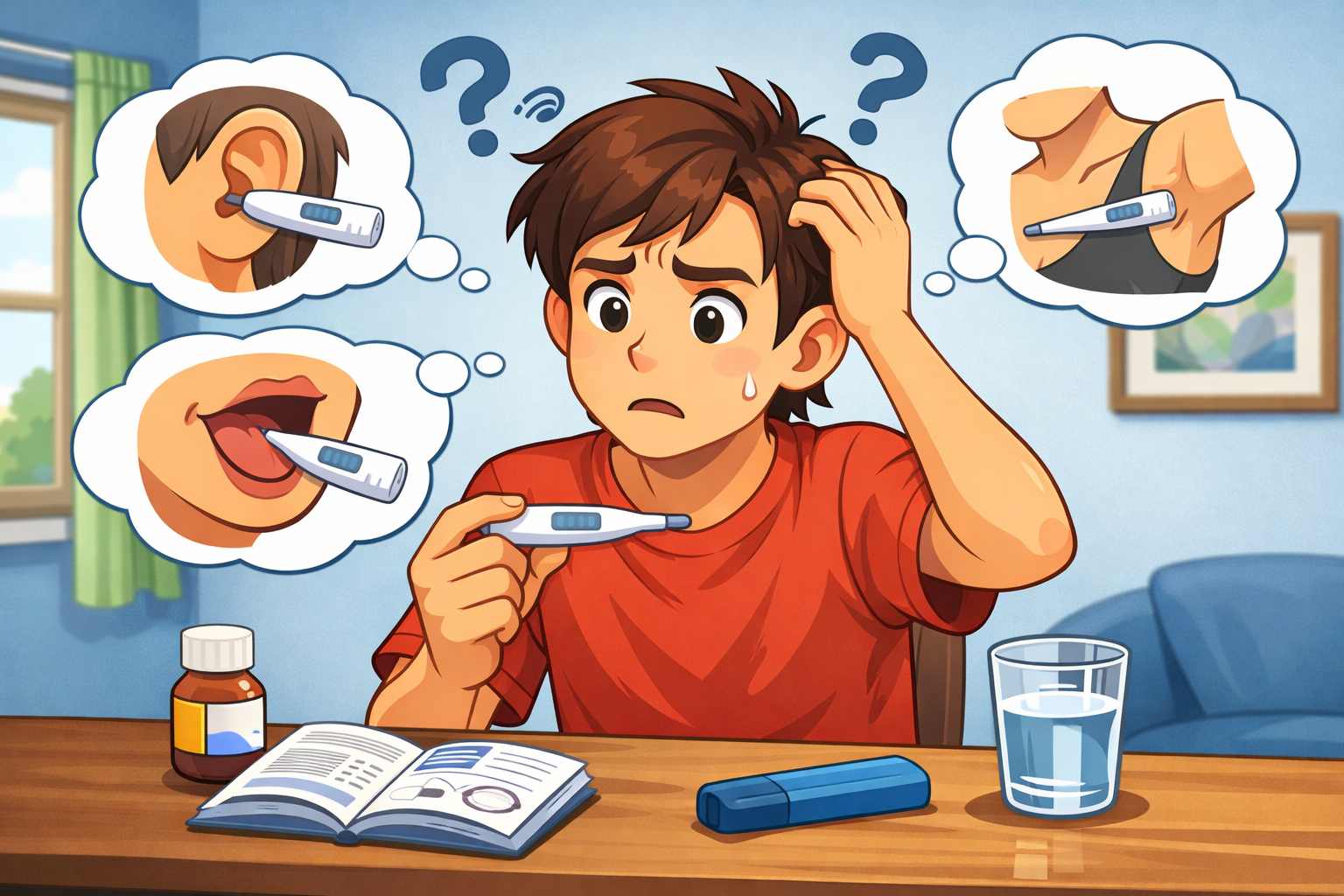
Thermometers are one of the most important tools for detecting fever. Over the years, they have evolved significantly—from traditional mercury devices to modern digital and infrared —making home temperature measurement easier, faster, and more accurate. Understanding the different types and how to use them correctly can help you monitor fever more reliably and take the right steps at the right time.
🌡️Type of Thermometers
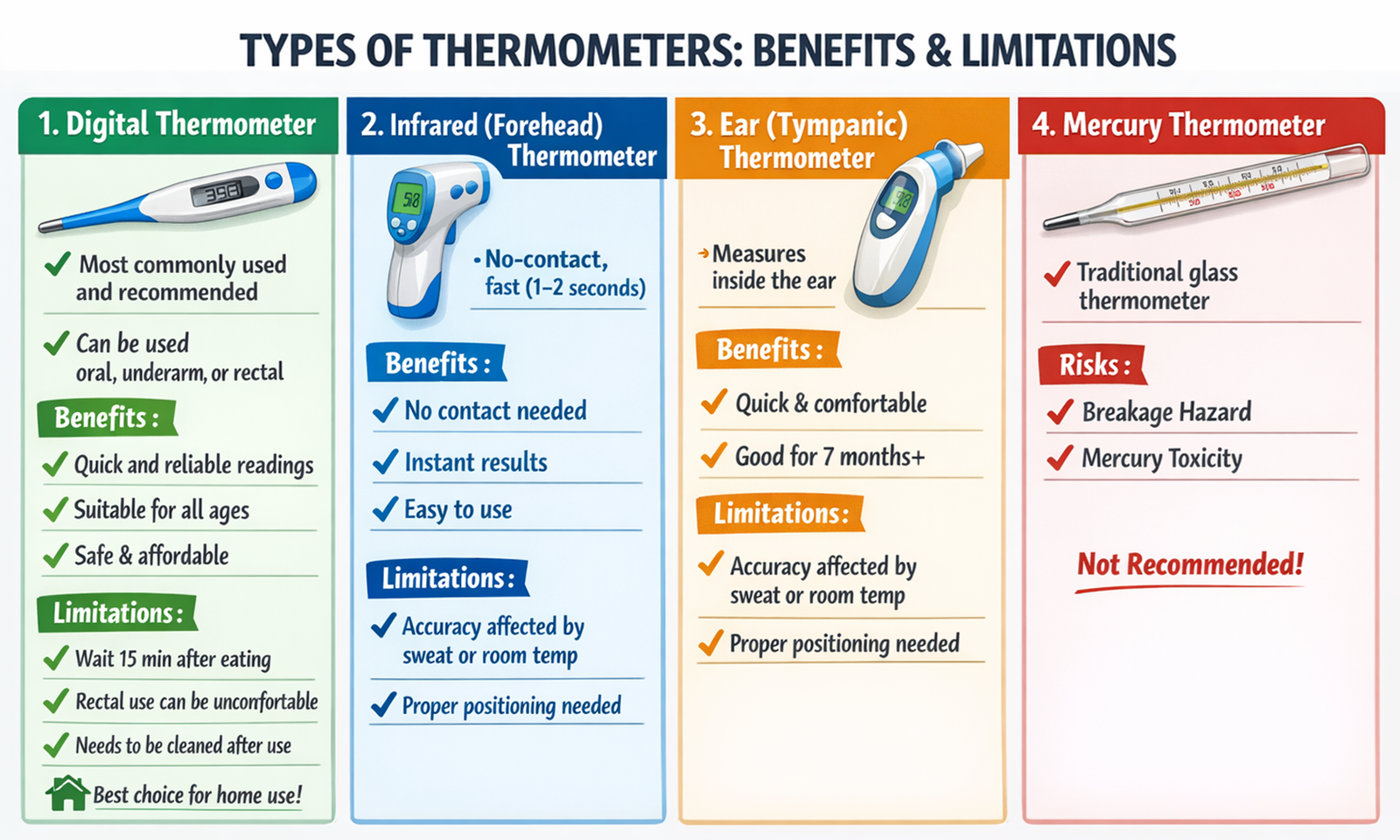
1. Digital
👉 Most commonly used and recommended
- Can be used under the tongue (oral), armpit (axillary), or rectal
💡 Benefits
- Quick and reliable readings
- Suitable for all ages (newborns to adults)
- Oral readings are fairly accurate
- Safe, easy to use, and affordable
⚠️ Limitations
- Oral readings need 15 min gap after eating/drinking
- The rectal method can be uncomfortable or difficult
- Must be cleaned after every use
🌟 Best choice for home use
2. Forehead
👉 No-contact thermometer
- Measures temperature from the forehead
- Very fast (1–2 seconds)
- Useful for children or multiple people
💡 Benefits
- No contact needed – helps reduce the spread of infections
- Quick results – gives temperature in seconds
- Easy to use – simple point-and-click method
- Easy to clean – no need for frequent disinfection
- Repeat readings easily – can check temperature multiple times without discomfort
⚠️ Limitations
- Accuracy can vary – affected by sweat, head coverings, or room temperature
- Proper positioning matters – wrong distance or angle can give incorrect readings
- Close range still needed – slight risk of infection if used very near the person
3. Ear (Tympanic)
👉 Measures temperature inside the ear
💡 benefits
- Quick and comfortable
- Good for children above 7 months and adults
⚠️limitations
- Not suitable for infants under 7 months
- Earwax, infections, or ear shape can affect accuracy
- Needs proper cleaning after each use
- Extreme hot/cold weather can affect readings (wait ~15 minutes before use)
4. Mercury
👉 Traditional glass thermometer
- Previously widely used
- Takes longer to show readings
❗ Not recommended now due to:
- Risk of breakage
- Mercury toxicity
👶👨👩👧👦 Choosing the Right Thermometer by Age
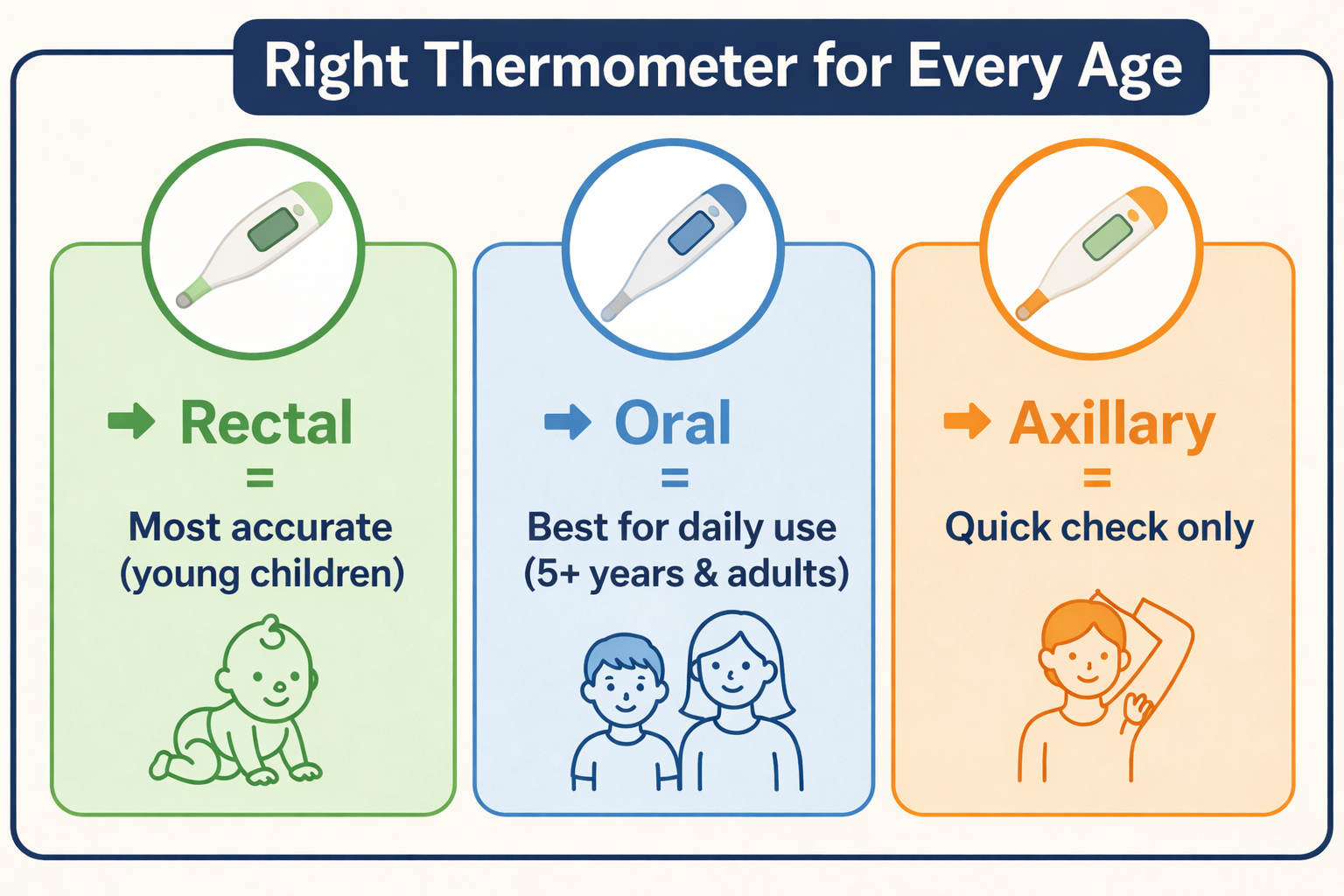
Choosing the right thermometer depends on age, as accuracy and safety can vary.
🔹Birth to 2 years
- ✅ Best choice: Rectal
- 👉 Alternative: Armpit (axillary)
🔹 2 to 5 years
- ✅ Best choice: Rectal
- 👉 Alternative: Ear / Armpit
🔹 5 Years and above
- ✅ Best choice: Oral
- 👉 Alternative: Ear / Armpit
🔹 65 Years and Older
- ✅ Best choice: oral or ear
- ❌ Avoid: forehead thermometers as they may be less accurate in this age group
🌡️ Correct way to place A thermometer
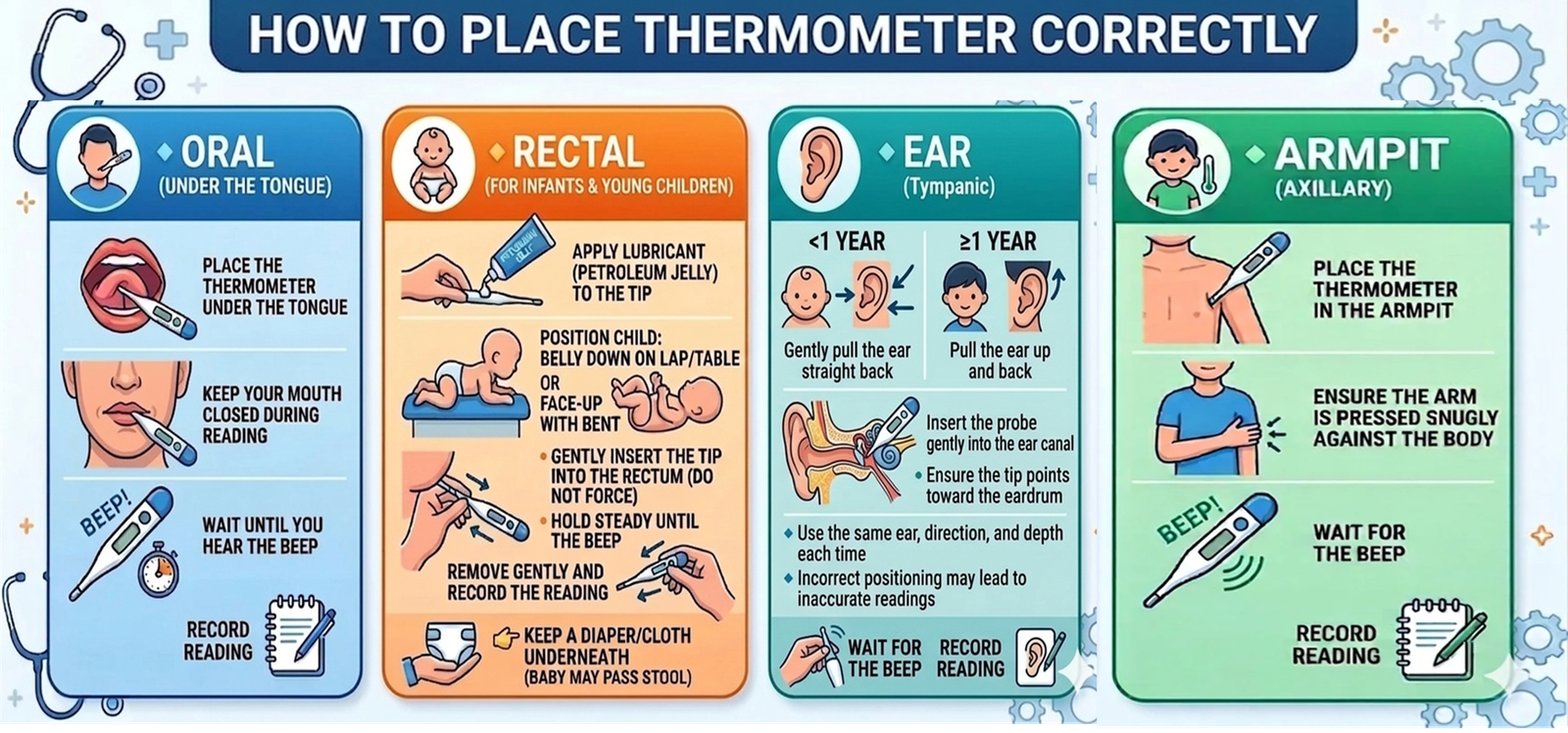
🔹 Oral
- Place under the tongue
- Keep your mouth closed during reading
- Wait until you hear the beep
🔹 Rectal
- Apply lubricant (petroleum jelly) to the tip
- Position child:
- Belly down on lap/table or
- Face-up with legs bent
- Gently insert the tip into the rectum (do not force)
- Hold steady until the beep
- Remove gently and record the reading
👉 Keep a diaper/cloth underneath (baby may pass stool)
🔹 Ear
- <1 year: Gently pull the ear straight back
- ≥1 year: Pull the ear up and back
- Insert the probe gently into the ear canal
- Ensure the tip points toward the eardrum
- Use the same ear, direction, and depth each time
- Incorrect positioning may lead to inaccurate readings
🔹 Armpit (Axillary)
- Place the thermometer in the armpit
- Ensure the arm is pressed snugly against the body
- Wait for the beep
- Record reading
🧼 Cleaning the Thermometer After Use
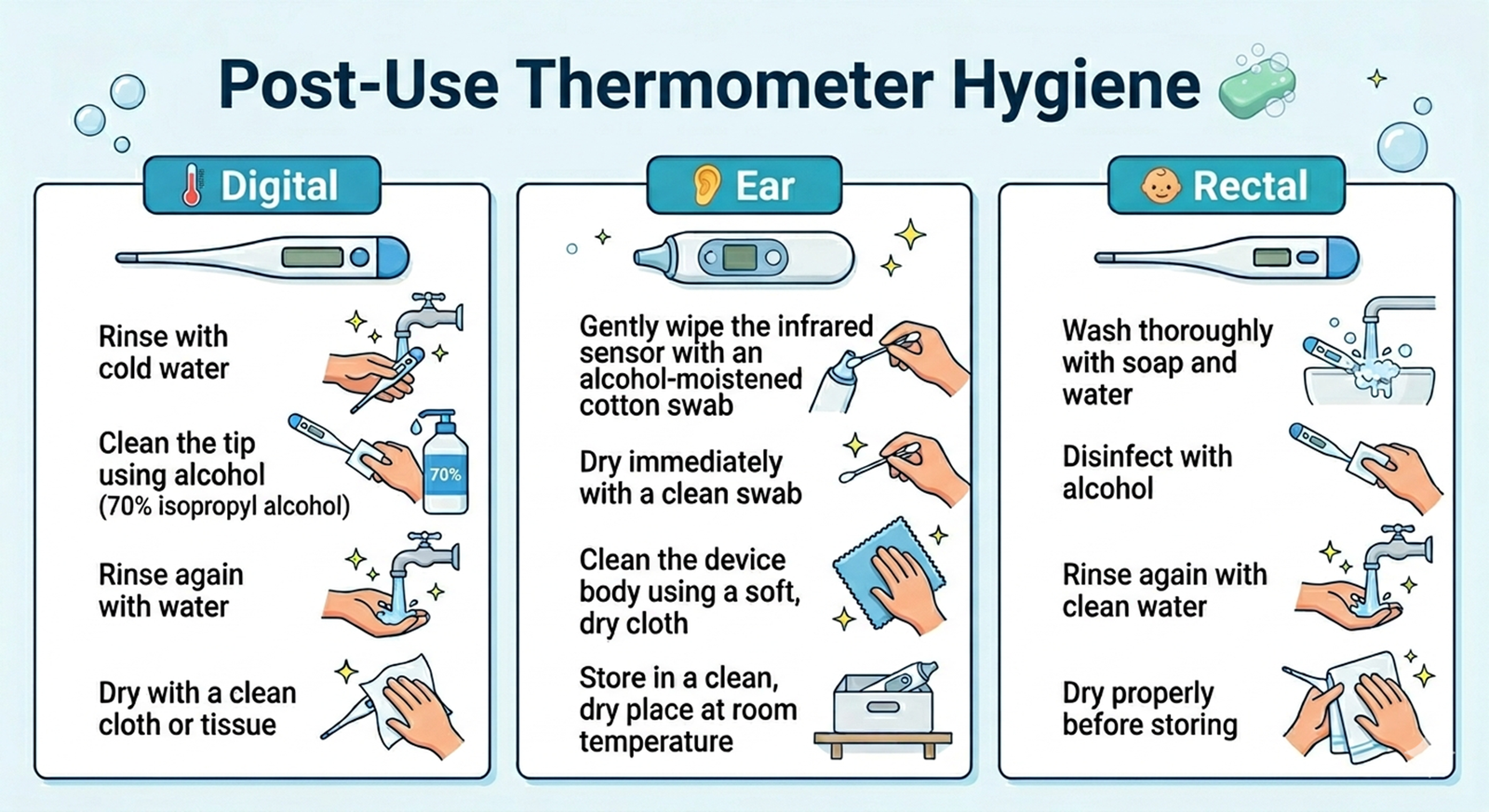
➡️ Always clean the thermometer after taking a temperature
🌡️ Digital
- Rinse with cold water
- Clean the tip using alcohol (70% isopropyl alcohol)
- Rinse again with water
- Dry with a clean cloth or tissue
👂Ear
- Gently wipe the infrared sensor with an alcohol-moistened cotton swab
- Dry immediately with a clean swab
- Clean the device body using a soft, dry cloth
- Store in a clean, dry place at room temperature
👶 Rectal
- Wash thoroughly with soap and water
- Disinfect with alcohol
- Rinse again with clean water
- Dry properly before storing
Thermometer: Quick Takeaways
- ✅ Use the right type for age
- ✅ Follow correct placement
- ✅ Wait for the beep before removing
- ✅ Use the same method each time for consistent readings
- ✅ Let the thermometer reach room temperature before use
- ✅ Read instructions for your specific device
- ❌ Don’t use the same thermometer for oral & rectal without proper cleaning
- ❌ Don’t take oral temperature right after eating/drinking (wait for at least 15 mins)
- ❌ Don’t guess readings—always check the display
- ❌ Don’t use a damaged thermometer
- ❌ Don’t forget to disinfect after use
Further Reading
- https://iopscience.iop.org/article/10.1149/10701.16223ecst/pdf
- https://www.fda.gov/medical-devices/general-hospital-devices-and-supplies/non-contact-infrared-thermometer
- https://www.mayoclinic.org/healthy-lifestyle/adult-health/in-depth/how-to-take-temperature/art-20482578
- https://www.mayoclinic.org/diseases-conditions/fever/in-depth/thermometers/art-20046737
- https://pmc.ncbi.nlm.nih.gov/articles/PMC2819918/#sec9
- https://health.clevelandclinic.org/thermometers-how-to-take-your-temperature