
Table of Contents
Introduction
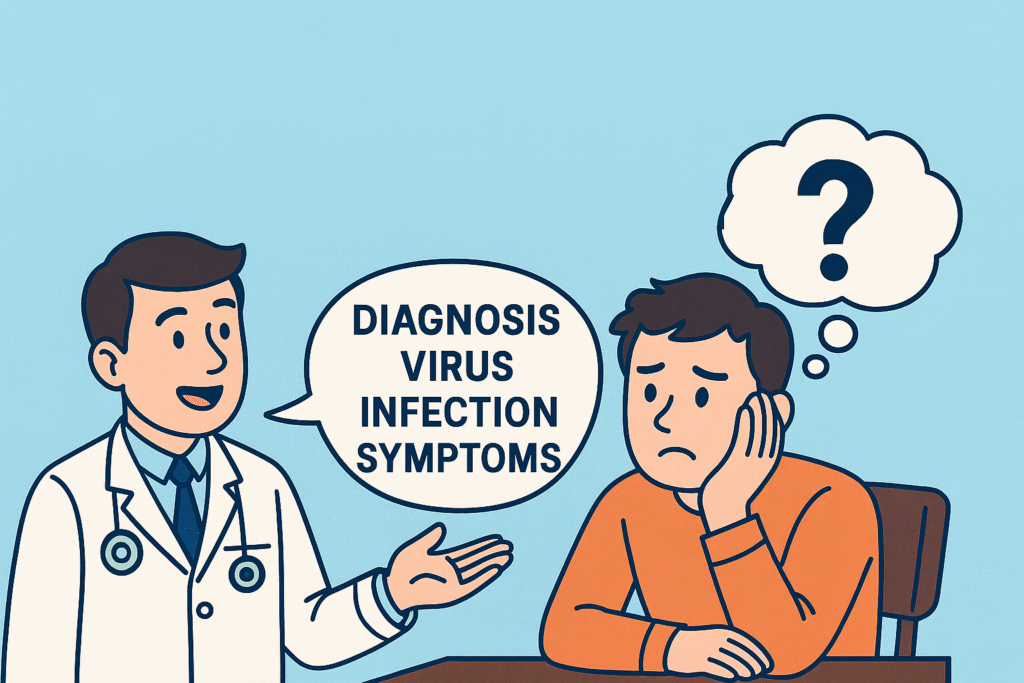
We all experience different health issues at some point in our lives. That’s why it’s essential to understand the common medical terms related to diseases and illnesses. Having a basic grasp of disease-related terminology not only helps you communicate better with healthcare professionals but also empowers you to make informed decisions about your own health.
In this blog, we break down key concepts in simple, easy-to-understand language to help you navigate medical information with confidence.
Let’s Break Down the Word’ DISEASE’!!!
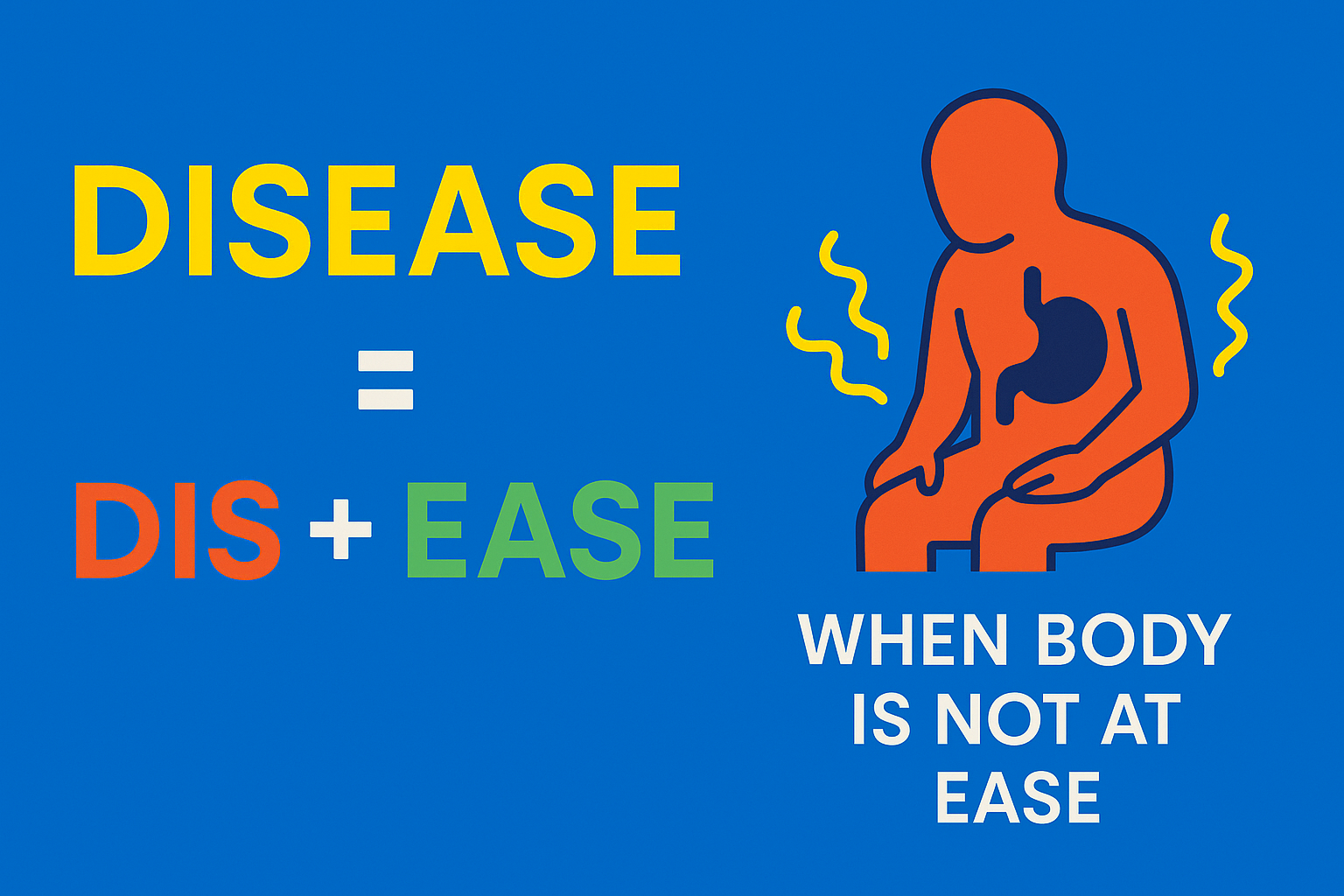
- The term “disease” comes from two words: DIS + EASE.
- This literally means “lack of ease.” When the body is not at ease, it becomes out of balance or enters an abnormal state in which it cannot function properly. This disturbed state of the body is what we refer to as a disease.
Causes of Disease
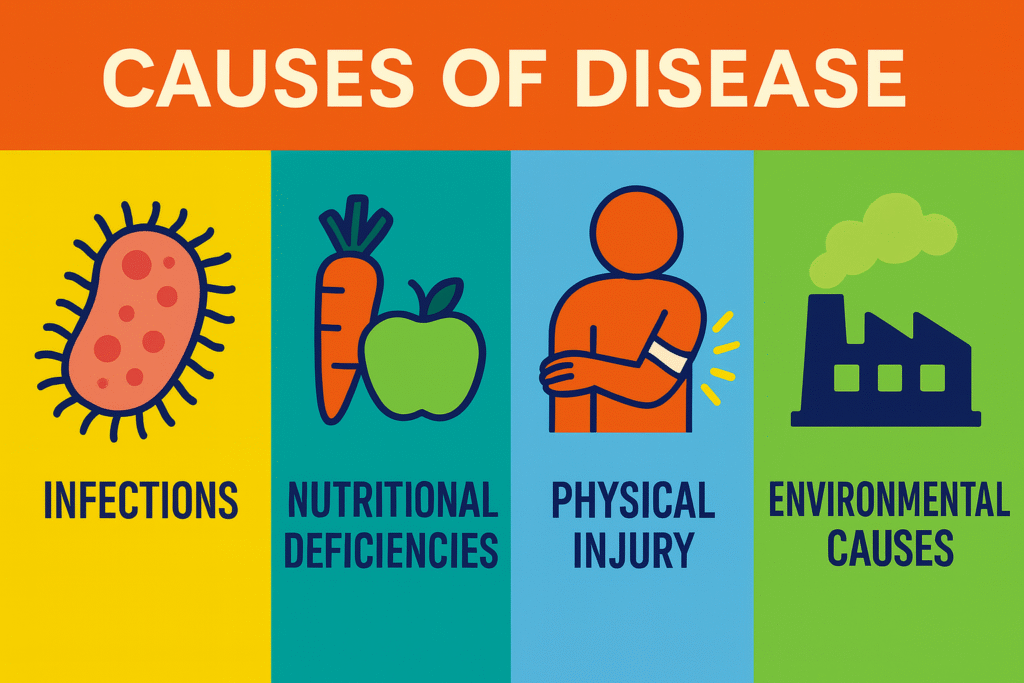
- Diseases often result from a combination of internal factors within the body and external environmental influences. These multiple contributing elements add to the complexity of many health conditions. Below is a list of common factors that can lead to disease.
1. Infections
- caused by Germs like Bacteria, Viruses and fungi.
- Examples: COVID-19 infection caused by the Coronavirus; common cold.
2. Nutritional deficiencies
- Lack of sufficient nutrients, like Vitamins, Minerals, etc., leading to health issues.
- Example: Anemia caused by a lack of iron in The Body, Vision problems due to Vitamin A deficiency
3. Physical Injury
- Harm to the body caused by an accident, a fall or blunt trauma.
- Example: Bone Fracture Caused by a fall.
4. Environmental causes
- Diseases caused by air pollution, water and food contamination, and exposure to harmful radiation.
- Example: Respiratory illness or breathing issues due to air pollution.
5. Genetic causes
- Diseases caused by abnormal genes or Chromosomes.
- Example: Certain cancers
Acute Vs Chronic Diseases
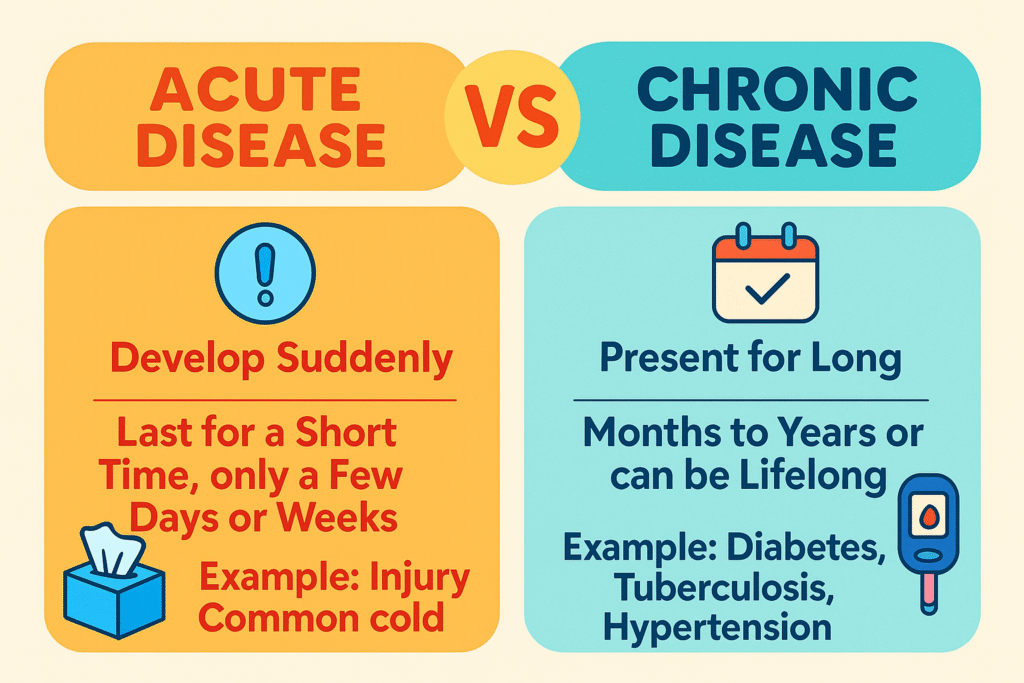
- Depending on how quickly a disease begins, it can be classified as acute or chronic.
- Acute diseases have a sudden onset and usually last for a short duration. They often resolve completely—for example, the common cold or injuries.
- Chronic diseases – develop gradually and may persist for weeks, months, or even a lifetime. Examples include diabetes, tuberculosis, and hypertension (high blood pressure).
Communicable Vs Noncommunicable Diseases
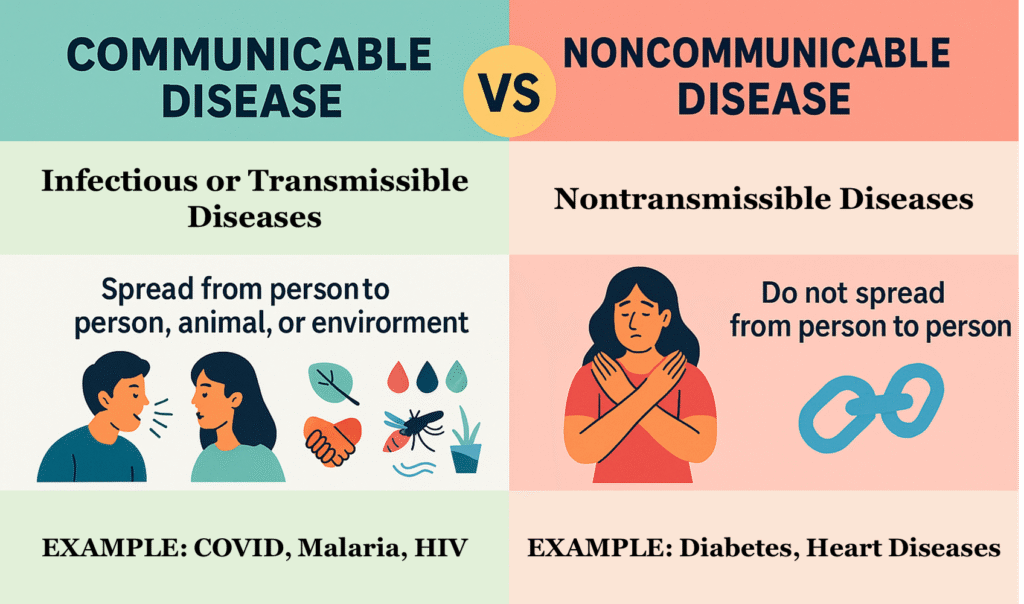
Communicable Disease
- Communicable (infectious) diseases are illnesses that can spread from one person to another, or through animals, insects, food, water, or the environment. Bacteria, viruses, fungi, or parasites usually cause them.
Modes of Transmission
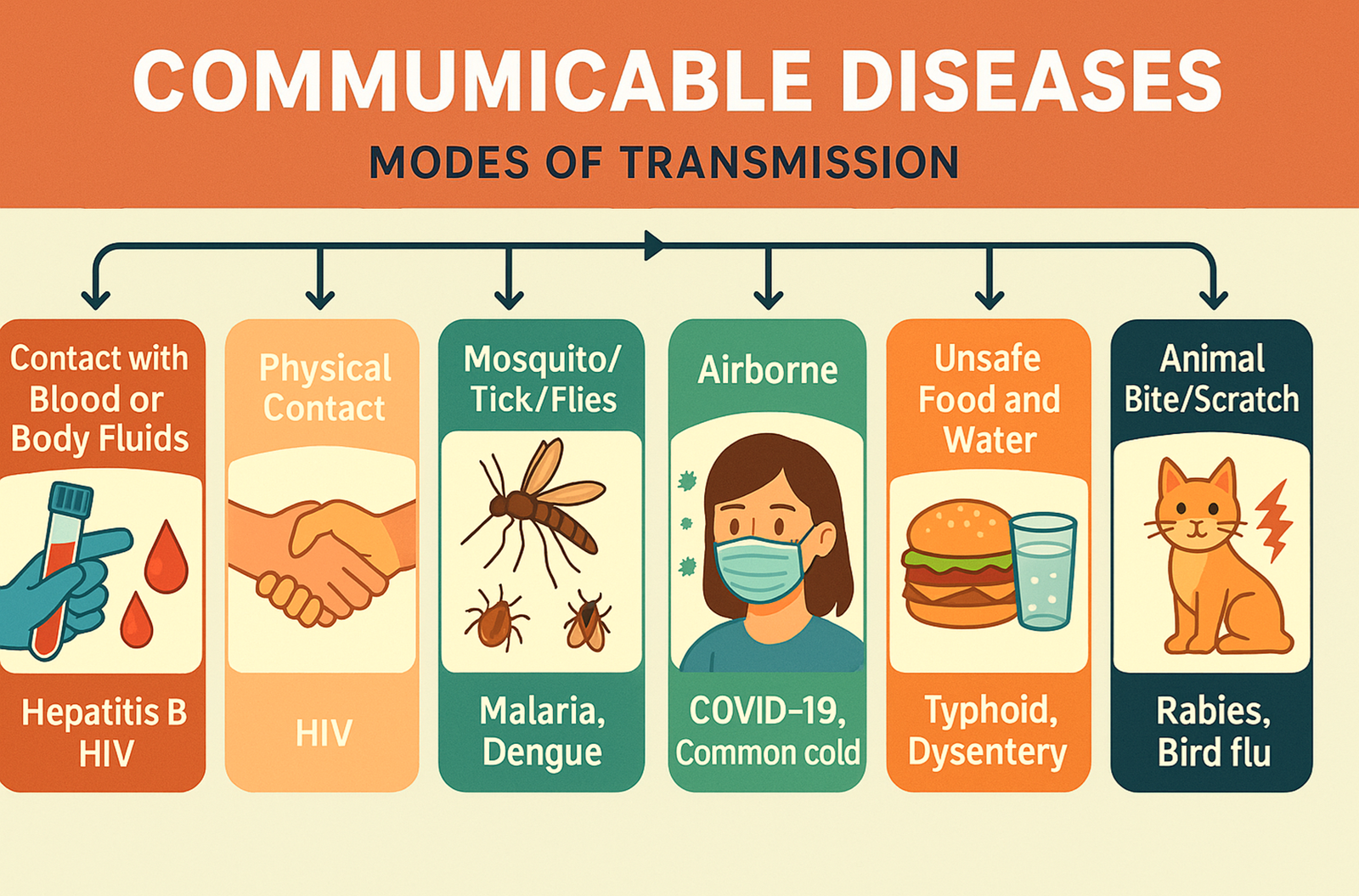
i). Contact with Blood or Body Fluids
- When infected blood or body fluids enter another person’s body.
- Examples: Hepatitis B, HIV.
iI). Direct Physical Contact
- Touching an infected person, such as hugging, caring for them, or during sexual contact.
- Examples: HIV, skin infections.
III). Vector-Borne Transmission
- Spread by insects such as mosquitoes, ticks, or flies that carry germs from one host to another.
- Examples: Malaria, Dengue, Chikungunya.
IV). Airborne Transmission
- Germs spread through tiny droplets in the air when an infected person coughs, sneezes, or talks.
- Examples: COVID-19, Common cold, Tuberculosis, Influenza.
V). Food and Water Contamination
- Eating contaminated food or drinking unsafe water containing harmful microorganisms.
- Examples: Typhoid, Dysentery, Cholera.
VI). Animal-to-Human Transmission
- Diseases spread from infected animals to humans through bites, scratches, or contact with animal waste.
- Examples: Rabies, Bird flu.
Noncommunicable Diseases (NCDs)
Non-communicable diseases are non-infectious and cannot be transmitted from one person to another.
They typically develop slowly and can persist for a long time. NCDS are one of the leading causes of death worldwide, affecting people of all ages. They place a significant burden on families and healthcare systems.
Causes of NCDs
- 🧬👨👩👧👦 Genetic factors (family history)
- 🍟🚶♂️Lifestyle habits (unhealthy diet, lack of exercise, smoking, alcohol use)
- 🌫️😓Environmental factors (air pollution, stress, exposure to harmful chemicals)
Common Types of NCDs
- 🫀Heart diseases – such as heart attacks and stroke
- 🎗️ cancers
- 🫁chronic respiratory diseases – such as chronic obstructive pulmonary disease (COPD) and asthma
- 🍬diabetes
Signs Vs symptoms
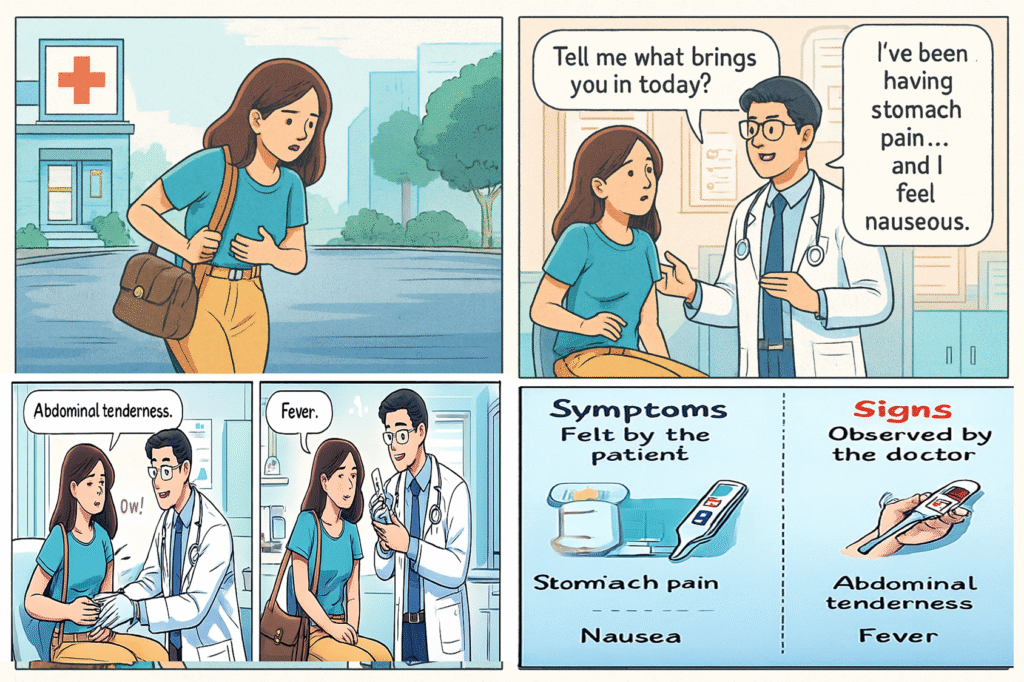
Sign
- A sign is something a doctor or nurse can observe, measure, or detect during an examination.
- It is objective — meaning it can be seen, measured, or verified by others.
Examples
- 🌡️Fever – measurable high temperature
- 🔴Rash – visible skin change
- ✋Tenderness – pain felt on touch during examination
- 🦶Swelling – noticeable enlargement
- 📊High blood pressure – can be measured
- 💓Rapid heart rate – can be counted
Symptom
- A symptom is something the patient reports.
- It is subjective — meaning it cannot be directly measured or observed by others.
Examples
- 🤕 Headache – only the person feels it
- 😩Fatigue – patient reports feeling tired
- 🤢 Nausea – feeling of vomiting
- 😖 Pain – only the patient can describe its severity
- 😵💫Dizziness – patient experiences an imbalance or spinning sensation
Other Disease-Related Terms
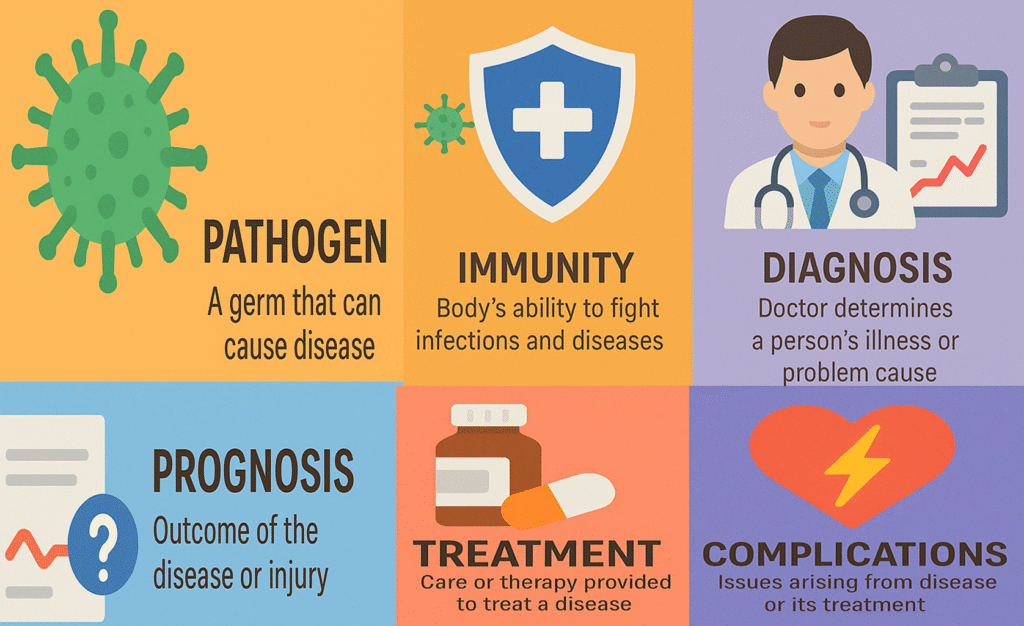
Pathogen
- A pathogen is a germ that can cause disease.
- It includes viruses, bacteria, fungi, and parasites.
Immunity
- Immunity is the body’s ability to fight infections and diseases.
- Strong immunity helps prevent infections or reduces their severity.
Diagnosis
- A diagnosis is like solving a puzzle, where doctors identify a disease by carefully examining symptoms, signs, test results, and medical exam findings.
Prognosis
- Prognosis refers to the expected outcome of a disease, helping us understand whether the condition is likely to:
- 📈 Improve
- ➖ Stay the same
- ⚠️ Lead to complications
- ⏱️ Recover quickly
- 🩺 Require long-term care
Treatment
- Treatment refers to the care or therapy given to manage or cure a disease.
- The goal is to reduce symptoms, treat the root cause, and improve quality of life.
Complications
- Complications are new problems that occur as a result of a disease or its treatment.
- They can make an illness more serious or more challenging to treat.
- Examples:
- Kidney damage from uncontrolled diabetes
- Infection after surgery
Common Medical Terms for Body Parts
- 🦴Arthr/o – Joint
- ❤️Cardi/o – Heart
- 💀Cranio – Skull
- 🧫Cyt/o – Cell
- 🧍♂️Derm/a – Skin
- 🍽️Gastr/o – Stomach
- 🟥Hepat/i – Liver
- 🟫Hist/o – Tissue
- 💪 My/o – Muscle
- 🫘 Nephr/o – Kidney
- 🧠 Neur/o – Nerve
- 🦴Osteo – Bone
- 🫁Pulmon/o – Lung
- 👃 Rhino – Nose
- 🫁🫀Thorac/o – Chest
Common Medical Prefixes
| Prefix | Meaning | Example | Meaning of Example |
|---|---|---|---|
| a-, an- 🚫 | without, lacking | Anemia | lack of healthy red blood cells |
| anti- 🛡️ | against | Antibiotic | medicine against bacteria |
| brady- 🐢 | slow | Bradycardia | slow heart rate |
| tachy- ⚡ | fast | Tachcardia | fast Heart rate |
| dys- ⚠️ | difficult, abnormal, painful | Dysfunction | abnormal function |
| hyper- 🔼 | above, excessive | Hypertension | high blood pressure |
| hypo- 🔽 | below, deficient | Hypoglycemia | low blood glucose |
| inter- 🔗 | between | Intercostal | between ribs |
| intra- 🔍 | within, inside | Intravenous | inside the vein |
| neo- 🆕 | new | Neoplasm | new/abnormal growth |
| peri- 🔄 | around | Pericardium | around the heart |
| post- ⏭️ | after | Postoperative | after surgery |
| pre- ⏮️ | before | Prenatal | before birth |
| sub- ⬇️ | under, below | Subcutaneous | under the skin |
| trans- ➡️ | across, through | Transdermal | through the skin |
Common Medical Suffixes
| Suffix | Meaning | Example | Meaning of Example |
|---|---|---|---|
| -algia 🤕 | pain | Neuralgia | nerve pain |
| -itis 🔥 | inflammation | Arthritis | inflammation of joints |
| -emia 🩸 | blood condition | Anemia | low red blood cells |
| -logy 📘 | study of | Cardiology | study of the heart |
| -lysis 💥 | breakdown/destruction | Hemolysis | breakdown of red blood cells |
| -oma 🎗️ | tumor or mass | Lymphoma | lymphatic cancer |
| -opathy 🧩 | disease of | Neuropathy | nerve disease |
| -penia 📉 | deficiency | Leukopenia | low white blood cells |
| -phobia 😨 | fear | Claustrophobia | fear of confined spaces |
| -plasty 🛠️ | surgical repair | Angioplasty | repair of blood vessels |
| -rrhea 💧 | flow/discharge | Diarrhea | excessive discharge of stools |
| -scopy 🔎 | visual exam | Endoscopy | viewing inside the body |
| -stomy 🕳️ | opening | Colostomy | opening in the colon |
| -therapy 💊 | treatment | Chemotherapy | drug treatment for cancer |
| -ectomy ✂️ | surgical removal | Appendectomy | removal of appendix |
Key Takeaways
📌Understanding basic medical terms helps you take charge of your health, communicate better with doctors, and make informed decisions. With the right knowledge, you become an active partner in your own healthcare journey.
Further Reading
- Cleveland Clinic. (2025, May 16). Infectious diseases: Types, causes & treatments. https://my.clevelandclinic.org/health/diseases/17724-infectious-diseases
- Budreviciute, A., Damiati, S., Khdr Sabir, D., Onder, K., Schuller-Goetzburg, P., Plakys, G., Katileviciute, A., Khoja, S., & Kodzius, R. (2020, November 26). Management and prevention strategies for non-communicable diseases (NCDs) and their risk factors. Frontiers in Public Health, 8, 574111. https://doi.org/10.3389/fpubh.2020.574111.
- National Institutes of Health. (2025, March 14). Disease Prevention Toolkit. https://www.nih.gov/health-information/your-healthiest-self-wellness-toolkits/disease-prevention-toolkit.
- Centers for Disease Control and Prevention. (2024, May 15). Preventing chronic diseases: What you can do now. https://www.cdc.gov/chronic-disease/prevention/index.html.