
Table of Contents
Introduction
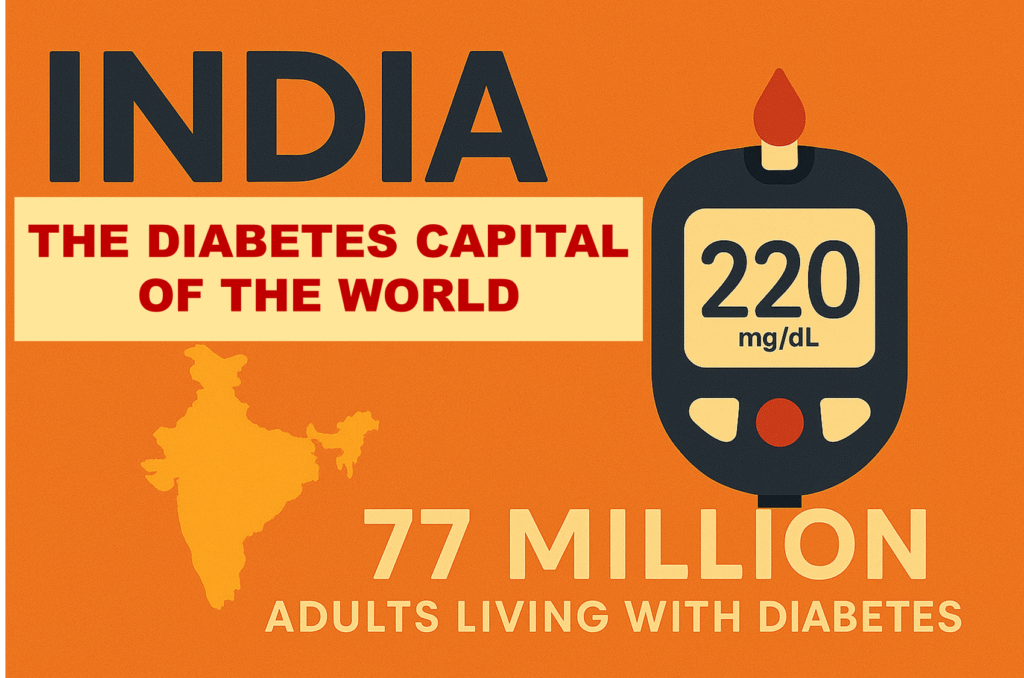
Poster Showing Rising Cases of Diabetes in India
Diabetes or diabetes mellitus is one of the fastest-growing health concerns worldwide, affecting people across all age groups and backgrounds.
In 2024, 589 million adults had diabetes worldwide, about 1 in 9, projected to rise to 853 million by 2050. Over 40% are unaware they have it, and 81% live in low- and middle-income countries.
India — often called the diabetes capital of the world — is home to nearly 77 million adults living with diabetes and an additional 25 million with prediabetes, placing them at high risk of developing the disease in the near future. Experts predict this number could rise to 134.2 million by 2045, highlighting an urgent need for awareness, early detection, and prevention.
Given the growing prevalence, it’s crucial to understand what diabetes really is and how it affects the body. To help make this complex topic easier to grasp, we’re launching a new “Diabetes Made Easy” blog series. This first post serves as a simple guide to the fundamentals, explaining how blood sugar is usually regulated, what happens when this balance is disrupted, and the different types of diabetes you should be aware of. Before we dive deeper into how diabetes develops and affects the body, here are the Top 5 key facts you should know.
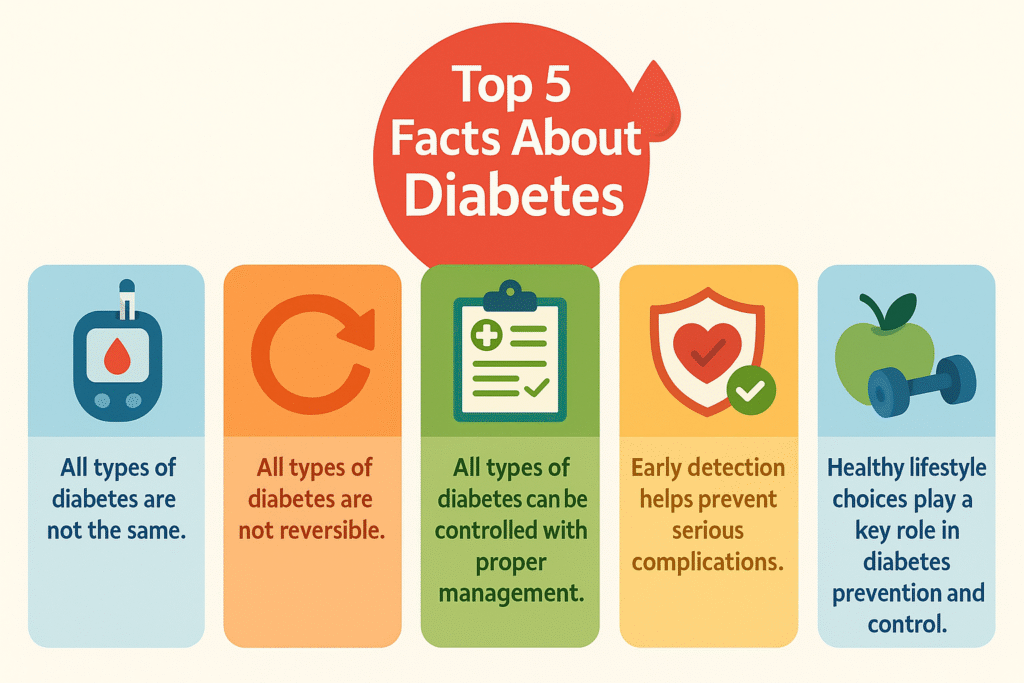
Visual Infographics Showing Top 5 Facts About Diabetes
What is Diabetes?
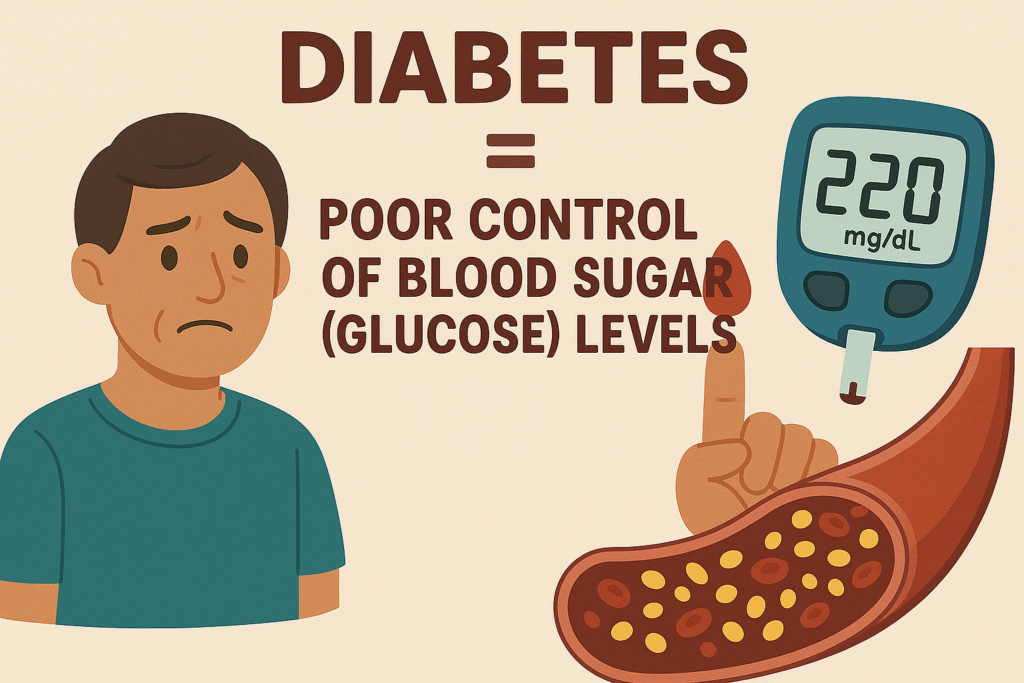
Visual Infographic Showing Simplified Definition of Diabetes
- Diabetes is a chronic condition in which the body cannot properly use or produce enough insulin, resulting in high levels of sugar (glucose) in the blood.
Main Hormones and Organs That Control Blood Sugar
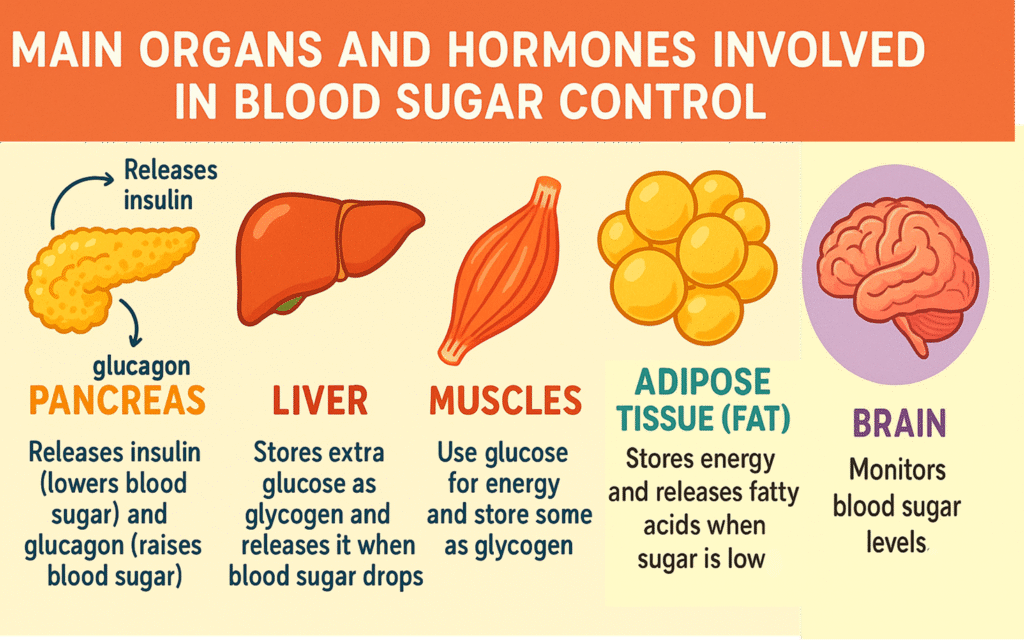
Visual Infographics Showing Key Hormones and Organs Regulating Blood Sugar Levels
- Sugar (Glucose ) gives our body energy. When we eat, carbohydrates and proteins break down into sugar (glucose). Our body maintains blood sugar (glucose) levels through the actions of key organs and hormones. Let’s explore their roles.
1. Pancreas
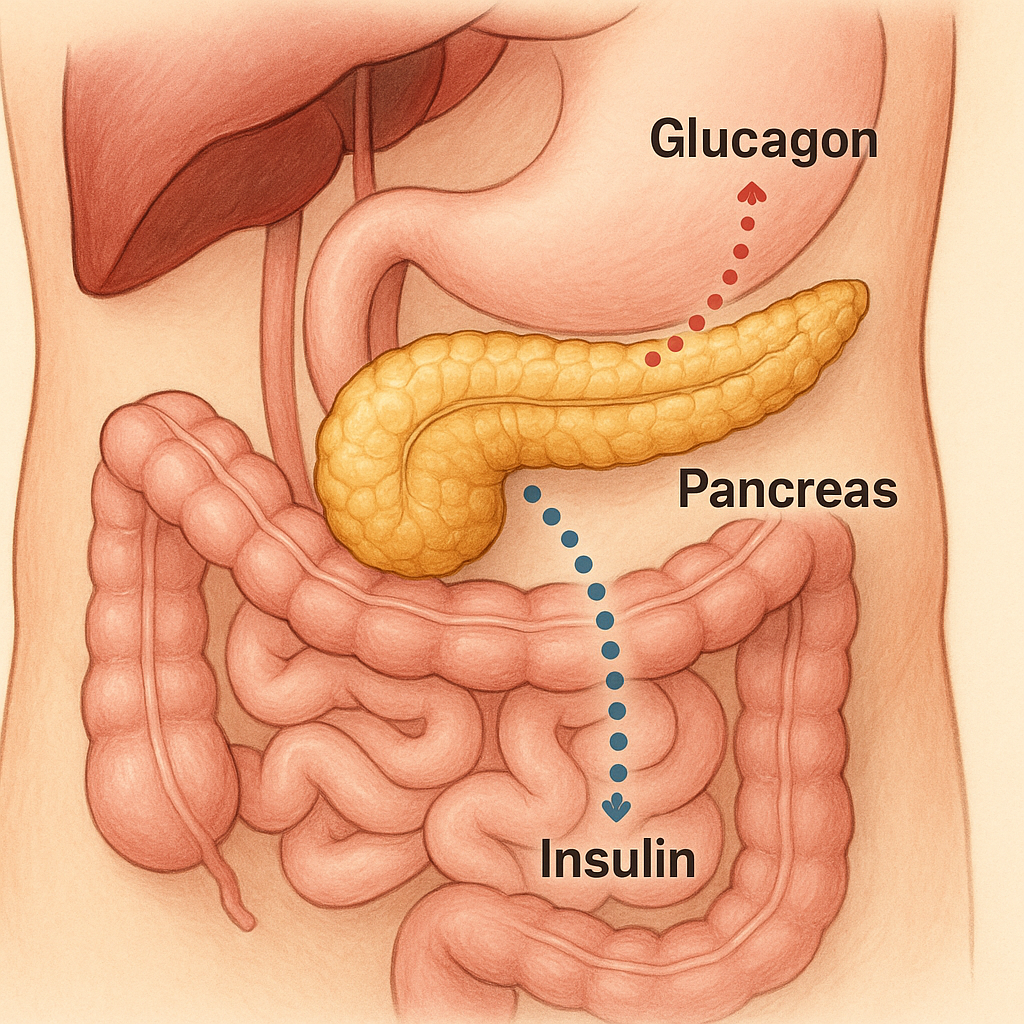
Picture Showing Pancreas and Main Hormones Regulating Blood Sugar Levels
- The pancreas is an abdominal organ that plays a crucial role in digestion and regulates blood sugar (glucose) levels. It produces two key hormones:
2. Liver
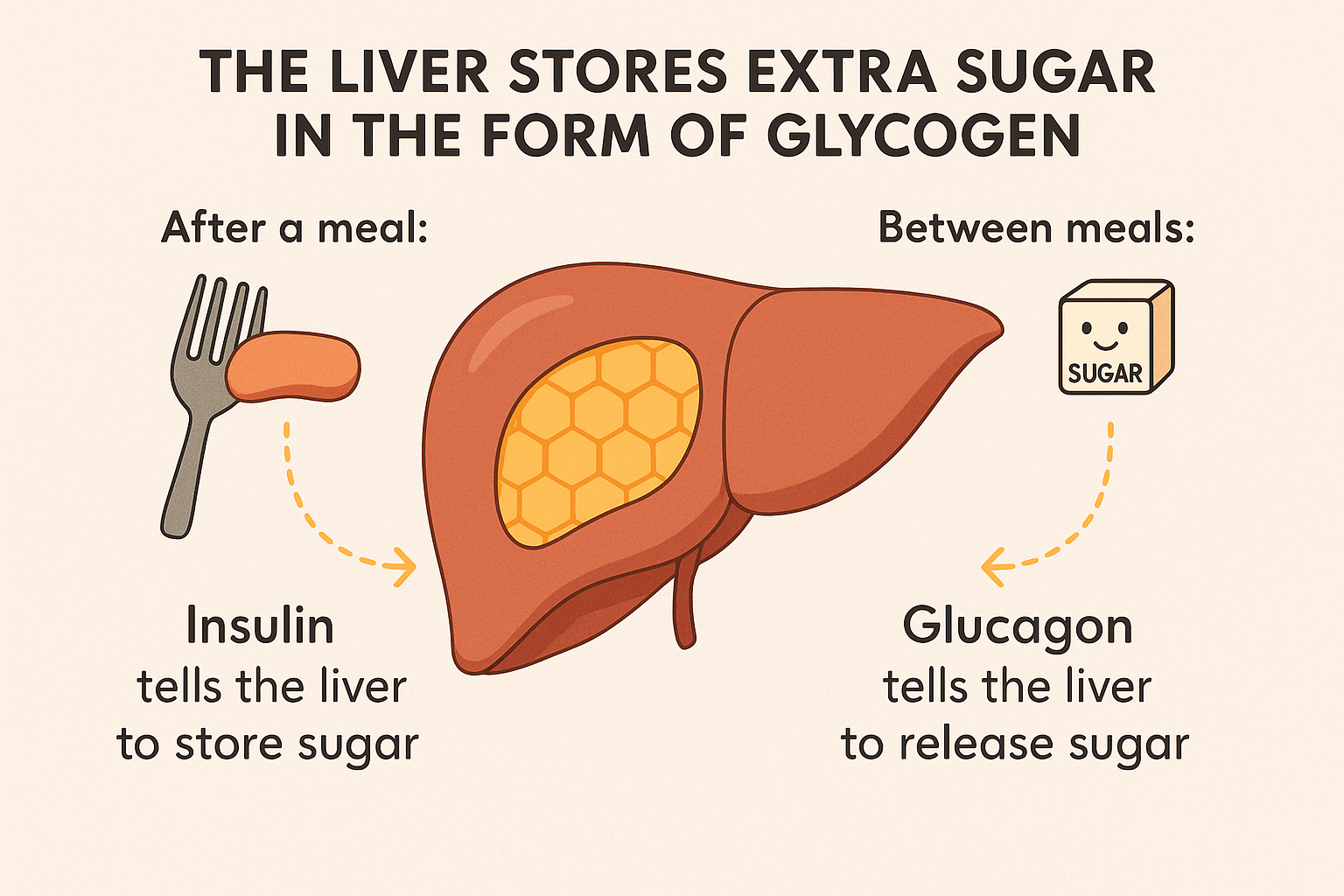
Picture Showing Role of Liver in Regulating Blood Sugar Levels
- The liver functions as a “sugar reservoir”—storing and releasing sugar (glucose) to regulate blood sugar levels.
- After a Meal (High Blood Sugar)
- Between Meals or During Fasting (Low Blood Sugar)
3. Muscles
- Insulin helps muscles to
- Use sugar (glucose) as a primary source of energy, particularly during exercise.
- Take in sugar (glucose) and store it as glycogen for later use.
4. Fat Tissue (Adipose Tissue)
- Insulin moves sugar (glucose) from the blood into fat cells.
- Fat cells store extra sugar (glucose) as fat.
- When blood sugar (glucose) levels drop, fat is broken down to provide energy.
5. Brain
- The brain monitors blood sugar levels.
- When blood sugar (glucose) levels drop too low, it sends signals to release sugar (glucose)- raising hormones, such as glucagon.
Blood Sugar Control – Normal vs Diabetes
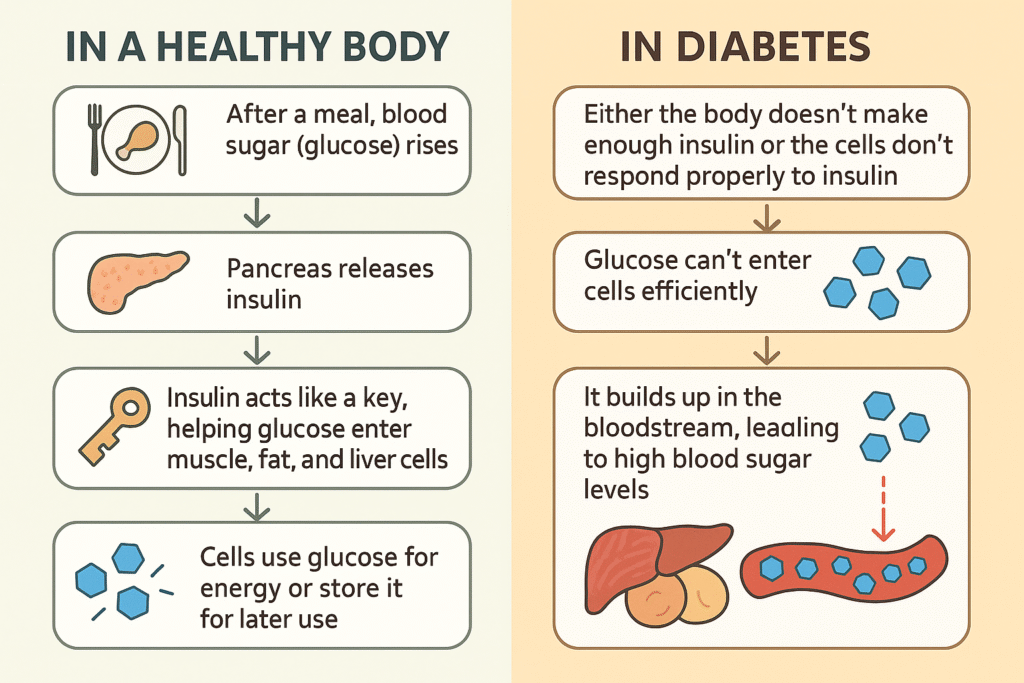
Picture Showing the Difference in Blood Sugar Levels Regulation in a Normal Person Vs Diabetes
- In healthy individuals, insulin helps transport sugar (glucose) from the bloodstream into muscle, fat, and liver cells, where it can be utilised for energy or stored for later use.
- In diabetes, this process gets disrupted because either the cells become resistant to insulin and don’t respond well, or the pancreas doesn’t make enough insulin. As a result, blood sugar (glucose) levels can become high because sugar (glucose) cannot enter the cells efficiently.
Type of diabetes
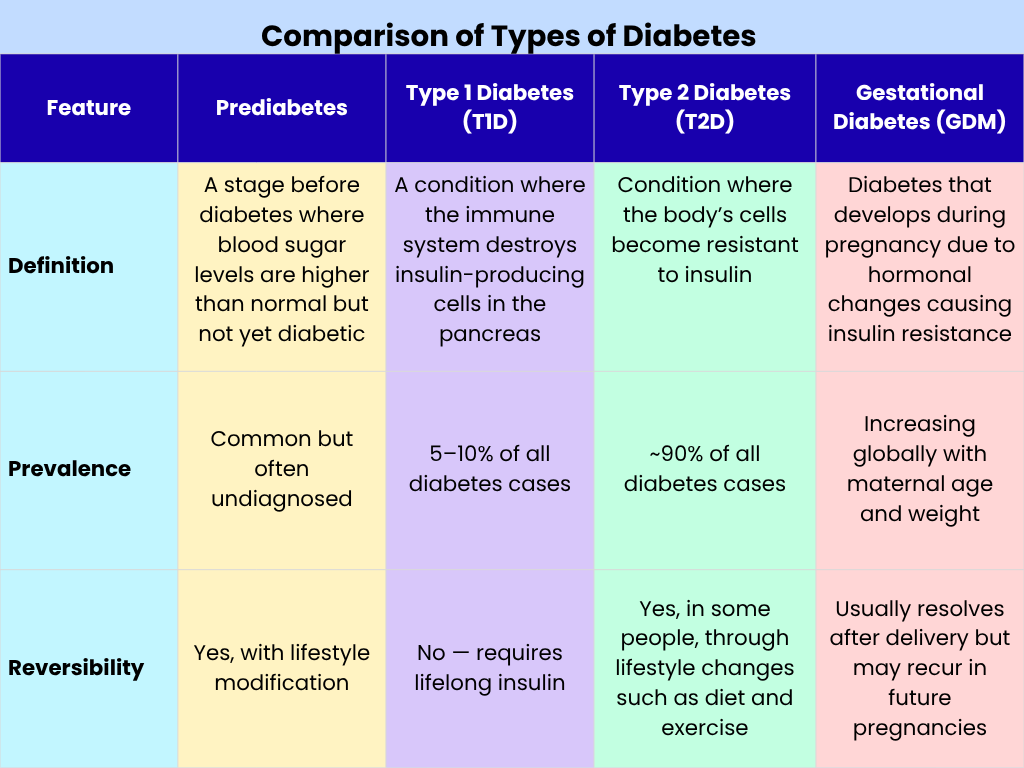
Prediabetes
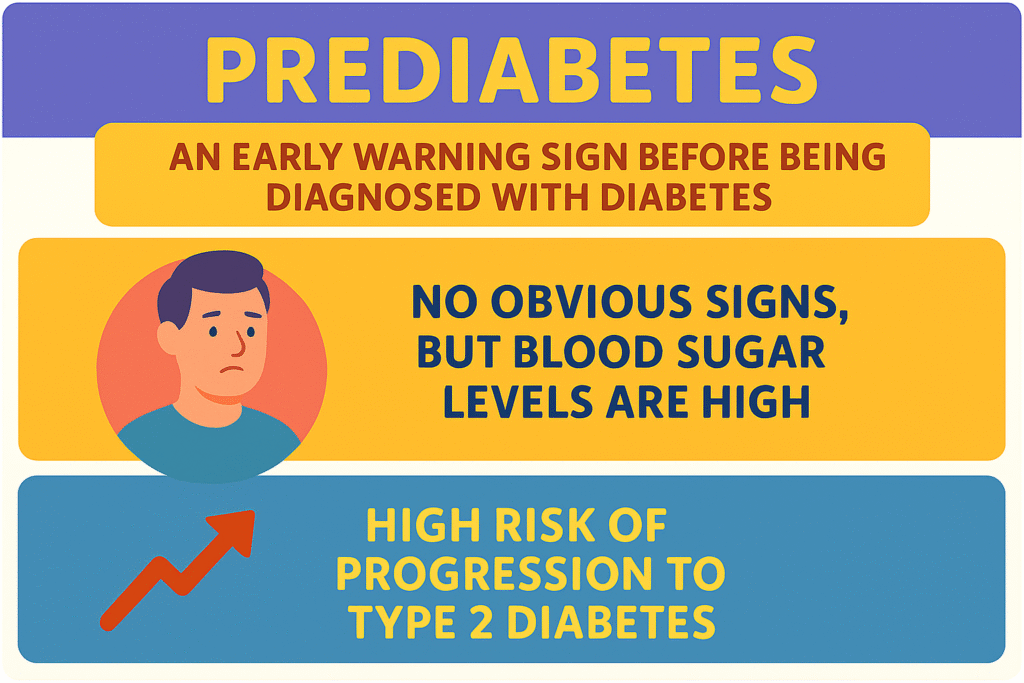
- Prediabetes is a critical stage before the onset of diabetes.
- In this condition, blood sugar levels are higher than usual but not yet high enough to be diagnosed as type 2 diabetes.
- Most people with prediabetes don’t experience any symptoms, so it often goes unnoticed. However, recognising and managing it early is vital — prediabetes increases the risk of developing type 2 diabetes, heart disease, and stroke.
- Regular health check-ups every 1–2 years can help monitor blood sugar and prevent progression to diabetes through early lifestyle changes.
Risk Factors
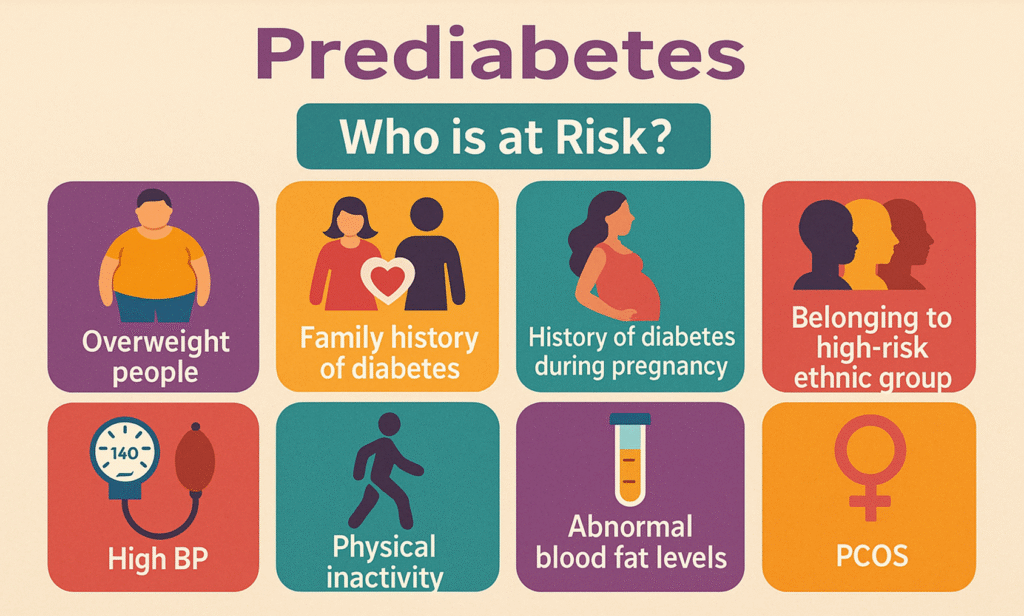
- 💪 Excess bodyweight or Obese
- 👨👩👧 People with a family history of diabetes
- 🤰 History of diabetes during pregnancy (Gestational diabetes)
- 🌍 High-risk Population or ethnic groups like African American, Latin American, Native American, or Asian/Pacific Islander
- 💓 History of High blood pressure (Hypertension)
- 🚶♀️ Lack of physical activity
- 🧈 Abnormal levels of blood lipid or fat levels (Dyslipidemia)
- 👩🦰 Women with hormonal disorder Polycystic Ovary Syndrome (PCOS)
Type 1 Diabetes (T1D)
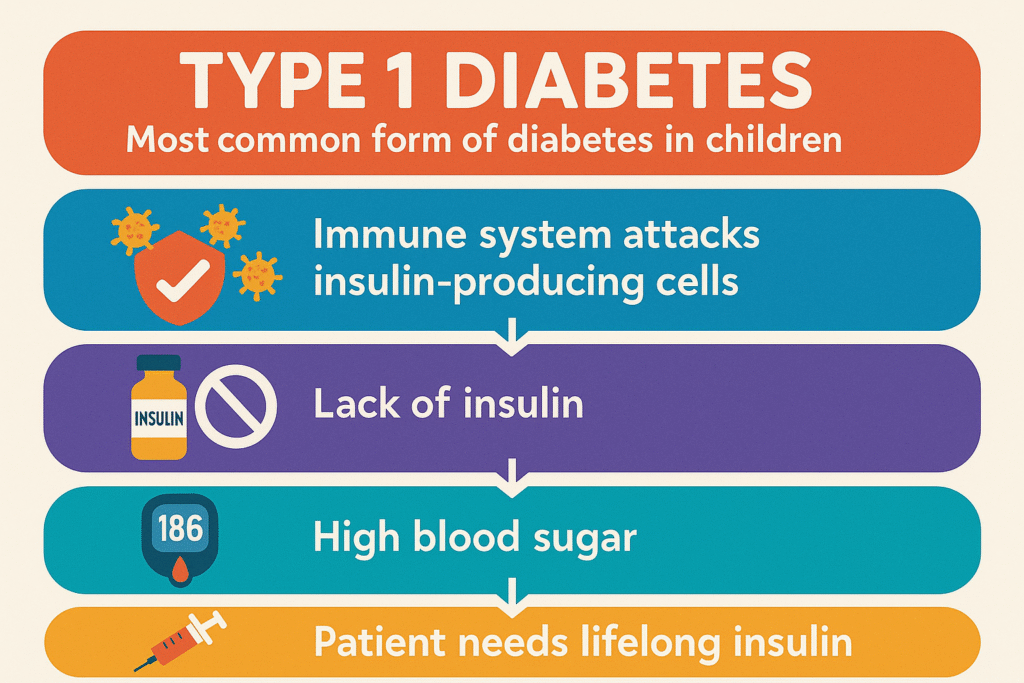
- Type 1 diabetes is a condition in which the immune system mistakenly attacks and destroys the insulin-producing cells in the pancreas, leading to a lack of insulin.
- It accounts for approximately 5%–10% of all diabetes cases.
- Type 1 diabetes is a lifelong condition that currently has no cure or reversal.
- People with this condition need to take insulin lifelong, along with diet and exercise.
- Without enough insulin, blood sugar levels can become dangerously high, and in some cases, it can lead to serious and even life-threatening conditions.
- Type 1 diabetes is one of the most common chronic diseases in young patients, mainly diagnosed in children and adolescents.
- There are two common periods in childhood when diagnoses tend to peak: between the ages of 4 and 7, and again between the ages of 10 and 14.
- When it begins in childhood, it often exhibits more severe symptoms.
Risk Factors
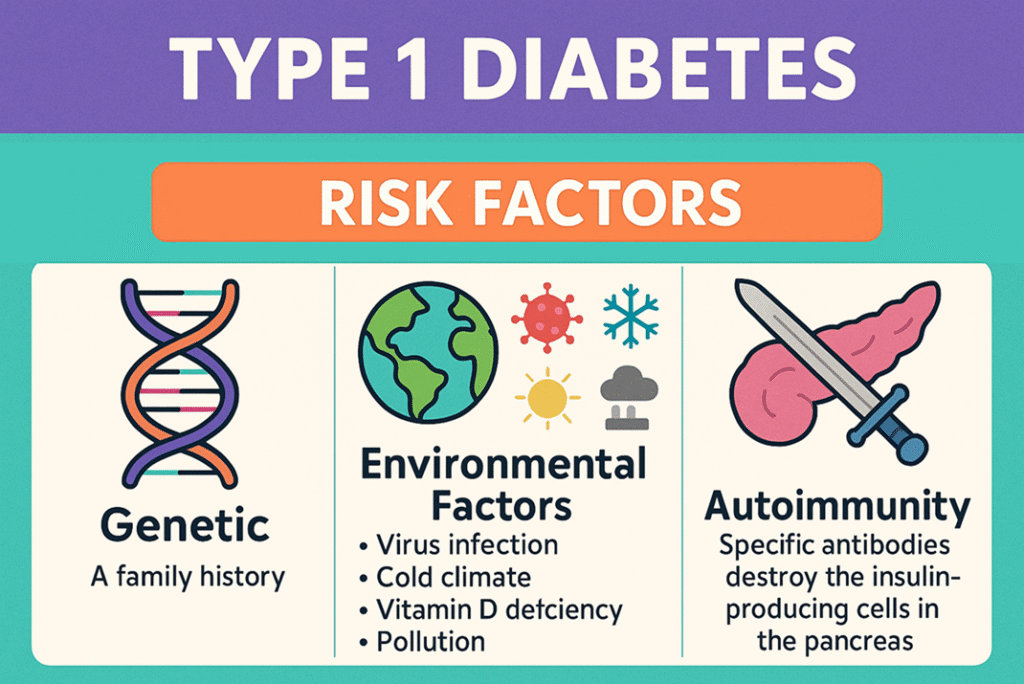
- 🧬Genetic – The risk of developing type 1 diabetes is considerably higher if there is a family history of the condition or a close relative with type 1 diabetes. This link tends to be stronger in individuals who develop type 1 diabetes during their youth compared to those who develop it as adults.
- 🌍 Environmental Risk Factors-In people with a genetic risk, some viruses or environmental factors can trigger the immune system to attack the pancreas. Research results indicate that a higher incidence of type 1 diabetes is associated with vitamin D deficiency, a colder climate, and environmental pollution.
- ⚔️Autoimmunity: In type 1 diabetes, the body produces specific antibodies that target and destroy the insulin-producing cells in the pancreas.
Type 2 Diabetes (T2D)
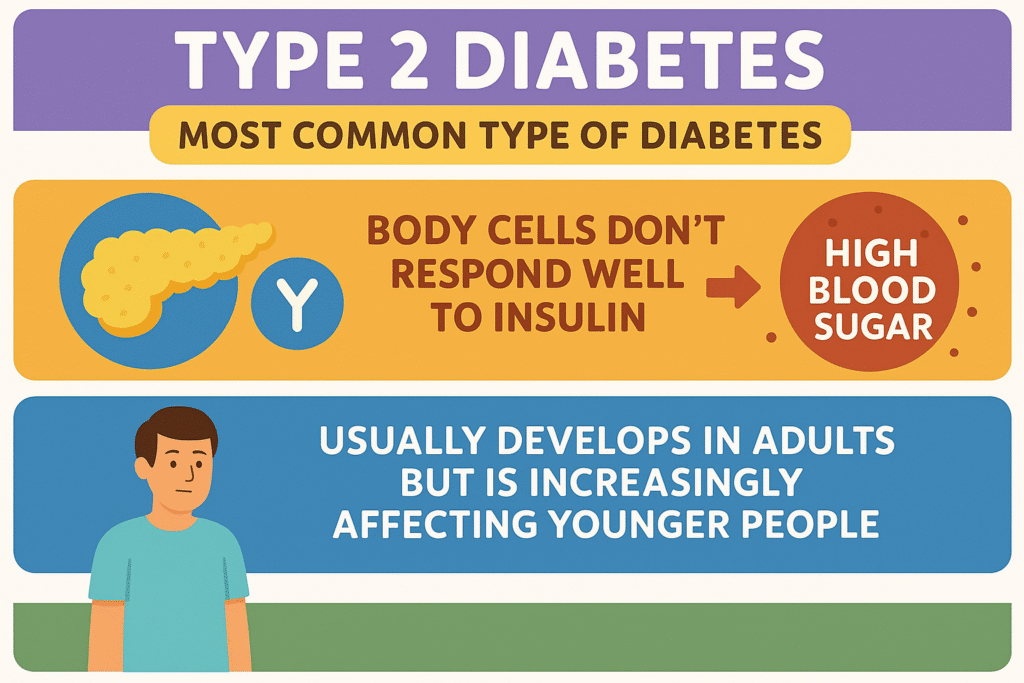
- In type 2 diabetes, the body’s cells do not respond well to insulin, a condition known as insulin resistance.
- It is the most common form of diabetes, accounting for about 90% of all cases.
- Type 2 Diabetes is often found in people over 45 years old.
- However, it’s becoming more common in children, teenagers, and even young adults because of increasing obesity rates, lack of physical activity, and diets high in energy.
- Type 2 diabetes can be reversed through weight loss, a healthy diet, and exercise — but only in some individuals and if these changes are sustained.
✅Prediabetes and Type 2 Diabetes share the same risk factors, because prediabetes is essentially an early warning stage before full Type 2 diabetes develops.
Gestational Diabetes (GDM)
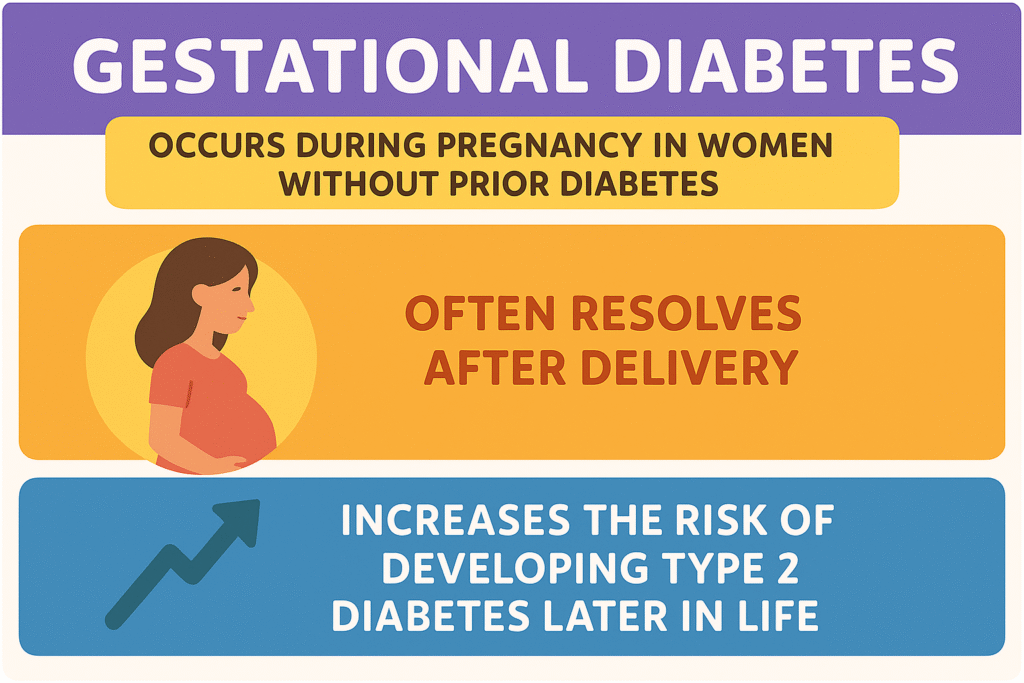
- Gestational diabetes is a condition that occurs during pregnancy, marked by a sudden rise in blood sugar levels in women who didn’t have diabetes before pregnancy.
- Hormonal changes in pregnancy make the body less responsive to insulin (insulin resistance).
- While it’s possible to develop gestational diabetes at any point during pregnancy, it usually occurs between weeks 24 and 28 of pregnancy.
- Usually resolves after delivery, but may recur in future pregnancies.
- Gestational diabetes increases the mother’s risk of developing type 2 diabetes later in life.
- Additionally, we’re seeing more cases of gestational diabetes around the world, which seems to be linked to factors like increased maternal weight gain, older maternal age, and less physical activity.
Risk Factors
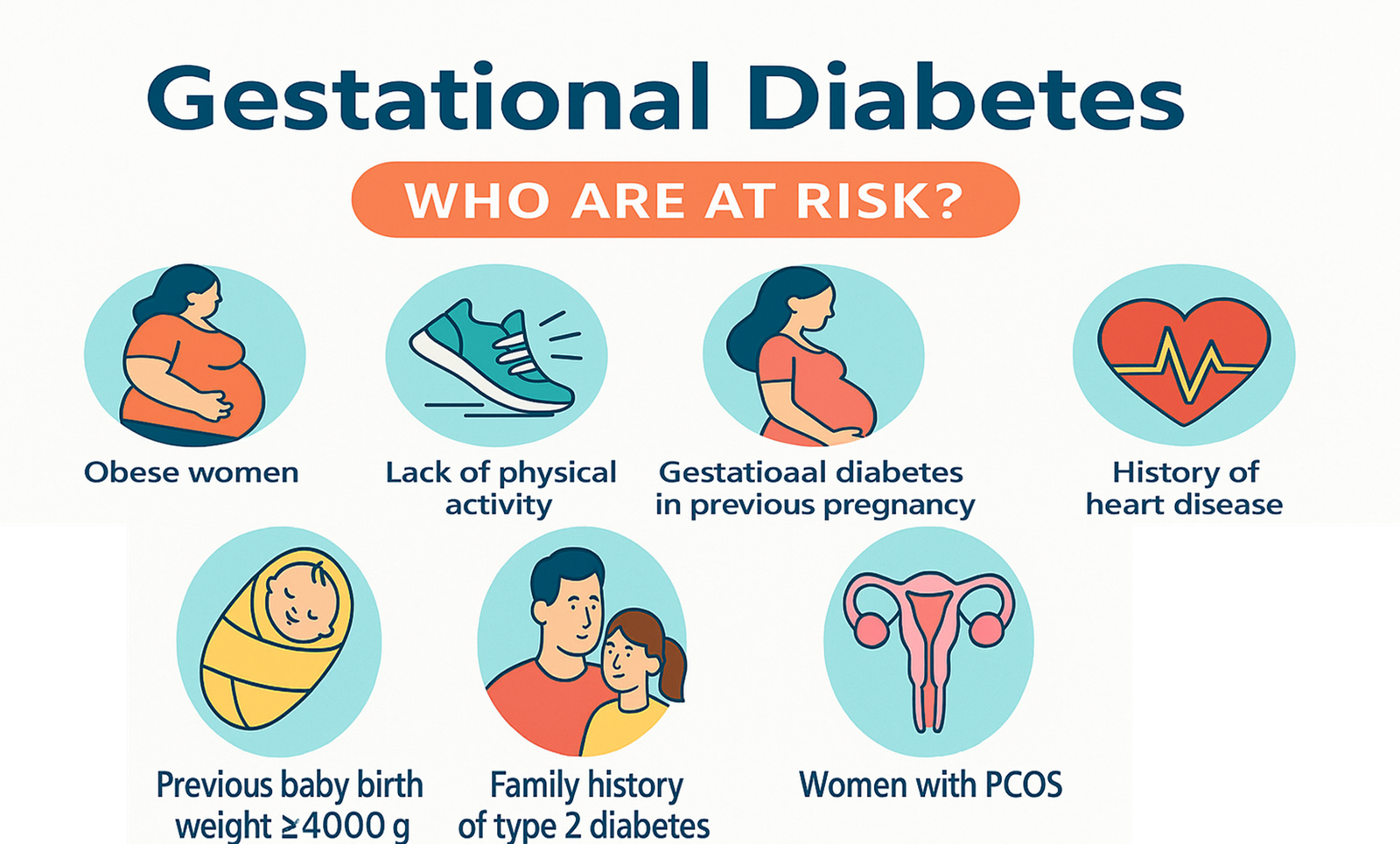
- ⚖️ Overweight or obese women
- 🏃♀️ Lack of physical activity
- 🤰 Women with a history of any of these:
- Gestational diabetes in a previous pregnancy
- Given birth to a baby with a birth weight ≥ 4000 g
- Heart disease
- 👨👩👧 Family history of type 2 diabetes
- 👩🦰 Women with hormonal disorder polycystic ovary syndrome (PCOS)
Signs and Symptoms of Diabetes
Classical Symptoms (3 P’s)
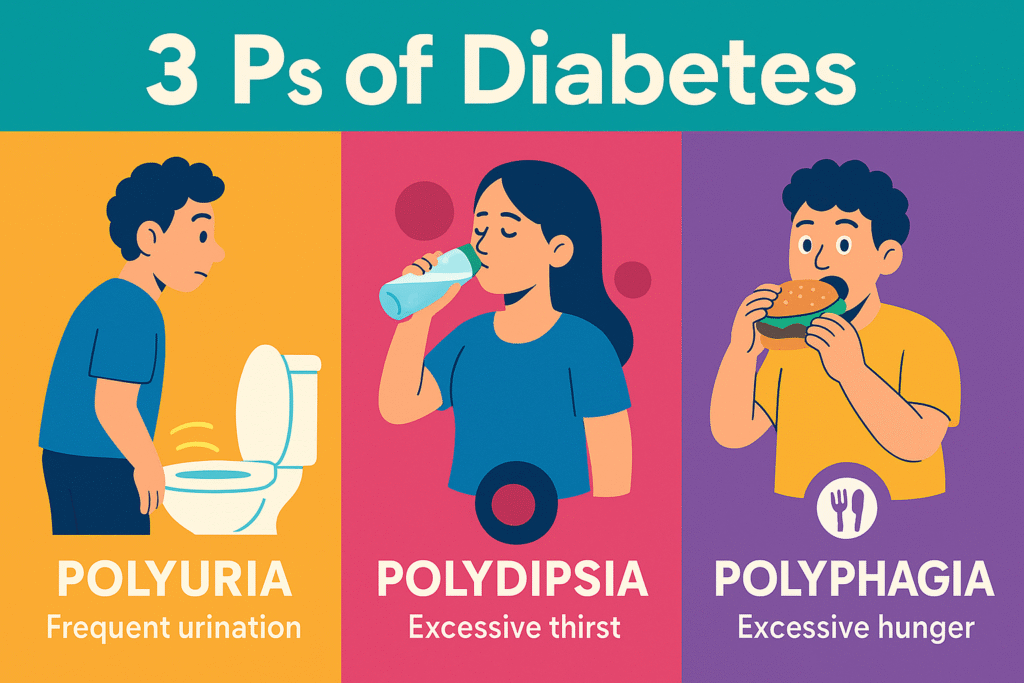
- Polyuria – Frequent urination due to high blood sugar (glucose) loss into urine.
- Polydipsia – Excessive thirst caused by dehydration from frequent urination.
- Polyphagia – Increased hunger because the body’s cells can’t use sugar (glucose) effectively for energy.
Other Common Symptoms
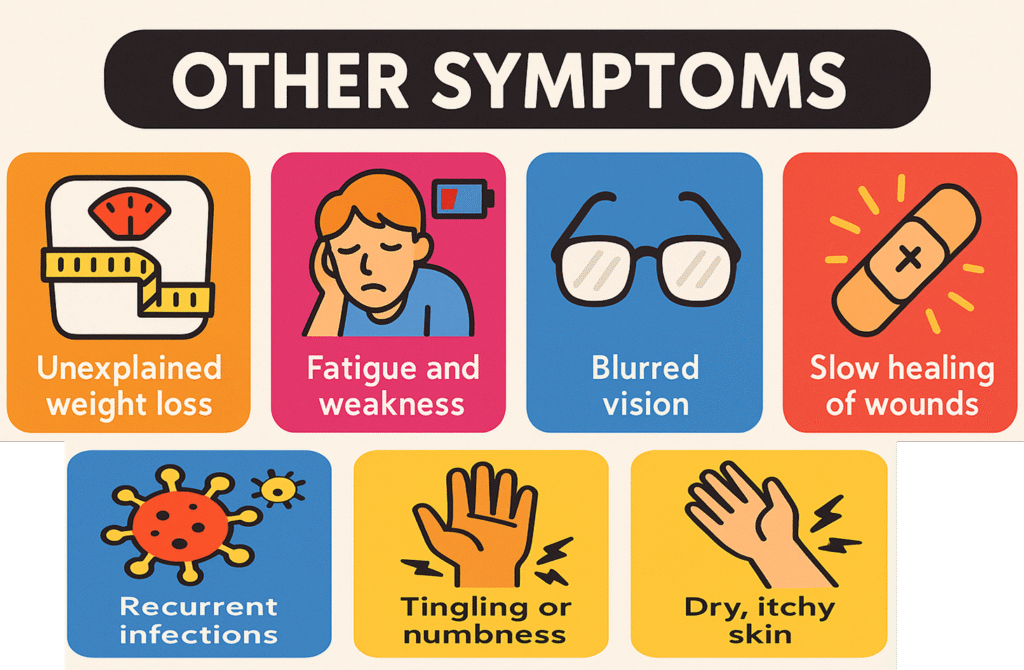
- Unexplained weight loss – Despite eating more, especially in Type 1 diabetes.
- Fatigue and weakness – Due to cells not getting enough sugar (glucose) for energy.
- Blurred vision – High sugar (glucose) levels cause fluid shifts in the lens of the eye.
- Slow healing of wounds – High blood sugar (glucose) impairs circulation and immune function.
- Recurrent infections – Especially skin, gum, urinary tract, and vaginal infections.
- Tingling or numbness – In hands or feet (Due to Nerve Damage).
- Dry, itchy skin – From dehydration and poor circulation.
🔑 Key Points
- Diabetes – A lifelong condition where the body can’t properly use or produce insulin, leading to high blood sugar.
- India is often referred to as the Diabetes Capital of the World.
- Insulin and glucagon work together to maintain balanced blood sugar levels.
- Liver, muscles, fat tissue, and brain all play key roles in regulating blood sugar.
- Prediabetes – A warning stage before the onset of diabetes.
- Type 1 and Type 2 diabetes are the two main types of diabetes
- Type 1 Diabetes – An autoimmune disease, most common in children; cannot be reversed and requires lifelong insulin.
- Type 2 Diabetes – Linked to insulin resistance and lifestyle factors; common in adults; can often be prevented or even reversed with healthy lifestyle changes.
- Gestational Diabetes – Develops during pregnancy and increases the mother’s risk of developing Type 2 diabetes later in life.
- Classic Symptoms: The 3 P’s — Polyuria (frequent urination), Polydipsia (excessive thirst), Polyphagia (increased hunger) — along with fatigue, blurred vision, infections, and slow-healing wounds.
In Summary
While diabetes can be complex, learning how it develops is a significant first step toward managing and preventing it. Staying aware early on, getting regular check-ups, maintaining a balanced diet, staying active, and keeping a healthy weight can make a significant positive difference in your health.
Further Reading
- International Diabetes Federation. (2025). Diabetes facts and figures. https://idf.org/about-diabetes/diabetes-facts-figures/
- World Health Organization. (2025, October 26). Diabetes in India. https://www.who.int/india/diabetes World Health Organization
- Nakrani, M. N., Wineland, R. H., & Anjum, F. (2023, July 17). Physiology, glucose metabolism. In StatPearls [Internet]. StatPearls Publishing. https://www.ncbi.nlm.nih.gov/books/NBK560599/ NCBI
- Alvarez, S., Coffey, R., Mathias, P. M., & Algotar, A. M. (2023, July 17). Prediabetes. In StatPearls [Internet]. StatPearls Publishing. https://www.ncbi.nlm.nih.gov/books/NBK459332/ NCBI
- Mobasseri, M., Shirmohammadi, M., Amiri, T., Vahed, N., Hosseini Fard, H., & Ghojazadeh, M. (2020). Prevalence and incidence of type 1 diabetes in the world: A systematic review and meta-analysis. Health Promotion Perspectives, 10(2), 98-115. https://doi.org/10.34172/hpp.2020.18 https://pmc.ncbi.nlm.nih.gov/articles/PMC7146037/
- Zorena, K., Michalska, M., Kurpas, M., Jaskulak, M., Murawska, A., & Rostami, S. (2022). Environmental factors and the risk of developing type 1 diabetes – old disease and new data. Biology (Basel), 11(4), 608. https://doi.org/10.3390/biology11040608
- Nakshine, V. S., & Jogdand, S. D. (2023, October 23). A comprehensive review of gestational diabetes mellitus: Impacts on maternal health, fetal development, childhood outcomes, and long-term treatment strategies. Cureus, 15(10), e47500. https://doi.org/10.7759/cureus.47500 & https://www.ncbi.nlm.nih.gov/pmc/articles/PMC10663705/
- Lucier, J., & Mathias, P. M. (2024, October 5). Type 1 diabetes. In StatPearls [Internet]. StatPearls Publishing. https://www.ncbi.nlm.nih.gov/books/NBK507713/ NCBI
- Goyal, R., Singhal, M., & Jialal, I. (2023, June 23). Type 2 diabetes. In StatPearls [Internet]. StatPearls Publishing. https://www.ncbi.nlm.nih.gov/books/NBK513253/ NCBI