
Table of Contents
Introduction
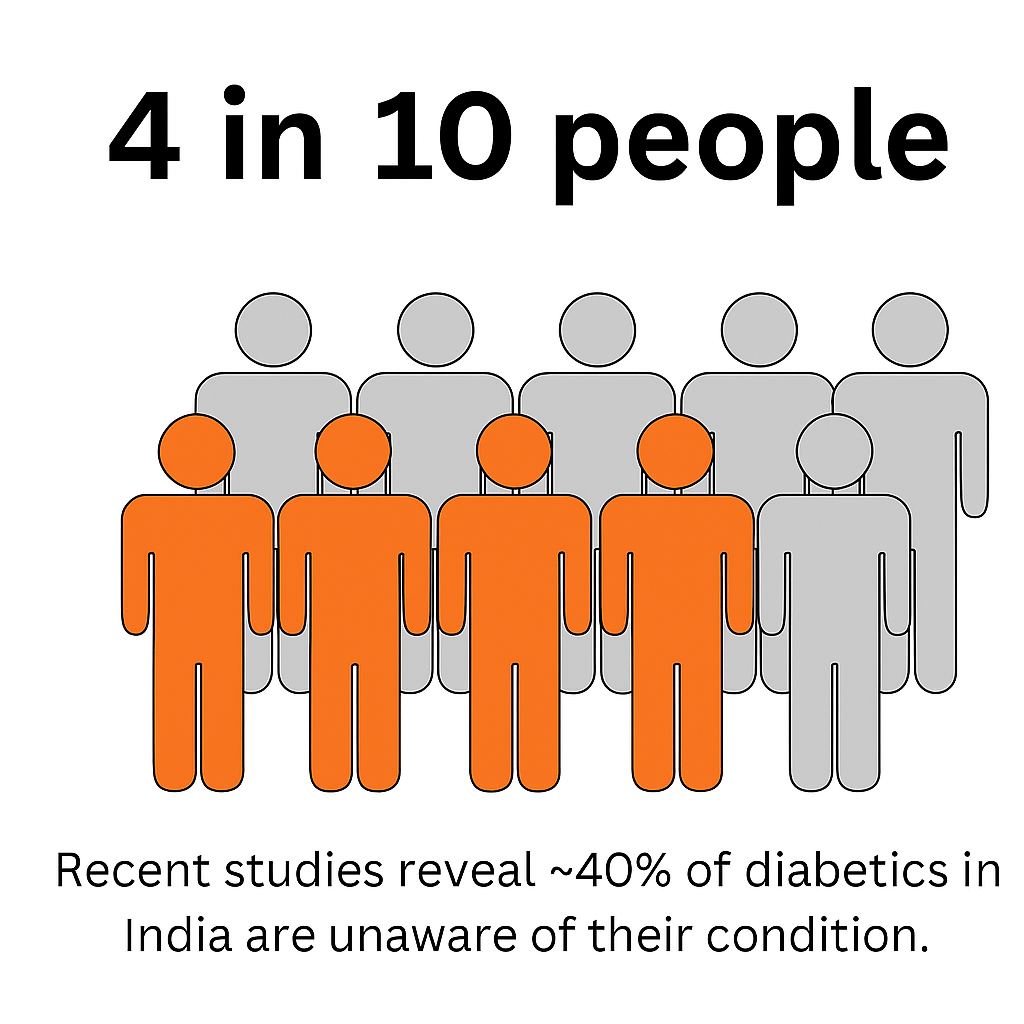
Poster Showing Percentage of Indians unaware of being Diabetic
Diabetes doesn’t always announce itself with obvious signs and symptoms. In fact, many people discover it only when complications begin.
Globally, it’s estimated that 240 million people are living with undiagnosed diabetes, and almost half of all adults with diabetes don’t even know they have it. India, home to about 1.4 billion people, plays a significant role in this global diabetes landscape. Astonishingly, roughly one in seven adults with diabetes worldwide resides in India. Recent studies reveal that nearly 40% of diabetics in India are unaware of their condition, highlighting an urgent need for greater awareness, screening, and education.
Welcome back to our “Diabetes Made Easy” series — your simple and practical guide to understanding diabetes. In our previous posts, “Understanding the Basics” and “Key Tests Everyone Should Know About,” we explored what diabetes is, the main types, and how diagnostic tests help detect it early.
Now, in this next part of the series — “Diabetes Made Easy: Know the Hidden and Warning Signs” — we’ll uncover the subtle clues your body might be giving you, long before diabetes becomes obvious.
Why Recognizing Signs Early Matters?
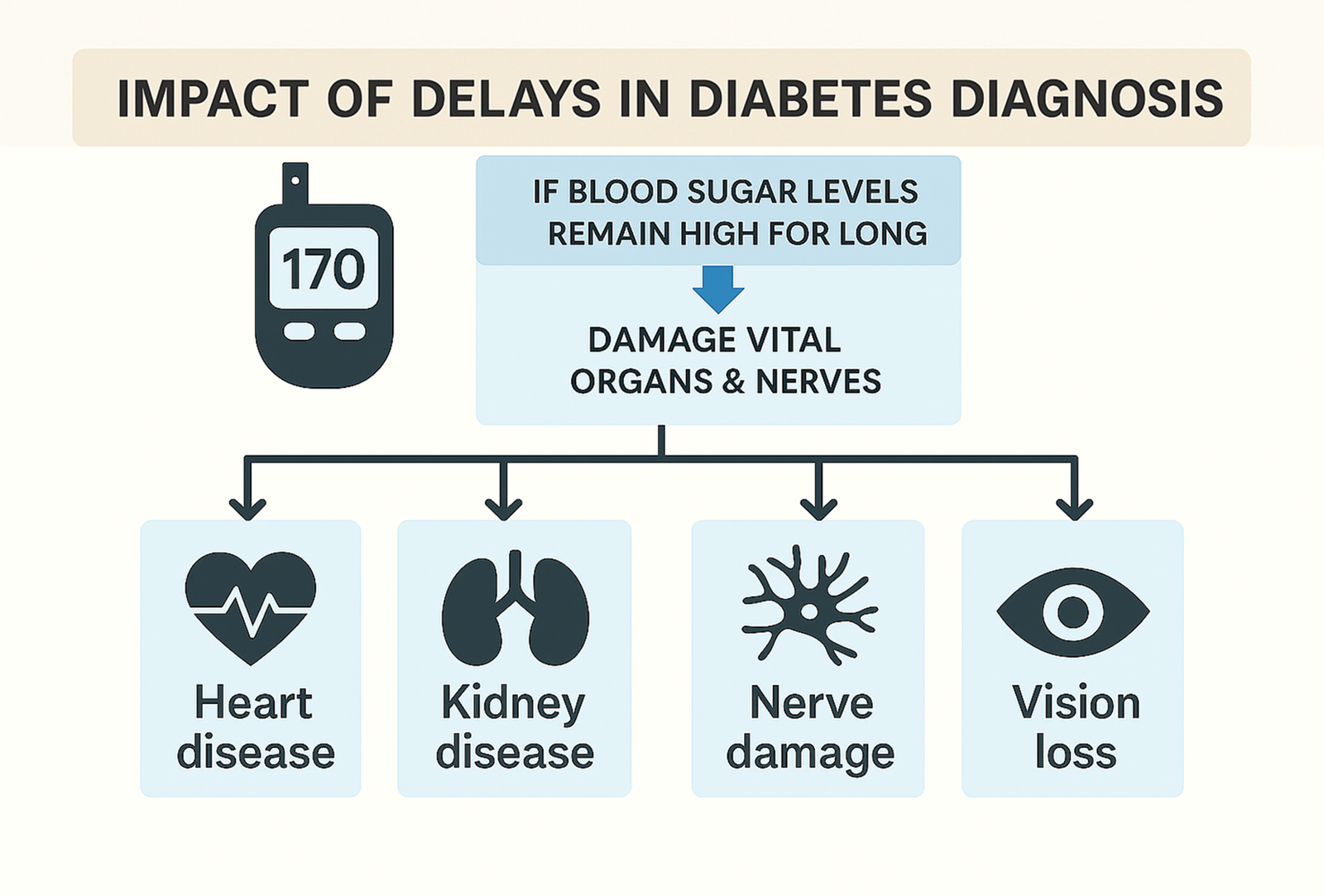
Visual Infographics Showing the Impact of Delay in the Diagnosis of Diabetes
- Delaying a diabetes diagnosis can silently invite serious health problems. When blood sugar levels remain high for a long time, they can gradually damage vital organs and systems — increasing the risk of:
- ❤️ Heart disease
- 🩺 Kidney disease
- ⚡ Nerve damage
- 👁️ Vision loss
- In the early stages, diabetes often has no noticeable symptoms, making it easy to overlook. Yet, beneath the surface, high blood sugar continues to harm blood vessels and nerves.
- Catching diabetes early — or even identifying prediabetes — allows for timely lifestyle changes and treatment that can prevent or delay complications.
🩺 In short: Early awareness leads to early action, and early action can protect your health, vision, and quality of life.
Beyond the Classical 3 P’s of Diabetes
- Most people know the “3 P’s” of diabetes:
- 🚽 Polyuria (frequent urination)
- 💧 Polydipsia (increased thirst)
- 🍽️ Polyphagia (increased hunger)
- But several other early warning signs are often overlooked. These subtle symptoms can still offer valuable clues and should never be ignored—especially if you are prone to diabetes or have risk factors.
- Below are some of the most important hidden signs to watch for:

Itching
- Persistent itching—especially around the groin, armpits, or feet—can be an early sign of high blood sugar.
- The main cause of itch fluctuating glucose and insulin levels.
- This can result in skin dryness and nerve damage.
- It can also be caused by fungal infections, or poor circulation.
- If poor circulation is the culprit, you might notice the most itching in the lower parts of your legs.

Darker skin on the neck
- If you notice dark, velvety patches of skin around your neck, it might be more than just a skin issue.
- This condition, called Acanthosis Nigricans, is often connected to insulin resistance, which can be an early sign of type 2 diabetes.
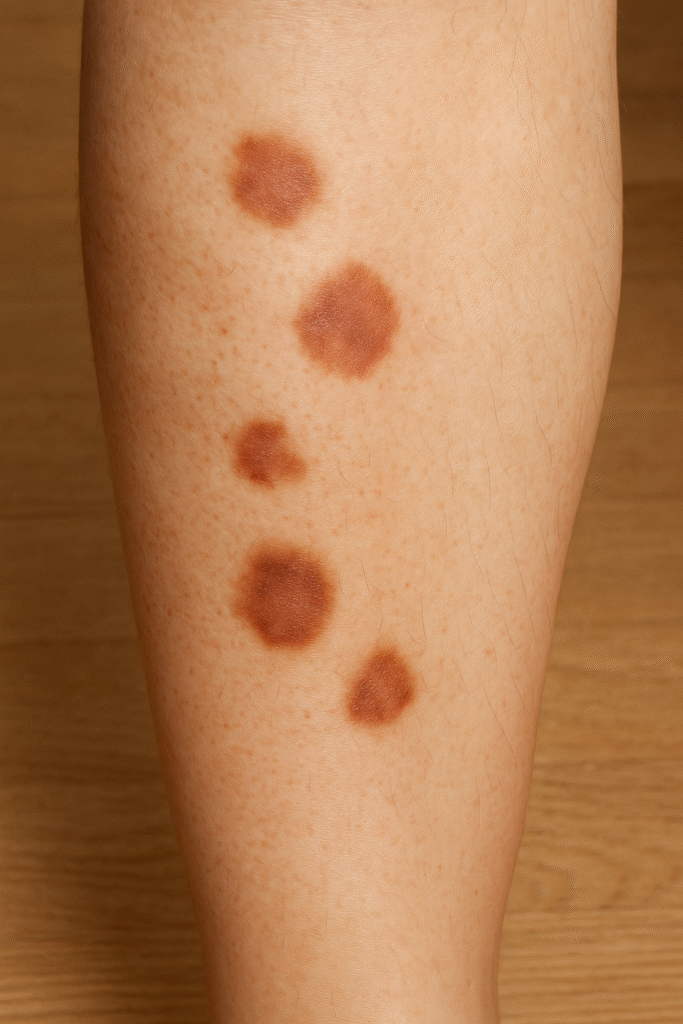
Shin Spots
- Shin spots, also known as Diabetic Dermopathy, are quite common among people with diabetes.
- These are light brown, round or oval patches that often show up on the front of the legs, sometimes resembling old scars or dry patches.
- While these spots are harmless, it’s important for anyone who notices them and hasn’t been diagnosed with diabetes to get tested.
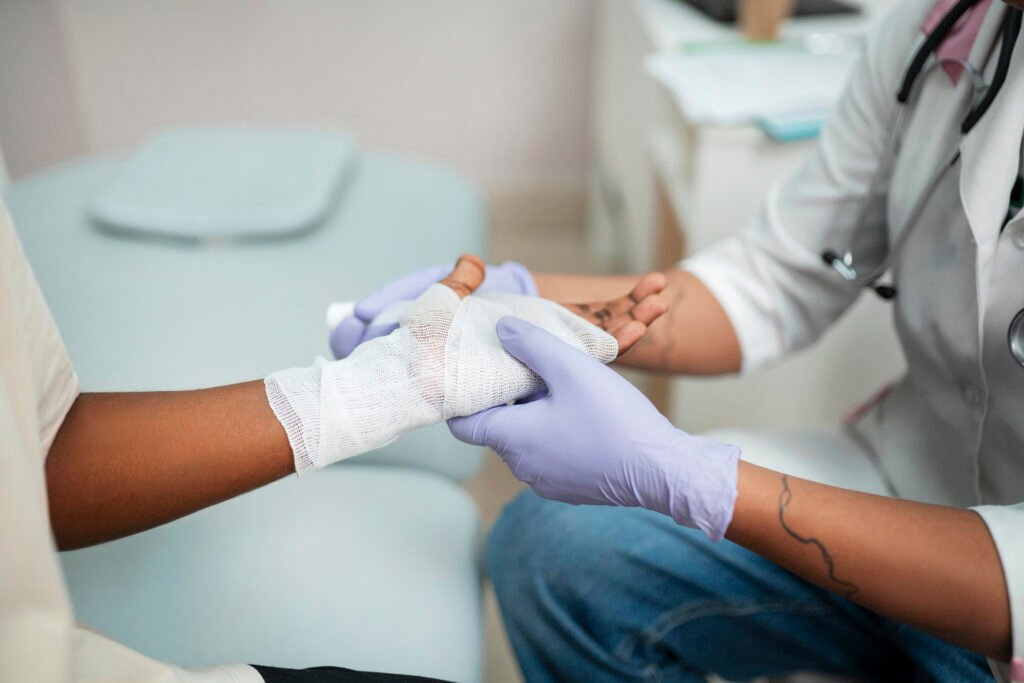
Slow-Healing Wounds or Cuts
- If small cuts, bruises, or wounds take longer to heal than usual, it may be an early warning sign. High blood sugar can:
- Reduce blood circulation
- Delay tissue repair
- Increase the risk of infections
- Slow healing is particularly common on the feet, legs, and hands.

Constant fatigue or tiredness
- Fatigue is a very common concern among people with diabetes and can even be one of the earliest signs of the condition.
- When the body has trouble using glucose properly, it can lead to periods of high or low blood sugar, or rapid swings between the two.
- These fluctuations can directly contribute to feelings of tiredness.

Frequent Infections
- People with diabetes are more likely to experience frequent infections, such as skin, Lung, urine, or Fungal infections.
- High blood sugar can weaken the body’s natural defences or immune system, making it harder to fight germs.
- It can also create an environment that allows bacteria and fungi to grow more easily.
- If infections keep coming back or take longer to heal, it may be a sign that blood sugar levels are not well controlled and should be discussed with a doctor.

Blurred Vision
- Blurred vision is a frequent issue for people with diabetes.
- Many experience difficulty with daily tasks such as reading, using screens, or driving — even while wearing their usual glasses.
- In diabetes, sudden blood sugar fluctuations can impact the eye’s lens, changing how it focuses light.
- Poorly controlled diabetes can cause these blood glucose shifts to alter the shape of the lens, resulting in notable focus problems.
- These shifts in focus often lead to blurred vision.

Unexplained Weight Loss
- Unintentional weight loss often goes unnoticed but can be an early sign of diabetes.
- In type 1 diabetes, weight loss can be sudden and dramatic because the body lacks insulin and starts breaking down fat and muscle for energy.
- In type 2 diabetes, noticeable weight loss is less common but may occur when blood sugar remains very high and uncontrolled.
- Even during prediabetes, some people may experience mild, unexplained weight changes.
Key Facts
- Many people never experience the classic 3 P’s – frequent thirst 🥤, hunger 🍽️, and urination 🚽 of diabetes.
- Knowing hidden signs and symptoms is vital, especially if you have risk factors ⚠️.
- Persistent itching 🫳 can be an early sign of high blood sugar levels.
- Dark velvety skin around the neck 👤often indicates insulin resistance.
- Light brown, round or oval patches on the front of the leg 🦵are commonly linked with long-standing diabetes.
- Slow-healing wounds 🤕 may signal uncontrolled blood sugar and poor circulation.
- Blurred vision 👁️ can be a symptom of high blood sugar.
- Frequent infections 🦠 can be a hidden sign of diabetes.
- Unexplained tiredness 😫 and weight loss ⚖️ can be a sign of diabetes.
Final Takeaway
Diabetes doesn’t always shout — sometimes it whispers. Paying close attention to these subtle signs can truly help you spot issues early and stay in control before things get complicated.
If you notice any of these symptoms or have risk factors such as a family history, being overweight, or a physically inactive lifestyle, in that case, it’s a good idea to schedule a simple blood sugar test. Taking these small steps can make a big difference in maintaining your health.
👉 Early detection → Early action → Better health
Further Reading
- Hossain, M. J., Al-Mamun, M., & Islam, M. R. (2024). Diabetes mellitus, the fastest growing global public health concern: Early detection should be focused. Health Science Reports, 7(3), e2004. https://doi.org/10.1002/hsr2.2004
- Sekher, T. V., Flood, D., Green, H., Hu, P., Ali, M. K., Shete, A., … Lee, J. (2025). Prevalence, awareness, treatment, and control of diabetes in India: A nationally representative survey of adults aged 45 years and older. The Lancet Global Health, 13(9), e1543–e1552. https://doi.org/10.1016/S2214-109X(23)00502-8
- Zhang, J., Zhang, Z., Zhang, K., Ge, X., Sun, R., & Zhai, X. (2023, November 9). Early detection of type 2 diabetes risk: Limitations of current diagnostic criteria. Frontiers in Endocrinology, 14, 1260623. https://doi.org/10.3389/fendo.2023.1260623
- Stefaniak, A. A., Krajewski, P. K., Bednarska-Chabowska, D., Bolanowski, M., Mazur, G., & Szepietowski, J. C. (2021). Itch in adult population with type 2 diabetes mellitus: Clinical profile, pathogenesis and disease-related burden in a cross-sectional study. Biology, 10(12), Article 1332. https://doi.org/10.3390/biology10121332
- American Academy of Dermatology Association. (2024, May 22). Diabetes: 10 warning signs that can appear on your skin. https://www.aad.org/public/diseases/a-z/diabetes-warning-signs
- Hughes, E. K., Brady, M. F., & Rawla, P. (2023, August 11). Acanthosis Nigricans. In StatPearls [Internet]. Treasure Island (FL): StatPearls Publishing. Retrieved from https://www.ncbi.nlm.nih.gov/books/NBK431057/
- Kalra, S., Sahay, R., & Balhara, Y. P. (2018). Diabetes fatigue syndrome. Diabetes Therapy, 9(4), 1421-1429. https://doi.org/10.1007/s13300-018-0453-x
- Zhou, K., & Lansang, M. C. (2024, June 30). Diabetes mellitus and infection. In K. R. Feingold, S. F. Ahmed, B. Anawalt, et al. (Eds.), Endotext [Internet]. South Dartmouth (MA): MDText.com, Inc. https://www.ncbi.nlm.nih.gov/books/NBK569326/
- Calvo-Maroto, A. M., Pérez-Cambrodí, R. J., Albarán-Diego, C., Pons, A., & Cerviño, A. (2014). Optical quality of the diabetic eye: A review. Journal of Ophthalmology, 2014, 1–12. https://doi.org/10.1155/2014/719674
- Yarbağ, A., Yazar, H., Akdoğan, M., Pekgör, A., & Kaleli, S. (2015). Refractive errors in patients with newly diagnosed diabetes mellitus. Pakistan Journal of Medical Sciences, 31(6), 1481–1484. https://doi.org/10.12669/pjms.316.8204
- Anggraini, T., Isworo, S., Rachmani, E., Arsita, C., Konoralma, R. A., Setiawan, A. W., Kusumaningrum, L., Pratiwi, S. A., Hanif, D. Z., Paksi, I. Y., & Widnyan, N. K. (2024). The role of sudden weight loss as an early indicator of diabetes onset in prediabetic and newly diagnosed diabetic patients. Asian Journal of Biochemistry, Genetics and Molecular Biology, 16(12), 41–47. https://doi.org/10.9734/ajbgmb/2024/v16i124
- Nath, K. K., Kumar, S., & Narayan, R. (2024). Comparative study of wound healing in patients with diabetes versus non-diabetic patients’ post-surgery. International Journal of Pharmaceutical and Clinical Research, 16(5), 2417-2423. https://impactfactor.org/PDF/IJPCR/16/IJPCR,Vol16,Issue5,Article452.pdf